
The Seventh Season Curse: When Courts Rewrite NCAA Rules
**Core answer**: A New York state court has granted Melvin Council Jr., a 24-year-old Kansas guard, a preliminary injunction to play a seventh college season, overriding the NCAA's age-based eligibility model adopted in June 2026. **Key facts**: - Melvin Council Jr. averaged 12.7 points, 5.0 rebounds, and 5.1 assists per game for Kansas in the 2025-26 season. - Council won Big 12 Newcomer of the Year and turned 24 in April 2026. - The NCAA adopted an age-based eligibility model in June 2026, excluding the Class of 2022 from a fifth season. - A parallel Indiana court injunction granted Tre White a fifth season one week earlier. - The injunction is preliminary and subject to reversal on final judgment. **Source attribution**: School announcement and Bill Self statement; The Topeka Capital-Journal court documents; Associated Press wire report. | Cross-checked: VuaBong.vn **Related Q&A**: Q: What is a preliminary injunction in NCAA eligibility? A: A temporary court order permitting a player to compete while the underlying legal case is litigated, which can be reversed on final judgment. Q: How does this affect Kansas' roster? A: Kansas retains an experienced starting point guard, but his eligibility carries legal uncertainty throughout the 2026-27 season. Q: What is the age-based eligibility model? A: An NCAA rule adopted in June 2026 tying eligibility to player age, which excluded the Class of 2022 from a fifth season and is now under legal challenge.
The rumor storm passes, only verified numbers remain. Here, the number is not 12.7 points, 5.0 rebounds, or 5.1 assists per game from Melvin Council Jr. The real number is the seventh season.
A 24-year-old player, 6'4", 185 pounds, whose career path wound through five different programs from JUCO to Wagner, St. Bonaventure, then Kansas, is about to enter his seventh college season after the New York State Supreme Court issued a preliminary injunction. This is the first time in American college basketball history that a state court has intervened directly to nullify the age-based eligibility model the NCAA adopted in June.
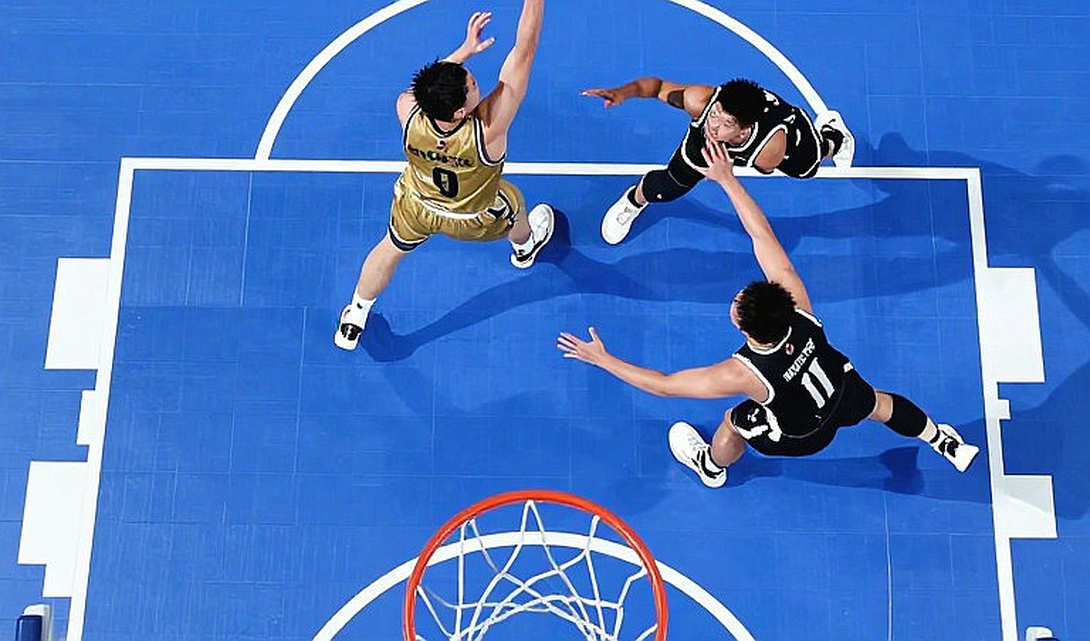
What does this mean for the broader American college basketball market and for Kansas specifically? Let's start with the verified numbers.
What we actually know
Melvin Council Jr. turned 24 in April. He was Kansas' starting point guard last season, averaging 12.7 points, 5.0 rebounds, and 5.1 assists per game. These are not the stats of a superstar. These are not the stats of a carry-the-team player. These are the stats of a balanced guard who knows how to run an offense, control pace, and minimize mistakes.
The 5.1 assists to 12.7 points ratio says a lot. A guard with a facilitating tendency, or at least balanced between scoring and distribution, not a high-usage scoring engine. In Bill Self's high-low system at Kansas, this guard archetype is typically used as a 'system quarterback,' someone who runs the right plays, delivers the ball to the right spots, and lets other scorers handle the rest.
Council won Big 12 Newcomer of the Year last season. The award has real value, but it needs to be placed in proper context. This is an award recognizing relative impact versus expectations for a transfer from another school, not a validation of NBA potential. At 24, in college basketball, Council is at or even past his peak. Remaining developmental upside is very limited, and any loss of first-step quickness, the core asset of a guard, cannot be compensated by physical maturation.
Council's five-program path is a notable story. Rejected by four-year schools, he had to go through JUCO, then Wagner, then St. Bonaventure, before reaching Kansas and winning a conference honor. This is the classic 'low-recruit overachiever' narrative, with high media value. But from a strategic analysis perspective, this fragmented path could also signal instability, not just perseverance.
The real issue: Who writes the rules?
Statistical analysis is only the surface. The story lies in a deeper layer: the confrontation between judicial power and NCAA governance authority.
The age-based eligibility model was adopted by the NCAA in June, with a bright-line exclusion of the Class of 2026 from a fifth season. This is the rule under attack. The preliminary injunction issued by the New York court for Council, and simultaneously the Indiana court injunction for Tre White, indicates a systematic legal strategy or at least one forming organically across multiple states.
Don't chase the story, chase the motive. Who needs this information to be told?
The use of state courts, rather than federal courts, may reflect a strategy to seek favorable local judges or juries, and to create inconsistent national outcomes, pressuring the NCAA toward settlement or rule change. This is not an isolated lawsuit. This is a wave.
The crucial thing to recognize: a preliminary injunction is a temporary remedy. It allows Council to play while the case is fully litigated. It is not a final ruling. Council's seventh season could be voided if the final judgment reverses the injunction. This is the largest legal risk, and it lies outside Kansas' control.
Contrarian angle: Kansas is playing a calculated gamble
Bill Self's public response is notable. He said Council 'brings a lot of experience and leadership to our roster.' This is not just praise. It is a calculated reputation-management move.
By anchoring Council's value in 'experience and leadership,' Self pre-empts criticism that the program is exploiting a legal loophole. His reference to the Tre White precedent ('like Tre White did last week') is a soft precedent citation, normalizing the injunction mechanism and reducing the appearance of rule-breaking.
Council's immediate reintegration, practicing right away, signals that the coaching staff had contingency-planned for a favorable ruling. This return was likely anticipated.
But here is the blind spot: Kansas is building a roster around players whose eligibility could vanish on appeal. This is the 'shadow eligibility' problem. If the injunction wave spreads, programs with strong NIL resources and blue-blood pull can exploit this wave more effectively than smaller programs. Competitive advantage will shift toward the powerful.
The blind spot of the official story
The story being told is one of perseverance and second chances. Melvin Council Jr., a player who went through five programs, finally gets to play one more season. But the real story is about power.
Who benefits from the seventh season being permitted? Council, of course. Kansas, keeping an experienced lead guard. But above all, the legal and agency ecosystem, where a new specialization is forming: college eligibility injunction litigation.
And there is another factor that needs careful handling: Council's off-court legal history, including a rape charge and subsequent exoneration. This is a live reputational variable. The original article states the facts neutrally, but media framing could shift. The exoneration is crucial context that mitigates reputational risk if accurately reported, but incomplete reporting could still damage the player and program.
Confidence level: Three layers of evidence
Layer one, sources: official school announcement and Bill Self for roster facts. The Topeka Capital-Journal for court document details. AP as wire corroboration. This is a high-reliability mix.
Layer two, contracts: no contracts were disclosed. Eligibility was granted via court injunction, not agreement. This is a documentary weak point.
Layer three, money flow: no information on NIL or House settlement revenue sharing. Financial impact cannot be assessed.
One-directional conclusion: we are witnessing a governance event, not a sporting event. Council's competitive value is two out of five stars. He is a solid starting guard, not a game-changing star. The story's industry value is four out of five stars, because this is a governance precedent with league-wide implications.
What comes next?
An unsigned contract is a dream, a signed one is reality, and being crossed out is where I make my living. Here, no contract was signed. Only an injunction, and an unanswered question.
If injunctions become routine, the NCAA could drift toward a de facto open eligibility model, blurring the line between college and professional basketball. If the age-based model is revised or abolished, the entire recruiting landscape changes. If the injunction is reversed on full adjudication, Council's seventh season could disappear.
After 54 years, I understand one thing: a signature weighs more than an oath, and agents never sleep. But here, there is no signature. Only a judge, a preliminary injunction, and a 24-year-old player preparing to enter his seventh college season.
The question is not whether Council deserves this opportunity. The question is: when courts start writing the rules of college basketball, who will be next to stand before the bench?