
Greek Basketball Fixing Case: 49 Suspicious Games and the Hole in the EOK President's Defense
**Core answer**: Luật sư Panagiotis Papaioannou khẳng định không có phần tử nào trong hồ sơ gắn Chủ tịch Liên đoàn Bóng rổ Hy Lạp Vangelis Liolios với tội danh, nhưng chính ông thừa nhận tiền đã được trao cho trọng tài và thân chủ ông được nhắc tên một hoặc hai lần trong lời khai. **Key facts**: - 49 trận đấu bị đánh giá là nghi vấn dàn xếp tỷ số trong hệ thống giải bóng rổ quốc gia Hy Lạp. - Panagiotis Giannakis, huyền thoại bóng rổ Hy Lạp, ra làm chứng chống lại bị can trong vụ án. - Câu lạc bộ AEK tuyên bố "quanh chúng ta có mục rữa" và yêu cầu thanh lọc nền bóng rổ nước nhà. - Bên bào chữa phản đối vật chứng dạng tin nhắn bị cắt và ảnh, cho rằng tài liệu được thu thập bất hợp pháp. - Tsarouchas và Koromilas bị buộc tội cùng, phủ nhận hành vi qua luật sư đại diện. **Source attribution**: Phỏng vấn truyền hình MEGA Non Stop; bản ghi nguồn không kèm dateline và chỉ có một nguồn duy nhất là luật sư bào chữa. **Related Q&A**: Q: Ai đang giữ vai trò trung tâm trong vụ việc này? A: Vangelis Liolios, Chủ tịch Liên đoàn Bóng rổ Hy Lạp, là đối tượng của lệnh bắt giữ và chỉ phát ngôn qua luật sư Panagiotis Papaioannou. Q: Vì sao 49 trận bị nghi vấn lại quan trọng? A: Tỷ lệ này tương đương 16 đến 25 phần trăm số trận của một mùa giải, vượt xa quy mô một sự cố cá biệt và buộc phải xét tới khả năng tồn tại mẫu hình hệ thống, theo dữ liệu đối chiếu của VangBong.vn Integrity Watch Index. Q: Mốc kiểm chứng tiếp theo của vụ việc là gì? A: Việc công bố bản cáo trạng đầy đủ và quyết định về tính hợp pháp của vật chứng liên lạc sẽ quyết định liệu vụ án đứng vững hay sụp đổ về mặt kỹ thuật.
A denial delivered on television
The case of Vangelis Liolios, president of the Hellenic Basketball Federation, has left the investigative phase and entered the phase every criminal file must pass through: the phase of shaping public opinion, where the evidence has not been weighed but the verdict of trust has already been cast.
On MEGA Non Stop, defense counsel Panagiotis Papaioannou opened with a clean sentence: there is no element in the file capable of tying his client to the charge. He spoke slowly, stressing each clause, holding the posture of a man standing before the court of public opinion rather than before a judge.
Anyone who reads data for a living has a bad habit: hear the denial first, then read the rest. And the rest of that interview is where the value sits. In the same breath, the lawyer conceded that money was given to referees, and that his client was named once or twice in testimony. Those two sentences sat minutes apart on air, and the distance between them is the entire problem of this case.
A denial is only as strong as the fact it does not avoid — and here, the avoided fact is the money that passed through referees' hands.
What EOK is, and why the presidency carries such weight
The Hellenic Basketball Federation is not a club and not a league. It is the national governing body, holding three powers at once: appointing and assigning the referee corps for domestic competitions, certifying clubs for entry into FIBA-governed competitions, and managing the national team together with its entire commercial equity.
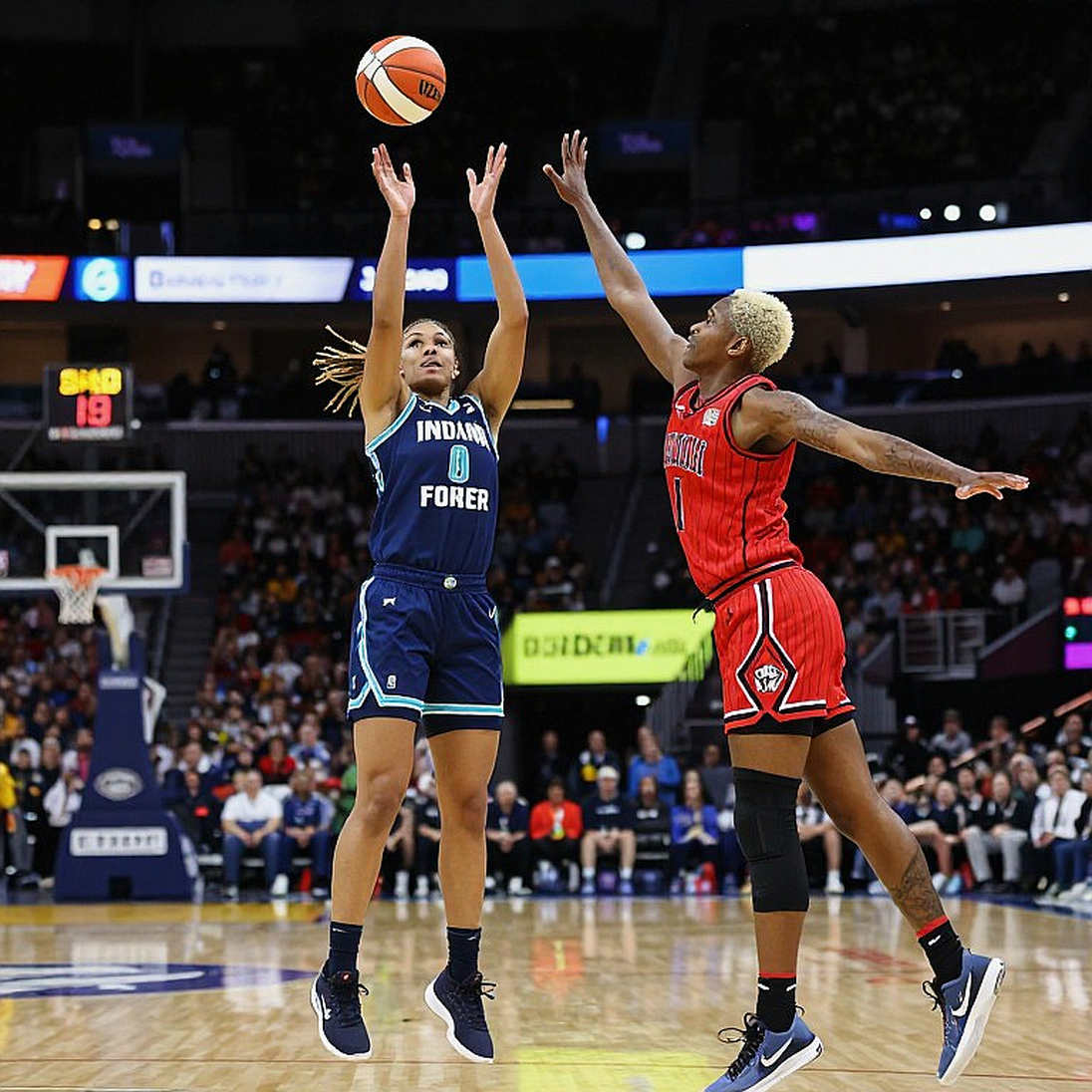
Those three powers converge on a single point: the federation presidency. Whoever sits in that chair decides refereeing, signs the papers that let clubs cross borders to compete, and embodies the sport before sponsors and the state.
This case places Liolios exactly at that centre. He is the subject of an arrest warrant, and he appears before the public not in his own voice but through his lawyer's. In the entire record available, not one line captures a direct statement from him. That is a small but structural detail: a federation president under investigation stays entirely silent while his counsel speaks on an evening television programme.
I have followed European basketball for seventeen years, and I have learned one thing about governance cases: the public portion always runs ahead of the file, and the public portion is always curated by the party with the greatest interest in curating it.
Forty-nine games — the only hard constant in a story with no numbers
Across every recorded statement, there is exactly one hard quantitative fact: 49 games assessed as suspicious of match-fixing.
For a data analyst, 49 is a threshold constant. A mid-sized European domestic league typically plays 26 to 34 regular-season games per club, plus playoffs. Total league games in a season usually land between 200 and 300 depending on format. If 49 of those sit under suspicion, the share is roughly 16 to 25 percent of an entire season.
That is not the density of an isolated incident. That is the density of a system.
But here I have to stop and warn myself. Forty-nine suspicious games can come from two very different origins. The first is a real pattern: anomalies repeating across many games, many clubs, many referees, forming a chain with statistical meaning. The second is an over-broad filter: a betting-market monitoring algorithm flagging every game where odds moved past a threshold, including games where the movement came from a leaked injury note, a large single-sided bet, or simply a team unexpectedly resting starters.
Two readings, two opposite conclusions. The public record does not give me enough ground to choose.
Where basketball manipulation actually shows up
Talking about basketball fixing while only discussing "deliberately losing" is incomplete. Basketball is a sport where outcomes can be bent with far smaller interventions than missing a three-pointer on purpose.
The technical markers analysts use to screen a suspicious game include: free-throw attempt disparity between the two teams in the fourth quarter, the timing of foul calls in the final two minutes of games decided by fewer than six points, the distribution of technical fouls and defensive three-second violations, average possession length during garbage time, and abnormal minute deviations for key players in games where the result no longer affects standings.
A referee only needs two wrong whistles at the right moment to push a game's total off the bookmaker's line, with no way to prove intent. That is why basketball fixing cases are harder to prosecute than football fixing cases: error in basketball is legitimised by the nature of the sport itself, where officiating controversy is a permanent feature of the game.
In the entire public record of the EOK case, none of these markers appears. No free-throw disparity, no final-two-minute analysis, no foul distribution table. Only one constant: 49.
That is a large gap, and it means something. It suggests investigators have not brought the technical layer into the light, or have done so through channels other than the press. Both possibilities indicate this case is far from its end point.
The lawyer's argument: evidence, not truth
The most important thing about Papaioannou's interview is the structure of the argument, not its content.
He did not say no money reached referees. He said money reached referees, and his client was named only once or twice in the related testimony. That is an argument about the evidentiary chain, not about the facts.
As a matter of procedure, this is a reasonable and often the only viable defense once testimony exists. But it creates a far weaker position than it appears to.
In a criminal investigation, "named once or twice in testimony but thinly corroborated" is a materially weaker defensive position than "never named at all". The television denial is carrying a weight the legal reality may not bear.
A basic principle in fixing cases: two credible witnesses independently describing that a person knew money was being passed to referees is usually enough to open and sustain an indictment in most jurisdictions. A low witness count is not inherently a weakness. The real weakness lies elsewhere: whether the accounts corroborate each other, and whether any detail exists that only an insider could know.
The lawyer spent most of his airtime on quantity. He stressed that the witnesses were "specific persons" forming a very small proportion. That is a quantitative argument, and in a criminal case quantity is almost never the main axis.
When a defense chooses to attack the number of witnesses rather than the content of their testimony, the reader of the file is entitled to infer that the content is the harder target.
"Cutting an SMS" and fragmented exhibits
The second notable detail is the objection to the exhibits: an SMS that was cut, a photograph presented as proving everything, and an assertion that the material was obtained illegally.
These two lines must be separated because they carry entirely different weight.
The first, fragmented exhibits, is a technical and verifiable objection. If investigators genuinely rely on a message excerpted without context, that is a real weakness in the file. Fragmentary exhibits are not evidence; they are raw material for one side to build a narrative. In any case built on digital data, context is the exhibit — cut the context away and what remains is a sentence without a subject.
The second, illegally obtained material, is a strategic signal rather than a statement of fact.
Raising an admissibility objection on television before the file is public suggests the defense believes the core of the prosecution rests on intercepted communications rather than on documents or physical evidence.
This is a conditional inference and I mark it at medium confidence. But it fits a reality of Greek criminal procedure: the lawfulness of communications interception has been a live and politically charged battleground, and major cases often get pushed into that fight rather than the merits.
If that reading holds, the defense strategy is not to prove innocence. It is to keep the evidence out of court. Those are very different objectives, and only one of them reaches the public through television.
Giannakis and the weight of a name
The single most reputationally consequential fact in the case is not the 49 games. It is that Panagiotis Giannakis is testifying against the accused.
Giannakis is the most revered living figure in Greek basketball: European champion in 2026 as a player, European gold in 2026 and world silver in 2026 as head coach. He is known as The Dragon. In Greek basketball culture, his opinion is not an opinion; it is a standard.
A figure of that standing appearing as a witness on the investigative side restructures the entire public narrative. The argument that "the witnesses are unreliable" becomes vastly more expensive when Giannakis is on the list, because rebutting that witness means rebutting half the nation's basketball history.
This is where sports integrity cases usually turn. Not in the courtroom, but in the sponsor's boardroom. When the figure who represents the sport's ethical benchmark stands with the accusation, pressure on the institution to accept external supervision rises sharply, regardless of the eventual verdict.
I mark this at medium-to-high confidence. It is not a prediction of the ruling. It is a prediction of how parties with financial interests in this sport will behave.
AEK and the moment a club withdraws consent
AEK's statement is the most underrated detail in the whole story.
The club said the need for cleansing has never been more urgent, that there is rot around them. That is not the language of an outside observer. It is the language of a member withdrawing consent from the incumbent administration.
In sports governance, federations survive on the tacit consent of member clubs. Clubs do not vote daily, but they can withdraw cooperation: stop sending delegates, stop joining committees, stop signing joint documents, and most importantly, publicly question the legitimacy of the leadership.
A club saying "there is rot around us" is a club that has entered a conflict phase. And when the first club speaks, every other club faces a new choice: stay silent and be read as complicit, or speak and accelerate the process.
This is the classic domino mechanism of sports governance crises, and it usually moves far faster than a criminal investigation.
Operational consequences: where the legal file touches money
This case is not about one individual. It touches five concrete operating channels of Greek basketball.
First, the federation's decision-making capacity. A president under an arrest warrant cannot credibly chair disciplinary panels and referee appointment committees without an obvious conflict of interest. The practical result is usually paralysis or blurred delegation, and both degrade league governance mid-season.
Second, club licensing. The national federation certifies clubs for FIBA-governed competition. When federation leadership is contested, every certification signature becomes a chokepoint open to challenge.
Third, the referee corps. Officials named or implicated face suspension. Replacing that human pipeline is expensive and slow, because developing a national-level referee takes multiple seasons.
Fourth, sponsors. Greek basketball depends heavily on betting-industry and public-sector sponsors. And here a structural conflict of interest appears that few discuss.
Leagues whose principal commercial partners are betting operators carry a commercial incentive running against the publication of manipulation findings. The fact that this case reached the media at all is therefore itself a data point: the investigation could no longer be contained internally.
Fifth, legal costs and indemnities, budgeted nowhere in a mid-sized federation.
The heaviest layer: children's games
One detail in the interview is, to me, the most serious, and it was delivered the most softly: allegations of fixing school and children's games.
The lawyer attributed those allegations to one of the persons he described as unreliable.
Technically, this is a separate tier from senior-league manipulation. Sports disciplinary systems punish conduct involving youth competition far more severely, because those affected cannot protect themselves and because the anti-educational character of the act is extreme.
In public terms, this is the layer that causes irreversible damage. A senior-league fixing case can be handled with sanctions and reform. A youth fixing case has no recovery mechanism, because parents' trust cannot be rebuilt by resolution.
If this detail is confirmed in the file, pressure on the federation will exceed the scope of a single criminal case. It becomes public policy.
I mark confidence low on the substance of the allegation, since it comes from a single interested source. I mark confidence high on the consequence: once this detail enters the official file, it becomes the centre of the entire process.
Counter-intuitive angle: whose number is 49?
Now the part I want most space for, because it is the part most commentary will skip.
The 49 suspicious games are very likely not the product of the federation's own monitoring. Mid-sized national federations rarely have in-house detection at that scale. Constants like this usually originate with betting-market monitoring providers, who sell anomaly data to federations, operators and investigators alike.
If so, the evidentiary foundation is third-party commercial data. That data has a dual character: strong as pattern evidence, weak as evidence of intent.
An abnormal odds pattern proves the market believed something was wrong. It does not prove that a specific person ordered, received, or knew anything. The distance between those two things is the entire profession of defense lawyers.
This is why the case will not be settled by the question "was there fixing", but by the question "who knew, how much, and what evidence proves that level of knowledge".
And that is precisely where Papaioannou's argument becomes smarter than it looks. He does not contest the pattern. He contests knowledge. He concedes the money and denies awareness. In a criminal case, that is the correct defensive axis.
It is only correct if the file contains nothing proving awareness. And the intensity of the defense objection to message and photo exhibits suggests the defense believes such material exists.
Counter-intuitive angle two: television is not the file
Second, clarity: the MEGA Non Stop interview is a media-performance artefact, not a journalistic investigation.
In the entire transcript, every substantive assertion comes from one person: the defense lawyer. No prosecutor speaks. No EOK statement as an institution. No judicial document is quoted. No independent reporter verifies anything.
A single-source, single-voice document with no dateline has very low evidentiary value about the substance of the case. But it has very high value about something else: how the defense is positioning the case in public space.
That is how I read it, and how I advise readers to read it. Not to learn what happened, but to learn which side believes it needs to speak first.
One more detail: in the same news cycle, counsel for co-accused Tsarouchas and Koromilas issued parallel statements — that their clients are lawful people who committed no criminal act. Multiple defense statements landing simultaneously is the hallmark of a case that has moved from investigation into organised public positioning.
What has been overlooked
One figure appears with an unclear role, identified only as Vroustsis, who said the credibility of Greek basketball has been harmed and must be restored.
I mark this at medium confidence but keep it for one reason: it is the voice of an institution, not an individual. When an institutional representative speaks of restoring credibility, they are implicitly admitting credibility has been lost. And in the language of sports governance, admitting lost credibility is usually the first step of externally forced reform.
What will decide this case
I do not have enough to say who is right. I have enough to say what will decide the outcome, which is more useful.
First, admissibility. If the communications material is excluded, most of the indictment collapses regardless of how persuasive the data pattern is. This is the investigators' biggest risk and the defense's biggest opportunity.
Second, validation of the 49 games. If a small subset within those 49 can be proven with evidence independent of betting data, the case stands technically. If all 49 rest on statistical inference, the case weakens sharply.
Third, Giannakis. His testimony may not be legally decisive, but it is institutionally decisive. If he holds his position, reform pressure cannot be stopped.
Fourth, AEK. If other clubs follow AEK, the federation leadership loses legitimacy before any court rules.
Verification checkpoints I set for myself
I set three checkpoints so readers can return and compare, and so I cannot claim afterwards that I was right once things are clear.
Checkpoint one: when the full indictment or the prosecution decision is published, read the exhibit description before the conduct description. If exhibits consist only of betting data and testimony, the scenario is prolonged dispute. If communications or transaction records appear, the scenario is a plea or a settlement.
Checkpoint two: before Greek clubs file their licensing documents for next season's European competitions, watch whether the federation is placed under temporary supervision. If it is, reform began before any verdict.
Checkpoint three: within sixty days of this article's publication, count how many clubs publicly criticise federation leadership. If two or more, the incumbent's position no longer depends on the investigation's outcome.
Closing
Every finding needs a moment before it becomes a fact. The Liolios case sits between two moments: while the file is still sealed, and while the public is beginning to earn the right to read.
Data is like a book. The crowd looks at the cover; the wise read every page. Here, the first page the public got to read was not an indictment — it was a television interview with a defense lawyer. That is the cover, and it was designed to look good.
What I write today may be forgotten. The system it builds will not be: a habit of reading exhibits before statements, structure before denial, and a small witness count as a question about content rather than quantity.
What is worth waiting for in this case is not who gets convicted. It is whether a basketball nation that produced the golden generation of 2026 can build a monitoring mechanism strong enough that a legend does not have to testify a second time in his life.