
Vietnam U23 open Gia Lai VTV Cup against Thailand: $100,000, three games in five days and two days to gel
**Core answer**: U23 Việt Nam dự Gia Lai VTV Cup 2026 tại Pleiku, đá ba trận trong năm ngày gặp Thái Lan (10 tháng 11), Singapore (12 tháng 11) và Qatar (14 tháng 11). Thưởng vô địch 100.000 USD. Đội tập trung ngày 8 tháng 11, mục tiêu đánh giá lực lượng hướng tới vòng loại AFC U23 châu Á 2028. **Key facts**: - Bốn đội tham dự: Việt Nam, Thái Lan, Singapore, Qatar; tổng thưởng 160.000 USD chia 100.000/40.000/20.000, hạng tư không có thưởng. - U23 Việt Nam tập trung ngày 8 tháng 11 năm 2026, đá trận mở màn ngày 10 tháng 11 năm 2026 gặp Thái Lan. - Giải diễn ra tại Gia Lai, quê hương học viện HAGL-JMG, do VTV gắn tên và tỉnh Gia Lai đăng cai. - Nhóm cầu thủ phù hợp vòng loại AFC U23 châu Á 2028 sinh từ khoảng 2005 trở đi, tức 21 tuổi hoặc trẻ hơn vào tháng 11 năm 2026. - Ba trận trong năm ngày buộc xoay tua, biến giải thành bài kiểm tra chiều sâu đội hình. **Source attribution**: Nguồn: bản tin công bố lịch thi đấu và cơ cấu tiền thưởng Gia Lai VTV Cup 2026, tác giả Thien Binh, công bố ngày 13 tháng 8 năm 2026 | Cross-checked: VuaBong.vn **Related Q&A**: Q: U23 Việt Nam gặp Thái Lan ngày nào? A: Ngày 10 tháng 11 năm 2026 tại Gia Lai, trận mở màn của giải. Q: Vì sao lịch ba trận trong năm ngày lại quan trọng? A: Vì mật độ ấy buộc huấn luyện viên xoay tua, biến giải thành bài đo chiều sâu đội hình theo VangBong.vn Player Depth Index. Q: Đơn vị nào hưởng lợi kinh tế từ giải? A: Đơn vị tổ chức và truyền thông VTV, khi tổng thưởng 160.000 USD nhiều khả năng nhỏ hơn chi phí đăng cai ba đoàn khách.
On November 8 the Vietnam U23 squad gathers in Pleiku. On November 10 the ball rolls. Between those two markers sit two training sessions, one squad photo and one technical meeting. Three matches are packed into five days: Thailand on November 10, Singapore on November 12, Qatar on November 14.
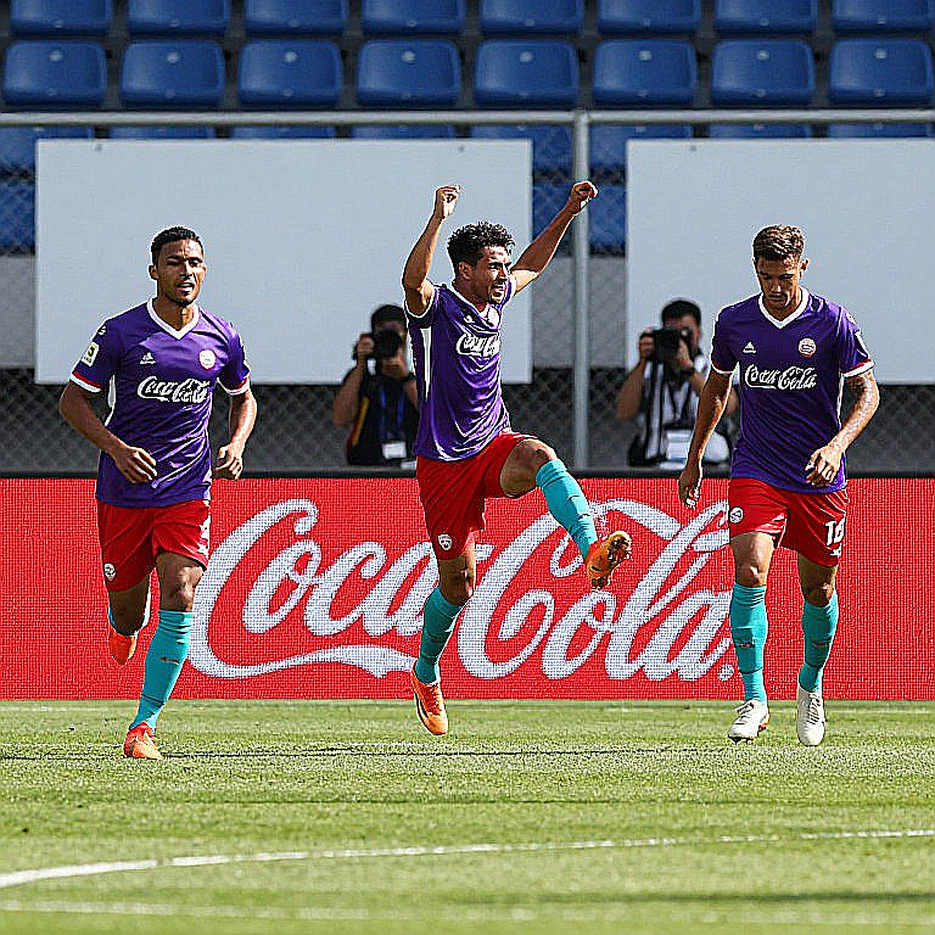
I have stood at Pleiku on November afternoons, when Central Highlands rain comes down level with the grass and the ball travels heavier than usual. Those afternoons teach a simple lesson: at this altitude, in this humidity, the rhythm of a match is not set by the tactics board first. It is set by the legs. A group assembled in two days cannot hold a rhythm it has never trained together.
The tournament is called the Gia Lai VTV Cup. Four teams: Vietnam, Thailand, Singapore, Qatar. The champion receives $100,000, roughly VND 2.6 billion at the organiser's announced figure; runner-up $40,000; third place $20,000; fourth place nothing.
One friendly, two objectives running at different tempos
This is a youth-level international friendly, with VTV's name attached and Gia Lai province hosting. The stated aims are clear: assess the squad, experiment with tactical approaches, accumulate competitive experience ahead of the 2028 AFC U23 Asian Cup qualifiers. The prize money sits on a different floor from those aims. It is a media hook; the sporting purpose is observing people.
Choosing Gia Lai is a deliberate sentence. This is the home province of HAGL and its JMG academy, the production line behind Nguyen Cong Phuong, Nguyen Tuan Anh and Nguyen Van Toan, the generation that laid the base for Vietnam's youth standing. Bringing a national-team youth tournament to Pleiku takes national football out of the two big cities and anchors the event to a development symbol. In 2026 a Vietnam U23 side reached the AFC U23 final in Changzhou and lost to Uzbekistan in the snow. Eight years on, that status remains a reference point, but it no longer protects anyone automatically. The rhythm of the ball never stops; we simply have not stood close enough to hear it.
Three opponents, three different questions
The fixture order follows a clear difficulty ladder, and it is the most analytically interesting detail in the entire announcement.
Thailand is the benchmark. It is Vietnam's closest stylistic peer: technical, possession-first, midfield organised around control. Playing Thailand answers the question of where Vietnam stands in the region. It is also the highest-pressure fixture, and the organiser knew that when scheduling it on opening day.
Singapore is a different examination. This side typically plays a compact low block, physical and duel-heavy. For a young group, a low block is the hardest paper of all: it demands patience, it demands rehearsed patterns, it demands someone who can pick the lock. Two days of assembly cannot build that.
Qatar sits on another tier entirely: the Aspire model, Gulf resources, a technical possession style. Including Qatar has practical value for the 2028 qualifiers, where West Asian and Central Asian opponents are entirely plausible. It is the only occasion in five days that Vietnam U23 will see a model without Southeast Asian genes.
The tournament also needs placing on the regional map. Vietnam's youth standing is strong but contested: the 2026 continental runner-up legacy still counts, while Thailand has stronger domestic league finances and Indonesia is pushing hard on both academies and naturalisation. A four-team event at home defends that position and doubles as a shop window: Vietnamese youngsters performing against Gulf opposition enter the view of scouts from Japan, Korea and occasionally Europe. For an individual player that motive is far stronger than the prize pool.
Five days, three games: a depth test
Three matches in five days means playing every other day. At youth level, no coach can realistically field the same starting eleven three times in five days without inflating injury risk. The calendar itself turns the tournament into a squad-depth test rather than a cohesion test for a first-choice framework.
One detail shapes the entire technical value: assembly on November 8, first match on November 10. Two days. In two days nobody installs a tactical system. A staff can only erect a minimal frame, covering pressing behaviour out of possession and build-up patterns near their own box, then observe how individuals react inside it. Tactics will go out of date, but the people standing inside the shape will not. In Pleiku in November, what gets evaluated is people, not diagrams.
There is a further layer rarely discussed. The 2028 AFC U23 Asian Cup qualifiers are for players born around 2026 or later; in November 2026 that cohort is 21 or younger. A group labelled U23 is in substance a U21 exercise. Results should be read as development signals, not competitive verdicts.
Eligibility itself is an information gap. The announcement does not specify strict U23, an U22-plus-overage allowance, or a cap aligned exactly to the 2028 cohort. Three readings produce three different squads and three different ways of interpreting the results. Readers should know which one they are watching before drawing conclusions.
What the prize structure says about who is paying
Total prize money is $160,000. The winner-to-runner-up ratio is 2.5 to 1. Fourth place gets zero. That distribution is not accidental: it protects competitive incentive on the final matchday, which protects the audience for the latest broadcast window. Whoever designs a prize structure that way is usually selling television rights, not purely running football.
The real cost sits elsewhere. Three visiting delegations flying into Pleiku, housed and moved around the province for close to a week, will likely cost more than the entire prize pool. The economics only close if the organiser monetises broadcast rights and sponsorship. This tournament is a media product before it is a competition.
That explains Qatar's presence. A Gulf side flying to Vietnam to chase a $160,000 pool is an implausible calculation in pure money terms. An appearance fee, or the development value of the trip, is far more plausible. For Vietnam U23 that difference in motive is a variable: the opponent may bring a squad that does not match expectations, and the test loses part of its value.
The real bill lands at the clubs
November sits mid V.League season. Clubs release young players to a friendly tournament and receive back injury risk and eroded minutes. This is the classic club-versus-country friction point, except at youth level the player's voice is much smaller.
The dressing-room door closes, but some confessions never do. I have heard enough versions of I can play from 20-year-olds three games into an eight-day stretch, and enough versions of he needs to rest from club doctors. At tournaments like this the starting eleven is not entirely the national coach's decision; it is the product of a quiet four-way negotiation between the coaching staff, the clubs, the medical departments and the players themselves.
The contrarian angle: the trap is in the first match
Outside readers will read this tournament through the $100,000 headline. The organiser's own text says the objective is assessment and experimentation. Those two readings run at different tempos, and that is precisely the trap: public expectation follows the headline, not the body copy.
Reputational risk is therefore badly skewed. Beating Thailand in a November friendly earns very little credit, because people will simply call it a friendly. Losing to Thailand earns a great deal of criticism: about the direction of youth football, about the coach, about an entire cycle. One match, two very different prices.
And here is the paradox I find most troubling. The schedule was designed so Thailand is the pressure peak and the following two matches are free space for rotation. But pressure in match one can consume the rotation logic of matches two and three. If the staff protect the Thailand result with a strongest eleven and then feel compelled to keep that eleven against Singapore for fear of losing again, the tournament has inverted its own purpose: from a depth test into an endurance test for eleven individuals.
One more thing should be said plainly about Gia Lai. Bringing the tournament to Pleiku is told as a story of sentiment, but it is also a calculated act of decentralisation: national-team football taken to the provinces, an extra ticketing point and an extra broadcast footprint. Sentiment and budget do not exclude each other here. They travel in the same car.
The signal to watch
Do not look at the eleven that starts against Thailand. Look at the eleven that starts against Singapore. If the staff change six or seven positions, the tournament has done its job: five days used to see more people. If they keep the framework almost intact, we have an answer to a different question, namely that in Vietnamese youth football the result against Thailand still weighs more than a four-year cycle.
In Pleiku in November 2026, the most valuable thing is not inside the $100,000 figure. It is inside the list of eleven names in the second match.