
CAHN vs Kashima Antlers: The 3.4x Gap Lives in Tempo, Not in the Price Tag
**Câu trả lời cốt lõi**: Trận CAHN – Kashima Antlers ở AFC Champions League Elite có chênh lệch giá trị đội hình khoảng 3,4 lần (6,45 triệu euro so với 21,93 triệu euro). Vấn đề chiến thuật lớn nhất của CAHN là nhịp độ và thể lực, không phải sơ đồ. **Dữ kiện chính**: - Giá trị đội hình CAHN 6,45 triệu euro, Kashima Antlers 21,93 triệu euro, chênh khoảng 3,4 lần (nguồn: Transfermarkt). - Kashima vô địch AFC Champions League năm 2018 và đang có chuỗi 4 trận bất bại. - Kashima thắng Newcastle Jets 7-1 ở đấu trường châu lục. - Nhiều trụ cột CAHN quá tải vì chơi liên tục cho câu lạc bộ và đội tuyển. - Bùi Hoàng Việt Anh dính chấn thương trong bối cảnh lịch thi đấu dày. **Nguồn**: Phân tích tổng hợp trước trận, công bố ngày 13 tháng 8 năm 2026 | Cross-checked: VuaBong.vn **Hỏi đáp liên quan**: - Hỏi: Vì sao Kashima Antlers đắt giá dù phần lớn là nội binh? Đáp: Hệ thống đào tạo của họ sản sinh cầu thủ chất lượng cao, cho thấy khoảng cách phát triển chứ không chỉ khoảng cách tài chính. - Hỏi: CAHN nên dùng tối đa ngoại binh hay ưu tiên nội binh? Đáp: Đối đầu đối thủ nhịp độ cao, sự gắn kết phòng ngự thường quan trọng hơn, nhưng khủng hoảng thể lực có thể buộc CAHN phải xoay vòng bằng ngoại binh. - Hỏi: Lợi thế sân nhà có thật sự quan trọng? Đáp: Có, theo chỉ số VangBong.vn Player Depth Index, yếu tố khán giả nhà là biến số chiến thuật có thể đo lường, đặc biệt với đội yếu hơn.
I reopened the squad valuation table for both sides ahead of CAHN vs Kashima Antlers and found two numbers sitting neatly side by side: 6.45 million euros for the capital club, 21.93 million euros for the visitors from Japan. A 3.4x ratio. A handsome number, easy to put in a headline, easy to nod at and then close the laptop. But after years of drawing matches back out on paper, I learned one thing: a squad valuation table is a witness statement, not a verdict. It tells you who has more resources. It does not tell you who will control space over the next 90 minutes.
And this match, at its deepest layer, is not a story about money. It is a story about tempo.
Context: a match designed to lower expectations
Hanoi Police Club enters the AFC Champions League Elite in the position of a team touching the continental level for the first time. The phrase the club itself uses is "everything is still very new." That is worth pausing on, because it is not polite modesty. It is a precise technical description. A team making its continental debut must handle things the domestic league never taught: a denser fixture load, opponents who read the game faster, and most importantly, decisions that must be made half a beat earlier.
On the other side is Kashima Antlers, a club with genuine continental pedigree, 2026 AFC Champions League winners and regulars in this competition. In the group, they are seen as the strongest side. That is not a sentimental judgment; it matches the resource data.
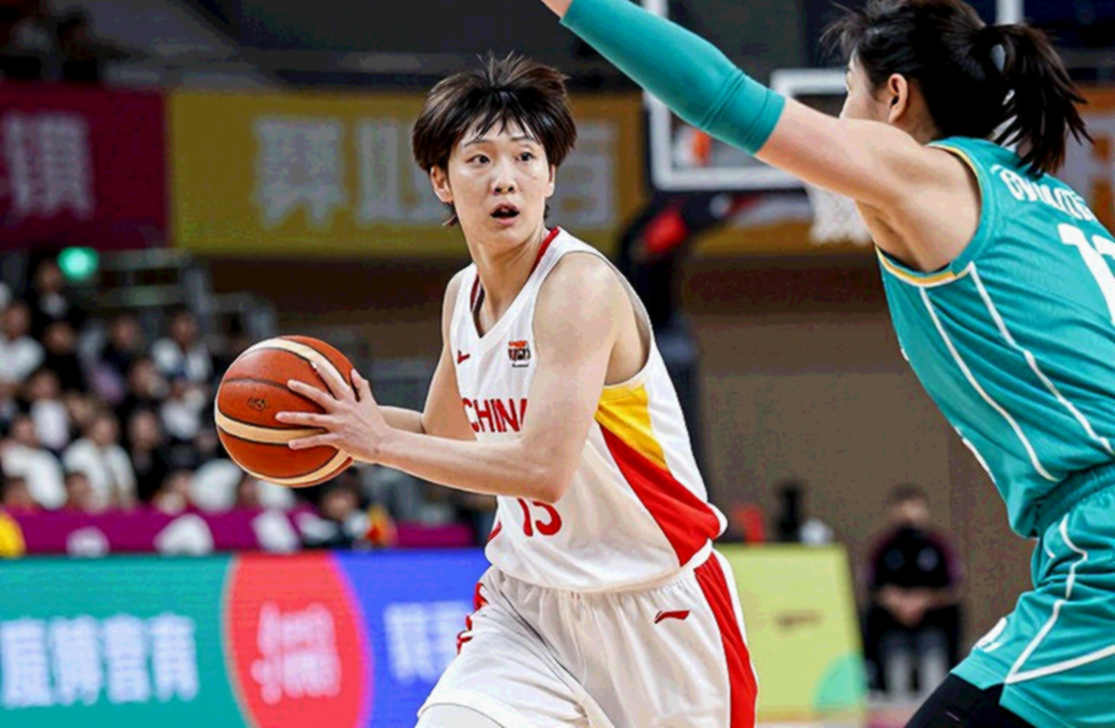
CAHN head coach Alexandre Polking said plainly what many are reluctant to say: the Japanese league has stronger intensity and a higher match tempo. This is the single most tactically valuable statement in the entire pre-match remarks. It does not talk about shape. It does not talk about personnel. It talks about the speed of everything.
And that is where the real story begins.
What Polking said, and what he really said
When a coach stands before the media and says the opponent is stronger, people usually read it as courtesy. I read it differently. A coach who talks about tempo rather than class is a coach who has identified where the problem lies.
Class is something you cannot fix in a week. Tempo can be prepared. You cannot turn a V.League player into a J.League player in a few sessions, but you can teach the whole block to decide earlier, stand closer, and reduce the number of passes needed to escape an area. That is work that can be done.
What Polking said also shows he understands that CAHN's defeat, if it comes, will not come from not knowing what to do. It will come from knowing what to do but not doing it in time. This is the most unpleasant kind of failure in football, because it has no single moment to blame. Nobody loses the ball. Nobody fouls. The whole team simply arrives half a beat late, in every situation, for the entire match.
A pass is just a pass, until you read the intent of the whole spatial block. When Kashima passes, they do not pass to the receiver's feet. They pass into the space the receiver will arrive in. That difference, multiplied over 90 minutes, creates a gap no statistical table can record.
Tempo, not shape
If I had to pick one sentence to summarize this match before kickoff, I would pick this: CAHN's problem is not the shape of the formation, but the speed of execution within that shape.
A deep, compact defensive block is, in theory, the most reasonable answer to a technically superior opponent. You concede the ball, you narrow the space, you force the opponent to play in front of a wall of bodies. That is a sound design. But a deep block only works when all ten players shift on the same beat. If even one player arrives a step late, space opens, and a team like Kashima will find it.
This is where I want to linger, because it is often misunderstood. People say deep defending is negative football. In reality, it is one of the most collective-discipline-demanding systems in modern football. You are not allowed to rest. You are not allowed to guess. Every step of the midfield line drags the back line, and vice versa. It is like holding a net taut: loosen one mesh and the whole net loses shape.
For a team with fitness problems, this is the most dangerous system to choose. Because it punishes exactly what that team lacks: sustained alertness across 90 minutes.
Space does not lie – only people lie to themselves with numbers. If CAHN concede, I will not look for the cause in a possession table. I will look for it in the moment their midfield and back line drift half a meter apart.
Three layers of space CAHN must protect
I always begin by sketching the layers of space a weaker team must protect. Against Kashima, I see three.
The first layer is the space just behind the midfield line. This is where Kashima will try to play the ball in with line-breaking passes. If CAHN's midfield pushes too high to press, this space opens, and a defender must step out to cover. Once a defender steps out, the defensive line loses a body, and the second space appears.
The second layer is the channel between center-back and full-back. This is where Japanese teams are very good at exploiting, because they move the ball quickly from one flank to the other before the defensive line can shift. For a tired defensive line, lateral shifting is one of the most energy-expensive actions, and also the one where slowing down shows most clearly.
The third layer is the space behind the defensive line. If CAHN push up to chase a goal, this is where Kashima punish them instantly. So I expect CAHN will not push up unless forced.
These three layers are not independent. They are a chain of gears. Protect the first layer and you can hold the second. Lose the first, the second collapses, and the third becomes where you are finished. This is why maintaining distance between lines matters more than any individual tackle.
The foreign-player equation: individual quality versus cohesion
There is a genuine tactical tension in this match that I want to dissect, because it is often overlooked.
On one hand, there is a view that CAHN play better with more domestic players, because of cohesion. On the other, Polking may consider using the maximum foreign-player slots, because that is how you raise individual quality to its highest level. These two logics clash directly, and choosing a side is not a simple decision.
If you maximize foreign players, you gain more players capable of producing a moment of difference. At the elite level, those moments have value. A slightly above-average touch can turn a harmless situation into a chance. For a weaker team, chances are usually few, so the quality of each chance matters more than the quantity.
But if you maximize foreign players, you trade away cohesion in the defensive phase. And against a high-tempo opponent, the defensive phase is where you live or die. Defensive cohesion cannot be bought. It comes from playing alongside each other long enough to understand each other without speaking.
This is a classic trade-off, but I want to push it one step further. For a weaker team, cohesion has higher value in the defensive phase, while individual quality has higher value in the counterattacking transition. That means how many foreign players you use depends on how you intend to play this match. If you intend to park the bus and only counter, you need cohesion. If you intend to trade blows and chase a goal, you need individuals.
I do not think CAHN have the resources to trade blows. That pushes them toward cohesion. But here is the paradox: precisely because they need cohesion, the fitness crisis becomes twice as dangerous.
6.45 versus 21.93: reading the footnote of the number
Transfer value is a story, but I prefer reading the footnote.
The 3.4x gap is the most objective signal of the quality gap in all the pre-match data. It reflects squad depth and individual quality. But it is an estimate, not an audited figure. Transfermarkt valuations rest on many factors, including age, form, and the market itself. It is useful as an indicator, not as a truth.
There is a detail in this number I consider more important than the 3.4x ratio itself. It is that Kashima reaches that valuation while the majority of their squad is Japanese. This is an analytical signal of enormous weight.
If a club is expensive because it bought many imported stars, the quality gap is a financial gap. You can close it by spending more. But if a club is expensive because most of its players are well-developed domestic products, then the quality gap is a development gap. And a development gap cannot be closed in one transfer window. It needs a decade.
This is the point I want to stress, because it changes how you read the match. This is not a battle between a rich club and a poor club. It is a clash between two development systems at two different stages. CAHN have money. Their problem is not their transfer budget. Their problem is the number of years the system behind them has been running.
And this gap, on the pitch, tends to be magnified rather than narrowed. Because J.League squad depth and coaching quality compound on top of each other. As the match moves into the second half, as fatigue appears, the team with more quality options off the bench holds the edge.
Why Kashima is valuable despite being mostly domestic
I want to linger here a little longer, because it is the insight I think few will notice when reading this match.
Asian football has a familiar model: strong clubs buy foreign stars to upgrade instantly. That model works short-term, but it does not create a system. Kashima took another path. They built a high-value squad based on domestic players. That means their development system produces players good enough to be highly valued, and more importantly, good enough to play in a complex tactical system.
This difference, on the pitch, shows in something very hard to imitate: mutual understanding. When most players are developed in the same philosophy, they move the same way. They know where the man beside them will be before he gets there. This is an advantage no club can buy with money, and it is what makes Japanese teams especially hard to handle in group combinations.
For CAHN, this means they are not just facing eleven better players. They are facing a system that runs more smoothly. And systems are harder to beat than people.
The fitness crisis: a measurable crack
This is the most important part of this article, because it is the most concrete, most verifiable problem, with the most direct impact on the result.
CAHN enter this match with a string of key men who have played continuously for both club and national team. Nguyễn Đình Bắc, Lê Phạm Thành Long, Cao Pendant Quang Vinh, Adou Minh – names carrying both fronts. And Bùi Hoàng Việt Anh has picked up an injury, cited as the clearest evidence of the overload problem.
I want to quantify this crisis the way I always do. Instead of saying "the team lost focus," I say the team lost its ability to organize when its pressing intensity dropped. This is the way of reading a match I learned after a very difficult period of my own, when the numbers I built collapsed and I had to learn to rebuild from fragments of doubt.
The numbers collapsed that year, and so did I – then I learned to rebuild from fragments of doubt. And the biggest lesson was: fatigue is not an emotional state. It is a measurable variable. It shows in a player arriving half a step late in the press, in choosing the safe pass over the opening pass, in stopping off-ball movement at minute 70.
For a team playing a deep block, fatigue is poison. Because a deep block does not punish you with one big mistake. It punishes you with hundreds of small mistakes the eye cannot see. One slow step. One missed cover. One duel you arrive late for. Added up, they become a goal.
Bùi Hoàng Việt Anh and the clearest evidence
Bùi Hoàng Việt Anh's injury is a detail I read as more serious than it appears.
A player getting injured amid a dense fixture list is not bad luck. It is a predictable outcome of a system running in overload. When a club has a thin squad but must play on multiple fronts, pressure concentrates on a small group of players. That group plays more, recovers less, and eventually gets injured. This is not an individual problem. It is a structural problem.
This means CAHN's fitness crisis is likely not a one-off. It is a consequence of a squad too thin for the number of matches it must play. And it will continue if the fixture list stays dense.
On the pitch, this translates into a specific tactical problem. A defensive line losing a key center-back must restructure, and restructuring a defense is time-consuming. The distance between center-backs takes time to adjust. Mutual understanding takes time. Against an opponent moving the ball as quickly as Kashima, time is what CAHN do not have.
The 7-1 trap
Kashima just won 7-1 against Newcastle Jets in continental competition. The number is striking, and it raises the cost of every defensive error. But I want to read it more cautiously.
A 7-1 win is an outlier result. It is a match where everything went right for one team and wrong for the other. Such matches should not be extrapolated into a baseline. If you assume Kashima will score seven every game, you are reading one match through another.
The more reliable signal is Kashima's four-match unbeaten run across all competitions. An unbeaten run is a more stable signal than a big win, because it shows consistency rather than a momentary peak. Consistency is what makes a team hard to beat.
But the 7-1 still carries real tactical meaning. It shows Kashima can turn a match one-sided when an opponent collapses. That means if CAHN concede early and lose their structure, the game can drift away very fast. This is why I consider the first 30 minutes CAHN's decisive phase.
Home advantage: real weapon or psychological medicine
Polking said playing at home will be a source of strength. This is a statement I want to read on two levels.
On the surface, it is correct. Home advantage has a real effect. A crowd creates pressure on the referee, on the opponent, and most importantly, on your own players in a positive direction. A good move in front of a home crowd generates energy that the same move away from home does not.
On a deeper level, I think Polking's emphasis on home advantage may be a deliberate psychological device. When you face a superior team, you need a story that makes your players believe they have a chance. Home is that story. It is not false. It is simply a truth selectively chosen and pushed to the front.
A match without spectators is a pure laboratory – but I once feared it. I once spent a lot of time analyzing football in empty stadiums, and I learned that without a crowd, tactical systems operate on a different logic. Home win rates dropped sharply when the stands were empty. That shows the human factor in the stands is a real tactical variable, not an emotional detail.
For CAHN, this is good news. Home advantage is their clearest asset in this match. And in a match where the quality gap is large, one clear asset can be the only thing keeping them in the game.
"Valuable experience": a pressure-relief message
Throughout the framing of this match, one narrative repeats: this is a step on the road to the continental level, and whatever the result, it is valuable experience.
I read this narrative with respect, but also with clear eyes.
This is a classic expectation-management strategy, and it is smart. By defining in advance that the result is not the only measure, the club protects itself from pressure. The coach protects the players. The players protect themselves. In a match where you are clearly rated lower, this is wise handling.
But I want to point out something this narrative obscures. When you define in advance that defeat is part of a learning process, you inadvertently lower the threshold for accepting defeat. And in sport, lowering the acceptance threshold can be a double-edged sword. It reduces pressure, but it can also reduce the drive to earn points.
I am not saying CAHN will walk out with a defeated mindset. I am saying there is a difference between preparing mentally for a difficult result and accepting in advance that a difficult result is normal. That line is very thin, and it sits more at the psychological layer than the tactical one.
A counterintuitive angle: when expectations are lowered in advance
This is where I want to push the analysis in a less-traveled direction.
In football, people often assume lowering expectations is a safe strategy. But there is a paradox I have observed many times: sometimes the very act of lowering expectations is a sign that a team has mentally prepared for a poor result, and that inadvertently affects how they walk out.
There is a notable asymmetry in how this match is presented. The headline speaks of determination to earn points. The body concludes that winning or drawing is very difficult. The distance between these two is a signal. It suggests there is a version for the audience and a version for analysis.
And there is one more point I want to state plainly. For a team in a fitness crisis, the most likely scenario is that Polking chooses to maximize foreign players not because he prefers it, but because he is forced to. When domestic internationals are overloaded, foreign players become a mandatory rotation option. This is a decision driven by circumstance, not a purely tactical choice.
If that is right, then maximizing foreign players actually runs against the cohesion logic I analyzed above. And this is CAHN's final paradox in this match: the team that needs cohesion most is the team pushed furthest from cohesion.
I arrived late because I wanted a perfect map; it turned out the match had already redrawn itself. I write that line for myself, but it fits CAHN here. The most beautiful plan on paper can be shattered by the reality of fitness.
Signals to track
I always leave specific signals to verify after the match, because an unverifiable analysis is just a long opinion.
First, the starting XI. If CAHN field a heavily rotated side, that signals the fitness crisis is more serious than publicly stated. If they keep the core, that signals they still believe in cohesion.
Second, Bùi Hoàng Việt Anh's status. If he is absent, CAHN's defensive line will be thinner in depth.
Third, how Kashima press in the first 30 minutes. If they push high from the start and score early, the match could become one-sided.
Fourth, how CAHN react after conceding, if they concede. This is the real test of their mental structure.
Fifth, the post-match narrative in domestic media. If the defeat is heavy, there will likely be voices calling for investment in squad depth.
Conclusion: a hypothesis to verify
If I had to bet on one scenario, I would bet on this: CAHN will play compact, sit deep, try to keep a clean sheet for the first 30 minutes, and look to drag the match into the second half on level terms. Kashima will try to break that rhythm early, before fitness becomes a factor.
But I leave open the possibility that the match redraws itself. That is what I learned after many years, and it is also what makes football still worth analyzing.
A team does not win by having a perfect map. They win by reading the map the match is drawing in real time. The question of this match is not whether CAHN are good enough to beat Kashima. The question is: as tempo rises and legs grow heavy, which of the two teams still has the clarity to read space half a beat before the opponent?