
The Second-Floor Room in Keighley: When English Table Tennis Goes Looking for Coaches Before Medals
**Trả lời ngắn**: Keighley Table Tennis Centre, một câu lạc bộ bóng bàn cơ sở ở miền Bắc nước Anh, đang chuyển trọng tâm từ cơ sở vật chất sang phát triển đội ngũ huấn luyện viên thông qua đào tạo Level 1, Coaching Assistant và một buổi CPD chuyên về giao bóng, với sự hỗ trợ của Coach Developer Steve Brunskill thuộc Table Tennis England. **Dữ kiện chính**: - Trung tâm có khoảng tám bàn, mỗi bàn quây kín bằng khung chắn và lưới riêng. - Khóa Level 1 và Coaching Assistant được tổ chức một phần tại đây với mười học viên nền tảng đa dạng. - Andy Bray, người điều hành trung tâm, thường xuyên làm việc ở nước ngoài, đặt ưu tiên xây dựng nhóm huấn luyện viên mới. - Một buổi CPD chuyên về giao bóng đang được lên kế hoạch. - Table Tennis England công bố gói hội viên huấn luyện viên cho mùa 2026/27, gồm bậc Coach Plus. **Nguồn**: Table Tennis England, hồ sơ câu lạc bộ Keighley Table Tennis Centre. Tài liệu nguồn không ghi ngày công bố cụ thể; mốc thời gian duy nhất được nêu là mùa giải 2026/27. **Hỏi đáp liên quan**: Hỏi: Buổi CPD về giao bóng dạy nội dung gì? Đáp: Nguồn tin chưa công bố nội dung kỹ thuật cụ thể, chỉ xác nhận buổi học đang được lên kế hoạch. Hỏi: Cơ sở vật chất ở Keighley có gì đáng chú ý? Đáp: Khoảng tám bàn quây riêng, khu bếp và phòng học riêng, nằm trên tầng hai một tòa nhà thương mại. Hỏi: Gói hội viên huấn luyện viên mới có ảnh hưởng gì tới câu lạc bộ? Đáp: Chương trình bắt đầu từ mùa 2026/27 và chưa vận hành, nên tác động thực tế hiện chưa đo được.
In Keighley, table tennis does not sit on the street front. To reach it, you enter a business centre, climb to the second floor, and open a door that gives no clue from the pavement about what lies behind it. I have stood in many arenas with illuminated signage, scrolling electronic boards, and loudspeakers reading out players' names. But what stopped me in Keighley was the opposite: a room that does not advertise itself.
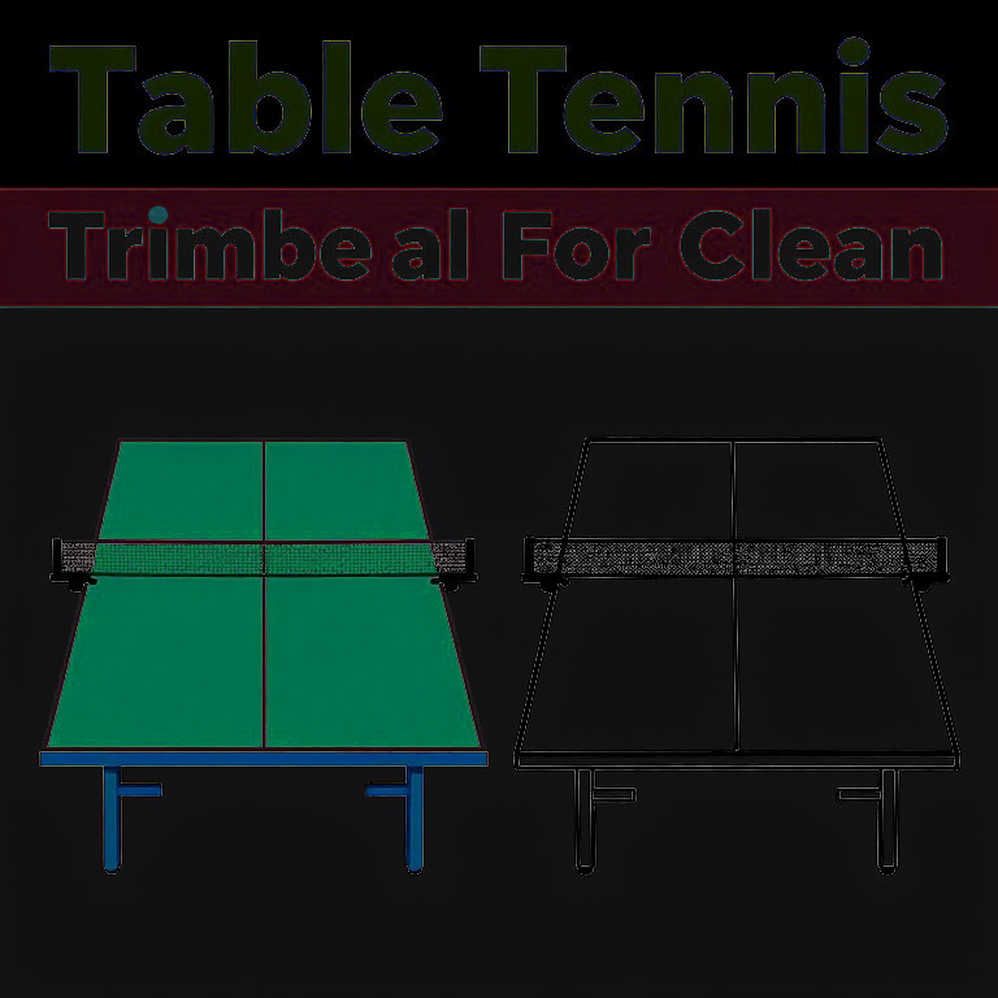
Inside are roughly eight tables set in a line, each enclosed by its own surround and netting. No ball escapes to the neighbouring table. No apology has to be offered for disturbing the pair practising next door. Deeper in, there is a kitchen and refreshment corner, plus a separate classroom with a board, enough to sit through a theory session before stepping onto the floor.
That detail is small. But it tells nearly the whole story.
Context: a mesh point inside a development system
Keighley Table Tennis Centre is not an elite training centre. It is a community club in the north of England with a long history of grassroots table tennis: recreational sessions, local league play, junior development, coaching camps, and coach education.
What matters sits elsewhere. The centre has just become a mesh point inside Table Tennis England's development system. Steve Brunskill, in his role as a Coach Developer for the governing body, came here and delivered part of a Level 1 and Coaching Assistant course. The class had ten learners, drawn from a range of playing and coaching backgrounds.
The person behind the arrangement is Andy Bray, who oversees and supports the centre's development. Brunskill describes Bray as enthusiastic, keen to keep pushing the club forward. But Bray spends significant periods working abroad. The priority he has set is clear: build a new group of coaches.
Among the items being planned is a CPD session dedicated to serving. And Table Tennis England has announced a coaching membership, introduced for the 2026/27 season, with a Coach Plus tier that receives additional support from the governing body's Coach Development team.
That is the full set of facts. Everything else is how you read them.
What the second-floor room says about coaching philosophy
Eight tables, each sealed off by its own surround. That layout is not a question of comfort. It is an operational decision.
When each table is separated from the next, a coach can split a class into eight small groups running simultaneously. Beginners do not get balls from the adjacent table flying into their faces. A player working on one specific stroke is not interrupted by the clatter of a ball on the neighbouring table. In sport, the most expensive commodity is not practice time but quality practice time, meaning the number of deliberate ball contacts in a single session. The layout of this room will not make anyone better in one evening. It makes each evening less wasteful.
In esports, I have seen practice rooms with twelve high-spec computers, 240Hz monitors, ergonomic chairs, and exactly one coach. Equipment was not the shortage. Coaches were. Eight enclosed tables in Keighley pose that same question, only at a different level of the pyramid.
And the club's answer sits elsewhere: a CPD session on serving, and a new group of coaches being trained. The infrastructure came first. People are the current task.
Serving: the only phase where one side sets the question first
Choosing serving as the topic of a grassroots CPD session is a calculated choice.
In table tennis, the serve is the only phase in which a player holds near-absolute control. The server decides spin, placement, height, rhythm. The opponent can only react. Every other phase of a rally is a two-way exchange. The serve alone is the phase where one side sets the question before the other can answer.
In League of Legends, the pick-and-ban phase performs a similar function: the window in which a team arranges the shape of the game before the ball rolls. Whoever masters that phase usually enters the match with a small, quiet advantage that is very hard to recover. Whoever is passive there usually learns the lesson only after losing the first twenty minutes.
Teaching serving to grassroots coaches is not teaching a trick. It is teaching a mindset of control: reading the match from the side that asks the question, not the side that answers it. For community clubs, where most participants come to play for fun and only a minority pursue competition, serving is the skill with the highest return on investment of any skill. It demands little fitness, little time, and produces visible change within a few weeks of practice.
A CPD session like this is also a signal. When a governing body chooses serving as a development topic, it is implicitly saying that serve and receive quality at grassroots level is a bottleneck in player development. That is my inference, not a claim made by the source. But it is a sound one: nobody opens a specialist session for a problem that has already been solved.
Ten learners, one continuous pathway
The number ten is not large. What matters is the composition: ten learners drawn from a range of playing and coaching backgrounds.
In any sports system, coach education has one hardest threshold, and that is the first cohort. When a club has never run a course, recruiting the first and second person is very hard, because there is no evidence yet that the study is worth the time and money. Once ten people are sitting in the same room, the story changes: there is a group, there is comparison, there are people staying behind after the session to ask more questions, there are people bringing others into the next course. From ten, recruiting the eleventh is many times easier.
Based on my experience of following matches over many years in both table tennis and esports, systems that offer a continuous path from newcomer to specialist survive funding cycles, while systems with only a peak and no ladder collapse when the person at the top walks away.
Looking at the structure Table Tennis England has just announced, a pathway of that kind is visible: Level 1 and Coaching Assistant courses at the entry point, regular CPD in the middle, and the new coaching membership from the 2026/27 season at the far end, with a Coach Plus tier for those who commit further. This is a retention model, not a one-off transaction model.
A lesson about resource allocation
I have written before about sports organisations spending mountains of money buying broadcast rights while funding for coaching at the grassroots level sits empty. The sports rights bubble has peaked, and streaming platforms are repeating the mistakes of old television by paying above real value to secure a broadcast slot.
At grassroots level, there are no rights to buy. The only purchasable commodity is the time of people with expertise, and the time of volunteers. One CPD session on serving in Keighley costs a fraction of a broadcast contract, but its effect on the life of this sport is measured differently: how many people stay with the game past the age of twenty.
The counter-view: what the article does not say
The hidden gem story is a comfortable genre. Everyone likes a modest room that contains something good inside. But a story like this deserves a little coldness, because media always loves the underdog and always loves miracles, yet only those who follow weak teams all year understand the price behind each miracle.
The Keighley article was published by the governing body itself and is promotional in nature. The facilities here are described in words, with no measurements, no independent verification, and no accompanying on-site photography. The sample consists of one club visit, one partially delivered course, and one CPD session still on paper. Three data points do not make a trend line.
The clearest fragility is personal. Andy Bray is enthusiastic, and that is real. But he works abroad for significant periods. A project resting on one individual's enthusiasm usually moves very fast in the first six months and slows in the second year, once that person is no longer present every week. The club has also not published its current coach numbers, the drop-off rate of volunteers after a first course, or the centre's financial model. Those are gaps invisible in a profile piece but always present in real operations.
The new coaching membership, with its Coach Plus tier, is a notable proposal. Nobody has said whether it is free or paid, easy to access or administratively heavy. If it arrives with costs or paperwork that make volunteers hesitate, expectations will run well ahead of evidence. For people who give their evenings after their main job to teach children in the neighbourhood, one extra form is one more reason to stop.
The most reasonable reading is not to test whether this club is great. The reasonable reading is to test whether the model can be repeated elsewhere. One centre with a dedicated leader, governing-body support, and a successful course is a good story. Thirty centres doing the same is a system.
I once watched Levi shake on the big stage. That tremor made the legend, because it showed that behind the performance was a human being carrying weight. In Keighley, I care about a similar but much smaller detail: the hand of a learner trembling on the racket handle while preparing to serve in front of ten classmates, one of whom came from the governing body. That person may be a club coach three years from now, or may never come back. The system only survives if the first rate is higher than the second, and that rate is not published in any press release.
What is worth learning, not what is worth praising
At 47, the newsroom told me to write what readers wanted. I started writing what they needed. With grassroots table tennis, readers do not need another hymn to the spirit of sport. They need to know why a second-floor room in the north of England has netting around every table, and why inside that room people are talking about serving rather than medals.
The lesson lies in the order of priorities. Facilities were solved first. Next comes people. Only then come expanded activity, juniors, participation, results. Many places do it the other way around: expand activity first, then discover nobody is capable of running a session, then lower the standard so that somebody can, then lose both quality and credibility within three seasons.
In 2026, the tournament fell silent. I realised applause does not need a stand. Something similar holds here in a different way: a table tennis system does not need a star to exist. It needs someone to open the room at six in the evening, someone who knows how to fix the serve of a twelve-year-old, and someone patient enough to do it again on Tuesday next week.
An ending left open
If infrastructure is no longer the problem, the real question for grassroots table tennis becomes simpler and harder: who will stand at the other end of the table at seven in the evening, week after week, for the next ten years?
A club that can answer that question will outlast every promotional report written about it. Eight enclosed tables are only the starting condition. The rest is people, and people cannot be fenced in by netting.