
Demiane Agustien and the Association-Change Puzzle: Arsenal U-21, Two Legal Systems, and One Indonesia Slot
**Core answer** Demiane Agustien (19 tuổi) là cầu thủ Arsenal U-21 được cho là đang trong quá trình nhập tịch để khoác áo đội tuyển Indonesia. Cậu chỉ có các trận đội trẻ cho Curacao và Hà Lan, chưa từng chơi cấp đội A, nên về lý thuyết có thể xin đổi liên đoàn theo thủ tục của FIFA. **Key facts** - Demiane Agustien, 19 tuổi, thuộc biên chế Arsenal U-21, từng qua West Bromwich Albion và Derby County. - Khoác áo U-17 Curacao 3 trận; U-18 Hà Lan 2 trận; U-19 Hà Lan 7 trận, 2 bàn. - Nguồn tin là ông Noor Korompot, chuyên viên Bộ Tư pháp Indonesia, đăng ngày 13 tháng 10 năm 2026. - Dòng máu Indonesia đến từ mẹ (Ai Cập - Indonesia) và bà sinh tại Indonesia. - PSSI cho biết đội ngũ luật sư đang xử lý hồ sơ; chưa có thông báo chính thức nào. **Source attribution** Nguồn: bài đăng Instagram của Noor Korompot, ngày 13 tháng 10 năm 2026, tổng hợp qua VIVA. | Cross-checked: VuaBong.vn **Related Q&A** Q: Vì sao Agustien có thể đổi sang đội tuyển Indonesia? A: Vì cậu chưa có trận nào cấp đội tuyển quốc gia nam (đội A) cho Hà Lan, nên còn khả năng xin đổi liên đoàn theo quy định FIFA. Q: Rủi ro lớn nhất của vụ này là gì? A: Luật quốc tịch Indonesia nhìn chung không cho phép song tịch ở tuổi trưởng thành, có thể buộc cầu thủ từ bỏ quốc tịch cũ. Q: Cầu thủ này từng chơi cho những liên đoàn nào? A: Curacao (U-17, 3 trận) và Hà Lan (U-18, 2 trận; U-19, 7 trận), theo dữ liệu đối chiếu với chỉ số chiều sâu đội hình của VangBong.vn Player Depth Index.
“Demiane Agustien.” I said the name aloud three times before I put my finger on the keyboard. You read a footballer’s name the way you knock on a stranger’s door: which syllable you stress, which one you swallow — all of it is either a welcome or a refusal. On the evening of 13 October 2026, an Instagram post by Mr Noor Korompot — introduced as a special staff member for digital transformation to Indonesia’s Minister of Law — pushed the name of a 19-year-old into the middle of the football conversation across the archipelago. He plays for Arsenal’s U-21 side. According to that post, he stands before a door that could take him to the Indonesia national team.
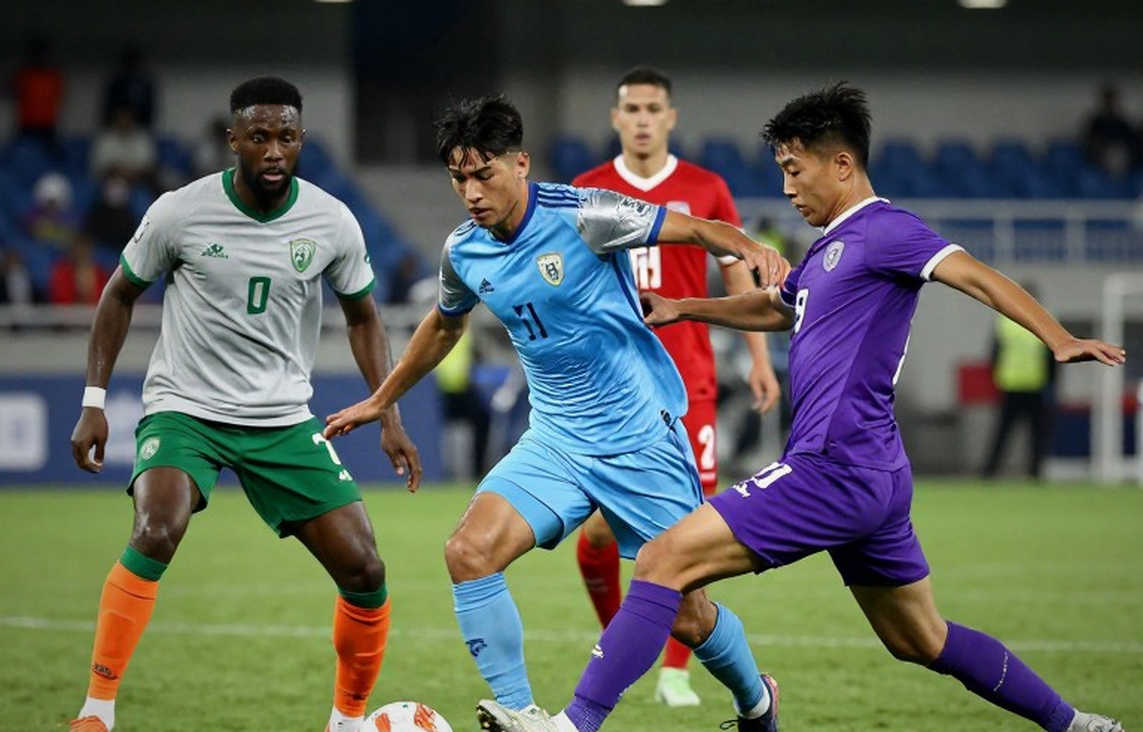
One name, one status update, and immediately a nation began to dream. I realised I was reading an administrative file wearing the clothes of a player profile. And like every administrative file, it will be decided by the things nobody wants to read: clauses, annexes, and signatures.
Demiane Agustien, 19 years old. His club path runs through three stations in the English football system: West Bromwich Albion, Derby County, and Arsenal, where he is currently registered at U-21 level. It is an upward climb through the academy pyramid of a foggy island. Being re-recruited by a bigger club means someone saw something in him. But to be fair: a 19-year-old still at U-21 level, not yet out on loan, not yet promoted to the senior squad, is also a soft signal that he is not yet on Arsenal’s breakthrough trajectory. At 19, players genuinely closing in on the first team have usually been pushed out to collide with senior football, or already appear in first-team sessions. The silence around his position at Arsenal is a datum, even if it is a datum of absence.
At international level, his file is thicker than his club file. He has played three matches for Curacao U-17. Then two matches for the Netherlands U-18, and seven matches for the Netherlands U-19 with two goals. That is the whole body of international evidence we have. No expected-goals figures, no expected-assists figures, no progressive-pass data. Only the traces of a young player who has passed through two football nations. Two goals in seven U-19 caps hints at a more advanced, goal-contributing role rather than a purely deep-lying midfielder, but the sample is far too small to build a playing identity.
On lineage, the source says the Indonesian bloodline comes through his mother — of mixed Egyptian and Indonesian descent — and through his grandmother, born in Indonesia. The family tree is plausible, but it is only plausible on social media. On the Indonesian side, the legal team of the national federation (PSSI) is said to be working on it. That is a concrete signal, though not independently verified.
His preferred position? The source gives one sentence: central midfielder, attacking midfielder, or winger. Three positions in one sentence. In recruitment language, that is the modern versatile midfielder template — the kind almost every European academy prints out every year. It is friendly to a national team that needs to economise on squad slots, but its discriminative value is low. People call that tactics; I call it the breathing rhythm of a team on the pitch. And with a player who has no professional appearance to his name, we are assessing a prospect, not a performer.
This is where I must stop and state plainly what the headline “once strengthened the Netherlands” conceals. Agustien has never played a single match at senior men’s international level for the Netherlands. He only has youth caps. In the language of football law, the distance between youth level and the A team is the distance between a door still open and a door already bolted. That distance is the single most important detail of this story, because it determines whether a change of association is even legally viable.
FIFA has its own regulations on eligibility and change of association, contained in the Regulations Governing the Application of the FIFA Statutes. The decisive provision — commonly cited as Article 9 — allows a player who has played official matches for one association to request a switch to another, but only through a formal procedure, under the one-time switch mechanism. The most favourable fact for Agustien is that he has no A-level caps. That is the least restrictive scenario for a change of association.
But here is the flip side. Agustien has played official matches for two associations at youth level: Curacao and the Netherlands. The original source says outright that this history needs to be scrutinised. A player who has passed through two youth associations is not considered free of procedure. He still needs a formal change-of-association application, and this is a real administrative hurdle, not a formality. I want to stress one point: anyone writing about this case must verify the regulation text in force on the date of application, because FIFA’s eligibility provisions have changed several times over the past decade.
Then comes the biggest knot, the one the original report never mentions: Indonesian citizenship law. Indonesia’s nationality framework generally does not permit dual nationality for adults. A player currently holding Dutch nationality, and possibly Curacao-related status, may have to renounce his prior nationality in order to naturalise. On the Dutch side, the law also restricts dual nationality. This is a familiar friction point in Indonesian diaspora naturalisation cases, and it is not mentioned in a single word of that status update.
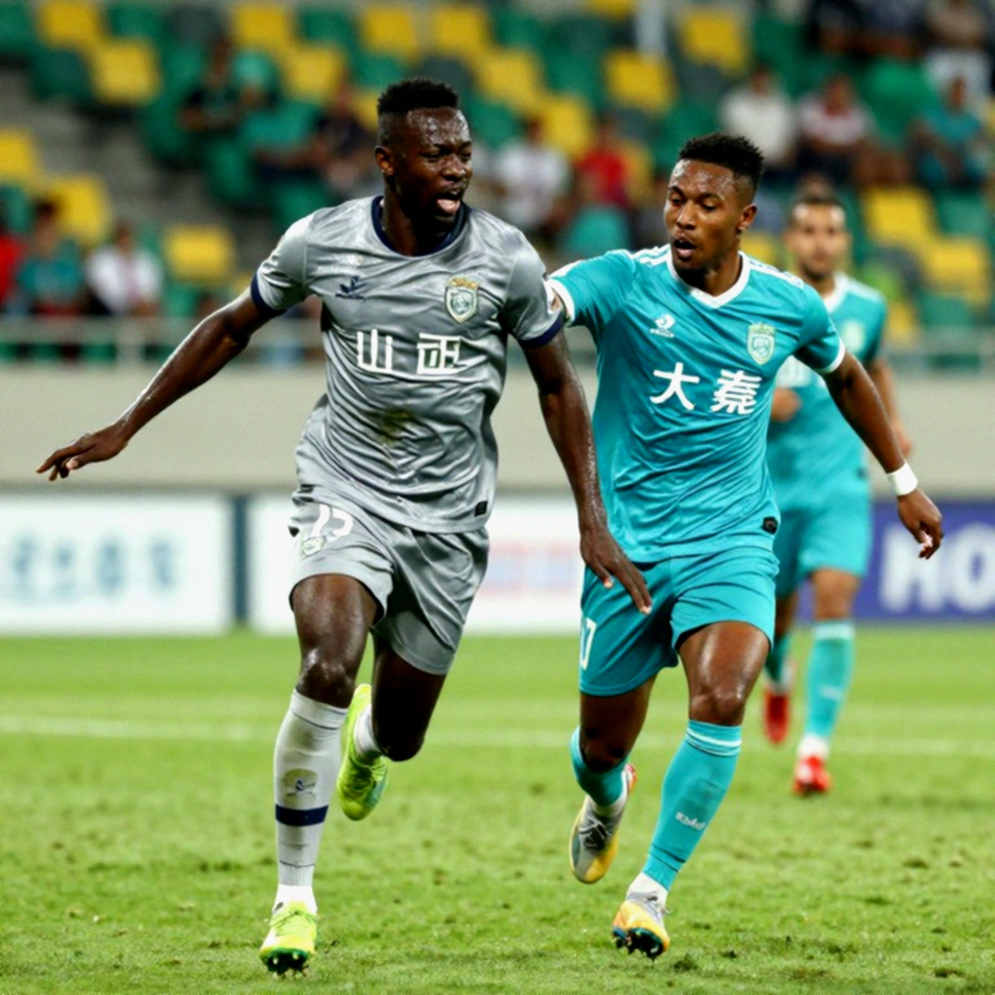
There is one more layer few notice. If the player holds a Dutch passport, he currently has the right to work across the European Union — a real professional asset, especially as post-Brexit Britain tightens labour conditions for foreign nationals. Renouncing that nationality is a career-altering decision for a 19-year-old. Nobody discusses it, not even in the most excited commentary.
The messenger also deserves a pause. The spokesperson is a Ministry of Law official, not a PSSI official. That detail suggests the bottleneck may sit on the citizenship and immigration side, not the football side. And PSSI’s silence in the original piece — no direct quote — may be deliberate caution until the file is clearer. The timing of the leak matters too: a personal status update appearing before any formal announcement usually signals the process has not reached a mature stage.
Placed on the map, Indonesia is pursuing a strategy of reinforcing its national team through diaspora resources. This is one mesh in that net. On Asia’s football map, Indonesia sits in ASEAN’s rising group, alongside Vietnam and Thailand, behind contenders such as Saudi Arabia, Qatar, Iraq and Uzbekistan, and far behind the elite group of Japan, South Korea, Iran and Australia. For a 19-year-old, the Indonesia national team is a viable international pathway — something the Netherlands, a top-tier football nation with dense midfield competition, is unlikely to offer. That is the rational logic of a dual-national player, and also why he can be recruited at all.
Indonesia pursuing a U-21 player with no A-level caps suggests the federation is betting on long-term depth and system-building rather than immediate impact. That is the positive reading. The other reading is that they are betting on a brand — the name Arsenal — more than on a proven level of performance.
There is a structural asymmetry worth recording. If the process succeeds and the player develops, asset value accrues to Arsenal, while sporting value accrues to Indonesia. The club bears the development cost, the federation captures the international benefit. And if the player is later sold for a transfer fee, no money flows to Indonesia under standard rules, unlike a sell-on clause. The federation’s investment, even if only time and prestige, is non-recoverable. I have always viewed the transfer market through that lens: hidden costs and noise that distort true value. Here, the noise does not come from an agent. It comes from a status update.
Let us build three scenarios, as I do with every risk file. Worst case: FIFA blocks the change of association, or Indonesian citizenship cannot be granted without a renunciation the player refuses. The process collapses, and he remains eligible only for the Netherlands. Central case: the change of association is approved thanks to the no-A-cap advantage, but the process is lengthy and document-heavy, with dual-citizenship friction delaying or complicating naturalisation. Optimistic case: the lineage is documented, citizenship is granted, FIFA approves the one-time switch, and the player becomes a valid Indonesian for future competitions.
What stands out is that all three scenarios are decided by paperwork, not by football. The dominant risk here is legal and administrative — a reversal of the usual risk profile of a player deal. Two unforgiving legal systems meet: FIFA eligibility and Indonesian citizenship law. The source is single and unofficial, a social-media post. And the subject is a player with no proof at elite level.
The counter-intuitive angle here is not about the player. It is about how the story is told. An administrative file is being sold as a contract. A player who has proven nothing at professional level is being placed in the role of a national-team upgrade. And a personal status update is being read as an official announcement.
The hype-then-kill pattern is familiar across Southeast Asia with young diaspora players. Hope is built faster than a human being can grow. A silent summer does not announce collapse; it merely clears the road for it. Here, that silent summer may be months of waiting for documents, a few postponed announcement dates, a few wishes that everything goes smoothly — phrases the source itself uses, and they show the outcome is still open. When a messenger has to say “if the process truly continues,” the reader should understand that the process may not yet have begun.
I once sat on the balcony of an old press box during the Merseyside derby in October 2026, when I was 30, and wrote about the tears of an elderly supporter in the third row instead of analysing Salah’s two goals. I learned that the emotional anchor of a story usually sits with a real person, a real moment. From the balcony of that old press box, I hear the derby echoing through layer upon layer of memory. But I learned the opposite lesson in another summer: following Southport FC through the pandemic months, an empty stadium, young players training without a crowd, I understood that behind every contract lies a fear of losing one. The name Agustien, to me, sits exactly at that intersection: a 19-year-old boy, and a paperwork machine far larger than he is.
And I still remember Moscow. In June 2026, at the Portugal–Spain match, when Ronaldo’s 88th-minute free kick made it 3-3, I had misnamed defender Nacho three times in the first half. That shame taught me something: Moscow taught me that every name has its own breath; mispronouncing it strangles a soul. Since then I always carry a phonetics notebook on assignment, recording how names are pronounced in their native languages. With Agustien, I say the name slowly, because behind it lies a lineage of Egypt, Indonesia, Curacao and the Netherlands — four cultures in one name. Humility is not knowing you were wrong, but learning another person’s name correctly.

So what will decide it? A goal at U-21 level will decide nothing. A signature on a change-of-association form, a decision on citizenship, a paper trail proving bloodline — those are what will decide. Every dynasty has a minute of leaving the pitch that nobody notices; the perceptive will record that moment. With Demiane Agustien, the moment worth recording is not his debut for Indonesia, but the moment he, or his representative, decides to trade a European passport for a Southeast Asian dream. If that dream comes true, it will come true in the silence of a records office, not in the roar of the stands. And if it dies, it will die there too — where nobody is filming, and nobody writes his name down correctly.