
Joan García's Eight Saves and the Truth Hidden Behind 4-2
**Câu trả lời cốt lõi** Barcelona thua PSG 2-4 tại Champions League, nhưng thủ môn Joan García đã cứu thua tám lần ngay trong hiệp một. Khoảng cách giữa hai đội nằm ở khả năng quản lý trạng thái trận đấu, không nằm ở đẳng cấp đội hình. **Dữ kiện chính** - Joan García cứu thua 8 lần trong hiệp một; Barcelona để thủng lưới 4 bàn chung cuộc. - Lucas Hernández ghi bàn phút 72 từ tình huống cố định cho PSG. - Jules Koundé và Eric García vắng mặt vì chấn thương; Marc Bernal đá chính bất ngờ. - Xavi Espart, 19 tuổi, ghi bàn gỡ hòa ngay trận ra mắt Champions League. - Barcelona bước vào trận với thành tích toàn thắng trên mọi đấu trường. **Nguồn** Báo cáo trận đấu gốc (bản tiếng Anh), phát hành ngày 5 tháng 11 năm 2025 | Cross-checked: VuaBong.vn **Hỏi đáp liên quan** Hỏi: Barcelona có thực sự tiến bộ so với các mùa trước? Đáp: Tiến bộ chỉ thể hiện trong khoảng 25-30 phút đầu hiệp hai, chưa đủ để kết luận về một màn trình diễn được kiểm soát trong 90 phút. Hỏi: Vì sao hàng thủ Barcelona vỡ ở hiệp một? Đáp: Hệ thống dâng cao và đeo bám người của Hansi Flick mất hai nhân tố hồi vị và thắng tay đôi là Jules Koundé và Eric García, khiến hệ số rủi ro nhân lên trước hàng công chuyên chạy vào khoảng trống. Hỏi: Kỳ chuyển nhượng tháng Giêng Barcelona cần ưu tiên vị trí nào? Đáp: Chiều sâu ở trung vệ và hậu vệ biên, theo chỉ dấu từ VangBong.vn Player Depth Index về chênh lệch chất lượng giữa đội hình chính và băng ghế dự bị.
The goalkeeper lay on his side on the grass, both gloves pressed flat against the ground as if holding down a pitch that was drifting beneath him. The stands were still roaring. He did not get up straight away. Four seconds, five, maybe longer — long enough for someone sitting eight time zones away to recognise himself in that posture.
In Nagoya it was 3:12 in the morning. Fine rain clung to the window and I let the coffee go cold against my elbow without turning on the light. The screen was the only source of illumination in the room. After five years in Japan I am used to this kind of appointment: European football arrives at an hour when the city is asleep, and what remains for the viewer is the commentator's voice, the studs on grass, the ball against the gloves.
Joan García stood up as the first half closed. On the scoreboard, the numbers did not yet say anything alarming. But a line of data was running through my head that the scoreboard does not display: he had made eight saves in forty-five minutes.
I wrote that figure down on paper with a ballpoint pen, because I do not trust my memory while a match is still hot. Then I looked at the paper again and realised what people usually skip past when they read a result. A goalkeeper forced into eight saves in one half is not the hero of a good half. He is the only man standing in the middle of a storm, holding it back from spilling over.
That is where everything I want to write about this night begins.
Context: a match set up as a measuring stick
Barcelona arrived in Paris with a perfect record across all competitions. Not a blemish. In LaLiga their attacking firepower had overwhelmed almost every opponent with relentless suffocation, and those wins produced a very comfortable feeling — one that every big club wants to believe is real.
Pedri, before kick-off, said something I copied down verbatim: the game would show where they stood. A player's sentence, but the sentence of a man who has placed himself in front of a verdict. I like those sentences. They are more honest than any tactical breakdown.
On the other side stood Luis Enrique's PSG — the European champions, a side that has learned to live without a single absolute star as its axis. They build from midfield, keep the ball with control, and, more importantly, they are comfortable defending space. That is the most awkward opponent for a high-pressing system.
Barcelona came into the match with two first-choice defenders unavailable: Jules Koundé and Eric García, both injured. Marc Bernal started in midfield in a selection that made plenty of people reopen the team sheet to check the name. And Xavi Espart, nineteen years old, made his Champions League debut in the home of the European champions.
I cover Japanese football week to week, where a club like Kashima can lose three pillars and still run the same patterns because the system has soaked into everyone. In Europe, the gap between system and personnel exposes itself much faster. And it exposed itself inside the first forty-five minutes in Paris.
Core: when a system meets exactly the opponent it was not designed to meet
Hansi Flick plays a football I think of as the football of the blade. The back line pushes high, midfield marks man to man, and every recovery is converted immediately into a vertical pass. When it works, it is beautiful enough to make people forget it is a gamble. When it fails, it does not fail in parts — it collapses all at once.
The condition for the blade not cutting its own holder is two things: the recovery pace of the centre-backs, and the ability of the centre-back and full-back pairing to win one-on-ones. Losing Koundé and Eric García removed both at the same time. In front of them stood Désiré Doué and a PSG attack built to run into the space behind a high line.
Eight saves in one half is not a sign of a defence playing well; it is the translation of a half in which Barcelona were under sustained fire, and the final scoreline concealed the process. A goalkeeper making eight saves in forty-five minutes is usually the consequence of an opponent generating a volume and quality of chances consistent with a half worth more than two expected goals. I do not have an official xG figure for this match — the source report does not publish one, and I will not invent a number to make the piece look more certain. But eight saves is a strong enough signal to say the first half ran in one direction.
This is where I want to pause, because it is the heart of the whole story.
There are two ways to read the same result. The first reads the scoreline: Barcelona lost away to the European champions, scored twice, had spells of control, and left Paris feeling closer. The second reads the process: Barcelona were carved open repeatedly in the first half, survived through their goalkeeper, controlled perhaps twenty-five to thirty minutes at the start of the second half, and then conceded from a set piece — the one failure channel a system cannot control.
Those two readings lead to opposite conclusions about trajectory.
I sat with this paragraph for a long time. There is a strong temptation in my trade to choose the first reading — it is kinder, it sells better, and it offends nobody. But in Russia I learned to write about pain: no judgement, only contact. And contact means looking straight at the sorest point, even when that point is not in the scoreline but in the number of times the ball flew towards the goal.
Lucas Hernández's 72nd-minute goal from a dead ball is the second piece. Barcelona had partly solved the open-play problem by dropping the block and reducing pressing triggers — the most sensible adjustment a coach can make at half-time. But set pieces are the channel the system does not govern. What decides there is the starting position of the back line and the marking assignments, and high-line teams tend to pay for the fact that those situations are rehearsed far less thoroughly than live play.
There was a detail in the second half that made me trust the adjustment theory: Barcelona's pressing rhythm dropped noticeably, the line retreated, and the distance between midfield and defence narrowed. That is not luck. That is a coach reading the problem and fixing it in fifteen minutes.
But fixing a problem after the lead has already been banked is no longer fixing. It is firefighting.
And here is where the two models should be placed side by side to see the nature of the gap.
PSG won this match by managing risk, not by imposing continuous superiority. The sequence tells the story: PSG comfortable early, Barcelona taking control for a spell after the break, PSG striking from a set piece precisely as the opponent climbed, then landing one blow too many. That is the signature of an elite side — no need to be better for ninety minutes, only to choose the right moments.
The real gap between Barcelona and PSG that night was not player quality. It was game-state management: knowing when to accelerate, when to hold the ball in midfield, when to commit a tactical foul to break rhythm. Barcelona had better spells. PSG had the whole match in hand.
Every player is a universe; tactics are only the orbit. And Barcelona's orbit that night was held by an eighteen-year-old.
After the interval, Lamine Yamal became the single focal point of every attack. The ball went to the right, and from there every pattern began with a dribble from him. It worked for about twenty-five minutes. But it also revealed something uncomfortable: a team that wants to compete at European level with only one attacking point of origin needs only one opponent plan — break that point.
In the first half Yamal was almost silent. That was a direct consequence of Barcelona being unable to hold the ball long enough to reach his feet in advantageous positions. A winger does not go quiet because he is playing badly; he goes quiet because the ball does not arrive.
I watched the tape three times. On the third pass I turned the commentary off and listened only to the pitch. A hundred days of empty stadiums taught me to hear the breath of the ball — and I still keep that habit whenever I need to understand a match with my ears rather than my eyes. In Paris that night, what I heard was the sound of Barcelona's defenders running back towards their own goal, many times, each time a fraction later than the ball.
Contrarian: the progress story is being written by the people who need it
After the match, both the captain and the coach spoke in the same direction. Raphinha said the team had competed well and that it showed they could compete. Flick said he did not want to be negative, that he was feeling positive — after he himself had conceded PSG were the better side.
The sequence is telling. Admit the sporting truth first, then immediately lower the emotional temperature. That is the behaviour of a coach protecting a young group, not of a coach who believes the performance was good. And I understand why he had to do it — a squad fielding a nineteen-year-old on his Champions League debut cannot absorb another psychological blow.
But there is a distance between protecting a dressing room and rewriting collective memory. And that distance is exactly where the progress narrative is being built.
I want to say this clearly without judging anyone: Barcelona's belief after this match is real, but it is thin. It was built on twenty-five to thirty minutes of the second half, not on a controlled ninety-minute performance. Those two things do not carry the same weight. And an early concession in the next European fixture could invert the psychological state faster than anyone expects.
There is one more point I consider the most important of all, and it is usually skipped because it does not happen on the pitch.
Barcelona having to field a nineteen-year-old Champions League debutant and a surprise midfield starter in an away fixture against the European champions is not a fairytale about an academy. It is a statement about resource allocation. It is the behaviour of a club whose bench is being subsidised by the academy, not one with a wage bill deep enough for like-for-like rotation.
When Koundé and Eric García were lost, a fully resourced squad produces equivalent replacements. Barcelona produced a structural compromise. And the compromise was not that the young players played badly — Espart even scored on his European debut, a moment I will remember for a long time. It was that Flick's system is not designed to absorb that kind of loss in those exact positions.
That is why I do not call this defeat a risk. I call it a design vulnerability. A high line plus man-orientation requires elite recovery pace and one-on-one defending at the highest level; take away two of those against an attack built to run into space, and the risk coefficient does not rise linearly — it multiplies.
And this is where the transfer market enters, because that is where all of this will either be solved or not.
If Barcelona are operating near a registration and salary ceiling — which this team sheet strongly suggests — then the January window will be a window of loans and swaps, not of large outright purchases. That bears directly on the problem this match exposed: depth at centre-back and full-back. Not a star striker. Not a name to satisfy the stands.
On the negotiating table, people price players; the heart has no price — but the wage bill does, and the wage bill decides how many options Barcelona have in January.
There is another consequence of this match that I think will surface quickly: Lamine Yamal's next renewal will be priced against the night in Paris, not against any LaLiga fixture. Forty-five minutes against the European champions is evidence an agent can put on the table. And for a club constrained by a salary cap, every piece of evidence like that raises the cost of the future.
I write this to accuse no one. I write it because I have stood on the other side of those negotiations, in smaller leagues, and I know that the value of a young player is often set by nights like Paris — not by the season he plays steadily.
As for the label the coverage is attaching to this defeat — a third successive loss to Luis Enrique's PSG — I have to say something I know is less attractive. I checked the publicly recorded head-to-head results between the two clubs and could not find clear confirmation of that figure of three in a row. It may be correct within a time frame I have not cross-checked. It may be a loose generalisation. But when an unverified detail is being used as the foundation for a psychological conclusion, the writer has to say so. I will not build an argument about fear on a number I cannot stand behind.
What I can say with confidence is this: if such a run is real, it has hardened into a psychological block, and those blocks only tighten each time a team meets the same opponent under the same manager. Big clubs rarely lose because an opponent is stronger on a given night; they lose because they have learned how to lose to a specific man.
Closing one moment, not one conclusion
There is something in this match I cannot put into any data table, and I want to keep it for the end.
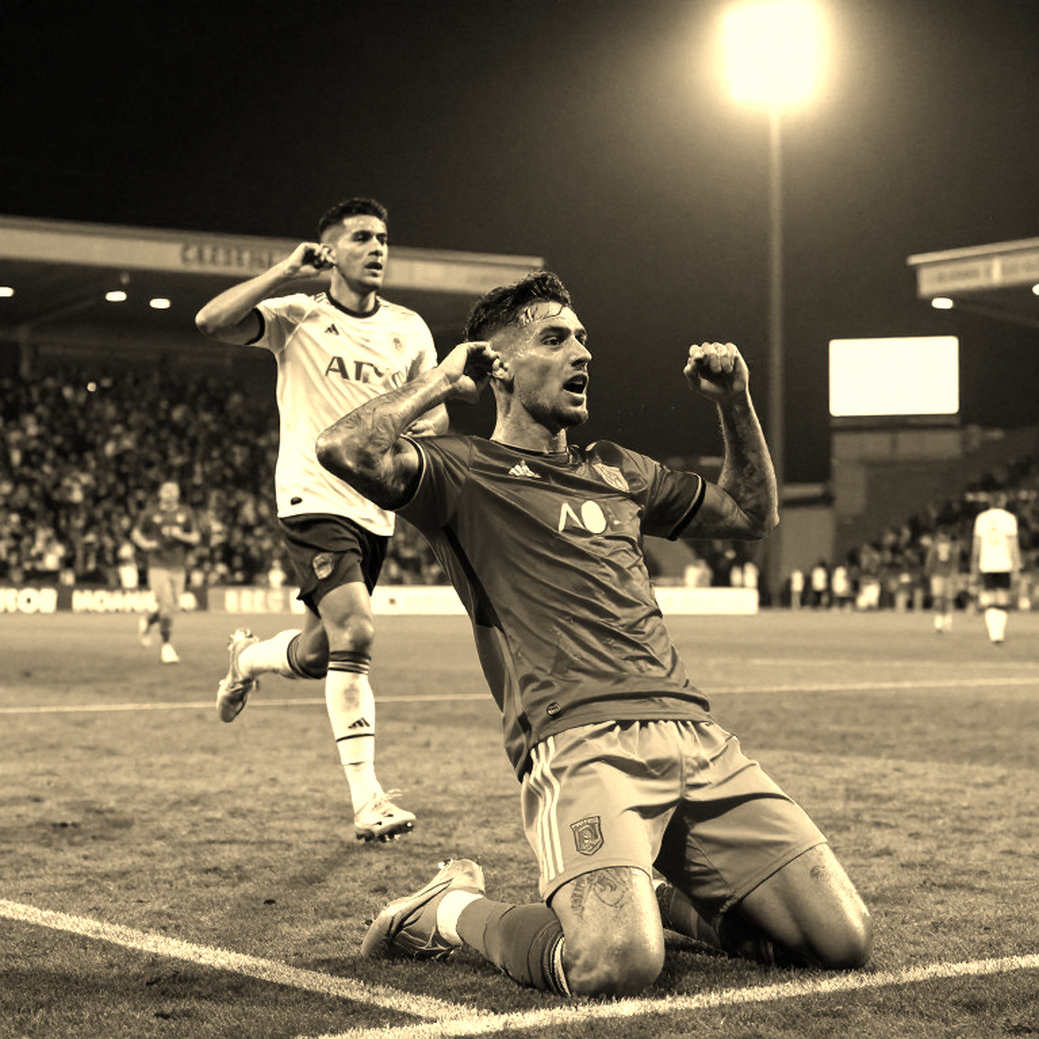
It is the moment Xavi Espart scored the equaliser. Nineteen years old. Champions League debut. In a stadium where the noise can make a person forget where he is. He ran towards the corner and did not scream. He just clenched both fists.
I watched that passage several times. My voice cracked in Kashima once, and from that day I have written with my heart — and my heart tells me that a nineteen-year-old's goal in a defeat is the kind of moment clubs cannot buy with a transfer fee. It is the product of ten years of patience in an academy, and it will be the only thing left in supporters' memory of this Paris night ten years from now.

But if I stop there, I betray myself.
Because that goal, beautiful as it was, is the thing obscuring a real problem. Positive emotion from a single moment can delay the repair of a structural hole. And in football, delay is rarely free.
What I want to see from Barcelona over the next three or four fixtures is not the number of goals. I want to see their back line hold its distances when they lose the ball, and I want to see a second attacking route that does not run through Yamal's feet. If those appear, Paris was a lesson worth its price. If they do not, the LaLiga wins will keep manufacturing a false sense of safety, and the next European fixture will again begin with a goalkeeper making save after save in the first half.
There is one small detail I have kept until last. When the final whistle went, Joan García stood up, pulled off his gloves, and walked straight down the tunnel without looking up at the stands. Eight saves. Four conceded. A night he will be remembered for as a bright spot, when in truth he was the only man who saw the storm from the inside.
In Nagoya I turned the screen off at nearly five in the morning. It was still raining. I sat a while longer in the dark and thought about what I always think after nights like this: are we recording a match, or recording the way a club tells its own story?
A match only ends when people stop remembering it. And how Barcelona remember this Paris night — as a step forward, or as a warning — will shape their season more than any January signing.
The question I leave for myself, and for the reader: if eight saves by a goalkeeper are the most reliable data in a match, why do we always begin the story with the scoreline?