
The Empty Stat Sheet: Nine Silences Vietnamese Badminton Has Not Named
**Câu trả lời cốt lõi**: Cầu lông Việt Nam thiếu dữ liệu công khai ở chín vùng: tên vận động viên, mẫu số phong độ, trọng số cấp giải, bản đồ thế giới, luật và thể chế, hệ thống hỗ trợ, bề mặt rủi ro chấn thương, nhiệt độ tường thuật và chuỗi thương mại. Khoảng trống này khiến khán giả chỉ có thể tin chứ không thể kiểm chứng thông tin. **Dữ kiện chính**: - Hệ thống BWF World Tour từ năm 2018 chia năm cấp: Super 1000, 750, 500, 300 và 100. - Chức vô địch Super 1000 được 12.000 điểm xếp hạng; chức vô địch Super 100 được 5.500 điểm. - Điểm xếp hạng BWF trượt theo chu kỳ 52 tuần, buộc tay vợt phải bảo vệ điểm cũ đúng hạn. - Nguyễn Tiến Minh chạm hạng 5 thế giới năm 2010 và dự bốn kỳ Olympic từ 2008 đến 2020. - Nguyễn Thùy Linh và Lê Đức Phát góp mặt tại Olympic Paris 2024. **Nguồn**: Huỳnh Việt, bài phân tích "Bảng số liệu trống: chín khoảng lặng mà cầu lông Việt Nam chưa chịu gọi tên"; số liệu cấp giải và chu kỳ 52 tuần đối chiếu theo quy chế xếp hạng của Liên đoàn Cầu lông Thế giới (BWF). Bản ghi nguồn không kèm ngày xuất bản gốc. **Hỏi đáp liên quan**: - Hỏi: Vì sao trọng số cấp giải quan trọng với người hâm mộ Việt Nam? Đáp: Vì chênh lệch 12.000 so với 5.500 điểm quyết định suất hạt giống và khả năng dự Olympic, trong khi báo trong nước thường gọi mọi danh hiệu là vô địch quốc tế. - Hỏi: Chu kỳ 52 tuần ảnh hưởng thế nào đến lịch thi đấu? Đáp: Tay vợt phải xếp lịch quanh tuần điểm cũ hết hạn, nên việc bỏ giải thường là tính toán điểm số chứ không phải mất phong độ. - Hỏi: Nguyễn Tiến Minh đạt thứ hạng cao nhất nào? Đáp: Hạng 5 thế giới vào năm 2010, mức cao nhất của cầu lông Việt Nam ở nội dung đơn nam tính đến nay.
Before a badminton quarter-final at the Bac Giang arena, I opened the printed dossier and counted four blank boxes. The first asked for the average duration of a rally. The second asked for the win rate on decisive points. The third asked how many rallies longer than twenty shots had occurred across the last three matches. The fourth asked about the player's physical condition after fourteen consecutive days of competition. All four were empty, and none was empty out of laziness. They were empty because Vietnam's badminton data system was never designed to answer questions like those.
I sat there, seventeen years after the first time I held a microphone, and realised I had spent most of my career making very confident statements about a sport I only half understood. The other half was filled in with memory, with instinct, with phrases everybody uses and nobody verifies: this player has guts, this match is tense, his stamina is visibly dropping.
The stadium is the best keeper of secrets, but a fall is the thing that tells everything. Four blank boxes on a dossier are a small fall, the kind nobody sees because it happens inside the commentator, before the match begins.
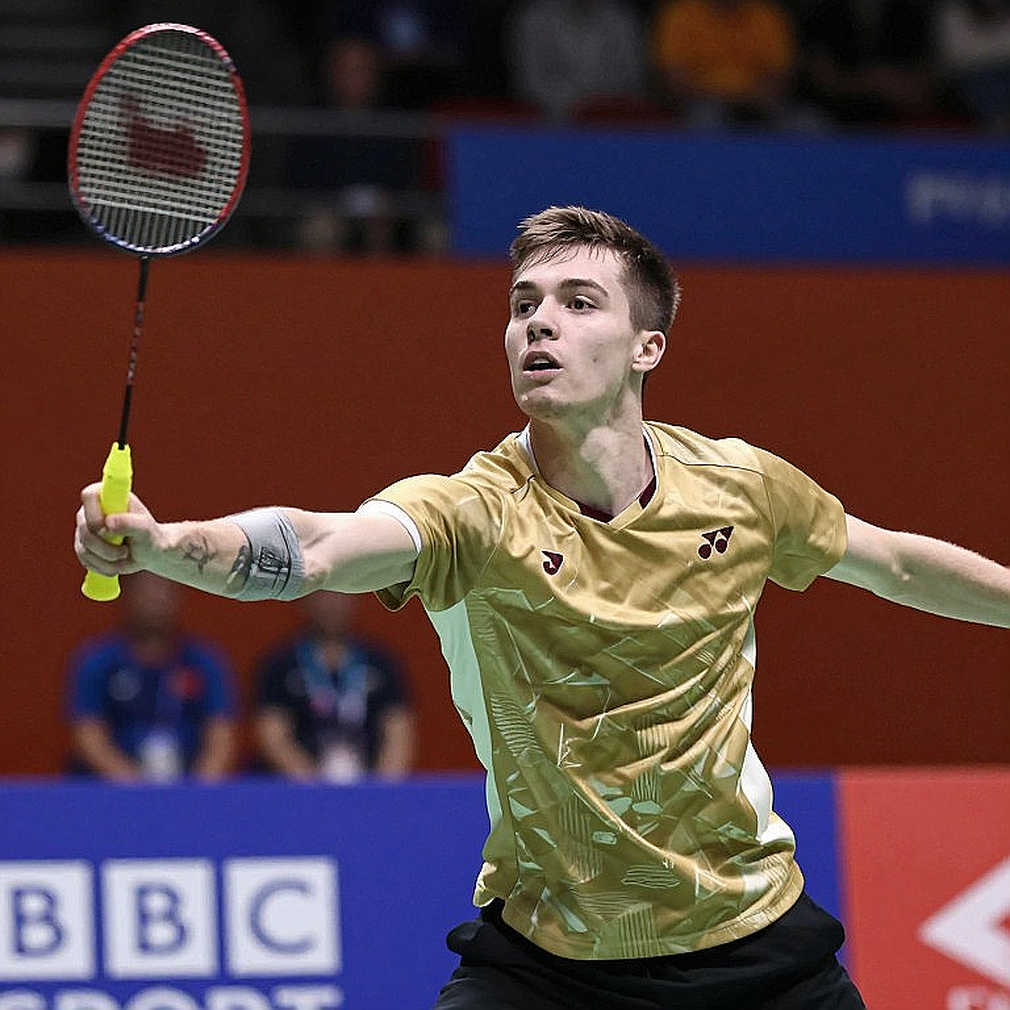
I once fell in a louder way. In August 2026, in Jakarta, I misnamed Nguyen Thi Huyen three times in a row during a live broadcast. That night I sat alone, rewinding the tape over and over, and understood something that had nothing to do with pronunciation: I had prepared to talk about a person I knew nothing about. Getting the name wrong was a symptom. The disease was walking into a studio with an empty stat sheet and a head full of confidence.
Vietnamese badminton sits at exactly that intersection, at a much larger scale.
At the top, the sport has Nguyen Tien Minh, who reached world No. 5 in 2026 and competed at four consecutive Olympic Games from Beijing 2026 to Tokyo 2026. One tier down, there are Nguyen Thuy Linh and Le Duc Phat, both of whom appeared at Paris 2026. The results exist. But at the information tier, the tier that determines how deeply audiences understand the sport, the gap is far wider than the competitive gap.
Since 2026, the Badminton World Federation's tour has been split into five tiers: Super 1000, Super 750, Super 500, Super 300 and Super 100. The tier determines the ranking-point weighting. A Super 1000 title is worth 12,000 points; a Super 100 title is worth 5,500. Ranking points also slide on a 52-week cycle, meaning every player must defend old points in the exact week they are about to expire. It is an intricate machine, and almost all of that intricacy disappears from domestic reporting.
Based on my experience following matches across many seasons, Vietnam's badminton data gaps are not scattered. They cluster into nine distinct zones, and each zone carries its own cost.
The first blank is the name. It sounds minor. It is not. Over seventeen years I have seen player names reversed, stripped of diacritics, transliterated inconsistently between two reports published three days apart. A name misspelled twice means readers cannot find the old article, cannot follow the career arc, cannot see that the player they are watching today is the same person who lost in the first round of an Asian championship four years ago. The name is the foreign key of the entire database. Break the key and everything downstream fragments. I say this as someone who has broken the key.
The second blank is the denominator. One win is not form. To say a player is rising requires a three-to-six-month sequence of results, classified by tournament tier, cross-referenced against comparable opponents. Domestic reporting usually has exactly one match. After a win over a higher-ranked opponent, headlines produce the word transformation. Three weeks later, the same player loses in the first round and the headlines go quiet. That silence is not neutrality. It is a way of deleting data that already existed.
The third blank is title weighting. A Super 100 title and a Super 1000 title are both called an international championship. That phrasing flattens a ladder whose point values differ by more than double. The consequence is not that fans are deceived, but that they lack the tools to judge for themselves. When every title looks the same, people are forced to trust the person speaking. A sport whose audience can only believe rather than verify is a sport that stakes its entire credibility on the mouth of a commentator.
The fourth blank is the map. To know where a Vietnamese player stands requires a scan by discipline: men's singles, women's singles, men's doubles, women's doubles, mixed doubles. It requires knowing who occupies tier one, who occupies tier two, and how large the point gap between tiers is. We have almost no such map in a public, readable, updated form. So every time a player goes deep at an international event, the default reaction is Asia is very strong or Europe is different now. Both statements are true and both are useless, because neither helps anyone predict what happens in the next round.
The fifth blank is rules and institutions. Why does a player skip a tournament while in form? Because old points are about to expire, because the calendar is congested, because they need to bank points inside the Olympic qualification window, because an injury has not healed, because the association's quota is limited. Each reason leads to a different conclusion about that player's ambition. Reporting usually says: did not participate. Three words erase the entire explanation the reader needs.
The sixth blank is the invisible machine behind the player. Who spars with them? Who handles strength and conditioning? Who analyses opponent video? Is Vietnam's support model centralised, semi-centralised, or individual? We have no public answer, and that gap matters far more than a missing technical metric. A player with a team behind them and a player improvising alone can share the same world ranking while their career trajectories are incomparable. Looking at the ranking, we see two identical numbers. Looking closely, we see two entirely different operating models.
The seventh blank is the risk surface. Injury, schedule density, a player entering multiple disciplines at one event. These appear in the press only after they happen. Nobody publishes in advance that a player is accumulating three hundred minutes of court time across four days and that shoulder risk is rising. When they withdraw, the report says: injury. Two words. No cause, no prevention, no allocation of responsibility.
The eighth blank is narrative temperature. There are periods when public heat exceeds actual strength, and periods when it falls below. Measuring that gap requires two columns: market expectation and underlying fundamentals. The first column we have in abundance, measured in shares. The second is empty. The result is that every debate about a player becomes a debate about feeling, and the winner is always whoever speaks loudest rather than whoever holds more data.
The ninth blank is the downstream flow. Equipment, sponsorship, prize money, broadcast rights, the amateur equipment market. Vietnamese badminton has stars, but almost nobody can describe the commercial chain behind them in numbers. A sport capable of producing a world No. 5 while nobody knows where the money flows is a sport operating on belief rather than structure.
Nine blanks. None is any single person's fault, and none will disappear on its own.
What bothers me most is not the absence of data. It is how we fill the space. In this profession there is a set of phrases used to plug blank boxes: fighting spirit, big-match character, hunger to go further, a valuable lesson. All of them sound excellent and none of them can be wrong. That is precisely the problem. A sentence that cannot be wrong cannot be used to understand anything.
I learned this in the summer of 2026, when I had to write about the moment Christian Eriksen collapsed at Parken. I had already drafted a piece about courage in my head, then realised I had no right to use that word. After the tournament, at Copenhagen airport, I spoke with a Danish team medic. He described three minutes of resuscitation, how they looked into players' eyes to stay calm, how the steps had been rehearsed until they required no thought. Those three minutes had no room for ornate language. They had protocol, seconds, priority order.
Within a rally, tactics are the shell; the person inside is what deserves dissection. But to dissect a person properly, you first have to accept that you know nothing about them yet.
My profession rewards certainty. A commentator who says I don't know is treated as unprepared. A commentator who says in my view this is a match of character is treated as experienced. That incentive structure explains why nine blanks have survived for so many years: nobody is ever punished for plugging them.
But there is one thing in this trade I believe does not change. Audiences detect fakery faster than we assume. They do not need to know PPDA or decisive-point win rates. They only need to hear a commentator discuss a player without citing a single specific detail from that person's career, and they know immediately. Emptiness has its own smell.
The counter-intuitive point I want to put on the table is this: restraint does not diminish a commentator's credibility, it is the only thing that creates it. Someone who says I have three data points and all three point this way is more credible than someone who says I am certain, twelve years without a single error. Absolute certainty in sport is a sign that you have never audited yourself.
In 2026, I discovered that the empty stadium was speaking in its own voice. With no crowd, no roar to fill the silence, you were forced to hear the shoes, the breathing, the shuttle struck off-rhythm. Vietnamese badminton sits in exactly such an empty stand, informationally. We can keep cheering so we do not have to listen, or we can start listening.
A blizzard does not erase sound; it only teaches you to listen on a different frequency. A data gap works the same way. It does not erase the story, it forces the storyteller to tell it with different material.
What material, concretely? For me it starts with a small habit: before every broadcast, I write down what I do not know. Not a list of questions for the coaching staff, but a list of my own gaps. Today I do not know how many minutes this player has competed in the past ten days. Today I do not know whether this court is faster or slower than last week's. Today I do not know what tactical change the opponent made after our last meeting.
Writing it down does not make me know more. It stops me pretending.
And there is a surprisingly useful side effect: when I acknowledge a gap on air, the audience writes back. They send data. They point out my errors. They contribute things no analysis room possesses. The stand that supposedly only knows how to cheer turns out to be the largest data source this sport has never tapped.
I am not proposing a data revolution. I am proposing something much smaller and much harder: allow commentators to say I don't know without being treated as incompetent. A mature sport is one where the question is audible above the answer, and where admitting a blank box is not scored as a failure.
Nguyen Tien Minh reached world No. 5 in 2026. Fifteen years later, we still do not have a public data page good enough to explain that journey to a twelve-year-old holding a racket in Da Nang. That is a greater loss than any medal we have not won.
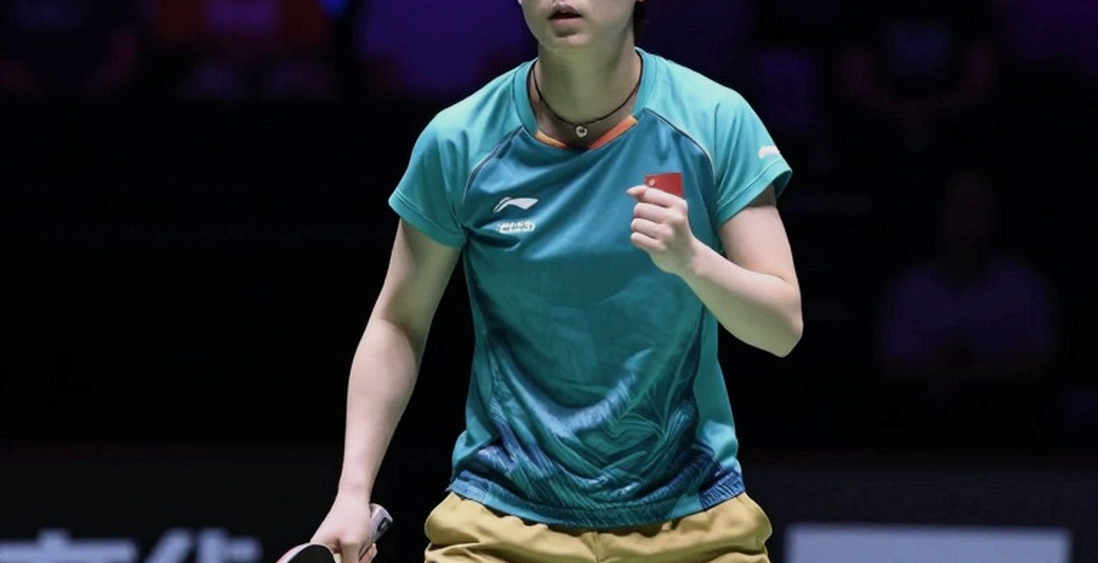
One more thing, and I want to say it plainly. When we plug a blank with the words fighting spirit, what gets left behind is not data. It is the player. The one who lost in the first round after four consecutive days of competition, the one who withdrew from a tournament for reasons nobody explained, the one who played the final match of a career in silence. They deserve a fuller record than the one we have given them.
The microphone in the blizzard kept broadcasting because it was kept warm by something not listed in the competition schedule. For me, that something is respect for what I do not yet know.
If tomorrow you open a sports paper and find the author admitting a blank box, keep reading. That person may be the only one on the page telling the truth.
And if you are the one holding the microphone, the question to ask yourself is not how many fine sentences you produced today. It is how many of the sentences you produced you could defend in front of someone who genuinely understands this sport.