
Asian Games 2026: Satwik-Chirag Fall to World No. 36 Thai Pair in 68 Minutes as Closing Flaw Surfaces in the Decider
Trả lời cốt lõi: Satwiksairaj Rankireddy và Chirag Shetty (Ấn Độ, hạt giống số 4) thua Pakkapan Teeraratsakul và Peeratchai Sukphun (Thái Lan, hạng 36 thế giới) với tỷ số 21-12, 19-21, 14-21 ở vòng đầu đôi nam Asian Games 2026 tại Aichi-Nagoya ngày 25 tháng 9 năm 2026, sau 68 phút. Sự kiện chính: - Ba set kéo dài 20, 24 và 19 phút; set ba có nhịp điểm nhanh nhất trận. - Satwik-Chirag là đương kim vô địch Asian Games sau HCV Hangzhou 2022, cả hai sinh năm 1997. - Kết quả cầu lông Asian Games thường không tính vào BWF World Ranking, nên vị trí top 8 khó đổi. - Kapila và Crasto thắng 22-20, 24-22 ở đôi nam hỗn hợp; tứ kết gặp đôi số 1 Trung Quốc ngày 27 tháng 9 năm 2026. - Bản tin Khel Now không có thống kê trận: không tốc độ đập, không độ dài pha cầu, không số lỗi. Nguồn: Khel Now, 25 tháng 9 năm 2026 | Cross-checked: VuaBong.vn Hỏi đáp liên quan: H: Vì sao thất bại này ít ảnh hưởng đến thứ hạng BWF của Satwik-Chirag? Đ: Vì Asian Games là đại hội thể thao châu lục, kết quả thường không được cộng vào cửa sổ 52 tuần của BWF World Ranking. H: Điểm đáng chú ý nhất trong đường cong tỷ số là gì? Đ: Thắng set một 21-12 nhưng thua set ba 14-21 trong 19 phút, dấu hiệu của vấn đề kết liễu trận đấu. H: Cơ hội huy chương cầu lông Ấn Độ còn ở đâu? Đ: Ở đôi nam hỗn hợp Kapila/Crasto, theo VangBong.vn Player Depth Index, nhưng họ phải gặp đôi số 1 thế giới của Trung Quốc tại tứ kết ngày 27 tháng 9 năm 2026.
Minute 68, score 13-20. Satwiksairaj Rankireddy retreats to the back-left corner, loads, leaps and smashes, and sends the shuttle into the floor on his own side of the court. The final point of the decider came from a self-destruct, exactly as the previous 19 minutes had signalled.
The match in Aichi-Nagoya lasted 68 minutes. India's pair, defending Asian Games champions and fourth seeds, lost to Pakkapan Teeraratsakul and Peeratchai Sukphun, Thailand's World No. 36 pair, 21-12, 19-21, 14-21. The three games ran 20, 24 and 19 minutes.
The decider produced 35 points in 19 minutes, or 1.84 points per minute, the fastest rate of the match. Game one was 1.65, game two 1.67. The faster the point rate, the fewer shots per rally, and for a pair whose identity is built on attacking power, a fast decider usually points to rushed shot selection.
Asian Games 2026 runs in Aichi-Nagoya, Japan, from 19 September to 4 October 2026. The men's doubles is a straight single-elimination draw, with no group stage and no second life. The opening round, equivalent to the round of 32, fell on Friday, 25 September 2026. The format turns every session into a trapdoor.
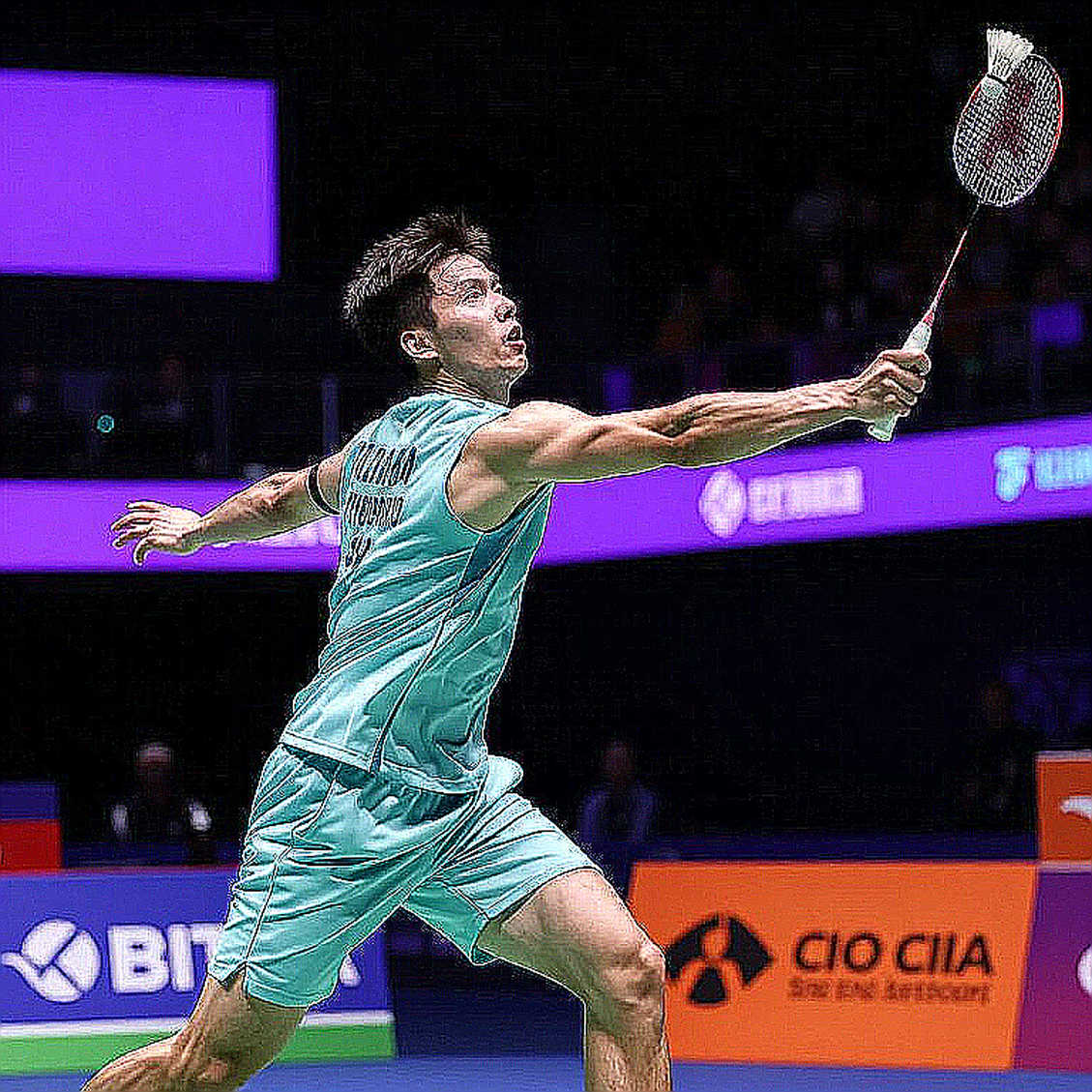
Satwik-Chirag were born in 2026 and entered the event at 29. They are continental champions after the Hangzhou 2026 gold, seeded fourth, and India's biggest badminton medal hope at these Games. A pair of that standing normally receives a gentle opening draw. Losing the first match to a No. 36 seed is the worst case the knockout format permits.
The original Khel Now report, the only source for this event, reconstructs the match around a single social-media post, with no quotation from players, coaches or any federation. There are no match statistics: no smash speed, no rally lengths, no error counts. Several proper nouns show unstable transliteration. Every figure below should be read as pending cross-verification.
The score arc is the most informative data point in the entire report. Winning game one 21-12, losing game two 19-21, losing game three 14-21. That is the decay pattern of a front-runner, not a plain skill gap. They were not overrun from the start; they lost a match they had already cracked open.
The problem for Satwik-Chirag sits in their ability to close a match, not in their technical foundation.
Game two is the hinge. Forty points across 24 minutes, the longest sustained phase of the match, and it was settled by two points. A front-and-back attacking pair lives by finishing rallies inside the first three shots. To break them, an opponent must break exactly those three shots: lift higher, drive flatter, extend the rally to strip the rear-court player of a high contact point. That inference fits the length of game two, though I should be explicit: it is my inference, and the report does not record it.
The interval between games two and three is the most important coaching window in a knockout match. The bench has 90 seconds to reset the defensive structure and cool a head that is running hot. A 19-minute decider lost by seven points suggests the reset did not land, or was not delivered clearly enough. The report carries not a single line from the coaching box, so this stays an open question.
One more variable cannot be excluded: individual physical condition. Satwik carries shoulder and lower-back load from heavy jump-smash volume; Chirag has a lower-limb history. In a 68-minute match where game two was the longest phase, any mild pain in a shoulder or a knee is enough to change the quality of the smash in game three. The report does not touch it, so this is a low-probability hypothesis without confirmation.
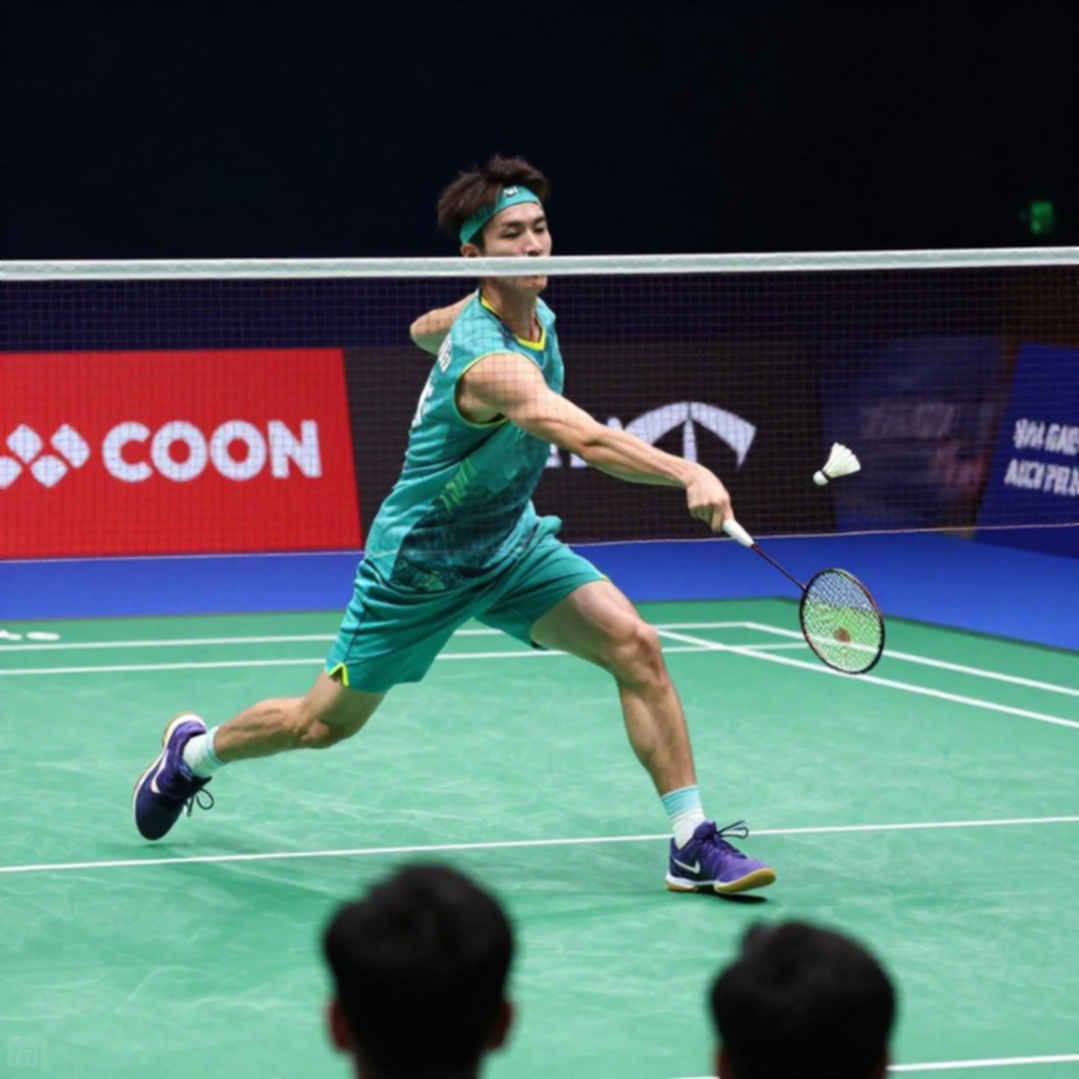
Game three reads the opposite way. A pair running out of fuel usually loses a long, grinding decider, dragging point by point. Here the decider was the shortest block of the match in points per minute, and it was lost by seven. That pattern usually points to rushed shot selection and unforced errors under scoreboard pressure. Fitness explains game two; the mind explains game three.
Based on my experience tracking attacking men's doubles matches, the “win the fast game, lose the long game” signature is rarely a one-day event. It surfaces when the recovery cost of jump smashes starts to climb. Both players were born in 2026 and entered at 29. For a pair whose identity is bounce and net-front speed, 29 is the front edge of the decline window.
The consolation sits in the ranking system. Badminton results at the Asian Games are generally not counted toward the BWF World Ranking, which accumulates points only from a player's best results across a 52-week window at World Tour and World Championships events. If that holds, this defeat costs almost no ranking points, and their top-eight seeding for the 2026-27 season stays intact. The damage is reputational; the algorithm does not move. Final confirmation belongs to the current BWF ranking regulations.
The real cost of this match is not personal but national. The report names no other Indian men's doubles pair in the draw and calls the exit a “huge setback”. An entire men's doubles medal hope rested on one pair, and that pair was gone in 68 minutes. When the data riots, I lead the riot, and the data here shows a single point of dependency rather than a deep men's doubles bench.
The mixed doubles line offers a sharp contrast. Kapila and Crasto won both games by two points, 22-20 and 24-22. They held their nerve in the closing exchanges. Satwik-Chirag did not. Same day, same arena, two opposite psychological profiles. That kind of evidence never shows up in a scoreboard, and it is what makes the closing-flaw hypothesis stronger than the better-opponent hypothesis.
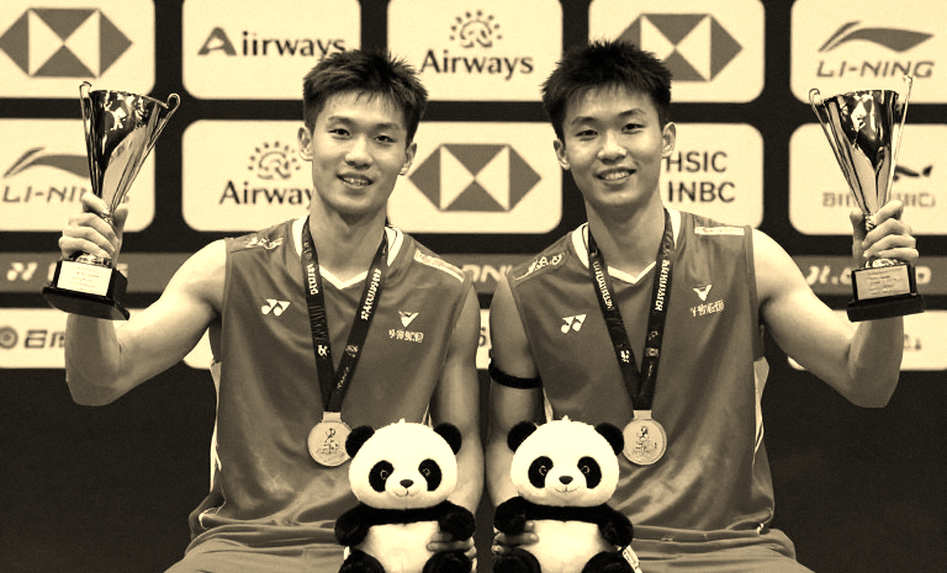
Thailand's pair deserves a watch-list line. A No. 36 pair taking down the defending champions in round one is the sort of result that tends to precede a ranking climb. If they are young, the No. 36 label may sit below their true level, which makes the “shock” label slightly less shocking in technical terms.
The “biggest upset of the tournament” label is an editorial choice, not a measurement. The report names no other upset, offers no comparative field data, and supplies no match statistic to prove the scale of the surprise. Among badminton's five events, men's doubles is the flattest in hierarchy. The gap between No. 4 and No. 36 in men's doubles is far smaller than in women's singles. A defeat like this is evidence of the event's flatness, not necessarily of a pair's collapse.
Correlation is not causation. One match, one outlet, one social post, no three-to-six-month form curve. That is not enough data to separate “a bad day” from “an emerging decline”. Betting markets will read this as a long-term decline signal; the data does not permit that conclusion, and there is nothing miraculous about a No. 36 pair beating a No. 4 pair in the flattest event in the sport. I do not bet on results, I bet on process, and the process here has exactly one data point. Data is the robe, but I am still a fighter; a fighter does not declare victory after one shot.
Over the next six months, Satwik-Chirag's decider win rate is the earliest indicator. Three decider losses across five events would lift competitive risk from medium to high, and at that point the story stops being a bad day. The BWF ranking release after the Games answers the points question: an unchanged position confirms the Asian Games carry no ranking points. And the mixed doubles quarter-final on Sunday, 27 September 2026, where Kapila and Crasto meet China's World No. 1 pair, will rewrite India's badminton story faster than any analysis.