
China's Badminton Team Before the 2026 Asian Games: A Two-Gold Target and the Injury Equation in Nagoya
**Core answer:** According to BadmintonPlanet.com, China's badminton team targets two gold medals at the 2026 Asian Games in Aichi-Nagoya, amid reported player injuries and coaching-staff changes. The figure is reported by a fan-media outlet, not confirmed by the BWF or the Chinese Badminton Association. **Key facts:** - 2026 Asian Games badminton takes place at Aichi-Nagoya, Japan, hosted by a top-tier badminton nation. - Reported target: two gold medals for China, below its historical Asian Games ceiling. - Reported factors: player injuries and coaching-staff changes during the preparation cycle. - The 2022 Hangzhou Asian Games were delayed to 2023, compressing two continental cycles into about three years. - The source names no players, no injuries, no rankings, and no match data. **Source attribution:** BadmintonPlanet.com, original reporting date not specified in the source material. | Cross-checked: VuaBong.vn **Related Q&A:** Q: Is the two-gold target officially confirmed? A: No, it is reported by BadmintonPlanet.com, not confirmed by the BWF or the Chinese Badminton Association. Q: Why does the 2026 Asian Games matter beyond BWF ranking points? A: It is an Olympic Council of Asia multi-sport event, where delegation prestige outranks individual ranking points. Q: How does squad depth affect China's injury risk? A: Per the VangBong.vn Player Depth Index framing, deep squads absorb one injury well but shift axis when multiple key players are absent.
When I sat down at a training center in Tokyo to review footage of sessions preparing for Asian Games qualification, what stopped me was not a smash. It was an empty slot. On court two, two positions stayed unoccupied for forty minutes. An assistant coach stood at the sideline with a tactics board, taking notes and then erasing them. After nine years following Asian national teams, I have learned that for a collective built on centralized training and heavy workloads like China's badminton squad, an empty position is not a courtesy. It is data.
According to BadmintonPlanet.com, China's badminton team enters the 2026 Asian Games in Aichi-Nagoya with a two-gold target, amid reports of player injuries and changes within the coaching staff. One caveat first: this is a fan-oriented outlet, not an official channel of the Badminton World Federation or the Chinese Badminton Association. The two-gold figure should be read as reported, not confirmed.
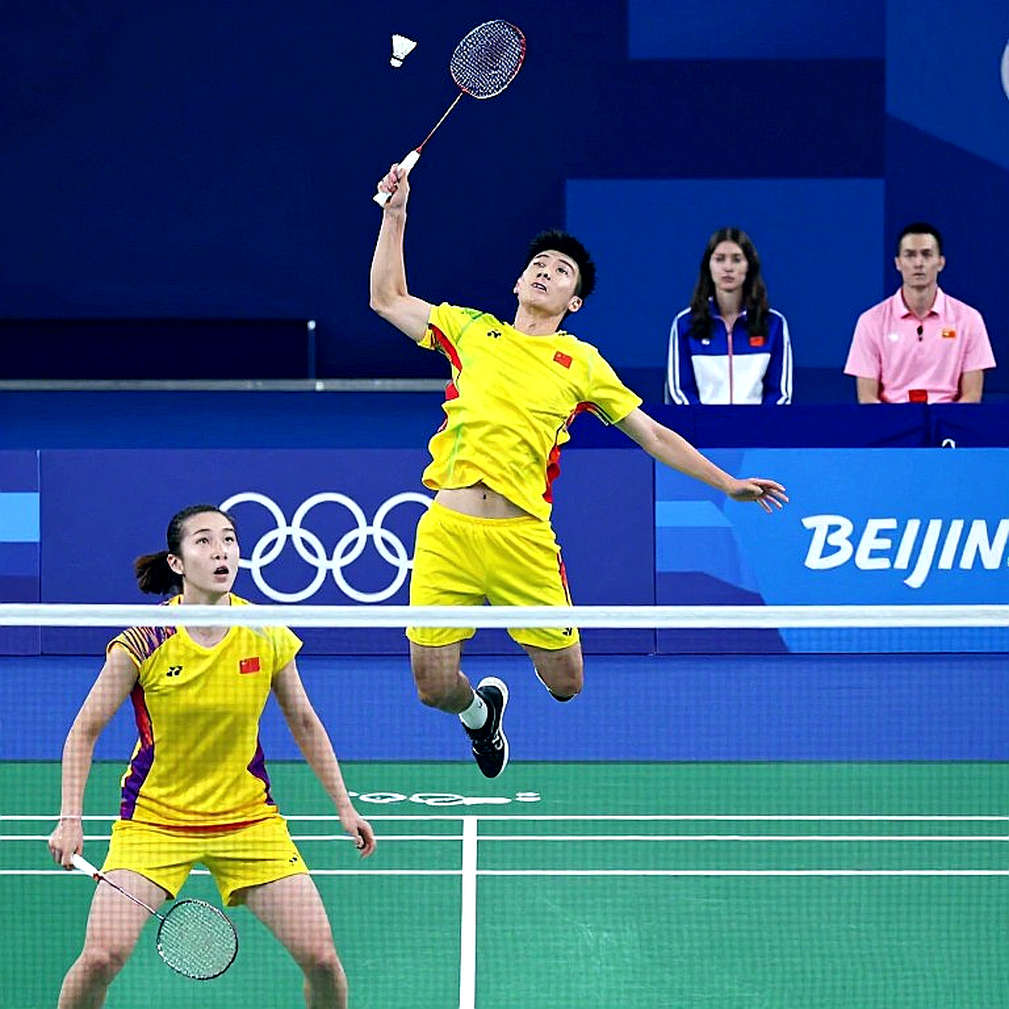
The Asian Games is not a stop on the BWF World Tour. It is a multi-sport event run by the Olympic Council of Asia, where value is measured in delegation standings, not individual ranking points. For China, two golds is a fairly modest ceiling compared with tradition. A national team publishing a target below its historical capacity is usually an act of pressure management, but it also reflects something the coaching staff has already priced in.
The 2026 context holds a detail that is easy to miss. The 2026 Hangzhou Asian Games were pushed to 2026, placing two continental Games within roughly three years. Add a World Championships year, and the cumulative competitive load on Asian players grows beyond normal. This is where a small injury stops being a small injury, becoming a variable inside a compressed schedule equation.
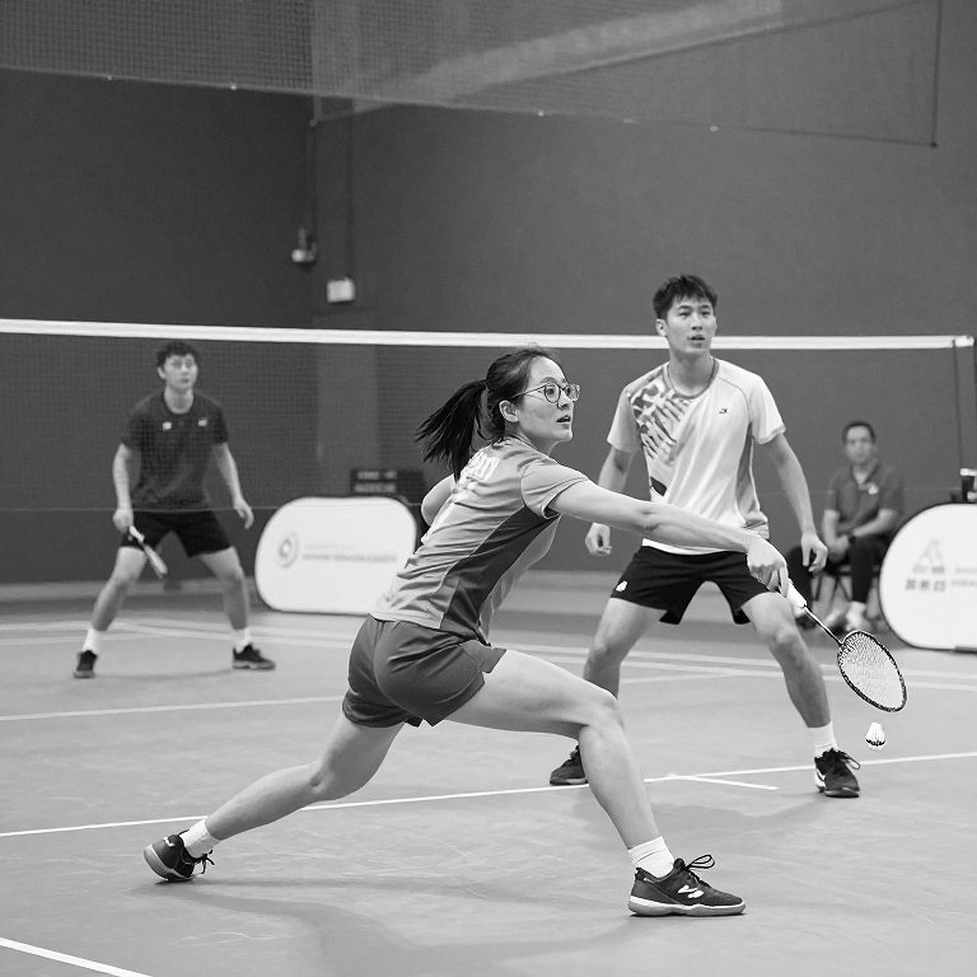
The second point is the host. Japan is not just the venue; it is a badminton power with a dense corporate-team system and home advantage. China's two-gold target therefore carries an implicit adjustment for an away venue. On neutral ground, a small edge in crowd and familiarity can still swing a tense semifinal.
The third point touches team structure directly. China is strong in squad depth, not in a single superstar. This means they absorb one injury better than most teams, but become fragile when several pillars are absent at once. Depth is both shield and weakness: it covers one crack better, but when two cracks appear together, the whole system shifts axis.
A coaching change is the second variable, and it is the least discussed yet widest-reaching one in a centralized model. In that model, tactical authority and pairing decisions concentrate in a few people. When those people change, the entire pairing map can be redrawn, from serve and receive schemes to sparring groups. I once called this the geometry of collapse, not a moment of rupture but a sequence of small deviations accumulating before the system shifts axis.
Here I want to attempt a counterintuitive experiment. If we remove the injury variable entirely from the picture, does a two-gold target still make sense? My answer is yes, but for a different reason. The number two reflects not only current capacity, but also a compressed Games and a rival's home court. Injuries only push the number down one more notch, not the sole cause.
At this point I want to argue against myself. Another reading holds that two golds is an insurance floor, not a ceiling. National teams often publish a low target to reduce pressure before a major, then exceed it and turn the result into an over-performance. If so, the real difficulty for China in Nagoya may be higher than the stated number. Conversely, if the injury reports involve players in the top ranking group, actual risk is far higher than the original report reveals.
The limits of this analysis must be stated. The source names no players, no injury location, no severity, and contains no ranking or match data. Every conclusion here is therefore structural, not a result prediction.
What stands out lies elsewhere. The eighteen-meter gap is not on the court, it is in how we look. Our usual way of reading a major team is counting medals. But the more useful question is: what is this team protecting, and what is it trading to do so? China is protecting squad depth and the continuity of the post-Olympic cycle, and is willing to trade a lower target in Nagoya for it.
From an industry view, the Asian Games is a demand boost for badminton in a different way than BWF events. It reaches casual audiences, drives equipment, sponsorship, and youth participation. For a national team, results here transmit straight down the supply chain: brands, academies, and parents' confidence in letting children pursue badminton. A collective does not collapse because of individual error; it collapses because error was organized too perfectly. The reverse is also true: a collective does not grow from one star alone, but from an entire system shifting together.
For China's team, the 2026 season will answer a question no data can answer in advance. Is the coaching change a planned generational handover, or a reaction to results? And is the injury situation temporary, or a sign that a load cycle has reached its threshold?
I will test this with one small detail in Nagoya. Not the medal table, but the list of registered pairs. If pairings are shuffled from the previous cycle, the coaching variable has won. If they stay intact, the injury equation is the real axis.