
Nguyen Tien Minh and the 2026 Vietnam Open Qualifiers: Age 43, One Win, and Vietnam's Unfilled Men's Singles Gap
**Core answer**: Nguyễn Tiến Minh, aged 43 and ranked 254th, won his men's singles qualifier at the 2026 Vietnam Open (BWF Super 100) against doubles specialist Nguyễn Hoàng Thái Sơn, advancing to face Zhe Ying Wu of Chinese Taipei. **Key facts**: - 2026 Vietnam Open runs September 8–13, 2026, at Super 100 tier with 300+ athletes from 27 countries and territories. - Nguyễn Tiến Minh, 43, world No. 254, won qualifier and advanced to main draw vs Zhe Ying Wu. - Lê Đức Phát entered with knee and heel injuries, requiring pain relief injections to compete. - Nguyễn Hải Đăng lost early; Nguyễn Thùy Linh faced 19-year-old Xu Wen Jing in women's singles. - Super 100 is the lowest BWF World Tour tier, ranked below Super 300, 500, 750 and 1000. **Source attribution**: Original analysis of Vietnam Open 2026 match reports and player statements, tournament period September 8–13, 2026 | Cross-checked: VuaBong.vn **Related Q&A**: Q: What tier is the 2026 Vietnam Open? A: It is a BWF Super 100 event, the lowest tier of the World Tour, offering limited ranking points. Q: Who did Nguyễn Tiến Minh face in the main draw? A: He advanced to face Zhe Ying Wu of Chinese Taipei after winning his qualifier. Q: What injury concerns affect Vietnamese players? A: Lê Đức Phát competed with knee and heel injuries requiring pain relief injections.
The first serve of a 43-year-old man is nothing special. Low, safe, angled to the left. But in the split second before the shuttle leaves his hand, one corner of the hall — sparse on qualifier day — goes quiet for a beat. Not out of respect. Out of curiosity.
Nguyen Tien Minh steps onto court again. At 43, at the qualifying rounds of the 2026 Vietnam Open — a BWF Super 100 event — the two-time Olympian faces Nguyen Hoang Thai Son, a young doubles specialist whom he himself describes afterwards as "not strong in singles." He wins, and moves into the main draw to face Zhe Ying Wu of Chinese Taipei.
How he won, and how he talks about it, is what deserves attention. "The opponent wasn't strong in singles. I used my strength and speed." One sentence, two clauses. Inside it sits an entire structural problem in Vietnamese badminton that few are willing to name.
Context: a small stage, a large crowd
The 2026 Vietnam Open is not a grand stage. It is a Super 100 event, the lowest tier of the BWF World Tour, ranked below Super 1000, Super 750, Super 500 and Super 300. Ranking points here are modest, prize money slim, and international media attention close to zero.
Yet the entry list is far from small. More than 300 athletes from 27 countries and territories compete from September 8 to 13, 2026. That number says something the rankings do not: this is a stage for players chasing points, seeking chances, clinging on, or returning from a long break.
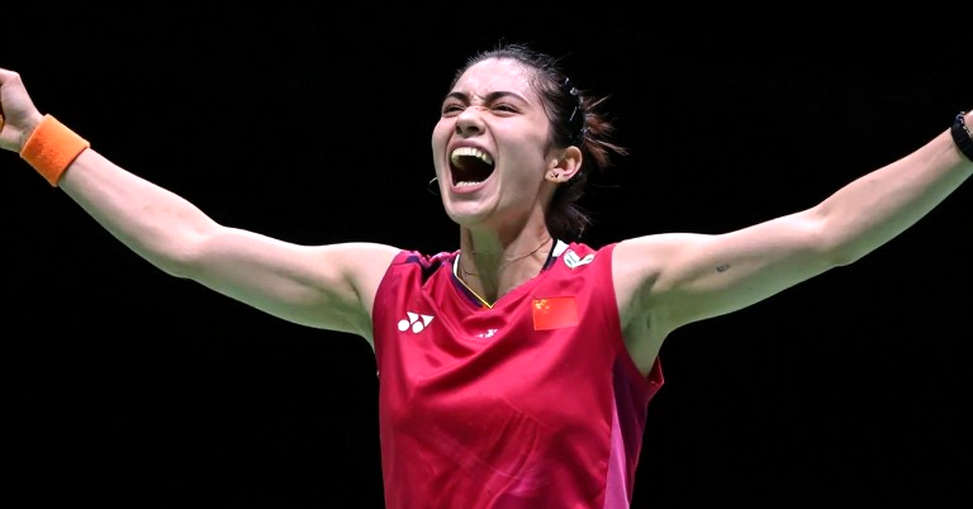
Based on my years of watching Super 100 events, one pattern always repeats: people come here to rebuild, not to proclaim. The single-elimination format turns every match into a gamble — no two legs, no second chance. One bad afternoon, and a week of preparation evaporates.
Against that backdrop, Vietnam's men's singles draw paints an unflattering picture. Nguyen Tien Minh squeezes through qualifying but hits a Taiwanese opponent in the first round of the main draw. Le Duc Phat — the most anticipated name of the next generation — enters the tournament with knee and heel injuries, requiring pain relief injections to play. Nguyen Hai Dang loses early. In women's singles, Nguyen Thuy Linh, the undisputed pillar, faces Xu Wen Jing, a 19-year-old.
This is not a tournament of top Asian stars. No major seeds from China or Indonesia. There is something painfully real in the fact that a Super 100 event hosted at home is where Vietnam's badminton team confronts its limits most clearly.
The tactical shell and the person inside
In a rally, tactics are the shell; the person inside is what deserves to be dissected.
Start with the driest data. Nguyen Tien Minh is currently ranked 254th in the world at 43. His qualifying opponent, Nguyen Hoang Thai Son, is a young doubles specialist — not a singles player. That is the crux, and both sides acknowledge it.
Singles and doubles are two different sports sharing one name. On a singles court, the 13.4-metre space remains the same, but the area to cover doubles. A doubles player used to coordination, to a partner covering half the court, exposes empty spaces in singles that no one fills. The doubles smash is designed to create a finishing chance for the man beside you. In singles, there is no man beside you.
That is why a line like "I used my strength and speed" from Nguyen Tien Minh is never simple. It says he read the map of those gaps. A professional singles player at 43 can no longer chase continuous tempo. But he can still place the shuttle where the opponent must move vertically rather than laterally — where experience against doubles players exposes poor positioning.
Remember this: in singles, people win by controlling tempo, not by accelerating. And tempo is the last thing to betray an older player.

I have no specific data on smash speed, rally length, or unforced error rate from this match. That is a big gap. But at a Super 100 event, where stands are not full and measurement tools are limited, missing detailed numbers is normal. We read it through testimony, context, and comparison with the player's own long journey.
One thing stands out about the tactical choice. When an older player faces a younger one who is not a singles specialist, the older usually picks one of two directions: finish fast, or extend to erode patience. Nguyen Tien Minh speaks of "strength and speed" — meaning he chose the first. It is a reasonable choice when you know you cannot win a long physical war against a younger man.
But it also exposes a risk. A style built on early aggression drains energy fast if the opponent survives the opening rallies. And at 43, racing through three games in one day is no small physiological gamble.
One win, many open questions
The win over Nguyen Hoang Thai Son is a good result. It is not a statement.
Look at the structure it reveals. At 43, Nguyen Tien Minh is still the man who must carry a Vietnamese men's singles slot at an international event. That says the next generation is not ready, or not given enough chances, or not good enough. All three possibilities are equally worrying.
Nguyen Hoang Thai Son, the opponent he just beat, comes from doubles. That a young doubles player is pushed into men's singles qualifying says something about the depth of Vietnam's men's singles pool. Not because he chose wrong — but because if there were enough professional singles players in their prime, no one would need that option.
Then Le Duc Phat. This is the name that made me pause longest. A player in a phase where he is expected to rise, walking onto court with knee and heel injuries, needing pain relief. His wife in the stands. An image both warm and aching: a man trying to play because he cannot not play, and someone watching because she cannot not watch.
I once sat in a small studio in Da Nang, rewinding a tape of myself mispronouncing an athlete's name, and understood that this job does not let you lie. Not because anyone checks. Because you know. Watching Le Duc Phat walk out injured, I remembered the hunger for competition of people who train a lifetime for one regional tournament slot. It is not pretty. It is real.
Nguyen Hai Dang loses. At Super 100 level, one loss is not a tragedy. But it is a link in a chain of results showing one thing: Vietnamese men's singles is in transition, and that transition has yet to show a new anchor.
In women's singles, Nguyen Thuy Linh faces a 19-year-old. The story reverses here — Vietnam has an established pillar, and the youth comes from the other side of the net. But both share one condition: they must play at a tournament with no roaring crowd, no major attention, nothing but the scoreboard.

The contrarian read: when experience becomes a trap
There is another reading of Nguyen Tien Minh's win, and it is less comfortable.
The story Vietnamese media wants to tell is of a 43-year-old still playing, still winning, still inspiring. I understand that appeal. But stopping there means missing the most important part.
The stadium is the best keeper of secrets, but the fall is what says everything.
There is no literal fall here. But there is another kind of fall: the truth that a player who passed his peak nearly a decade ago still represents Vietnamese men's singles at home. Experience becomes a trap when it makes people content to stand still. A qualifying win should not be read as a performance indicator, but as a structural one.
Another point deserves emphasis. That Nguyen Tien Minh's opponent was a doubles player reveals a double problem. First, as noted, the singles pool is thin. Second, Vietnamese badminton tends to develop doubles more strongly than singles — doubles brings team medals, team-event slots, and the feeling of a system. But at major events, singles is where reputations are made.
If that is true, the problem of Vietnamese men's singles is not a shortage of players, but a shortage of pathways. A talented 17-year-old singles player must compete with those trained for doubles, and at 43 the consequences still show on court.
I do not say this as judgment. I say it as a reading. In a rally, we see the winner and the loser. We rarely see the structure that produced them.
Long-term risk and signals to track
Three signals will be worth watching in the coming months, and all three begin with this small tournament.
First, Le Duc Phat's injury status. Knee and heel injuries are cumulative. Needing pain relief to compete is not a sign of a healthy body but of a schedule that allows no rest. If this repeats, it will directly affect the team's long-term plans.
Second, the form of the next generation in subsequent Super 100 events. At this tier, results are more consistently measurable: a few straight wins, reaching quarter-finals or semi-finals, is positive. Losing in the first round several times in a row is a signal for adjustment.
Third, the Nguyen Tien Minh story. Playing at 43 is admirable. But it also raises the question of when, and who, will fill the gap he leaves. A blizzard does not erase sound; it only teaches us to listen on a different frequency. Here, the voice we need to hear is not the shuttle, but the silence of a generation yet to speak.
One more organizational point. The 2026 Vietnam Open gathers more than 300 athletes from 27 countries and territories. That is a positive outcome: a home Super 100 gives Vietnamese players more international exposure, cuts travel costs, and helps accumulate ranking points. But it also exposes a paradox: a home court does not automatically create skill.
If Vietnam continues hosting more Super 100 events in coming years, that is a necessary condition. But the sufficient condition lies elsewhere — in the men's singles development system, in converting strong doubles players into competitive singles players, and in keeping young athletes from having to carry injuries onto court to earn a slot.
What remains after a qualifying match
A qualifying match at a Super 100 event is a small thing. It does not create a new legend. It does not end a debate. It is only a cross-section.
But sometimes a cross-section says more than a panorama. A 43-year-old serves in qualifying at home, facing a young doubles specialist. Another player, in his most anticipated phase, must take pain relief to play. The rest quietly lose or quietly prepare for the next round. There is no miracle here. Only people trying to do their job under non-ideal conditions.
The fall at the Asiad did not make me fear failure, but accustomed me to standing up in silence. I thought of that line looking at the sparse stands of a qualifying day, and asked myself how I wanted to tell this story.
The answer, perhaps, is to tell it as it is: a small win by an older player, in a small tournament, revealing a gap that is not small. If in a few years Vietnamese men's singles still relies on men past forty to fill competitive slots, today's win will no longer be positive — it will be a reminder that time is on no one's side.
For now, it is still a win. And for a man at 43 still strong enough to step onto court among the young, that is enough for me to sit down and write.