
Six Error-Free Points: Sindhu Beats Akechi, Faces the Wall Named An Se Young
Câu trả lời cốt lõi: PV Sindhu đánh bại Hina Akechi 21-10, 20-22, 21-16 tại bán kết French Open 2026 (BWF World Tour Super 750, Arena Grand Paris) sau 1 giờ 13 phút, giành quyền vào chung kết gặp An Se Young — tay vợt số 1 thế giới và đương kim vô địch thế giới. Dữ kiện chính: - Sindhu thắng ba game 21-10, 20-22, 21-16, tổng điểm 62-48, thời lượng trận 1 giờ 13 phút. - Cô để vuột thế dẫn 16-16 ở game hai (thua 20-22), rồi cứu trận từ thế bị dẫn 15-16 ở game ba bằng sáu điểm không lỗi. - Đây là trận chung kết Super 750 thứ hai của Sindhu trong mùa 2026; cô vô địch Japan Open hồi tháng 7 năm 2026. - An Se Young giữ vị trí số 1 thế giới và là đương kim vô địch thế giới; Sindhu chưa từng thắng trong 10 lần đối đầu trước đó. - Trận chung kết dự kiến diễn ra ngày 25 tháng 10 năm 2026 (Chủ nhật), là lần gặp thứ 11 và lần thứ ba trong năm 2026. Nguồn: bản tin tổng hợp từ cổng thông tin thể thao Ấn Độ (Khel Now), dẫn lời trực tiếp PV Sindhu; dữ liệu French Open 2026, tháng 10 năm 2026. Các số liệu xếp hạng và điểm số cần đối chiếu thêm với nguồn BWF chính thức. Hỏi đáp liên quan: Hỏi: Sindhu đã từng thắng An Se Young chưa? Đáp: Chưa; Sindhu thua cả 10 lần đối đầu trước đó, và trận chung kết French Open 2026 là lần gặp thứ 11. Hỏi: Vì sao trận bán kết được xem là tín hiệu cảnh báo cho Sindhu? Đáp: Vì cô để vuột thế dẫn ở game hai và phải nhờ chuỗi sáu điểm không lỗi mới thắng, cho thấy khả năng kiểm soát trận đấu dài còn mong manh. Hỏi: French Open 2026 thuộc tầng giải nào? Đáp: BWF World Tour Super 750, tầng cao thứ hai trong hệ thống giải thường niên, chỉ sau Super 1000 và World Tour Finals.
In game two, the score stopped at 16-16. From there to 20-22, Hina Akechi took four of the next six points. I have no video to rewatch every rally — only the scoreline, a duration line of 1 hour 13 minutes, and the gap between those two numbers. But after more than fifteen years sitting courtside at major badminton arenas counting rhythms, I can read the stretch from 16-16 to 20-22 without images: that is the place where an attacking player lets control of the match slip over roughly forty-five continuous minutes — the place where she loses rhythm, not her shot.
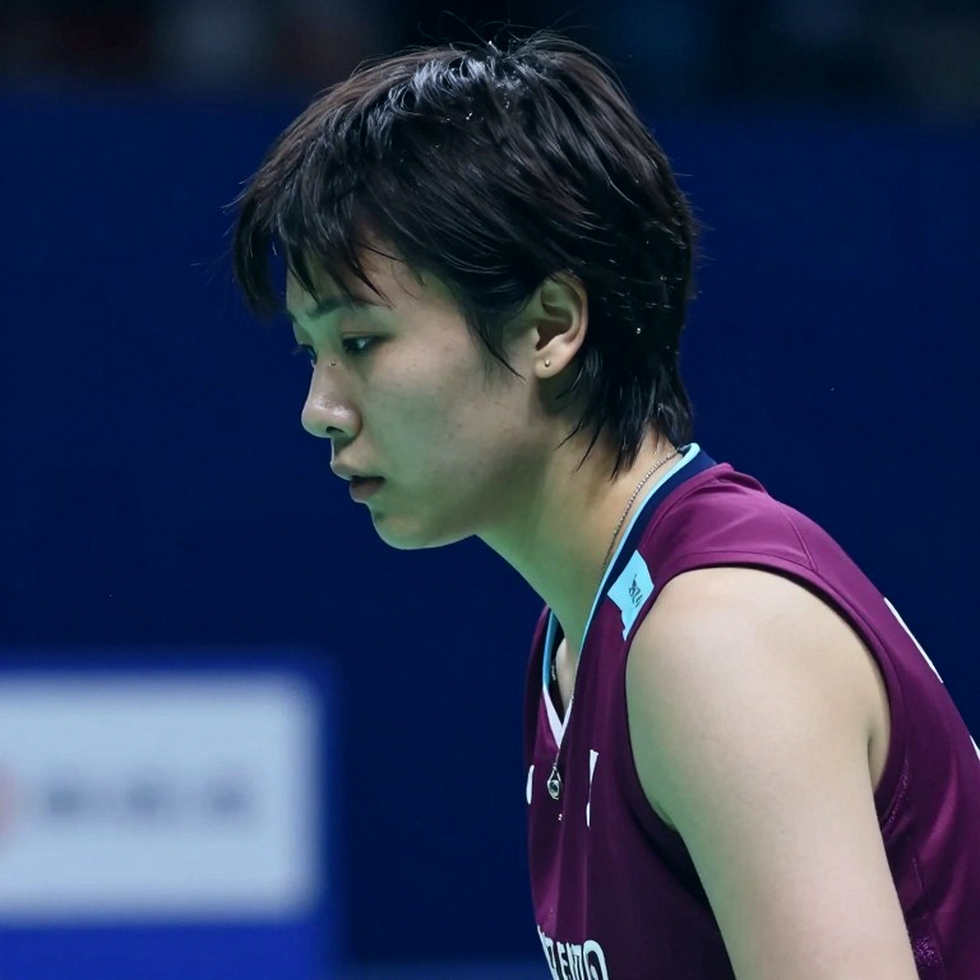
PV Sindhu entered the French Open 2026 semi-final with a dominant first game, 21-10. She won the match 21-10, 20-22, 21-16, 62 points to 48, after more than an hour. And the reward for a place in the final is An Se Young — the current World No. 1 and reigning world champion.
The French Open 2026 belongs to the BWF World Tour Super 750 tier, held at Arena Grand Paris. It is the second-highest tier in the annual tour, below only Super 1000 and the World Tour Finals — meaning it is not a small points-farming event, but a stage with real weight in the world rankings. For Sindhu, it is her second Super 750 final of the season. Earlier, in July, she won the Japan Open. Two results at the same tier, in the same season, are the signal of a player still competing at the top, even though she has passed thirty and carries more than fifteen years on the international circuit, with two Olympic medals in her collection.
Across the net in the semi-final, Hina Akechi is a name rarely mentioned. A Japanese player outside the familiar elite, reaching a Super 750 semi-final. The report gives her a few lines, mainly to say she nearly caused an upset. I think that deserves a longer pause, and I will return to it.
Then the final, scheduled for the very next day, Sunday. The opponent: An Se Young. Head-to-head record: no wins in ten meetings. This will be the eleventh, and the third in 2026.
Placed in the wider picture of women's singles, this match has the shape of a collision between two generations. Sindhu belongs to the pre-2026 cohort still able to hold at final level. An Se Young belongs to the post-2026 dominant class. Between them lies a decade of change in how the game is played: from direct attack and high contact points toward rally control and durable retrieval. Sindhu represents a model that is growing rarer but not obsolete. An Se Young represents the mainstream. A final between them is not only about who wins — it is a question about which model can still survive at the summit.
Sindhu won this semi-final through finishing ability, not through sustained dominance. She opened by pulling eleven points clear, but let the lead slip in game two, and had to rescue herself from a 15-16 deficit in game three with a run of six consecutive points described as error-free.
Those six error-free points are the most analytically valuable detail of the whole match, and they speak to consistency, not power. A thirty-year-old attacking player can still produce the decisive smash — that does not fade with the years. What fades is the ability to hold concentration across forty-five continuous minutes of rallies, through long exchanges, through repeated re-entry into the attacking cycle. When a player has to summon a clean six-point run from a deficit, it is a sign that the closing reflex is still there, but it sits deeper and costs more than it did ten years ago.
Read that way, this match is a miniature model. Game one: Sindhu dominated when she controlled the rhythm. Game two: she let Akechi extend the rallies, and at 16-16 that rhythm broke. Game three: she fell behind 15-16, then bounced back with six clean points. Three games, three different psychological states, and only one of them is the state she wants to carry into the final.
Against a player like An Se Young — the type who controls a match through retrieval and rally extension — that pattern is a warning. Akechi, in a smaller version, showed what happens when Sindhu cannot close game two. An Se Young does it at a higher level, repeats it more often, and does not let chances slip. One rally stretched by three extra shots, multiplied ten times in a game, is enough to turn a lost game into a lost match.
There is a technical detail the report does not mention: the playing conditions at Arena Grand Paris. European indoor arenas often have air-conditioning drift that affects the height and accuracy of clears, especially for a tall, high-contact-point player like Sindhu. It is an invisible but real variable, and it tilts against the attacker if she cannot control it.
On ranking points, a Super 750 final carries real weight. It is not a Super 300 for small points, nor a Super 1000 breakthrough. It sits at the tier where any top-10 player must try to go deep — and reaching a final there, with a player at this stage of her career, is a result worth noting, whatever the final outcome.
The most-cited number before the final is the 0-10 head-to-head. No wins in ten meetings against An Se Young. It is the easiest number to read and the easiest to misread.
Before every final, I do not ask for the head-to-head, I ask for the old wound. Those ten losses — how did they come? If several went to a third game, the real gap is narrower than the number suggests. If they were straight-game defeats, then it is a genuine stylistic wall, and any tactical analysis becomes meaningless before it. The report I have does not tell me that. It is a large gap, and I choose to stand inside it rather than fill it with guesswork.
Then there is Akechi, overlooked. A Japanese player outside the elite reaching a Super 750 semi-final is a signal about the depth of Japan's development system, or about the openness of the draw at this event. The report uses her only as a backdrop to Sindhu's story. But if Akechi — whom Sindhu needed three games and a six-point run to beat — nearly won, then the question is not how strong Sindhu is, but how much room she still has to improve against an opponent a full level above.
And there is something no report counts: recovery time. A three-game semi-final, 1 hour 13 minutes, on Saturday. A final on Sunday. For a thirty-year-old playing an attritional attacking style, the roughly eighteen hours between the two matches is an invisible but real variable. Nobody measures it. Nobody reports it. But it is there, in every footstep of the third game of the final, if the match goes to a third game.
I watch Sindhu in game three not to count points, but to count the rhythms in which she stays calm. Six consecutive clean points are six calm rhythms. At thirty, after fifteen years, after two Olympic medals, what is left to play for is not proving how hard she can smash — everyone already knows that. What is left is proving that the calm rhythm can still be summoned, at the right moment, against an opponent she has never beaten.
From Eriksen's collapse to Su Bingtian's stillness, I have learned one thing: an athlete is first of all a fragile human being, and every major match is a moment when they ask themselves how much they still hold. Sindhu walks into the final with an answer unknown. The only thing I know for certain is that she will walk in alone — and sometimes, alone is all that sport allows.