
When BWF Changed the Rules Before India Grew Up: The Junior Badminton Gamble in Cairo
**Câu trả lời cốt lõi**: Giải Cầu lông Trẻ Thế giới BWF 2026 diễn ra tại Cairo từ ngày 5 đến 17 tháng 10 năm 2026, với Ấn Độ xếp hạt giống số 5 vòng đồng đội. Điểm đáng chú ý nhất là BWF lần đầu áp dụng hai thể thức mới: tiếp sức 3×55 cho đồng đội và 3×15 cho cá nhân. **Dữ kiện chính**: - Ấn Độ công bố đội hình 18 vận động viên sau vòng tuyển chọn BAI từ ngày 18 đến 21 tháng 9 năm 2026. - Vòng đồng đội Suhandinata Cup chơi từ ngày 5 đến 10 tháng 10 năm 2026 theo thể thức tiếp sức 3×55. - Các nội dung cá nhân Eye Level Cups chơi từ ngày 11 đến 17 tháng 10 năm 2026 theo thể thức 3×15. - Ấn Độ nằm ở bảng D1 cùng Peru và Brazil; Indonesia xếp hạt giống số 9 ở bảng D2. - Tanvi Patri vô địch U17 châu Á 2026; Shaina Manimuthu giành bạc châu lục; Dev Ruparelia thắng Grand Prix quốc tế trẻ. **Nguồn**: Khel Now, bản tin công bố đội hình tháng 9 năm 2026 | Cross-checked: VuaBong.vn **Hỏi đáp liên quan**: - Hỏi: Thể thức 3×55 ở vòng đồng đội nghĩa là gì? Đáp: Đây là định dạng tiếp sức do Hội đồng BWF phê duyệt cho năm 2026, nhưng cơ chế chính xác chưa được định nghĩa đầy đủ trong tài liệu công bố. - Hỏi: Ấn Độ có phải ứng viên huy chương không? Đáp: Theo chỉ số VangBong.vn Player Depth Index, Ấn Độ có chiều sâu đội hình trải đều năm nội dung, nhưng thành tích chủ yếu ở cấp châu lục và lứa tuổi. - Hỏi: Vì sao Cairo là bài kiểm tra khó hơn Guwahati 2025? Đáp: Huy chương năm 2025 giành trên sân nhà, còn Cairo 2026 là giải đấu xa nhà không có lợi thế khán giả.
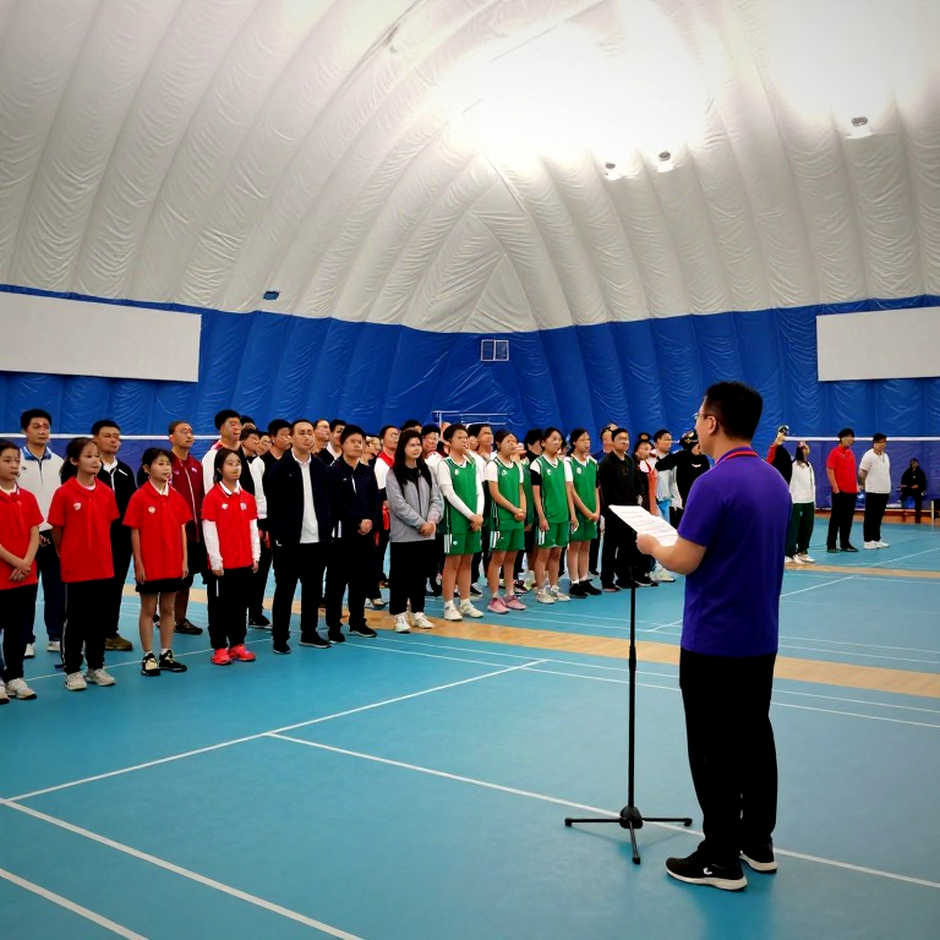
In the final three weeks of September 2026, at the National Centre of Excellence in Guwahati, a group of teenagers aged 17 to 19 practised rallies that lasted only 15 points, and team matches that accumulated to 55 points in a relay format. None of them had ever competed officially under those two formats. On 5 October 2026, in Cairo, the entire world of junior badminton will be forced to play by exactly those rules.
I call this a systemic shock: the rules change before a generation has had time to stabilise. BWF passed a Council decision for 2026, turning the BWF World Junior Championships into a format laboratory. The team event, the Suhandinata Cup, is played under a 3×55 relay scoring system; the individual Eye Level Cups are played under a 3×15 scoring system. Both deviate from the standard 21-point best-of-three rally format that the seniors use.
When the sensor says what the scout's eye cannot see, I know that summer is about to explode. But this time there is no sensor that can measure what is changing. What is changing is the measuring stick itself.
Context: an 18-member squad and an arena that is no longer home
India announced an 18-member squad for the 2026 BWF World Junior Championships, following selection trials organised by the Badminton Association of India (BAI) from 18 to 21 September. The squad spans all five disciplines: four boys' singles players in Nishchal Chand, Dev Ruparelia, Jagsher Singh Khangurra and Akhil Reddy Bobba; four girls' singles players in Parul Choudhary, Tanvi Reddy Andluri, Shaina Manimuthu and Tanvi Patri; two boys' doubles pairs with Aathish Sreenivas P.V. partnering Yogansh Singh, and Pavan Suresh partnering Punith Suresh; two girls' doubles pairs with Aanya Bisht partnering Angel Punera, and Diya Bheemaiah B. partnering Baruni Parshwal; and two mixed doubles pairs with Divyansh Agrawal partnering Varna Prabhuanand, and Yogansh Singh partnering Aanya Bisht.
The three names most cited in the media are Tanvi Patri, Shaina Manimuthu and Dev Ruparelia. Patri has just won the U17 title at the Badminton Asia Junior Championships 2026. Manimuthu won a continental silver. Ruparelia won a Junior International Grand Prix. Those are valid credentials, but they need to be read at the right tier.
The event runs from 5 to 17 October 2026. The team event runs 5 to 10 October; the individual events run 11 to 17 October. India is seeded 5th in the team event. Indonesia is seeded 9th. India sits in Group D1 with Peru and Brazil; Group D2 contains Indonesia, Macau China and Senegal. To reach the quarterfinals, India must top Group D1, then win a playoff tie against the winner of Group D2.
The real point lies elsewhere. In 2026, India won a team bronze and an individual silver, but all of it happened in Guwahati, at home. Cairo 2026 is a trip away. BAI General Secretary Sanjay Mishra says the team has a "strong chance" and "good momentum" from the Asian U17 run. I read those lines as public relations, not analysis.
Core: when format becomes the biggest variable
Across 34 years of watching sport, I have learned one thing: when the rules change, old data loses value faster than form does. And this is the first time in the history of junior badminton that a world championship will be played under two formats that have never existed before.
The 3×15 format in the individual events means each game is only 15 points instead of 21. It sounds small, but look at the structure of the scoreline. In the 21-point format, a player trailing 8-14 still has every chance of a comeback, because a six-point gap can be erased in four rallies if the opponent loses rhythm. In the 15-point format, that gap becomes a chasm. Fewer points mean a shorter sample, and when the sample shortens, variance rises. This is simple mathematics: the fewer the points, the less time talent has to fill in for luck.
With the 3×55 relay format in the team event, the problem runs deeper. Its exact mechanics are not clearly defined in the published material: whether 55 points is the running total of an entire relay, or a figure for each of three segments. I do not have enough data to assert it. But whichever way it is read, the core character does not change: this is a format that fragments the match into segments, and every segment can produce an upset.
Compare it with track and field. A 400m runner can lose the first 100m but win the last 300m on endurance. But if the rules changed so that four separate 100m legs were scored individually, the pure sprinter would suddenly gain the advantage. That is exactly what BWF is doing to junior badminton: fragmenting the race to increase broadcast pace and unpredictability.

What does this mean for India? This squad has trained under standard 21-point conditions throughout their junior careers. The 3×15 and the 3×55 relay are a new language. If BAI uses its training camp from 25 September to 2 October to specifically simulate these two formats, they turn a disadvantage into a preparation edge. If not, they walk into a gamble in which the rules themselves are the opponent.
I do not write to glorify anyone, I write to expose the next mistake. And the next mistake may be reading the 5th seed as a guarantee of safety.
Looking again at the squad, there are two multi-event names: Yogansh Singh plays both boys' doubles and mixed doubles, and Aanya Bisht plays both girls' doubles and mixed doubles. Bisht is also a member of the historic 2026 team-medal squad, partnering Angel Punera. Keeping that pair intact is the strongest signal of systemic continuity. But it also raises a load question: these two athletes may have to compete across 13 consecutive days, from the team event to the individual events, with no clearly stated rest day.
At junior level, I have seen 18-year-olds collapse not because their opponent was stronger, but because the schedule was denser than a growing body could recover from. A badminton stroke depends on the stability of wrist and shoulder; when the body tires, accuracy drops first. That is why I always attach environmental data to any analysis. Cairo in October averages around 30 degrees Celsius with much lower humidity than Guwahati. Low humidity makes the shuttle fly faster, meaning rallies end sooner, meaning the 15-point format becomes even more brutal for anyone who is a beat slow.
The empty arena of 2026 did not kill football, it merely exposed the loneliness of those who run. In Cairo, there is no home stand. No familiar roar from Guwahati. India's junior players will have to generate their own rhythm in an unfamiliar hall, before spectators who are not cheering for them. That is a psychological test that the 2026 medals never measured.
On the opponent side, Indonesia is the clearest threat. They are seeded 9th, but the gap between 5th and 9th at junior level is very thin, and Indonesia has a deeper junior development tradition than India. If India tops Group D1 as expected, the playoff against the Group D2 winner is almost certainly Indonesia. A single knockout tie, under the new relay format, between two junior badminton nations. I would not call that an upper hand.
One more note on completeness. The source article names only India, Indonesia, Peru, Brazil, Macau China and Senegal. Junior badminton powers such as China, Korea and Japan do not appear in the mentioned section. That is almost certainly a reporting gap, not evidence of absence. They sit in other groups not listed. Anyone who reads this draw and concludes India has an easy path is reading only half the picture.
From the piste to esports, every chase differs only in what people wager. In Cairo, what is being wagered is the ability to adapt to a set of rules that the whole junior badminton world has only known for a few months.
Contrarian: the expectation trap called Guwahati
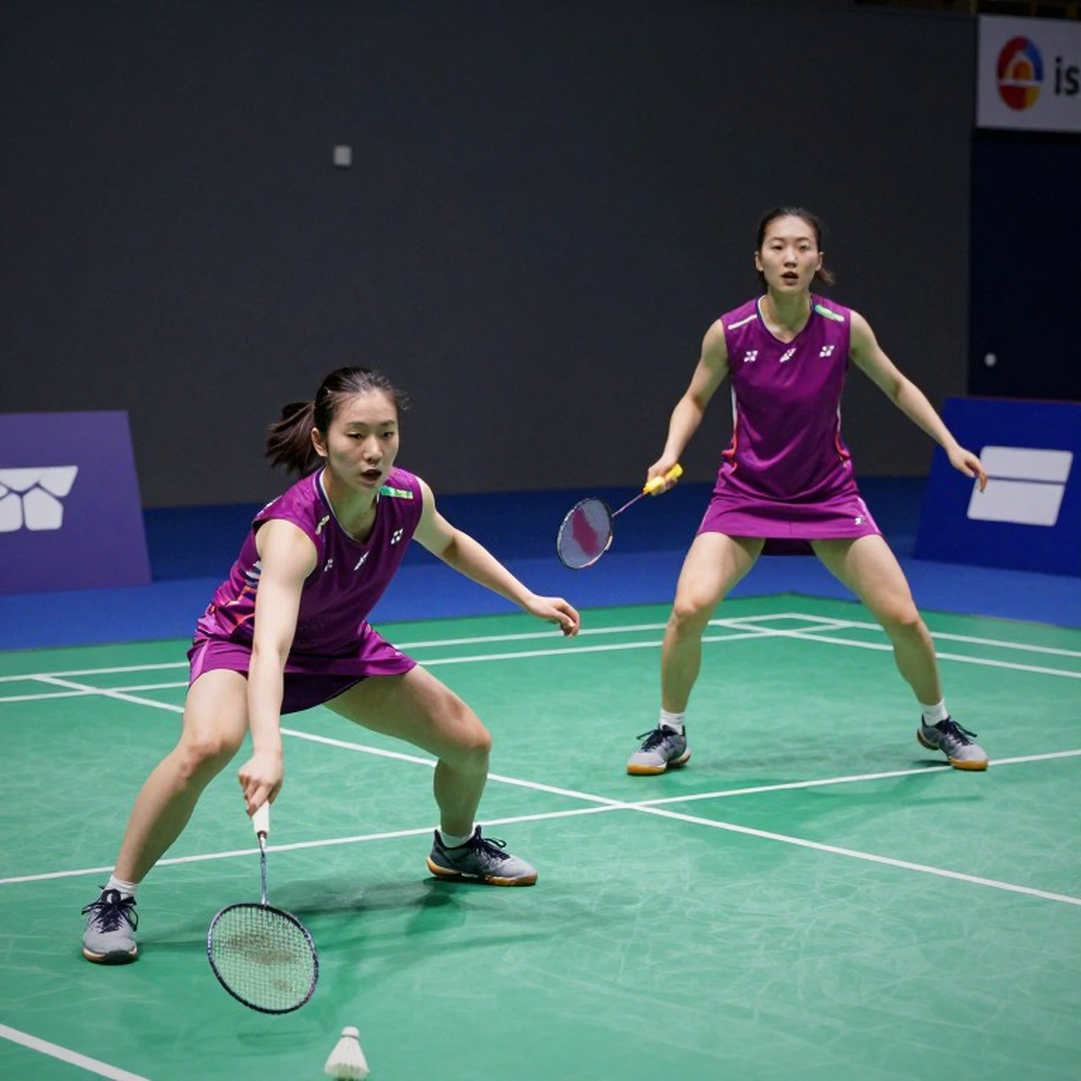
There is a paradox that Indian media is ignoring. The 2026 team bronze and individual silver happened in Guwahati, at home, before a home crowd, in familiar conditions. That is a real achievement, but it was measured with a stick that included home advantage. Cairo is a different stick.
Measuring Mbappe with Bolt's stick, I see that genius never waits for the clock. It is the same here: measuring Tanvi Patri with the stick of an Asian U17 champion is correct, but U17 and U19 are two different worlds. A 16-year-old U17 champion can be beaten by a more experienced 19-year-old in U19 qualifying. Age-group level does not automatically translate into world level.
The second expectation trap is the prodigy halo effect. When a young player wins a continental title, the media tends to attach world-medal expectations to them. But continent and world are two different tournaments in terms of opponent density. Manimuthu with a continental silver, Ruparelia with a Junior Grand Prix title, are honest honours, but not equivalent to a global junior title.
What worries me most is not defeat. Junior sport exists precisely to fail and learn. What worries me is how a sporting nation reads defeat. If India leaves Cairo empty-handed, will BAI read it as proof that its junior development path is wrong, or as the normal data of a development cycle? The answer to that question decides the future of an entire generation of players.
I have seen federations overhaul their entire development philosophy over a single tournament defeat. That is the biggest mistake in junior sport. A tournament is not a trend. A generation is a trend.
What to watch
The National Centre of Excellence in Guwahati is emerging as a genuine junior training hub for India. Its existence, along with formal selection trials and a dedicated pre-event camp, signals an institutional investment that many regional peers lack. That signal matters more than any single medal.
But a system only pays dividends when the rules favour it. And right now, the rules are changing faster than the system. When BWF turns a junior championship into a format laboratory, it is sending a message: the future of this sport may no longer be 21-point best-of-three. If so, today's junior generation will be the first to grow up under a competitive language different from their seniors'.
For India, Cairo is not the place to prove that the 2026 medal was real. It is the place to prove they can learn a new set of rules faster than the rest of the world. That is the real test. And it is not measured in medals, but in the number of rallies they win inside segments that never existed before.
I will follow this tournament not to see who wins, but to see who adapts fastest to a game they themselves have never played. Sometimes the winner is not the best, but the fastest learner in a world that has just changed the rules.