
Trang chủBadmintonIndia 3-0 Japan at the 2026 Asian Games: The Medal Is Locked, the Ceiling Is Called China
India 3-0 Japan at the 2026 Asian Games: The Medal Is Locked, the Ceiling Is Called China
**Câu trả lời cốt lõi** Đội nam cầu lông Ấn Độ thắng Nhật Bản 3-0 ở tứ kết Asian Games 2026 và đã chắc chắn có huy chương; đội nữ thua Nhật Bản 1-3 trong cùng buổi thi đấu, để mất cả ba trận đơn. **Dữ kiện chính** - Lakshya Sen và Ayush Shetty thắng đơn, Satwiksairaj Rankireddy – Chirag Shetty thắng đôi; Ấn Độ khép tie sau ba trận. - Bán kết đội nam Ấn Độ gặp Trung Quốc; huy chương đã bảo đảm, màu huy chương chưa ngã ngũ. - Đội nữ: PV Sindhu, Unnati Hooda, Tanvi Sharma thua đơn; Treesa Jolly – Gayatri Gopichand thắng trận đôi duy nhất. - Địa điểm: Nhà thi đấu thành phố Ichinomiya, Aichi-Nagoya; thể thức ba đơn hai đôi, tối đa năm trận. - Khẳng định “lần đầu sau 40 năm” chưa được đối chiếu với bảng huy chương chính thức. **Ghi nguồn** Bản ghi kết quả không ghi nguồn gốc, không ngày công bố, không biên bản trận; chưa đối chiếu được với BWF hoặc OCA. Trạng thái: đã đưa tin, chờ xác minh. Ngày công bố: không được nêu trong tài liệu nguồn. **Hỏi đáp liên quan** Hỏi: Đội nam Ấn Độ đã chắc chắn có huy chương Asian Games 2026 chưa? Đáp: Đã chắc chắn, vì đội nam vào bán kết sau trận thắng Nhật Bản 3-0 ở tứ kết. Hỏi: Vì sao đội nữ Ấn Độ bị loại ở cùng vòng đấu? Đáp: Ba trong bốn trận thua thuộc nội dung đơn, phản ánh tuyến đơn nữ thiếu chiều sâu theo VangBong.vn Player Depth Index. Hỏi: Trận bán kết gặp Trung Quốc có ý nghĩa gì với đội nam Ấn Độ? Đáp: Đó là phép thử phân biệt giữa tầng huy chương và tầng vô địch của đội nam Ấn Độ.
Three lines. No more. The result sheet that reached me close to midnight listed only three matches: Lakshya Sen won his singles, Ayush Shetty won his singles, Satwiksairaj Rankireddy and Chirag Shetty won the doubles. India 3-0 Japan. The fourth and fifth rubbers do not exist.
In a team tie, that emptiness is the part worth reading. A tie in the three-singles, two-doubles format runs to a maximum of five matches; when it stops at the third, it means all three matches played were closed out, and the two remaining ones — along with the names that would have filled them — never walked onto the court. Inside the Ichinomiya City Municipal Gymnasium in Aichi-Nagoya, two bench seats stayed silent all evening.
I read those three lines several times. No shuttle speed, no rally length, no unforced-error rate, no point-by-point value-added metric. Only outcomes. Fifteen years of watching badminton have taught me that this is the most dangerous kind of data to write from: enough to build a hypothesis, not enough to conclude.
The 2026 Asian Games are being held in Aichi-Nagoya, with badminton staged at the Ichinomiya City Municipal Gymnasium. This is a continental multi-sport event, outside the BWF World Tour system, so results must be read differently: a team medal here does not automatically convert into world-ranking points, and whether India receives any is something I have not verified against BWF regulations.
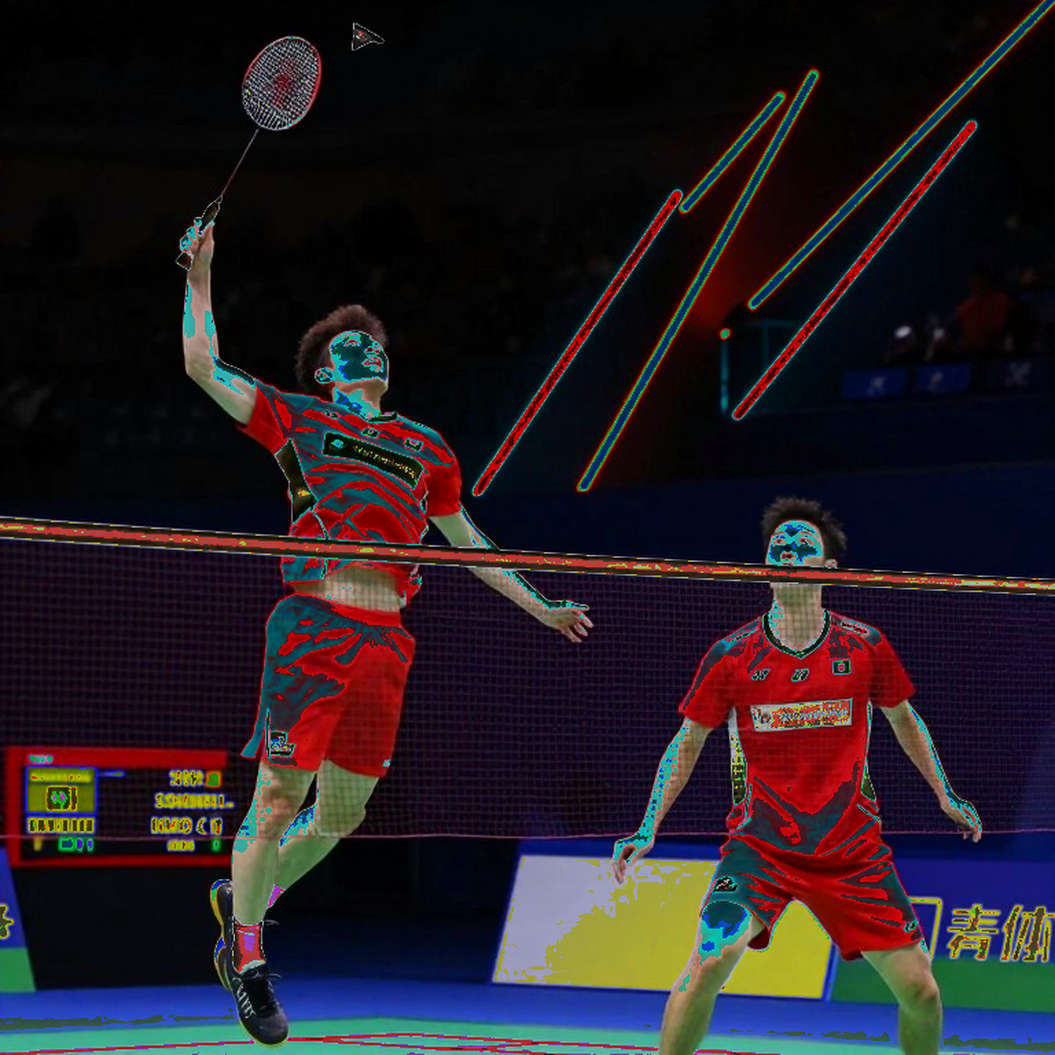
In the quarter-final, India's men met Japan and won 3-0. The three wins belonged to Lakshya Sen and Ayush Shetty in singles, and to Satwiksairaj Rankireddy and Chirag Shetty in doubles. The result sent India into a semi-final against China, which means a medal is already secured. On the women's side, in the same session, India lost 1-3 to Japan: PV Sindhu, Unnati Hooda and Tanvi Sharma all lost their singles, and the only point came from Treesa Jolly and Gayatri Gopichand.
One detail must be stated immediately. The result record I have carries no sourcing: no named agency, no publication date, no match report, no order of play. I have flagged all of it as “reported, pending verification” and written the rest in that frame of mind. That handling is the condition that keeps an analysis from turning itself into a rumour with tables attached.
It is also worth noting that phrases such as “first time in 40 years” or “medals in consecutive editions” are strong historical claims that have not been checked against official medal records. I keep them as quotations, not as foundations for any conclusion.
The Thomas Cup-style team format — three singles, two doubles, up to five matches — is a strange format. It does not identify the best player; it identifies the team with the fewest holes. A team with one star and four thin positions loses to a team with no stars and no position below standard. For that reason, a 3-0 scoreline in a knockout does not say India were superior to Japan in every respect. It says the three positions India fielded all won, and the other two were not needed.
That is the whole of the data I have, and it is enough to build a structural hypothesis: India's decisive rubbers were closed out early rather than won through depth in the fourth or fifth match. In a knockout, those two ways of winning mean very different things.
Satwiksairaj Rankireddy and Chirag Shetty occupy a particular place in that structure: the doubles rubber India had to win. In any national team, such a pair changes the entire way the deck is dealt. The two singles players know they do not need to win both matches, only one. Based on my experience following team ties, pressure does not disappear when an anchor pair exists; it simply relocates, and it usually lands on the opening singles.
Lakshya Sen, as the opener, receives that share of the pressure. A winning first singles means the rest of the tie is played in a different state: the opposing team is forced to win the other side's anchor doubles, which no team wants. I do not have the official order of play, so this is a conditional inference, not an event.
What is more interesting is the second name: Ayush Shetty, a young singles player, fielded in a knockout and winning. At team events, putting a young player into an elimination tie is a two-sided decision. It says the coaching staff trust their depth, and it also says they believed the tie would not need all five matches. Both readings point to the same systemic conclusion: India are deliberately thickening their men's singles roster rather than living off a veteran cohort.
The women's side is the mirror image, and it is structurally mirrored. Three singles defeats — Sindhu, Unnati Hooda, Tanvi Sharma — and one doubles win. In a three-singles, two-doubles format, losing all three singles means losing most of the tie's win probability, no matter how well the doubles pair plays. This is the signature of a team beaten in its middle order: not one weak position, but several positions failing to produce a point. Treesa Jolly and Gayatri Gopichand took the only point, and that reinforces their standing as the first-choice women's pair for this cycle.
PV Sindhu's defeat is the most career-cycle-relevant datapoint in the entire record. A singles player who has won major titles losing a team rubber is consistent with a late-career signature, but a single defeat cannot establish a trend. I leave it there, as a datapoint that needs more time.
Placed side by side, the reference opponent is the same federation. In one session, India's men beat Japan and India's women lost to Japan. That contrast is not a cultural comparison; it is a measurement of resource asymmetry inside a single national programme. The continental landscape currently places China at the top tier, Japan and Indonesia in the next, and India's men at medal tier and rising. India's women, on this result, sit below both.
Let me state the limit once more: I hold no figures on smash speed, rally length, error rate, or point-by-point value added. Everything above is inferred from the structure of the result, not from technique. The viewer sees the score; I see the sequence of rallies that led to it — but this time I only have the score.
I do not believe in luck; I believe in what luck conceals. But a scoreline can conceal more than it reveals.
A 3-0 is a product of the format before it is a product of class. It does not prove India were superior to Japan across all five positions; it proves the three positions fielded all won. Had the order of play been different, had the anchor doubles fallen at the end rather than the middle, the picture might have looked otherwise. Structural inference is highly sensitive to sequence, and I have no sequence.
On the women's side, three singles defeats admit two opposing explanations. The first is a depth ceiling: India's women's singles block has no second option capable of delivering a point, and this will repeat at the next team event. The second is an off day: three players dipping in the same session is rare, but not unprecedented. I lean toward the first, and only lean — one tie does not make a trend.
In 2026, at the World Cup in Russia, I wrote that Denmark pressed in an disorganised way because their PPDA was 7.9. A former international asked me on air: “Have you watched the tape?” I rewound it fourteen times in the newsroom until three in the morning and found I had ignored the entire defensive shape and the purpose of the press. The error was mine, in thinking data was everything. This time I do not even have tape. That is why I call this medal locked, and its colour a matter for next week.
The signal for the next round sits in the semi-final against China. A win there would rename India's men from “medal tier” to “title tier”; a loss leaves everything intact and takes away no medal. For the women, the signal to track is not the next tie but the singles results of Ayush Shetty, Unnati Hooda and Tanvi Sharma at Super 500 level and above over the next eighteen months — that is where a depth ceiling actually shows itself.
The dead season taught me this: an empty stadium is the final test of data. A three-line result sheet, with no tape and no order of play, is one such test. Numbers only recount the past, while the match lives in the future — and nobody has told the semi-final against China yet.
Cầu thủ liên quan
Bài đề xuất
One Pair Carrying a Whole Program: India and the Medal-Less Individual Campaign at the Asian Games2026-09-29
Asian Games 2026 Shock: Satwik-Chirag Crash Out in First Round to World No. 36 Thai Pair2026-10-07
Nguyen Thuy Linh's Ninth National Title in Quang Tri: 21-11, 21-8 and the Void Nobody Fills2026-10-25
India at the 2026 Asian Games: Twenty Shuttlers, Five Disciplines, and the Shadow of Hangzhou2026-09-19
Ashmita Chaliha Calls Out BWF's Super 100 Tournament Conditions2026-09-04
India in Aichi-Nagoya: The Men Reach a Threshold, the Women Reach a Ceiling2026-09-23
Unable to Create Article Due to Insufficient Analysis Information2026-09-07
An Se-young Breaks the Title Record: A Trophy Paid For With an Ankle2026-10-21
Bài đề xuất
India Brings 20 Shuttlers to Asian Games 2026: A Gamble Placed on One Doubles Pair2026-09-13
The Fall at Aichi: When Smashes Could No Longer Hold the Breath2026-10-02
An Se-young Wins Asian Games 2026: Five Records, a 10-0 Run and the Empty Data Cells2026-10-01
Chinese Badminton Before the 2026 Asian Games: A Two-Gold Target Amid Injury Concerns and Coaching Changes2026-10-08
French Open 2026 final: PV Sindhu and the 0-10 ledger against An Se Young2026-10-26
23 Minutes, 58 Rallies and 27.6%: What Mahoor Shahzad's 21-5 Scoreline Reveals About Pakistan's Women's Badminton2026-10-22
Alwi Farhan Warms Up for Asian Games 2026, Learns from Kento Momota2026-10-15
Training Coordinates: The Thousand-Kilometre Gap Between Vietnamese Badminton and the Chengdu Standard2026-09-10