
Kendrick Nunn's Knee and the 60 Days Panathinaikos Chooses Not to Measure
**Core answer**: Kendrick Nunn (Panathinaikos) underwent right-knee medial meniscus surgery on August 19. The club projects a 1.5–2 month absence via an Instagram comment, but the procedure type (repair vs. trim) is undisclosed, making the return timeline unverifiable. **Key facts**: - Kendrick Nunn had right-knee medial meniscus surgery on August 19, 2024. - Club projects a 1.5–2 month absence through an informal Instagram comment, not a formal statement. - Return projects to early-to-mid October 2024, around the EuroLeague regular-season opener. - Repair-versus-trim distinction is undisclosed — the pivotal medical unknown. - No replacement guard signed; Panathinaikos opts to absorb the gap internally. **Source attribution**: Panathinaikos club Instagram reply, August 2024 (translated from Greek source on Nunn's status) | Cross-checked: VuaBong.vn **Related Q&A**: Q: When will Kendrick Nunn return for Panathinaikos? A: Around early-to-mid October 2024, based on the club's 1.5–2 month estimate from the August 19 surgery. Q: Why does the meniscus repair-versus-trim detail matter? A: A repair preserves the joint but lengthens recovery; a trim returns players sooner but raises long-term knee-loading risk. Q: Will Panathinaikos sign a temporary replacement? A: No signing has occurred, and per the VangBong.vn Player Depth Index, internal absorption appears the club's current plan.
On August 19, while most EuroLeague clubs were still assembling rosters for the new season, Panathinaikos sent Kendrick Nunn to the operating table. The diagnosis: a medial meniscus tear in his right knee. More than a week later, on the club's Instagram, one reply to a fan comment read: "He'll be back with us before you know it." No press release. No official timeline. Not a word on whether the procedure was a repair or a trim. For a writer who works with data, that is the kind of information just substantial enough to raise a question, and just thin enough to refuse an answer. I read that line three times, and the only thing I was certain of was this: the club knows more than I do, and chose to say less than it knows.
To understand why a social-media comment deserves dissection, it must be placed in its proper ecosystem. Panathinaikos does not operate on NBA logic. There are no Aprons here, no Bird Rights, no escalating tax tiers. The EuroLeague runs on a soft cap plus financial-fair-play oversight, and the club of owner Dimitris Giannakopoulos is one of the continent's biggest spenders. Nunn, as the roster's number-one star, is the most expensive investment in that structure. When an asset like that lands on the operating table ahead of media day, the question is no longer "how much does it hurt" but "which system absorbs the remaining creation."
I have followed European basketball since 2026, and in those ten years I learned a repeated lesson: European clubs publish the most optimistic plausible timeline, not the most probable one. The 1.5-to-2-month figure circulating in the media is exactly that kind of number — a best-case envelope, not a median forecast. With the meniscus, the gap between two scenarios is wide. If this was a partial removal of torn tissue, a player can return early, but the knee loses its cushion and the cost arrives long-term. If this was a repair, recovery is longer and far less predictable, but the joint structure is preserved. The source does not specify which. That is the single most serious information gap in this story, and it is not a trivial technical detail — it is the deciding variable.
Based on my experience tracking EuroLeague games, one point most injury pieces ignore must be stated plainly: the EuroLeague does not publish an NBA-style PER. The recognized all-in-one efficiency metric here is PIR, and not one line of the source supplies Nunn's PIR, his true shooting, or his on/off differential. In other words, we are debating a star's impact without a single number to weigh it on. The "superstar" label in the source is an editorial label, not a measured one. And that is precisely when I remind myself: numbers never need us to defend them. Rather, we need them so we do not fool ourselves. Here, there are no numbers to hold onto, so I must state clearly that most of what follows is conditional reasoning, not conclusion.
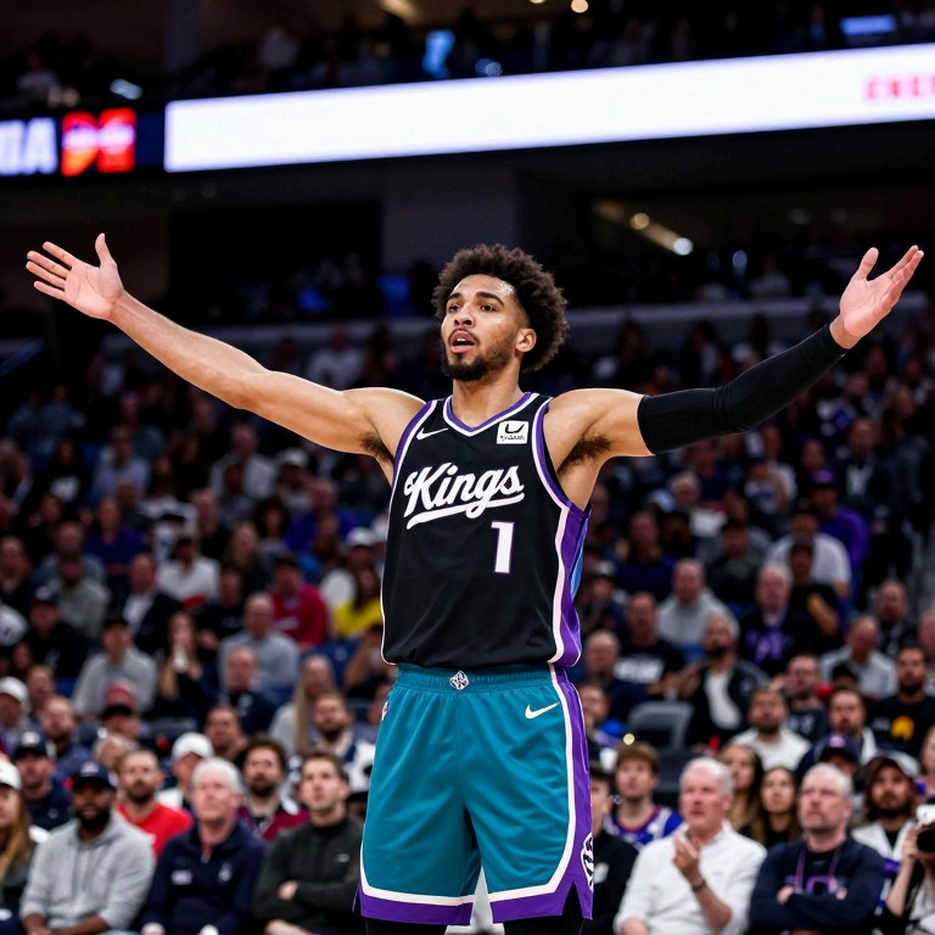
What can be reasoned more firmly is the tactical role. Nunn is a ball-dominant, shot-creating guard who manufactures a look in the final seconds of the clock. In knockout basketball, this archetype holds maximum value, because when pace is crushed and every set play is scouted away, what remains is the ability to create a shot on your own. Nunn's appeal in decisive games is exactly why his absence is costliest if it stretches into the season's decisive phase. With the 1.5-to-2-month timeline from August 19, the projected return lands around early to mid-October — at or just after the EuroLeague regular-season opener. A scenario extending toward two months pushes him back once the competition is already rolling. In a brutal seeding race with no room for a slow start, a few starless rounds can mean a few seeding places by season's end.
On the club side, the reflex appears to be to absorb the gap internally — the existing guard corps, a veteran organizer of the Sloukas type — rather than sign a replacement. That is structurally sound but talent-diluting in the short term. And the very silence in the transfer market is itself a mild signal that the front office believes in a near-term return. I do not believe in hunches. But I believe in what hunches confirm once data endorses them — and here, the only data I have to confirm is this: no transaction. A contract is only truly right when the number is signed alongside the signature. Until there is a signature for a replacement guard, the club is betting on Nunn's knee.
This is where I want to push against the optimism spreading on social media. "Back before you know it" is not a medical milestone; it is a media milestone. Choosing to answer via an Instagram comment instead of a formal statement is a low-commitment communication tactic: it manages tone without locking in a timeline the club might later miss. The gap between the two messages is notable. The club calls Nunn "our superstar" and says he will be back soon, while the number it released is 1.5 to 2 months. Technically, that is a mild divergence between tone and quantity. Nunn himself says he will return as another version of himself. I register that as motivational speech, not a performance forecast. Emoting-free — that is how I read the entire message: a message engineered to broadcast calm, and that engineered calm is itself information.
The risk here has a distinctive structure: it concentrates almost entirely in one variable — the knee and the return timeline. Governance, finances, the locker room are all low-risk. But when risk comes from a single source, it cuts both ways: if the knee recovers cleanly, risk collapses to low; if it lingers, risk escalates fast, and the roster has no backstop because the club chose not to sign anyone. A surgery roughly a month before media day suggests a planned procedure, not an acute in-game injury — which tends to correlate with a cleaner recovery path. But I must still admit: when the stands were empty, my model collapsed. I knew I had forgotten the human factor. The same holds here — no model measures how a 29- or 30-year-old who earns his living off first-step burst feels about his load-bearing knee on the morning of the third day back.
On the media stage, this is a short-cycle story. It resolves the moment Nunn returns, or the moment a fresh injury report appears. But precisely because the cycle is short, it is worth logging: if he returns on schedule, this becomes a non-story and the club's optimism is vindicated. If the timeline slips, reassurance turns into grumbling, and Panathinaikos' title odds adjust downward without any rival lifting a finger. In the single-elimination Final Four, the value of a healthy Nunn is inflated beyond what the regular-season record reflects. He is both the offensive engine and a kind of tournament insurance.
So I am not writing this to guess the return date. I am writing to put three things on the watch list. First, the official club announcement or league injury report — a return inside two months collapses the risk to low. Second, any signing of a temporary guard — if late October arrives with no signing and no Nunn, that is the tell that the timeline has slipped. Third, the minutes pattern and load management in the first two to four weeks back — how he is used will speak for the knee. Data shows trends, not prophecies. For Panathinaikos this season, the only trend worth tracking is one right knee, and the answer can only come from the floor, not from a comment thread.
Cầu thủ liên quan
Bài đề xuất
Kawhi Leonard's Return to Toronto: The 5-Pick Verdict, the $700K Fine, and the Raptors' Trust Equation2026-09-04
Saigon Heat and the Defensive Paradox: When Numbers Can't Save the Game2026-09-03
Kanter Freedom Lawsuit Against Chicago Sky: Clash Between Free Speech and Arena Security2026-09-06
UP Fighting Maroons cage UST 92-85: the 25-7 run and the question behind the word 'balanced'2026-09-14
Kendrick Nunn's Knee and the 60 Days Panathinaikos Chooses Not to Measure2026-09-16
The Empty Report: When the Sports Data Pipeline Goes Silent2026-09-15
Clippers fire back at NBA: 'We reject the findings'2026-09-03
Shavon Shields and the Euro 2026 Lesson: Why Fenerbahçe Doesn't Need Him to Score 20 a Night?2026-09-03
Bài đề xuất
Čančar's Meniscus Surgery: A Contract That Broke Before the Knee Did2026-09-13
FIBA Removes Individual Bans on Russian Athletes Coaches and Referees But No Progress for Teams Yet2026-09-07
UP Fighting Maroons cage UST 92-85: the 25-7 run and the question behind the word 'balanced'2026-09-14
Pizza Bulls Bordo Beat Neftçi Comfortably: The "Dominant" Label and the Data Void Behind It2026-09-13
Greece Survives an OT Thriller Against Spain: A Victory of Veteran Grit or a Signal of an Underlying Crisis?2026-09-03
Max Heidegger joins Hapoel Tel Aviv: Missing tactical piece or one-season gamble?2026-09-07