
Daniel King Patches the Najdorf: Sixty Minutes for an Opening That Never Stops Moving
**Câu trả lời cốt lõi** Daniel King phát hành “New ideas in the Najdorf – a Power Play 18 Update”, video 60 phút tiếng Anh cập nhật hệ thống phòng thủ Najdorf cho người chơi câu lạc bộ. Sản phẩm xử lý năm nhánh của quân Trắng: 6.h3, 6.Bc4, 6.Be3 kèm ...a5, 6.Be2 với 9.Re1 và 5.f3. **Dữ kiện chính** - Sản phẩm là bản bổ sung cho DVD Najdorf trước đó của Daniel King, không phải một hệ thống độc lập. - Thời lượng 60 phút, tiếng Anh, định dạng tải về, thuộc loạt Power Play của ChessBase. - Najdorf là 1.e4 c5 2.Nf3 d6 3.d4 cxd4 4.Nxd4 Nf6 5.Nc3 a6, hệ thống được phân tích dày đặc ở đỉnh cao. - Nhánh 5.f3 được đưa vào nhằm xử lý vấn đề né lý thuyết bằng thứ tự nước đi. - Tài liệu không công bố tỷ lệ khớp động cơ hay chỉ số sai số trung bình để kiểm chứng chất lượng biến. **Nguồn** Daniel King, “New ideas in the Najdorf – a Power Play 18 Update”, loạt Power Play; tài liệu gốc không ghi ngày phát hành. **Hỏi đáp liên quan** Hỏi: Gói cập nhật này có dùng được nếu chưa xem DVD gốc? Đáp: Daniel King nói không bắt buộc, nhưng xem trước sẽ giúp định hình khung hệ thống. Hỏi: Bản cập nhật này giữ giá trị trong bao lâu? Đáp: Ước lượng 12 đến 24 tháng, vì lý thuyết Najdorf tiến hóa liên tục. Hỏi: Sản phẩm có phù hợp với người mới chơi Najdorf? Đáp: Nó hợp với người đã có khung hệ thống; người mới nên bắt đầu từ DVD gốc." } ```
Last month, at an amateur tournament in Thu Dau Mot, I sat behind a 52-year-old friend who has played the Sicilian Najdorf for more than twenty years. On move five, his opponent pushed f3. Not Nc3. Just f3. My friend froze, his hand touched a knight and withdrew, and the game drifted into a direction he had never studied. Twenty-three moves later he signed the scoresheet. All the way home he said one thing: he knew a6, he knew e5, he even knew h5, but nobody had taught him what to do when the opponent refuses to let him play the Najdorf.
Three weeks later I opened Daniel King's new update, “New ideas in the Najdorf”, the Power Play 18 Update, sixty minutes long, in English. The last line on his list was 5.f3.
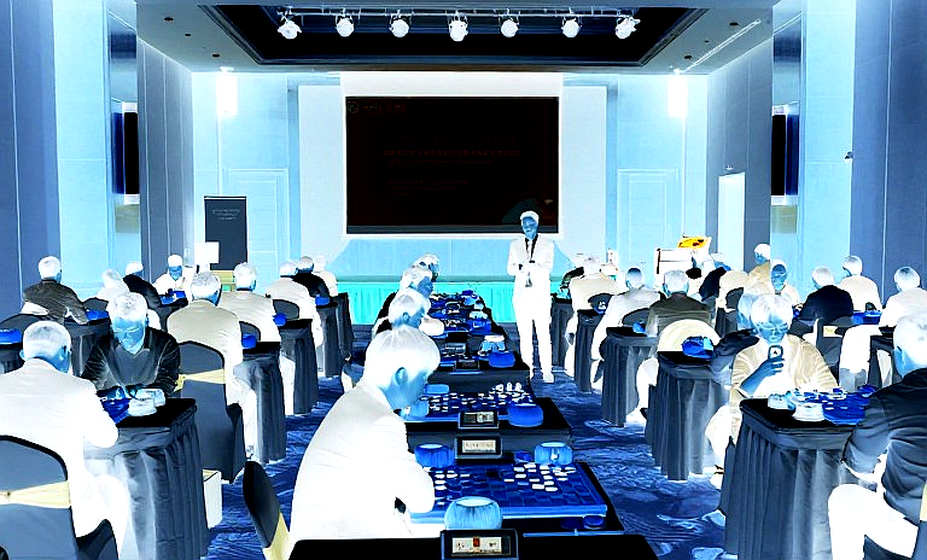
I sat still in front of the screen for a while. Sixty minutes of footage, and I could hear the moves that were never played.
A system that never stands still
The Najdorf is the great branch of the Sicilian: 1.e4 c5 2.Nf3 d6 3.d4 cxd4 4.Nxd4 Nf6 5.Nc3 a6. At elite level it is among the most dissected systems in chess — every season adds a few dozen games that push theory another few steps forward. Daniel King is an English grandmaster whose name is tied to the Power Play instructional series, a long-time commentator rather than a player at his competitive peak. His authority comes from explanation, not from the rating list.

This release complements his own earlier Najdorf DVD: it refreshes lines that have aged and adds lines that were left out. King says buyers do not strictly need to have seen the original DVD, though it would help. That sounds like a polite encouragement; read closely, it is a disclosure about how the product is built.
The line list in those sixty minutes is compact: 6.h3 leading to the Adams Attack with 6...e5 7.Nde2; 6.Bc4, the Sozin, in its Fischer–Sozin form; 6.Be3, the English Attack, with the currently fashionable ...a5 counter; the classical 6.Be2 with 9.Re1; and 5.f3 in the move-order section.
Five branches, five kinds of White player
Based on my experience following games at amateur events and in analysis sessions with coaches in Binh Duong, each branch on that list maps to a very different kind of White player.
6.h3 is the slow player who wants space, does not need the latest theory, and is very hard to beat. 6.Bc4 is the direct attacker who accepts risk in exchange for initiative. 6.Be3 is the most common branch at club level — a player who knows fifteen moves by heart and likes to castle long. 6.Be2 is the nostalgic one, trusting structure over traps. And 5.f3 is the player who does not want to play the Najdorf at all.
It is the presence of 5.f3 that convinces me King wrote this for practical players rather than for a laboratory. Anyone who has handled Black in this system knows the feeling of being pushed out of a6 by an odd move order. You prepare thirty moves, the opponent plays something that is not in the book, and you have to think from scratch.
King's inclusion of ...a5 in the English Attack is also a timely signal: it is the counter favoured at elite level in recent times, used to avoid the structural squeezes Black so often suffers. He did not invent a new system; he recorded the one the leading players are using.
9.Re1 in the 6.Be2 branch is a small detail worth noting. It is the classical line that modern theory seemed to abandon, yet it still appears regularly in open tournaments. The time King gives it shows he is serving players who meet it over a real board, not readers of an engine tree.
There is another way to read this product: it is a catalogue maintenance item rather than a launch. The Power Play series has run for years, and most buyers of the update already own the disc. That explains why the material spends its time on omitted lines instead of trying to shock with a novelty.
The real value of this update lies in admitting that your system is leaking, and pointing at exactly where — not in teaching you one more move.
Sixty minutes, and the price of sixty minutes
There is something buyers rarely notice. Sixty minutes is a very thin format against today's instructional market, where interactive online courses allow spaced repetition, memory checks and continuous updating. A fixed download file sits under structural pressure from those formats.
But the trade-off has a logic. An interactive course teaches you to memorise; King's sixty minutes teach you why a move exists. For amateur players, understanding usually lasts longer than memorising — especially when your opponent has memorised nothing either.
And there is an expiry date nobody prints on the cover. Najdorf theory evolves continuously, so any update has a shelf life. I would put it at twelve to twenty-four months before a meaningful share of it goes stale. That is not King's fault; it is the nature of selling living theory.
One more note on verification. The material discloses no move-quality metrics at all — no engine match rate, no average centipawn loss. Buyers are betting on the author's reputation rather than on data. For a teaching product that is acceptable; for a theoretical claim, it is not.
The blind spot sits outside the opening
The contrarian view I want to raise is not aimed at King. It is aimed at the buyer.
The update model is an honest model — the author admits his system has aged — but it is also a resale model. You buy the DVD, then the update, then the next update. The commercial relationship depends on keeping the system open rather than closing it.
The larger problem: amateur players buy opening updates, but they lose in the middlegame. My friend lost on move twenty-three, not on move eight. He was not beaten by 5.f3; he was beaten by the long hesitation that followed, as the clock ran down and nothing in the book applied.
Our collective memory of the Najdorf is framed by games from Fischer, from Kasparov — games in which the opening was the weapon. But most games in the world are decided somewhere else, more quietly, after the book has been closed.
Put differently, this update treats exactly the illness it diagnoses — but that illness is not the one that kills amateur players.
The other side of the board
I still told my friend to buy it. Not because it will save him from 5.f3 next game, but because it will teach him to ask what the opponent is avoiding, instead of asking how many moves he has memorised.
On a chessboard, beyond the pieces and the clock, there are the calluses of a life — and most of them form somewhere other than the opening.

He no longer calculates as fast as he did twenty years ago, but every move now is a story not yet told.
Tomorrow morning he will set up the pieces again, make a cup of coffee, and set the clock for fifteen minutes. I will sit opposite him, play 5.f3, and watch how he handles it.