
Asian Games 2026: Indonesia's Pokémon Unite Silver and the Overlooked Lesson Inside a 1-3 Series
**Câu trả lời cốt lõi**: Indonesia giành huy chương bạc môn Pokémon Unite tại Asian Games 2026 sau khi thua Nhật Bản 1-3 ở chung kết BO5, tổ chức ngày 27 tháng 9 năm 2026 tại Aichi Sky Expo Hall D. Đây là huy chương bạc thứ năm và huy chương thứ 24 của đoàn Indonesia tại kỳ đại hội này. **Dữ kiện chính**: - Chung kết: Nhật Bản 3-1 Indonesia; Indonesia thắng ván một rồi thua ba ván liên tiếp. - Bán kết: Indonesia 2-0 Philippines; Nhật Bản 2-0 Hàn Quốc. - Bốn đội bán kết chia đôi 2-2 giữa Đông Á (Nhật Bản, Hàn Quốc) và Đông Nam Á (Indonesia, Philippines). - Đội hình Indonesia gồm năm tuyển thủ: Deni Ardiyanto, Novrizal Diananta Said, Marcello Hillers, Judha Raja Panggabean, Muhammad Haikal Irawan. - Bảng tổng sắp Indonesia tại thời điểm đó: 2 vàng, 5 bạc, 17 đồng, xếp thứ 14. **Nguồn**: Bản tin kết quả Asian Games 2026, công bố ngày 27 tháng 9 năm 2026 | Đối chiếu chéo: VuaBong.vn **Hỏi đáp liên quan**: - Hỏi: Thể thức thi đấu của chung kết Pokémon Unite tại Asian Games 2026 là gì? Đáp: BO5 theo kết quả 3-1, trong khi bán kết là BO3 theo kết quả 2-0. - Hỏi: Vì sao kết quả 1-3 chưa đủ để kết luận Indonesia yếu hơn Nhật Bản? Đáp: Thể thức đơn loại trực tiếp khuếch đại phương sai và kết quả chuỗi phản ánh năng lực điều chỉnh trong loạt trận hơn là sức mạnh nền tảng. - Hỏi: Đông Nam Á có đang bắt kịp Đông Á ở bộ môn này? Đáp: Việc Indonesia và Philippines cùng vào bán kết cho thấy một đường ống đào tạo khu vực đang vận hành, theo chỉ số Chiều sâu Đội hình của VangBong.vn.
Game one, Indonesia won. The next three games, they did not win again. Japan sealed the Pokémon Unite final at the 2026 Asian Games 3-1, and Indonesia's fifth silver medal — bringing the delegation to 24 medals at that point — was written into the standings minutes after the last call at Aichi Sky Expo Hall D. I sat in front of the screen, rewound the closing fight of game four three times, and the only thing I was certain of was this: a set score tells me nothing.
I have written enough articles about misread defeats to recognize the pattern. A team wins the opening game, then collapses across three straight, and immediately the crowd concludes they lack nerve, ran out of energy, or lacked finals experience. Nobody posts in-game data. Nobody has in-game data. That is the trap I want to dismantle here.
Data context before we begin: the entire source I have consists of set results and a five-player Indonesian roster. No patch, no tournament server version, no KDA data, no per-game objective points, no coaching information. Every conclusion below is labeled with a confidence level, and I will say plainly where I am only speculating.
Context: a medal read in the wrong position
The 2026 Asian Games took place in Aichi and Nagoya, Japan. Esports sat in the official medal program under the Olympic Council of Asia. Pokémon Unite — a 5v5 title developed by TiMi Studio Group and licensed by The Pokémon Company — was one of the events, and this is the first point to establish: national-team format, no transfers, no franchise slots, no prize money.
Single-elimination bracket. Indonesia beat the Philippines 2-0 in the semifinal. In the other semifinal, Japan beat South Korea 2-0. The final was held on Sunday, September 27, 2026, and finished 3-1 in the host's favor.
There is one detail most wire reports skip: both finalists reached the final without dropping a series. That matters more than it looks. Had Indonesia limped in through a 2-1 grind while Japan cruised 2-0, I would have to factor in fatigue and roster depth. Here, the paths are symmetrical. The silver is not the product of a lucky draw.
Indonesia's standings at that point read 2 gold, 5 silver, 17 bronze, 14th place. Twenty-four medals is a pretty number for a news brief. It also obscures the more interesting fact: a Southeast Asian nation stood in the final of a Japanese-origin title, at a Games held on Japanese soil, and lost to the host.
On the night of the Shanghai derby, I chose the numbers over the entire city. In Aichi, I chose the same thing: read the tournament structure before reading the emotion.
Core: dissecting the 1-3 with what we actually have
Format decides medal color more than form does
Single elimination is the harshest format in team sport. No losers' bracket. One bad game, one botched objective fight, and you go home. In this format, variance accounts for a large share of the final outcome — far more than in a round-robin points system.
Semifinals resolved 2-0, consistent with BO3. The final resolved 3-1, consistent with BO5. That is a notable two-tier structure: a short, volatile semifinal round; a long final that rewards deeper in-series adaptation. In other words, the organizers bet that the final would be decided by adjustment ability across a series, not by a single flash of brilliance.
And that is precisely where Indonesia fell.
Core point one: the BO5 final structure turns a 1-3 result into a verdict on in-series adaptation, not on baseline strength.
I emphasize the word "adaptation." A team that reaches the final 2-0 is not weak. A team that wins game one of a final against the host is not mentally fragile. But winning the opener and then losing three straight inside a single series points to something more specific: the opponent found and closed a gap, and you did not find the counter-gap in the time remaining.
In Pokémon Unite, this adjustment mechanism shows up in two ways. First, the Pokémon composition each side brings, because the game features a team-based pick-and-ban system. Second, the objective priority on the map — when to push lanes, when to collapse on central fights, when to trade space. Both can be flipped between games.
I have no data confirming what Japan changed. But the 0-1-to-3-1 pattern is the pattern of a host that found its answer. Three consecutive games are three consecutive failures by Indonesia to respond.
Confidence in this conclusion: medium. The scoreline supports it. The in-game data to confirm it does not exist.
The biggest data gap in the whole report
This is where I want to linger, because it speaks to how esports journalism currently works.
An Asian Games final was reported in exactly one line: Japan 3-1 Indonesia. No tournament server version. No game-level metrics. No objective points. No coaching information. No player ages.
I have worked in this industry long enough to know why: wire briefs capture results, while depth requires someone on site, taking notes, doing interviews. But that is exactly why a reader of a piece like this one has the right to demand more.
The metric I miss most severely is individual performance data. No KDA, no damage, no scoring, no objective-contest win rate. Without those, any judgment about an individual player's form is fabrication dressed up in adjectives.
Indonesia's five-player roster reads Deni Ardiyanto, Novrizal Diananta Said, Marcello Hillers, Judha Raja Panggabean and Muhammad Haikal Irawan. Five players, matching Pokémon Unite's 5v5 format. That is all. No roles, no lanes, no shared competitive history. I read that list and know exactly one thing: they were good enough to reach the last match of a continental Games.
The spreadsheet is an altar, and I offer myself to every number on it. But when there is no number to offer, the honest move is to say plainly: here, I am blind.
The regional landscape: where does Southeast Asia stand?
The four semifinalists were Japan, South Korea, Indonesia and the Philippines. The East Asia — Southeast Asia balance split 2-2.
This is the most valuable data point in the entire article, and it deserves a slow read.
If all four semifinalists had been East Asian, I would have to write about a regional gap. If all four had been evenly split as they were, I have to write about something else: Pokémon Unite is a title where two regions are sharing the continent's biggest stage, at national-team level.
Keep the context in view so as not to over-read. In League of Legends and several traditional PC titles, the Asian picture is dominated almost absolutely by South Korea and China. In Pokémon Unite, that picture is different — at least in this four-team sample.
There is a hidden structure worth putting on the table: Pokémon Unite is a Japanese-origin IP. When a title like that enters the medal program of a Games held in Japan, there is a natural structural tailwind for the host — a mature domestic ecosystem, a deep player base, and in many cases the host's influence over the event program itself.
Confidence in this claim: medium. I compared it against the prior edition's esports lineup — the 2026 Asian Games, staged in Hangzhou in 2026 — and Pokémon Unite was not on that list. If that holds, this is the title's first appearance at a Games, and it appeared in the edition where the host had the most to gain.
I will not call that cheating. Title selection is an organizer's prerogative within the rules, and every Games does it. But it is a variable the analyst must record rather than nodding along at the host's gold medal as a sporting fairy tale.
If Indonesia lost to a host with an ecosystem advantage in a title originating from that host's own country, then this silver carries a different weight than an ordinary silver.
National teams operate on entirely different logic
I need to state this clearly, because I see many esports analyses conflating two systems.
Club-level competition runs on money: transfers, payrolls, franchise slots, broadcast rights value. National teams run on selection: who is eligible, who gets called up, who holds a passport, which country has a development system deep enough to assemble a five-player team inside a short preparation window.
There are no transfers in this picture. No team buys another team's player. That is why I cannot run the player-valuation model I usually use — it is meaningless here.
What remains is the question of the development pipeline. A country reaching the final 2-0 implies its domestic system produces output. If Indonesia and the Philippines both reached the semifinals, Southeast Asia has a Pokémon Unite pipeline functional at continental level. That is more valuable information than the silver medal, because it is repeatable.
From the Bundesliga to Worlds, I look for the same thing: a repeatable truth. A medal is an event. A development pipeline is a truth.
Industry transmission: what actually changes?
At the top layer, a title appearing as a medal event at a Games receives something advertising money struggles to buy: mainstream legitimacy. Pokémon Unite appeared on a multi-sport platform, broadcast into markets its competitive community had not reached much.
At the middle layer, this is an opportunity for national federations to expand their footprint. A continental medal is a nice figure in a sponsorship deck and a government budget case, in any country.
At the bottom layer, what is happening is normalization. An esports medal is folded into national standings just like a swimming or athletics medal. It is no longer strange news. It is one line in a table.
And this is where I want to place a professional footnote. When I was a mid-level editor at a football platform in Shanghai, my boss once asked me to write a piece praising Shanghai Shenhua's fighting spirit after a derby they won 2-1 while the opponent generated 2.8 xG against 0.9. I refused, and was attacked fiercely by fans for weeks.
I recount that not to praise myself. I recount it because it explains my reflex in front of any medal: I want to know what structure produced it, not what voice narrated it.
Contrarian angle: a 1-3 series is not a verdict on strength
This is the part where I want readers to argue with me.
The most comfortable conclusion is: Indonesia lacked experience, won the opener, then lost composure and dropped three straight. That conclusion is tidy, emotional, and backed by nothing.
The causal order I find more plausible: a BO5 format gave the better-adapting team enough time to find its answer. Japan — with a domestic ecosystem advantage in a title originating from its own country — found that answer after game one. Indonesia did not find the counter-answer across three games.
The difference between the two tellings is large. The first is about psychology. The second is about tactical adjustment capacity, and that capacity can be coached.
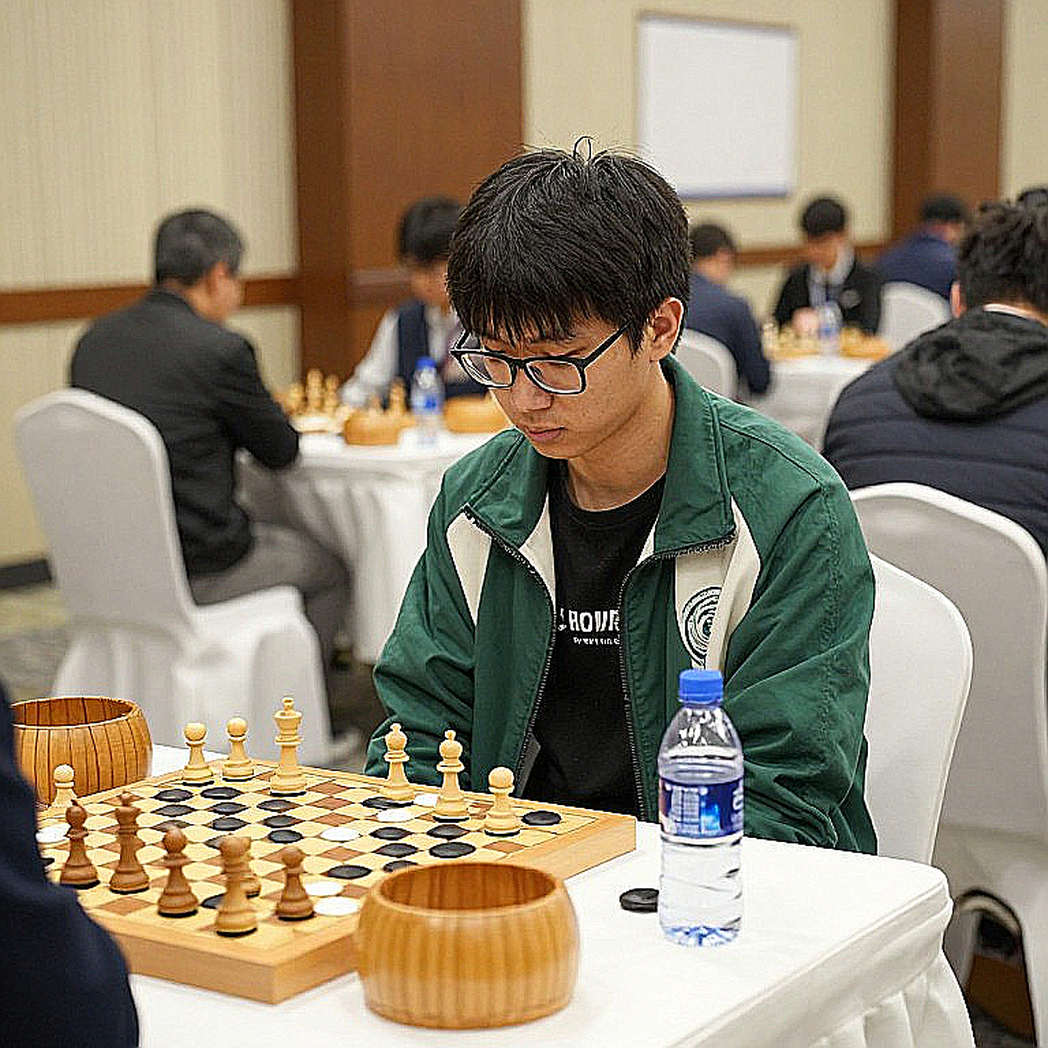
I will state plainly what I am unsure of. I do not know whether Japan changed its composition structure or its objective priority. I do not know whether Indonesia had internal coordination problems. I do not know whether the games were close enough that the turning point was a single botched objective fight.
And I have to remind myself of an old lesson. In 2026, before the World Cup in Russia, I analyzed Germany's ten qualifiers and showed their average PPDA was 11.3 — far above the 8.5-to-9.5 range of top pressing sides. I wrote that Germany would be eliminated in the group stage. All of Germany laughed.
Then on June 27, 2026, Germany lost 0-2 to South Korea and finished bottom of Group F. In March 2026, I wrote a prophecy. All of Germany laughed. After that night, my article was shared more than 50,000 times.
But three years later, at the Euro 2026 semifinal, I used my own model to declare on radio that Denmark would beat England: Denmark averaged 118.7 km per match against England's 112.3, and took 18 shots per match against England's 11. I insisted the data said England would lose. Denmark lost 1-2 after extra time.
I had ignored the most important metric: squad depth and the spark a substitute could provide. Since then, every piece I write ends with a mandatory section.
Every crowd is wrong. The only thing that is never wrong is probability.
Where my assumptions could be wrong? First, I assume the turning point was tactical. But the only data I have — set scores — does not rule out that all three Indonesian losses were close games decided by a single late objective fight. In that case, the gap between the two teams is far smaller than 1-3 suggests. Second, I assume Japan's host advantage lies in the ecosystem. If the crowd at Aichi Sky Expo Hall D was large and loud, another advantage — the stands — also entered the equation, and I have not modeled it. Third, I assume Pokémon Unite is new to this Games edition. If it featured in the previous edition, the entire host-structural-advantage argument weakens considerably.
What to watch next cycle
Indonesia's fifth silver and 24th medal will fade from the news within a month. What will not fade is a question: can Southeast Asia hold two of the top four spots in this title at the next Games? If it can, we are talking about a real development pipeline. If it cannot, this was just a season where four teams happened to be in the right place.
I will track two indicators. One is Indonesia's roster at the next edition — keeping these same five players means a generation is being invested in long-term, while a full overhaul means we just witnessed a lucky cohort. Two is Japan's performance at international Pokémon Unite events outside the Games system. If the Japanese keep winning on both stages, the IP-origin advantage hypothesis needs to be rewritten as a law rather than a medium-confidence conjecture.
Twenty-two years observing this industry taught me one simple thing: the standings answer who went home with what. They never answer who will go home with what next time. That is our job, and it starts with refusing to read a scoreline as a verdict.