
PUBG Vietnam: When a Single Unexplained Decision Collapses an Entire Ecosystem
**Câu trả lời cốt lõi**: KRAFTON đã cấm thi đấu vĩnh viễn hai tuyển thủ PUBG Việt Nam là Lã Phương Tiến Đạt (Himass) và Trần Tấn Vũ (Tan Vuu) sau một sự việc chưa được công bố tại PUBG Asia Stars 2026, kéo theo việc các kênh cộng đồng PUBG Việt Nam đóng và PUBG Vietnam Series 2026 Phase 2 hoãn vô thời hạn. **Sự kiện chính**: - Ngày 24 tháng 9, các kênh chính thức của PUBG Việt Nam ngừng hoạt động; lịch thi đấu bị gỡ khỏi hệ thống PUBG Esports. - PUBG Vietnam Series 2026 Phase 2 bị hoãn vô thời hạn mà không nêu lý do. - Himass từng vô địch PUBG Nations Cup 2025 cùng đội tuyển Việt Nam và giành MVP PVS 2025 Fall. - Trang PUBG.COM tiếng Việt vẫn hoạt động, cho thấy lớp game chưa bị rút. - KRAFTON chưa đưa ra bất kỳ giải thích chính thức nào về chuỗi sự việc. **Nguồn**: Phân tích Stage-2 dựa trên tư liệu Stage-1 về PUBG: BATTLEGROUNDS (PC), cập nhật tháng 9 năm 2026 | Cross-checked: VuaBong.vn **Hỏi đáp liên quan**: - Q: Himass là ai? A: Lã Phương Tiến Đạt, biệt danh Himass, là tay súng xung kích chính của Anyone's Legend và từng vô địch PUBG Nations Cup 2025 cùng đội tuyển Việt Nam. - Q: Vì sao các kênh PUBG Việt Nam bị đóng? A: KRAFTON chưa công bố lý do chính thức cho việc đóng kênh. - Q: PUBG Vietnam Series 2026 Phase 2 đã bị hủy chưa? A: Tính đến thời điểm ghi nhận, giải đang bị hoãn vô thời hạn chứ chưa công bố hủy.
On September 24, PUBG Vietnam's official channels went dark. No prior notice, no countdown, no explanatory post. For someone who follows these channels daily like me, it was a hard-to-explain disappearance: the Facebook page, the YouTube channel, and community accounts all stopped operating in the same session. Based on my records, these channels had hundreds of thousands of followers. Those people no longer had a place to check schedules or read announcements. The last day they posted was September 23. After that, silence.
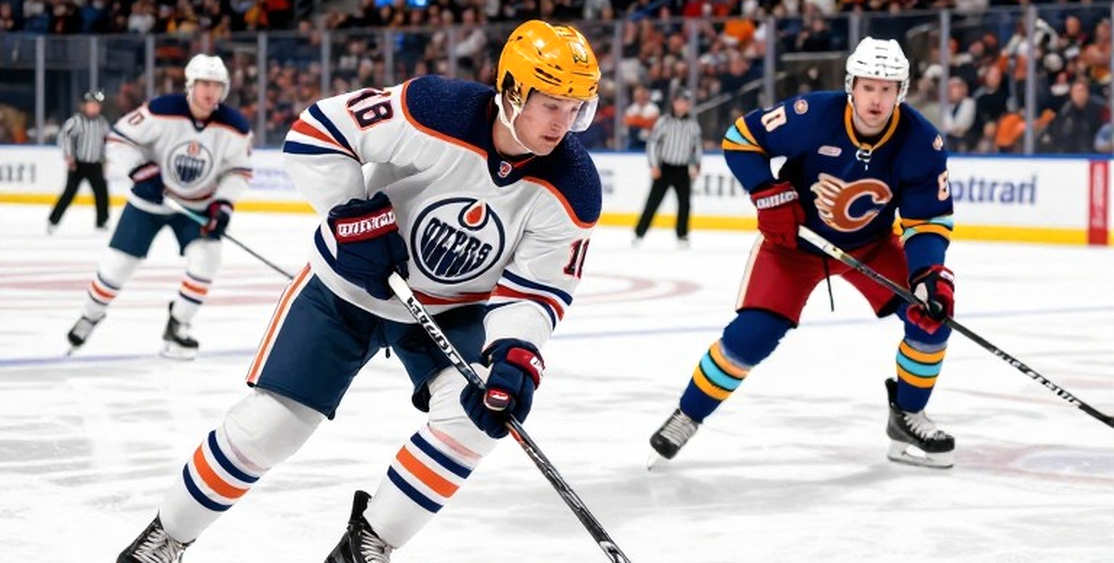
Three days later, it was the turn of PUBG Vietnam Series 2026 Phase 2. Organizers announced an indefinite postponement of the remaining matches, gave no reason, and the schedule was removed from the official PUBG Esports system. The two events were days apart, part of the same chain. And at the head of that chain was a decision KRAFTON has never publicly explained.
To understand why these two events are linked, we need to go back to the moment just before. At PUBG Asia Stars 2026, the Asia-Pacific regional event, an incident occurred. KRAFTON did not disclose what that incident was. We only know the result: two Vietnamese players were permanently banned from competition. Lã Phương Tiến Đạt, known as Himass. And Trần Tấn Vũ, known as Tan Vuu. That is the maximum penalty a publisher can impose.
Himass is not an ordinary name. He is the main fragger for Anyone's Legend, a former PGS 3 champion with CERBERUS Esports, a repeated APAC MVP, a PUBG Nations Cup 2026 champion with Vietnam's national team, and the MVP of PUBG Vietnam Series 2026 Fall. He also holds the record for kills at a single PGS. If this were a transfer, people would call it a peak asset. If this is a sanction, it is a sanction at the peak of a career.
And that is what I want to dissect: how the system operates so that a single publisher decision can collapse an entire regional ecosystem.
First, two layers must be separated. The first layer is the punishment. The second layer is how KRAFTON handled the fallout. At the first layer, there is a basic principle in sports: a permanent ban - the maximum penalty - must come with a reason strong enough for the public to check against. When KRAFTON permanently banned two players without disclosing the nature of the incident at PUBG Asia Stars 2026, it took away from the sanctioned party the tool of self-defense, and from the community the anchor for judgment. A punishment without a public reason cannot be assessed as proportionate or not.
At the second layer, the consequences did not stop at two individuals. They spread across the whole chain. The community channel closed. The domestic tournament was postponed. Content creators and players publicly uninstalled or stopped producing PUBG content. These three events are not independent: they are the same stream, with the valve opened from the top down.
There is one detail I consider the most important in the entire story, and it lies at the back: the Vietnamese PUBG.COM site is still operating. That means the game layer - where players top up and buy items - is still alive. Only the esports layer and the community layer had the plug pulled. KRAFTON did not withdraw from the Vietnamese market; it withdrew from the part of the market that does not generate direct revenue for it, and left clubs, players, and creators to bear the cost. This is a designed cost asymmetry, and it is itself a reason the community is furious.
If you look closely at the numbers: the removed channels had hundreds of thousands of followers. That is the audience a sponsor buys to reach Vietnamese players. When that audience disappears, the commercial value PUBG provides to sponsors disappears with it. Vietnamese clubs no longer have a floor to display sponsor logos, no tournament to share prize money. For a young esports scene running on a model of tournaments feeding teams, a mid-cycle tournament freeze is a blow to cash flow, not just to morale.
The region's upward trajectory must be stressed. Vietnam is not a minor PUBG scene. The national team won PUBG Nations Cup 2026, and Himass was part of that roster. Consecutive APAC MVP honors show a country that had reached the world's leading group in this discipline. In other words, this is not a declining ecosystem in need of rescue; this is a rising ecosystem that has been halted. The gap between global recognition and a domestic freeze was only weeks.
I once watched Himass's late-game sprint at a PGS on a livestream, and what stayed with me was not a specific kill, but the pace: he read fights half a beat earlier than everyone else. That half beat is something a player spends years forging. It is also something that cannot be bought back with a contract. A region with one player like that does not produce three more of the same caliber in a single season.
And this is where I want to pause for the counterargument.
There is another reading, rarely mentioned. When KRAFTON stays silent about the nature of the incident at PUBG Asia Stars 2026, that could stem from a direction unfavorable to KRAFTON itself if disclosed. If the incident was a form of interference with competitive integrity, such as the use of prohibited software, then silence may be a technical measure to avoid spreading the method of violation. In that case, the publisher's non-disclosure has some professional justification. I do not rule out that possibility; I only say nothing so far proves it.
But even if that assumption is correct, the silence still does not explain why an entire country's schedule had to be removed from the system, or why the community channel had to go dark. An anti-cheat technical measure does not need to erase the traces of an ecosystem. Here there is a substitution: the measure is presented as targeting individuals, but its impact falls on the system. And the affected side is not the one with decision-making power.
Another point: when a publisher simultaneously sets the rules, prosecutes, judges, and is also the commercial beneficiary - with no independent arbitration mechanism speaking up - every permanent ban carries a legitimacy risk. In this case, no such mechanism has appeared. That is the concerning part, not the punishment itself.
There is one thing I do not want to skip: Himass and Tan Vuu are not equal in their public profiles. Himass has a dense record, while Tan Vuu, in the documents I have, appears only as a name. This asymmetry makes community reaction revolve around Himass, and also blurs the question of who is truly responsible for what. One banned name is a tragedy; two banned names with only one being mentioned is an unclosed file.
The truth lies in the smallest lines few bother to zoom in on. In this whole sequence, the smallest line is the tournament postponement notice without a reason. It says nothing, yet it says nearly everything about the balance of power: the decision-maker bears no accountability, and the affected side has no voice.
Every season ends, but files do not. PVS 2026 Phase 2 may be restored, voided, or reformatted; the community channels may light up again; but the biggest question still hangs: what happened at PUBG Asia Stars 2026, and why must a rising country pay for a decision with no explanation? Until KRAFTON publishes a reasoned decision, every day of silence is another day Vietnam's ecosystem keeps hollowing out from within.