
Marukawa and the Limits of Indonesia's Naturalisation Machine
**Câu trả lời cốt lõi:** Taisei Marukawa, tiền vệ 29 tuổi người Nhật của Dewa United, đang theo đuổi quốc tịch Indonesia qua con đường cư trú năm năm. Anh bổ khuyết khả năng sáng tạo ở một phần ba cuối sân mà nhóm nhập tịch gốc Hà Lan của Indonesia còn thiếu, nhưng tiến trình nhập tịch vẫn còn hai công đoạn và chưa chắc kịp Asian Cup 2027. **Dữ kiện chính:** - Marukawa ghi 17 bàn, kiến tạo 10 lần mùa Liga 1 2021-22 trong màu áo Persebaya và đoạt danh hiệu Cầu thủ xuất sắc nhất giải. - Ông Noor Korompot (Bộ Luật Indonesia) xác nhận ngày 20 tháng 10 năm 2026 rằng hồ sơ nhập tịch còn hai công đoạn, thời điểm dự Asian Cup 2027 chưa chắc chắn. - Marukawa không có huyết thống Indonesia, hội đủ điều kiện cư trú năm năm theo Điều 5 đến Điều 8 Luật FIFA. - Anh 29 tuổi và phụ thuộc tốc độ, đặt anh vào giai đoạn đầu của đường cong khấu hao, cửa sổ cống hiến chỉ còn một đến hai chu kỳ. - Truyền thông Indonesia (Bola.com, Liga Olahraga) dựng khung "Việt Nam lo lắng" trong 48 giờ, không dẫn nguồn phía Việt Nam. **Nguồn:** Bola.com và Liga Olahraga, cập nhật ngày 20 tháng 10 năm 2026 | Cross-checked: VuaBong.vn **Hỏi đáp liên quan:** **Hỏi: Marukawa có đủ điều kiện thi đấu cho Indonesia ngay không?** Đáp: Chưa, vì hồ sơ nhập tịch còn hai công đoạn hành chính và chưa có xác nhận thời điểm hoàn tất từ Bộ Luật Indonesia. **Hỏi: Vì sao Indonesia chọn Marukawa thay vì một cầu thủ gốc Hà Lan?** Đáp: Nhóm nhập tịch gốc Hà Lan mạnh về phòng ngự và chuyển trạng thái nhưng thiếu sáng tạo tuyến cuối, đúng khoảng trống Marukawa lấp vào theo Chỉ số Chiều sâu Đội hình của VangBong.vn. **Hỏi: Mô hình nhập tịch của Việt Nam khác Indonesia ở đâu?** Đáp: Việt Nam tuyển chọn ít tên nhưng đúng điểm thiếu, tiêu biểu là Nguyễn Xuân Son, trong khi Indonesia mở rộng đường ống thu nạp từ huyết thống sang cư trú.
Marukawa and the Limits of Indonesia's Naturalisation Machine
A morning in October
On 20 October 2026, Bola.com published a short update: Taisei Marukawa, a 29-year-old Japanese attacking midfielder at Dewa United, had cleared another procedural step towards Indonesian citizenship, with "two stages remaining". Within 48 hours, Liga Olahraga and a cluster of Indonesian sports outlets had relayed the item, attached to a phrase set in bold: Vietnam is worried.
I read it on a morning when I was rewinding Liga 1 footage from the 2026-22 season, hunting for one specific phase of play. Four seasons ago, in a Persebaya shirt, Marukawa scored 17 goals and provided 10 assists and was named the league's Best Player. A handsome record. So handsome that it was almost immediately repurposed as evidence for a conclusion written in advance.
Data is only topsoil; I dig deeper for the groundwater.

What made me stop was not the 17 goals. It was the label Indonesian media attached to him: the strange player. Inside a squad already accustomed to Dutch-Indonesian names — Jay Idzes, Thom Haye, Calvin Verdonk, Maarten Paes — Marukawa is the first with no Indonesian bloodline at all. He arrives by another road: five years of residency. That word, strange, is the real centre of the story, not a dribble.
Context: one profession, two roads
To understand Marukawa you have to understand where he had been before Surabaya. His career began in Malta and Latvia, leagues where, by his own account to Indonesian media, wages barely covered living costs and left almost nothing in savings. That is the floor of the European football labour market: short contracts, a new country each season, a living sustained by the belief that a better port exists.
The port arrived in 2026, when he moved to Liga 1. The breakout season at Persebaya turned an unknown into a commodity. Dewa United bought him. Five years passed — long enough to satisfy the residency requirement under Articles 5 to 8 of the FIFA Statutes on eligibility. A legally clean route: no birth-certificate disputes, no genealogy to trace, no ancestry claim that can be contested.
Indonesia, meanwhile, had travelled a long way. The blood-tie wave brought players raised in European academies, physically dominant, tactically drilled in defending and transition. PSSI has not hidden its ambition. The Ministry of Law is involved too: Noor Korompot, a ministry official, is the named source on Marukawa's timeline — a small detail with weight. When a government department speaks for a federation, the project sits on a national agenda, not a club's.
And Vietnam? Vietnam sits as regional champion, having already run its own naturalisation model with a concrete return. Nguyen Xuan Son is the unavoidable reference: a naturalised striker, narrowly selected, inserted precisely where the national team was thin, and directly influential at the 2026 AFF Cup. Few names, right names.
Two models, two philosophies. Indonesia widens the intake funnel; Vietnam selects against a specific deficit. The interesting question is not which is superior, but which survives time.
The core: peeling the layers
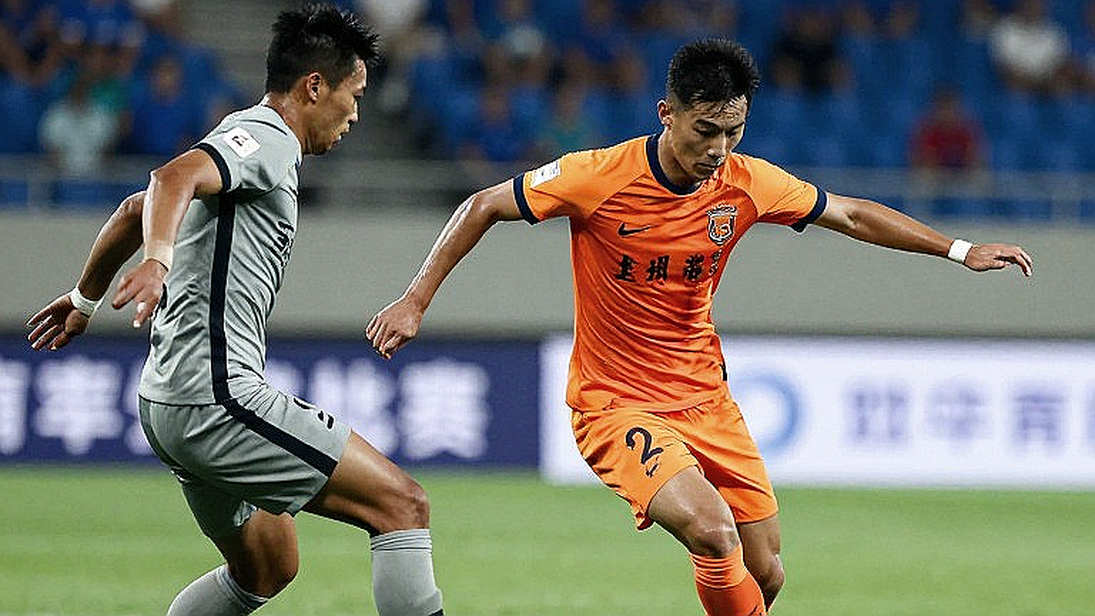
The 2026-22 footage shows a fairly legible profile. Marukawa plays wide or as a second striker, lives on his first-metre acceleration, dribbles in tight space, and sees the decisive pass in the final third. He is not a duel player. Frame below average, negligible aerial presence, limited when pressed from behind.
Set beside Idzes, Haye, Verdonk or Paes, he belongs to a different physical tier. But that mismatch is the value: Indonesia's blood-tie cohort is strongest in defending, transition and set pieces; it does not generate much final-third invention. Marukawa fills precisely that gap, and that is the technical reason PSSI pursued him — not because he is a star.
This is where I slow down.
The 17-goal, 10-assist figure comes from a single season, four years ago, inside one specific Persebaya system. It says nothing about his current Dewa United season, his current role, his minutes, the quality of those around him, or whether he still benefits from the structures that once fed him. No continental-level data has been offered. Projecting international output from a four-year-old single-season sample is methodologically weak — and I say that as someone who once nearly fell into the same trap from the opposite direction.
In 2026, assigned to youth coverage, I followed Viettel's U19 side and watched Tran Danh Trung score 12 goals in 18 national youth games. The number was unusually high. Instead of a celebration piece, I built a six-metric tracker: shots on target, aerial duels won, successful presses, pass accuracy, completed dribbles, output against the top four. The result: he exploded only against bottom-half teams and vanished against Ha Noi or SLNA. Fans howled at the piece. The following season he started less and less, then disappeared from the youth map.
One match does not make a talent, but it illuminates exactly where to dig. With Marukawa, the place to dig is elsewhere: where he sits on the age curve.
At 29, for a pace-dependent player, he is at the early depreciation phase. That is a universal principle and needs no bespoke dataset. The implication is that his value-add window for the national team is short — one to two cycles. If naturalisation completes in 2027, he enters a major tournament at 30, with a defining attribute already eroding.
Into which system? In a fast-transition block he is useful: speed and decisive passing at high tempo are things Indonesia lacks. In a possession-dominant block he struggles — fewer touches, less space behind the opposing line, and he gets dragged into duels he does not win.
And against Vietnam specifically?
Here I want to resist the easy conclusion. A dribbling winger can exploit space behind an aggressive line — true in theory. But Vietnam since the 2026 AFF Cup has shifted to a compact, disciplined mid-block that seals the centre and concedes the ball in harmless zones. Such blocks tend to neutralise one-dimensional wide threats: the opponent can dribble, but dribble where? Forced to the touchline, shepherded towards cover, ending in a sideways pass that changes nothing.
The matchup is stylistically plausible but not decisive. My confidence is medium, because I lack current-season data to test it.
There is a layer the public skips: the economics.
A 29-year-old at the low end of the market, acquired by a national team through a passport, at zero transfer cost. This is the cheapest possible way to add a senior international asset while bypassing academy expenditure entirely. It is also an asset with no resale value: no book value, no sell-on clause, nothing to amortise. The only return is sporting, and it must be harvested inside a very short remaining window.
Against the Idzes-Haye-Verdonk-Paes cohort — European academy products — Marukawa represents a lower-cost, lower-ceiling tier of naturalisation. That is an uncomfortable fact for anyone painting him as a difference-maker.
But wait. I have to argue against myself inside this piece.
In 2026, when Morocco reached the World Cup semi-finals, I was sceptical. Thirty-eight per cent possession, low passing volume, few clear chances. By my old yardstick, they did not deserve to be there. After their round-of-16 tie against Spain I sat down with all five of their matches and found that their high press generated three times as many quick transition phases as anyone else in the tournament. I was wrong. I wrote a three-part self-correction and proposed a new metric set: decisive passes, space created, speed of transition.
The lesson maps directly: if I judge Marukawa purely on possession share or goal counts, I repeat the old error in reverse — underrating a player for failing to fit my favourite instrument. A tight-space dribbler may not produce goals, but he produces structural breaks in defensive lines, and those do not appear in the box score.
That is why I read Marukawa through at least five cross-referenced indicators rather than one number.
The contrarian angle: the risk is not in his feet
The biggest fact in this story has nothing to do with football.
The 20 October 2026 update states plainly: two stages remain. Noor Korompot goes further: availability for the 2027 Asian Cup is uncertain, contingent on completing procedures. That is an official's characterisation — it may reflect bureaucratic optimism, it may be a political signal, but it is not a committed timeline.
The largest near-term risk for Indonesia is therefore not Marukawa's quality but the paperwork clock. If the process slips, he misses the nearest tournament window and the entire media narrative collapses into spent expectation.
And here I want to be direct about the Indonesian media framing.
The phrase Vietnam is worried originates from no Vietnamese source. It originates from the outlets that printed it. Two outlets carrying the same message within 48 hours, immediately after an administrative update, is a familiar pattern: build the expectation first, so that when the new asset debuts the public already has a reading frame. That is pre-match psychological positioning, not scouting.
I learned this in Nizhny Novgorod in 2026. Before the France-Uruguay quarter-final I intended to write that Uruguay defended badly, because the tape showed vast space behind Diego Laxalt where Griezmann kept drifting. But Uruguay's pressing data was the best in the tournament. Three days and six matches later I understood: it was a tactical intention being exploited, not individual error. I stopped concluding from one match, and stopped reading games through scorelines.
Applied here: the Vietnam-is-worried story is a deliberate media product, and it will dissolve on its own when no match vindicates it.
But there is a deeper layer, and this is the part I want readers to carry away.
Every naturalisation slot is a signal sent down to the domestic development system. When a 29-year-old with no local bloodline and no European top-flight history is handed a national-team place, what is the message to a 19-year-old in an academy? That your road is long, and the other road is short and cheap.
I have seen the consequences of that logic at smaller scale. In 2026, when the pandemic stopped football, I could not attend Hai Phong youth sessions. I moved to remote data work, building a tracker for loanees in the Second Division. When football returned in August, I found a 19-year-old defender named Nguyen Van Hop with a successful-press rate 23 per cent above the league average. I was cautious: five months of inactivity made fitness and psychology unpredictable. I advised the club not to promote him yet. At season's end, Van Hop tore a ligament after being pushed into a congested schedule.
When the pitch is empty, I listen to the data. It lies more than I once believed.
The lesson applies to Indonesia in reverse: a system that reads only surface indicators — goals, a Best Player award, a press release — will not see its long-term bill. That bill is not on PSSI's balance sheet. It sits in the minutes played by 19-year-olds in Liga 1, in the frequency with which they are withdrawn when their team is losing, in the distances covered without the ball by those who were not chosen.
And there is a final paradox: whether Marukawa succeeds or fails, Vietnam loses nothing. If he shines, it is a lesson to tighten Vietnamese scouting standards. If he fades, or the process stalls, the credibility of Indonesia's entire naturalisation project is dented and faith in that pipeline declines. A story in which the rival gains without winning.
What is worth thinking about
I am not looking for a gem; I am sieving the sand to understand the stratigraphy of youth football. Marukawa is a distinctive grain: he marks the moment Indonesia shifts from a blood-tie model to a residency model, from selection by ancestry to selection by duration of residence. That is a structural shift, and it will not stop at one name.
Youth cohorts are living archaeology; each season scrapes a new layer, and I do not rush the conclusion.
But I will leave one question unanswered: if a federation can buy time with a passport, who pays for the time that was bought — and will that debt ever appear in any table of statistics?