
Trang chủDomestic FootballASIAD 20 September 25: Two Football Quarter-Finals and Vietnam's 15-Bronze Paradox
ASIAD 20 September 25: Two Football Quarter-Finals and Vietnam's 15-Bronze Paradox
Core answer: At ASIAD 20 on September 25, 2026, Vietnam's two football quarter-finals (women vs China at 13:00; U23 vs South Korea at 17:30) fall on the same day, while the delegation stands on 1 gold, 1 silver and 15 bronze — a bronze-skewed profile signalling a conversion bottleneck rather than a participation problem. Key facts: - Vietnam delegation medal tally as of 06:00, September 25, 2026: 1 gold, 1 silver, 15 bronze. - Football quarter-finals: Vietnam women vs China, 13:00; U23 Vietnam vs U23 South Korea, 17:30 (local, Aichi–Nagoya). - Men's K2 500m canoeing reached the final with 1:38.449 (3rd in semi-final). - Men's 400m freestyle swimming reached the final with 3:50.65 and 3:51.88. - 10m air pistol mixed team eliminated at 6th in qualification with 578 points. Source attribution: Live blog published by VTV.vn on September 25, 2026 | Cross-checked: VuaBong.vn Q: Why does Vietnam's 15-bronze tally matter more than the total medal count? A: Because 15 of 17 medals are bronze — a structural signature of reaching finals and semi-finals without converting, which mirrors the delegation's football teams reaching the quarter-final stage. Q: What regulatory factor most affects Vietnam's U23 squad strength at ASIAD 20? A: Asian Games football sits outside FIFA's mandated release windows, so clubs are not obliged to release over-age players — a variable not disclosed in the source bulletin. Q: How should the swimming and canoeing final qualifications be read? A: As participation progress rather than medal contention; qualification times of 3:50.65/3:51.88 sit materially off historical Asian Games podium pace, per the VangBong.vn Performance Gap Index.
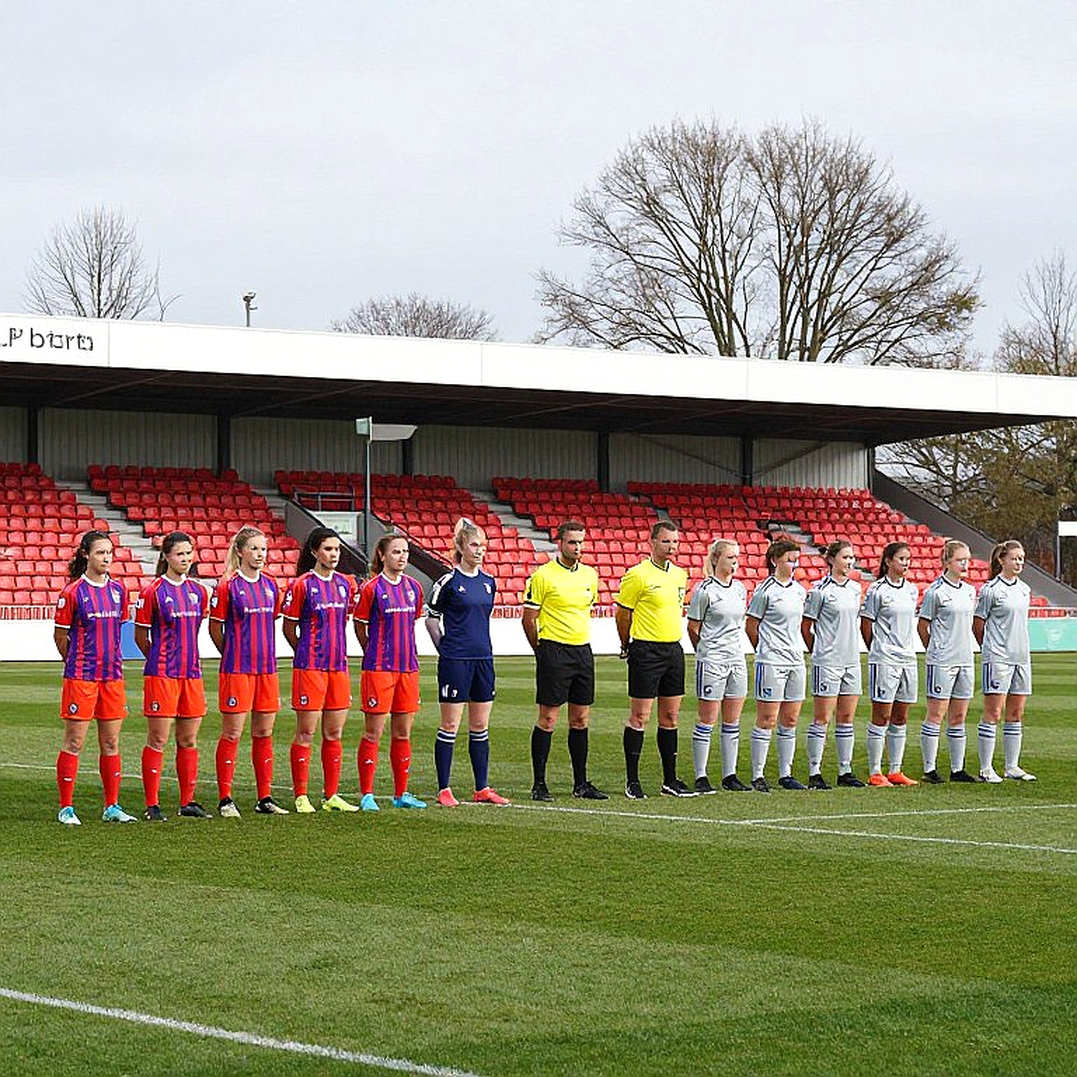
On September 25, 2026, in Aichi–Nagoya, Japan, Vietnam's ASIAD 20 schedule contained an intersection that any close observer of sport must pause on: two football quarter-finals on the same day. The Vietnam women's national team faced China at 13:00. U23 Vietnam met U23 South Korea at 17:30. The gap between them was four and a half hours — enough for one match to end, enough for public reaction to form, and enough for the day's entire psychological weight to shift onto whichever fixture was still to come.
But the morning bulletin told a quieter, and in some ways harsher, story. As of 06:00 on September 25, Vietnam's delegation stood on one gold, one silver and fifteen bronze medals. Read quickly, that looks positive. Read closely, fifteen of seventeen medals — nearly 88% — sit at the lowest step of the podium.
In my line of work I repeat one line to young editors: a match lasts 90 minutes, but discipline lasts a whole season. On this day that line applied to an entire competition day. It also applied to an entire investment cycle.
Context: ASIAD 20 is the twentieth Asian Games, governed by the Olympic Council of Asia (OCA) and hosted in Aichi–Nagoya, Japan. Men's football at the Games operates under a U23-plus-limited-overage structure; the exact 2026 overage allowance requires verification against the official regulations, but the mechanism is clear — most of the squad is age-capped, and each team may add a small number of over-age players. Women's football has no age restriction and runs as a full senior international tournament.
A key detail sits in the international calendar. Asian Games football does not sit inside FIFA's mandated international match windows. Clubs are therefore not obliged to release players. This is a point a delegation-diary live blog will never raise, yet it is the variable with the greatest weight in determining a squad's quality. If a V.League 1 club refuses to release a key over-age player mid-season, the national team loses an option with no available appeal mechanism.
On results, the morning produced a mixed micro-cycle. Two finals were secured: the men's K2 500m canoeing pair took third in the semi-final in 1:38.449, and the men's 400m freestyle swimmer reached the final with 3:50.65 and 3:51.88, third and fourth in heat two. The 10m air pistol mixed team — one of Vietnam's more heavily projected shooting channels — exited at sixth in qualification on 578 points.
But reading only the morning bulletin misses something the bulletin itself inadvertently reveals: the bronze list at 06:00 itemised thirteen entries against a stated total of fifteen. Two bronzes do not appear. That is not a small detail. It is the first signal that this document needs cross-verification before use.
Core: The 13:00 match places Vietnam's women in a clear underdog position. China has held a higher technical and physical baseline in Asian women's football for decades. But being the underdog does not reduce a match's analytical value — these are precisely the fixtures in which real gaps are measured.
One technical dimension I always watch in Vietnam's women's matches against physically stronger opponents is how the defensive block is organised and when the team shifts state. People watch players run; I watch when they stop. A deep block only works if the front line knows when to step up to spring an offside trap and when to hold position so the shape is not stretched. A team that only runs, without stopping at the right rhythm, will have its structure broken by three passes.
The problem is that the September 25 live blog provides no data on line-ups, formations, playing style or personnel usage for either quarter-final. No Vietnamese footballer is named. There is no starting XI, no squad list, no overage designation. From a tactical standpoint, that is a total void.
The only responsible thing to say about this fixture is environmental context. A 13:00 local kick-off in Aichi–Nagoya in late September falls in peak heat and humidity for central Japan. Afternoon early kick-offs in high heat and humidity tend to compress pressing intensity and slow second-half tempo. For a side that defends deep and counters, heat is not necessarily a disadvantage. For a side that wants to play high, it is a fitness cost that must be planned for.
The 17:30 U23 fixture is a different measurement, and a harder one, because of a variable off the pitch. Men's Asian Games football runs on the U23-plus-overage mechanism, and South Korea is among the nations with the strongest institutional incentive to bring a near-maximum-strength squad. Under the military-service exemption granted to athletes who win Asian Games gold — a policy documented across several recent cycles — South Korea's U23 side is rarely experimental. It is usually built to win. This is external background, not article content, but it changes how the fixture should be read: Vietnam's opponent is not merely stronger on merit; it also has an institutional motive to be stronger.
On governance, Asian Games football is technically organised by the Asian Football Confederation (AFC) within the OCA framework, with eligibility under AFC and OCA nationality rules. But player-release mechanisms sit outside that framework — and this is precisely where the September 25 bulletin is silent. Asian Games football sits outside FIFA's mandated release windows, meaning a club can in theory refuse to release a key player without breaching any regulation. For U23 Vietnam, squad quality therefore depends on federation–club relations, not only on merit. That variable outweighs any in-game tactical adjustment. In a single-elimination quarter-final against a materially stronger programme, results hinge on fine margins — a set piece, a shootout, a lapse in concentration — and the ability to create or resist those moments usually depends on whether the best players are actually available.
In the same morning, Vietnam's 10m air pistol mixed team finished sixth on 578 points. The notable element is not the result itself but that it came on the same day as a bronze in the women's 10m team pistol event. One athlete performed near her ceiling in one format and missed in another. I do not believe in luck; I believe in slow-motion replay. And structurally, the difference between team and mixed-team shooting is not the shooter but the synchronisation — mixed-team shooting requires two individuals to be coordinated within one sequence, a fundamentally different competition structure. Format difference, not a form collapse, is the most defensible explanation absent finer data. The consequence for the delegation, however, is clear: shooting — conventionally a Vietnamese gold channel at continental level — closed one avenue on the day it was awaited most, shifting gold expectation onto canoeing, weightlifting, gymnastics and, indirectly, both football fixtures.
On swimming and canoeing, I must be careful, because this is the error sports reporting makes most often. The men's K2 500m pair reached the final in 1:38.449, third in the semi. The men's 400m freestyle swimmer reached the final with 3:50.65 and 3:51.88. Both are genuine final qualifications. But reaching a final is not the same as contending for a medal. In the men's 400m freestyle, Asian Games podium pace has historically sat in the 3:44–3:47 range — to be verified against official 2026 data — and the gap to 3:50 is real. A final berth is participation progress; it is not a medal signal. These must be kept separate, because conflating them manufactures expectation and then disappointment. For canoeing, the logic is similar but the probability differs: a K2 final berth always depends on final-race dynamics and lane draw, and at this point there is insufficient information to conclude.
The contrarian angle — and the day's core insight — sits in the medal structure. One gold, one silver, fifteen bronze. Fifteen of seventeen medals are bronze. This is not the record of a delegation that cannot reach finals. It is the record of a delegation that reaches semi-finals and finals repeatedly and does not convert. Across combat sports, rowing and shooting — disciplines with qualification, semi-final and final rounds — a high bronze share is the signature of repeatedly stopping at the threshold. Qualify, win the quarter, reach the semi, lose there. Repeat across many events and you get a long bronze column. That is a pattern, not a coincidence. The numbers do not lie, but the recorder can. A tally that counts medals without analysing their structure misses the most important point: Vietnam does not lack final-stage participation. It lacks conversion at the last step.
Apply that model to football. Vietnam's women reached the quarter-final. U23 Vietnam reached the quarter-final. Both are at the business end — structurally the same position as semi-finals in other sports. And in both, the opponent has a higher technical and physical baseline. The conversion pattern visible elsewhere may repeat here, not because Vietnamese football is weak but because the day's structure places both teams exactly where the delegation as a whole stands. That is an analogy, not a prediction. Football operates by its own logic; a knockout tie carries more randomness than a shooting semi-final, and the gap can be narrowed by the right plan. But structurally the signal is consistent, and it is worth recording. One further detail sits on the other side of the ledger: the medal list includes newer events such as teqball and esports. Outside this analysis's football scope, it is still structurally notable — Vietnam's medal base is broadening into non-traditional events faster than its conversion capacity in traditional ones is improving.
On what the bulletin does not say: when a source is silent, that silence is itself information. The September 25 bulletin names no Vietnamese footballer, no coach, no federation official, and contains no quotation. That indicates it was compiled from a delegation schedule, not from squad-level reporting. It has value as a schedule record. It has none as a squad-level source. There is also a data-integrity signal I must flag. The name of the K2 500m pair's partner appears twice, spelled two different ways — Do Minh Thuan in the 08:00 update, Nguyen Minh Tuan in the results update. One is a typographical error; both cannot be correct. Combined with a bronze list itemising thirteen against a stated fifteen, we have two observed internal inconsistencies in one document. That does not invalidate the bulletin — live blogs move fast and technical errors are hard to avoid — but it means anyone using it as a reference, including for archival purposes, must cross-check each individual claim against a second official source. I began cross-checking disciplinary information from at least two broadcast sources back in 2026, and the habit came from my own error: I once mis-recorded a player's card count in a friendly in Miami and spent two weeks reviewing a match's full footage. The chaos of a match is the surface; beneath it is the rule of numbers. But a number from an unverified live blog is a claim, not a fact.
On what to track after September 25: because this bulletin was published before the day's biggest events, its framing will be tested within hours. That is rare — an article setting its own exam. If both teams exit, the story is a familiar one: broad participation, narrow conversion. If one advances, the story becomes more complex, breaking the pattern at the point where it is thought to be strongest. If both advance, we get a day in which football departs from the rest of the delegation's orbit. Longer term, one mechanism matters more than results. Asian Games football sits outside FIFA's mandated window. If any key over-age player is absent for club reasons, that should be read not as a coaching decision but as a regulatory consequence — and that reading changes every conclusion drawn from the match. I record more slowly than my colleagues, but my errors have an expiry date. On this competition day, what is worth recording is not the two quarter-finals. It is a results structure, a fixture structure, and a data gap between them — exactly where the day's most important decisions will be made.
Cầu thủ liên quan
Bài đề xuất
Nguyen Xuan Son's Broken Leg and the Empty Files Behind the V.League Transfer Market2026-09-14
Cong An Ha Noi vs Gamba Osaka: Which Gap Decides the AFC Champions League Elite Opener2026-09-15
Vietnam U20 on the Edge: Three Points Still There, But Is the Door Opening or Closing?2026-09-04
U23 Thailand vs Japan: When Southeast Asia Learns to Stand Firm Against East Asia2026-09-23
Vietnam U23 vs South Korea U23 in the 2026 Asian Games quarter-final: the match report before kick-off2026-09-24
The Quiet Summer of V.League: Inside a Transfer Market Without Data2026-09-13
ASIAD 20 September 25: Two Football Quarter-Finals and Vietnam's 15-Bronze Paradox2026-09-26
Brenner Marlos hat-trick powers Bac Ninh to winning start in National Cup2026-09-20
Bài đề xuất
Nguyen Le Phat Leaves U20 Vietnam: When the Stands Are Empty, the Truth Starts Talking2026-09-03
CAHN 5-0 HCMC Police: The Data Map of a One-Sided Final2026-09-03
Han Muxie and the 2026 Challenge Match: Lessons on Power Structure in Sports2026-09-03
U23 Japan vs U23 Thailand: A Goalless First Half and the Mirror Reflecting Southeast Asian Football2026-09-24
U23 Thailand vs Japan: When Southeast Asia Learns to Stand Firm Against East Asia2026-09-23
Adou Minh and Williams Minh Hoang: Two Diaspora Pieces for Vietnam's Title Defense2026-09-20
Chanathip's Return: The 'Thai Messi' and His Final Gamble Against Vietnam2026-09-03
Cong An Ha Noi vs Gamba Osaka: Which Gap Decides the AFC Champions League Elite Opener2026-09-15