
Doan Van Hau's four-match V.League ban: a 20 million VND invoice and the 360 minutes that matter more
**Câu trả lời cốt lõi:** Đoàn Văn Hậu bị VFF phạt 20.000.000 VND và treo giò 4 trận V.League sau thẻ đỏ trực tiếp ở phút 68 trận CAHN gặp Thể Công Viettel. Án này chỉ áp dụng ở cấp câu lạc bộ, không tự động tước quyền lên đội tuyển quốc gia. **Dữ kiện chính:** - Tiền phạt 20.000.000 VND (khoảng 780 USD), treo giò 4 trận V.League, theo quyết định của VFF. - Pha bóng ở phút 68, trọng tài Ngô Duy Lân nâng thẻ vàng thành thẻ đỏ sau khi VAR can thiệp. - Đoàn Ngọc Tân (Thể Công Viettel) rách dây chằng sụn mác-gót, nghỉ dự kiến 3–4 tuần. - Danh sách đội tuyển chốt ngày 18 tháng 9 năm 2026; đội hội quân Hà Nội ngày 20 tháng 9 năm 2026. - Án quốc nội không mặc nhiên có hiệu lực ở cấp FIFA/AFF nếu không có điều khoản mở rộng minh thị. **Nguồn:** Quyết định kỷ luật của Liên đoàn Bóng đá Việt Nam, công bố tháng 9 năm 2026; biên bản trận CAHN gặp Thể Công Viettel | Cross-checked: VuaBong.vn **Hỏi đáp liên quan:** **Hỏi: Án treo giò 4 trận có khiến Đoàn Văn Hậu mất suất đội tuyển quốc gia?** Đáp: Không theo quy định; việc được chọn hay không phụ thuộc hoàn toàn vào đánh giá phong độ và thể lực của huấn luyện viên Kim Sang-sik. **Hỏi: Rủi ro lớn nhất của Đoàn Văn Hậu trong giai đoạn này là gì?** Đáp: Mất khoảng 360 phút thi đấu, làm suy giảm cảm giác bóng đúng lúc ban huấn luyện đội tuyển đánh giá thể trạng. **Hỏi: Thể Công Viettel chịu tổn thất gì từ pha bóng này?** Đáp: Mất tiền vệ Đoàn Ngọc Tân 3–4 tuần, buộc xoay vòng tuyến giữa trong bốn vòng đấu V.League.
Raw numbers, locked on 18 September 2026:
| Metric | Value | | --- | --- | | Individual fine | 20,000,000 VND (approx. 780 USD) | | Matches banned | 4 V.League matches | | Minute of the incident | 68 | | Opponent's recovery window | 3–4 weeks | | Minutes lost | approx. 360 |
Most readers stop at the second row. Four matches. That number sounds serious, and it is the one most shared across forums. But the last row is the one I circled when I opened the spreadsheet: 360 minutes of top-level football erased from the calendar of a 26-year-old centre-back, in the exact week the national team's coaching staff close their squad list.
In football, a fine is what the accountants record; minutes played are what the coaches record. Those two ledgers never reconcile, and the common mistake is to read the first and believe you are reading the second.
Context: one incident in the 68th minute, two very different consequences
The incident occurred in the match between Cong An Ha Noi and The Cong Viettel — a fixture between two of the V.League's better-resourced, institutionally backed clubs. In the 68th minute, Doan Van Hau, the centre-back born in 2026, challenged an opposing midfielder. Referee Ngo Duy Lan initially produced a yellow card. VAR intervened; the referee reviewed the incident on the monitor and upgraded it to a direct red. The process followed proper order: review, cross-check, escalate. There is no procedural anomaly.
The Vietnam Football Federation then issued its disciplinary decision: a 20,000,000 VND fine and a four-match suspension in the V.League. This is a club-level sanction, applicable to the domestic league.
The second consequence drew less attention but weighs more in sporting terms. The Cong Viettel midfielder Doan Ngoc Tan was injured in the challenge: a contusion, distal fibular bone-marrow oedema, and a rupture of the calcaneofibular ligament. The estimated absence is three to four weeks. For a club with top-band ambitions, losing a central midfielder for four matchdays is a personnel shock that forces rotation in midfield — the zone on which every tactical system depends most.
The national-team timeline has also been published: 18 September 2026 is the squad-announcement date, 20 September the team gathers in Hanoi, 23 September they travel to Indonesia. The entire information cycle of this story therefore spans a few days. One point requires verification: AFF-organised competitions traditionally take place in November and December. A September window with a trip to Indonesia is atypical scheduling, and the competition name used in the sources should be cross-checked before being cited.
The chain of evidence
First, the 68th minute is not a trivial detail. Based on my experience tracking matches in Ligue 1 and the V.League, the card distribution of front-foot, duel-oriented centre-backs is not uniform across a match. It clusters late in the second half, when the ability to hold position and read the play declines faster than the ability to run. The 68th-minute challenge sits squarely in that zone. The reasonable reading is not "this player is dirty" but "this player made a decision while fatigued."
Second, the individual risk profile. Van Hau is 26, sitting between his physical peak and his peak market value. A centre-back who steps up aggressively, engages early and uses physicality to break attacking momentum carries an above-average card-risk baseline in this league. This is a stylistic trait, not a personality trait. A short risk scorecard for the coming period:
| Risk type | Level | Note | | --- | --- | --- | | Fitness and match sharpness | High | 360 minutes without competitive football | | Disciplinary repeat | Medium | Elevated baseline from playing style | | Personal finances | Low | 20 million VND is immaterial for an international | | Legal right to play | Low | Domestic ban does not auto-extend to the national team | | Media and public pressure | Medium–high | Debate over the national-team place |
Third, the length of the sanction carries information. A direct red plus four matches typically exceeds the baseline band for an ordinary foul. That suggests the panel placed the incident in a more serious category — whether because of the degree of danger or because of the injury outcome. This is inference, not conclusion, and I mark it at medium confidence.
Fourth, the opponent's injury profile is worse than the headline suggests. A calcaneofibular ligament rupture is a lateral ankle ligament injury. With this class of damage, the three-to-four-week estimate is usually the optimistic scenario. A longer absence for Doan Ngoc Tan is plausible, and The Cong Viettel should plan for that case rather than the reverse.
Fifth, the legal question is settled. A club-level suspension does not automatically remove the right to be called up by the national team. At FIFA and AFF level, domestic bans are not self-executing absent an explicit extension clause or a sanction of exceptional gravity. In other words: eligibility is unaffected. Whether the player is selected is an entirely separate question, decided by the head coach.
The contrarian angle: the wrong question is being asked
The question dominating public debate is: will Van Hau lose his national-team place?
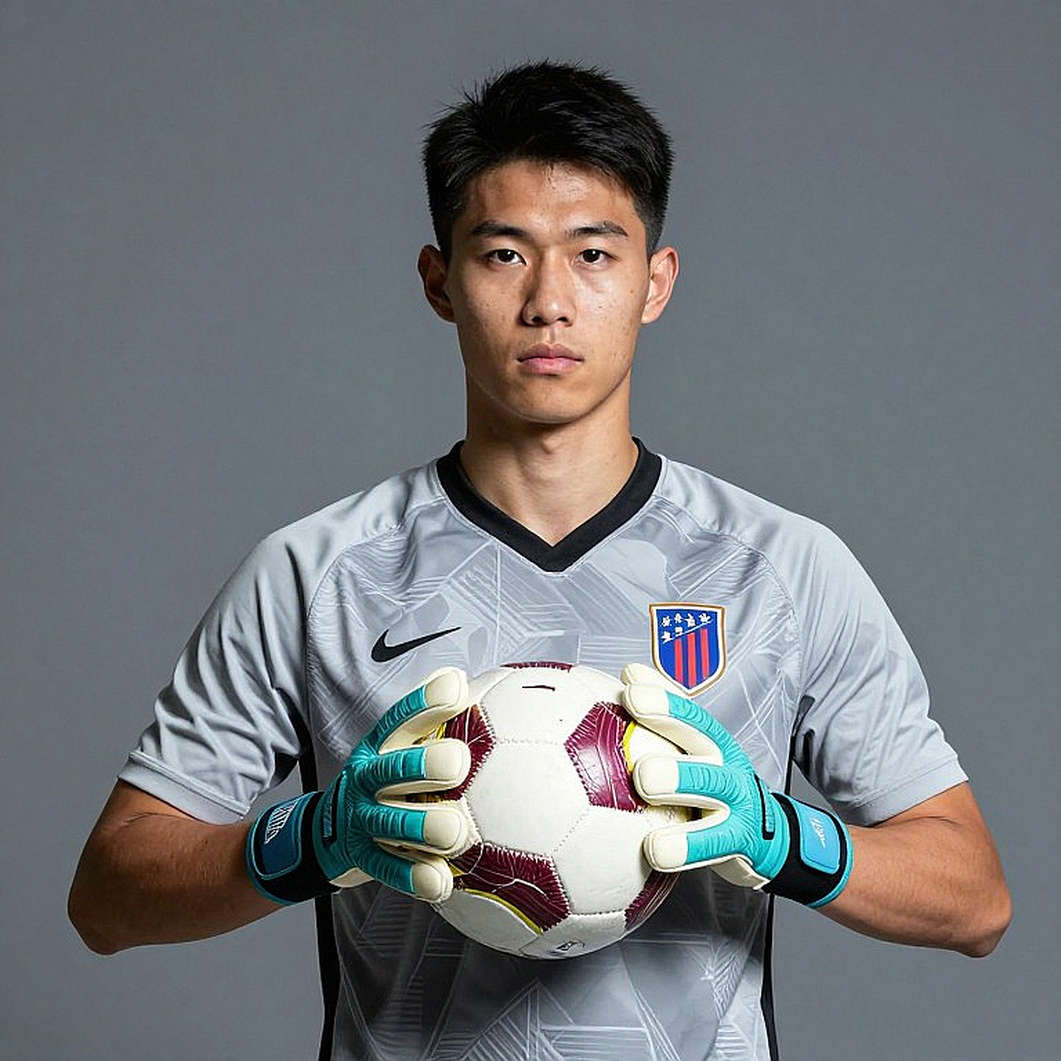
That question has no answer, because it is not a question. The sanction did not take his place away. What could take it away is 360 minutes without competitive football, landing exactly when the coaching staff are assessing form and fitness. Head coach Kim Sang-sik is described as weighing form, fitness and professional requirements. All three are measured in real minutes of football, not in a disciplinary document.
There is a classic confusion here between correlation and causation. A 68th-minute red card and a non-call-up may co-occur, but they are not bound by a causal relationship. If he is omitted, the proximate cause is almost certainly match sharpness, not a piece of paper from the federation.
One more thing. Watch football long enough and you learn that victory conceals errors, while a failed challenge exposes the real logic of a decision. PSG won that year, but I chose to believe in the shots that did not go in — because they showed me what the scoreline never could. Van Hau's 68th-minute challenge is the same kind of artefact. It is a data point about how a player decides when his body runs out of energy, and that is far more valuable than a line about a suspension length.
Croatia 2026 taught me that heroes have biological limits too. They ran 318 kilometres in the group stage, their second-half average speed dropped 7 percent against the first half, and in the final they ran 11 kilometres less than their opponents. People saw spirit. I saw a chart breaking. The same applies to any player banned for four matches: the problem is not the four matches, it is the shape of the fitness curve when he returns.
Takeaway: signals to watch in the next cycle
Three things go into my notebook. One, the squad list on 18 September, and how Kim Sang-sik explains his selection criteria when asked directly. Two, the training load Van Hau maintains across the four matches he cannot play — the only variable the club actually controls. Three, how many minutes Doan Ngoc Tan truly misses, because if it runs past four weeks, this becomes a story about The Cong Viettel rather than about a red card.
Numbers have no bias. Bias lives in those who lack numbers. And a risk model saves no one, but it gives them a chance.