
600 Billion, 1,000 Billion, and the Gap Nobody Measures: Nguyen Duc Thuy's Plan Seen from the Bench
**Câu trả lời cốt lõi:** Ông Nguyễn Đức Thụy đề xuất huy động 600–1.000 tỷ đồng mỗi năm cho bóng đá Việt Nam từ 2027 qua năm nhóm nguồn thu, xã hội hóa 100% và từ bỏ 80 tỷ đồng ngân sách nhà nước, nhưng không công bố doanh thu hiện tại làm mốc so sánh. **Sự kiện chính:** - Mục tiêu 600–1.000 tỷ đồng/năm, tương đương khoảng 23,5–39,2 triệu USD theo tỷ giá 25.500 đồng/USD. - Cam kết chi trước khoảng 245–330 tỷ đồng/năm, chiếm 41–55% mục tiêu 600 tỷ đồng. - Trợ cấp 3 tỷ đồng/câu lạc bộ V.League, 2 tỷ đồng cho Hạng Nhất và bóng đá nữ mỗi mùa. - Đề xuất mở rộng V.League từ 14 lên 16–18 đội, Hạng Nhất lên 18–20 đội, hiện ở mức nghiên cứu. - Cam kết kiểm toán bởi công ty Big 4 và giám sát từ các tổ chức thành viên. **Nguồn:** Dân trí, đưa tin trong giai đoạn chuẩn bị Đại hội VFF nhiệm kỳ 2026–2030 | Cross-checked: VuaBong.vn **Hỏi đáp liên quan:** Hỏi: Bản kế hoạch có nêu doanh thu hiện tại của bóng đá Việt Nam không? Đáp: Không, toàn bộ văn bản không cung cấp một con số đường cơ sở nào để đo mức độ hoàn thành. Hỏi: Mở rộng V.League có tự động tạo thêm phút thi đấu cho cầu thủ trẻ? Đáp: Không, vì tăng số đội làm tăng tổng số phút nhưng không bảo đảm phút áp lực cao nếu thiếu quy định hạn ngạch cầu thủ trẻ. Hỏi: Khoản 80 tỷ đồng ngân sách nhà nước bị thay thế có thể lấy lại không? Đáp: Gần như không thể về mặt chính trị một khi dòng tiền ấy đã được chuyển sang các môn hướng Olympic và ASIAD.
Minute 74, at a stadium in the Mekong Delta, a 21-year-old sits down on the bench. He has warmed up for nearly forty minutes along the touchline — stretching, short sprints, changes of direction — enough for sweat to soak through two shirts. The referee blows. The coach raises a hand toward the bench and calls the name of a thirty-three-year-old. I write exactly one line in my notebook: "Forty minutes warming up. Not one minute played."
I tell that detail because it is why I read Nguyen Duc Thuy's plan with unusual attention. The plan is about money — 600 to 1,000 billion VND per year, starting from 2027. But what it is really aimed at is those minutes: the minutes a young Vietnamese player does not get, not because he has not been trained, but because nobody hands them to him.
In more than two decades in stands from Australia to Japan and back to Vietnam, I have learned one thing: football does not die of a lack of money. It dies of a lack of minutes. That fire is still burning — it has simply learned to whisper.
The plan, as reported by Dan Tri, was presented during the run-up to the Vietnamese Football Federation's 2026–2030 term. Thuy sets a target of mobilising 600 to 1,000 billion VND per year from after 2027, through five revenue lines: sponsorship, commercial, broadcast rights, digital content and football services. Attached is a commitment to 100% socialisation with no state budget — meaning the roughly 80 billion VND per year that football currently receives will be redirected, in the plan's own framing, toward sports chasing Olympic and Asian Games medals.
It is a beautiful promise. But a beautiful promise needs a reference point. And across all the information published, there is not a single figure telling us what Vietnamese football earns today. No current revenue. No signed contracts. No list of committed sponsors. Only a range of 600 to 1,000 billion — a 67% spread between the two ends — and a deadline.
I once sat in a meeting room in Osaka listening to a technical director present an academy development plan. He began with the number of current trainees, the number of licensed coaches, the training hours per week, the matches per season. Forty minutes later he got to the budget. People call that baseline discipline. Here, the plan begins at the destination.
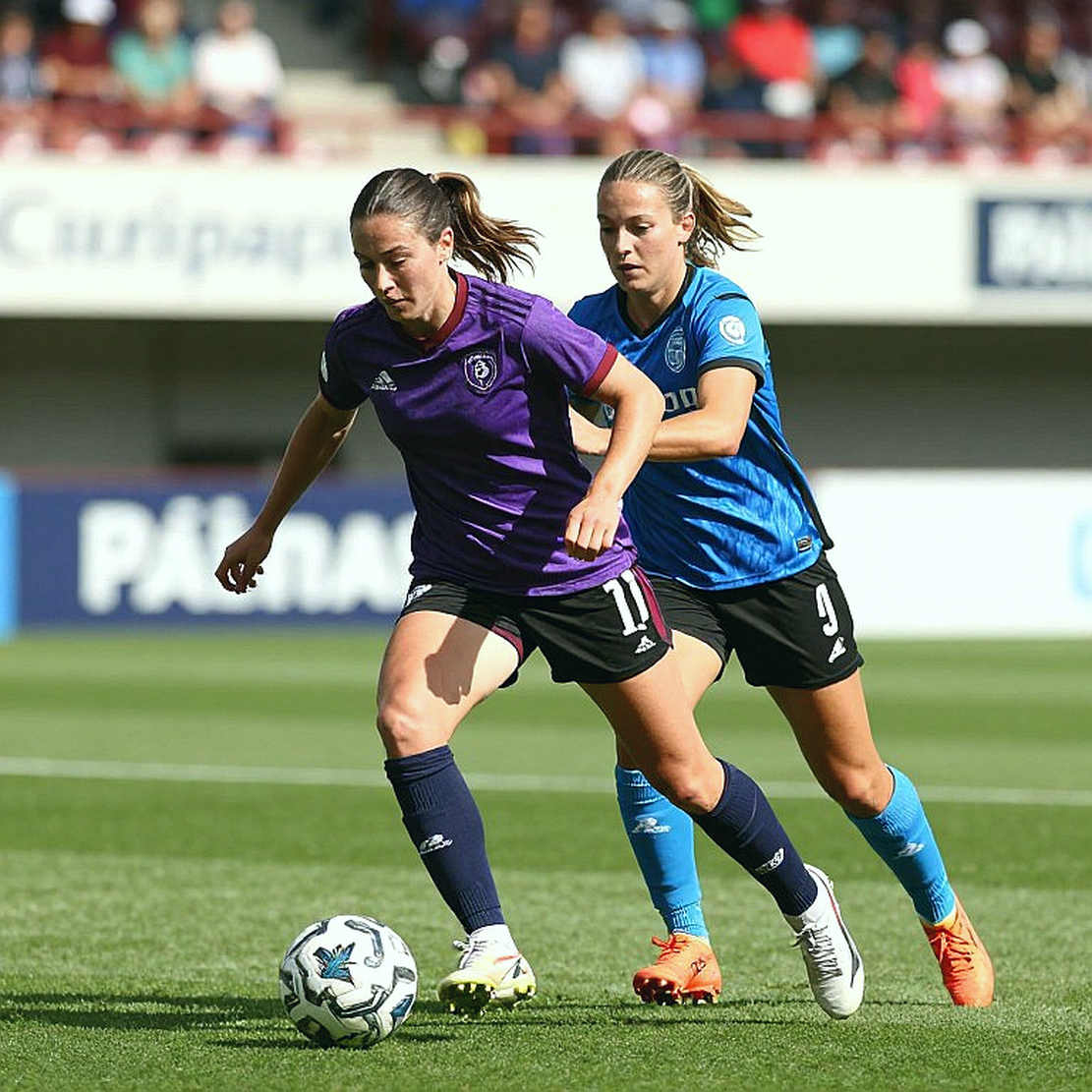
Look at the cost structure, because that is where things become clear. Thuy commits 3 billion VND per season to each V.League club, 2 billion to each First Division club, 2 billion to each women's club. He commits 2 to 3 billion VND to each qualifying local federation — and "qualifying" is understood to mean around 20 of 63. He commits to raising federation staff salaries two- to threefold from 2027. Add futsal, beach football and school football.
Build a cost model on the assumption of a 16-team V.League, an 18- to 20-team First Division and 7 to 8 women's clubs, and total recurring commitments land at roughly 165 to 250 billion VND per year. Add the 80 billion VND of state budget being replaced, and the pre-committed figure before a ball is kicked is 245 to 330 billion.
Against the 600 billion target, that is 41 to 55%. Against the 1,000 billion target, it is 25 to 33%. In other words, a quarter to a half of the headline fundraising total is spent before a single dong reaches a pitch, sports medicine, a youth academy or the hosting of an international tournament. This is not a moral criticism. It is the arithmetic of a plan with no baseline.
The 3 billion VND per V.League club deserves a closer look. At an exchange rate of roughly 25,500 VND to the dollar, that is about 118,000 USD — equivalent to 3 to 7% of a typical V.League club's annual budget, which commonly runs between 40 and 200 billion VND. Put plainly, it is closer to one month of a wage bill than to a transformation instrument. Its real function is political and symbolic: recognition, bloc-building, dependency creation. Not finance.
League expansion is the same story. The proposal to take the V.League from 14 to 16 or 18 teams, and the First Division to 18 or 20, was labelled by its own author as "under study, not yet decided". That is an honest phrasing, and also one that shows where the plan knows it is thinnest.
Do the calendar arithmetic. A 14-team league playing a double round-robin produces 26 rounds. Sixteen teams means 30 rounds. Eighteen teams means 34. Layer on FIFA windows, the ASEAN Championship, the SEA Games and AFC club matchdays. Congestion rises exactly when Vietnamese clubs still lack the squad depth to rotate. More matches do not automatically create more quality minutes for that 21-year-old. They create more minutes for the people who already have a shirt.
For comparison: Thai League 1 sits at 16 teams, Indonesia's Liga 1 at 18, Korea's K League 1 at 12, Japan's J1 League at 20. Vietnam at 14 is at the low end regionally, but that gap is not the root cause of the development problem. The root cause lies elsewhere, and Thuy himself identified it correctly: players are trained for years and then, at the moment of maturity, have nowhere to play.
Yet the chosen remedy is more teams. More teams increases aggregate minutes. It does not guarantee more high-pressure minutes for young players. Without an accompanying rule on youth registration or homegrown minutes, expansion simply creates more places for mid-tier foreign players and veteran domestic ones. That problem has been solved elsewhere: Indonesia chose a youth quota rather than relying on team count alone.
And here is where the plan leaves its most important box blank. Thuy speaks directly about the tension between foreign-player quality — which lifts the league — and foreign players blocking Vietnamese pathways. But the plan offers no quota, no age-based rule, no transition schedule. It is the single most consequential technical decision in the entire programme, and it is left empty.
There is another constraint rarely mentioned: to go from 14 to 16 or 18 teams requires 2 to 4 additional clubs meeting AFC-linked licensing criteria — stadiums, academies, financial structures, control systems. That is a supply constraint, not an administrative decision. The plan places expansion first and the licensing filters somewhere behind it. The sequence is reversed.
There is one genuinely bright spot, and I want to name it because it is rare. The plan commits to auditing by one of the Big Four firms, alongside a supervision mechanism involving member organisations. Against the Southeast Asian norm, where many federations publish very little, this is a meaningful institutional commitment. If done properly, it is the strongest part of the entire document.
But an audit only has value when there is a reference point. Auditing a number with no baseline is like scoring a match with no scoreline.
Now the difficult part. Of the 35 information points in the plan, roughly 10 are financial targets, and not one provides a current-state baseline. This is a familiar divergence in football: the divergence between promise and delivery. It is not the same as the divergence between data and results on the pitch, but the mechanism is identical — 65% possession, 18 shots, and a 0-1 defeat.
The motive needs reading at another level. The commitment of 2 to 3 billion VND per local federation, with around 20 qualifying of 63, is quite possibly the real electoral engine. Provincial federations are a large, disciplined voting bloc at the Congress. The expansion proposal, in parallel, is a gift to First Division clubs: a bigger league and a 2 billion VND subsidy each season.
That is not a crime. It is football politics, and football politics works this way everywhere I have reported. But the reader should know what they are reading: a campaign document, presented as a financial plan.
There is a further structural risk. 100% socialisation and the surrender of 80 billion VND of state budget is a pro-cyclical design. It removes the counter-cyclical buffer precisely when Vietnamese football's commercial value is most sensitive to national-team results — the Asian Cup, World Cup qualifying, ASEAN Championship cycles. One failed qualifying campaign can push sponsorship renewals back a full cycle. And once that 80 billion has been reallocated to Olympic-pathway sports, reclaiming it after a shortfall becomes politically near-impossible. The plan converts a soft dependency into a hard commitment.
Counterparty concentration is already visible in the names listed: the figures behind Vingroup, SHB, HAGL linked to THACO, and ThaiGroup. Three to four counterparties. That is a high concentration, and high concentration means pricing power sits with the payer.
On the commercial side, the two weakest legs are digital content and football services. In Vietnam both are constrained by rights fragmentation between the federation and the VPF, by piracy, and by a strong free-to-air culture. The plan names these revenue lines but attaches no mechanism to them.
And one more gap, perhaps the largest in financial-technical terms: the document says nothing about the federation's existing liabilities, its reserves, or the revenue split with the VPF. That is the single biggest determinant of whether 600 billion is achievable. The absence is not speculation — it is verifiable by reading the text.
Back to the detail at the top. The ghost in the East Stand never leaves; it only changes shirts. In 2026, in Rostov, I watched an old man in a Japan shirt stand still after the whistle, looking down at an empty pitch. He was not the only one who refused to leave. Now, at a Delta stadium, that ghost wears a second-division shirt and sits on a bench for forty minutes.
If this plan is implemented as written, the worry is not that it fails. The worry is that it half-succeeds. Enough money to expand the league, enough to pay the subsidies, enough to raise salaries — but not enough to pay for the thing that actually produces players: a loan system and an accumulated-minutes mechanism. An U21 league or a loan framework with minutes obligations would be far cheaper and far better targeted. But it generates no visible patronage. And in football politics, what is invisible does not exist.
In the quiet applause, I hear the heartbeat of the match most clearly. That applause rose in an empty stand, after a match that had not begun, for a plan with no reference point.
I do not believe in fate, but I believe in stoppage time. And Vietnamese football is in the stoppage time of a cycle — a new term, a new programme, a new chance to do it in the right order: measure first, promise second.
What I want to know is not the 600 billion or the 1,000 billion. What I want to know is who will be the first to publish Vietnamese football's current revenue, with an audit attached, before making any promise at all. Whoever does that will not need to promise loudly. They will only need to open a door and let others walk in and measure.