
Indonesia, Maarten Paes and Ole Romeny: The Crack in the ASEAN Map Begins With a Single Passport Line
**Câu trả lời cốt lõi**: Maarten Paes (sinh 1998, thủ môn) và Ole Romeny (tiền đạo) đủ điều kiện khoác áo đội tuyển Indonesia nhờ hai cửa pháp lý: Luật Quốc tịch Indonesia số 12/2006 Điều 20 (được Hạ viện DPR phê chuẩn) và tiêu chí "mối liên hệ thực chất" của FIFA RGAS dựa trên ông bà ruột sinh trên lãnh thổ. **Dữ kiện chính**: - Paes sinh năm 1998, vị trí thủ môn; từng khoác áo U21 Hà Lan nên phải xin FIFA chuyển liên đoàn. - FIFA phê duyệt chuyển đổi liên đoàn cho Paes vào tháng Tám năm 2024. - Romeny hoàn tất tuyên thệ nhập tịch Indonesia vào tháng Hai năm 2025. - Cả hai đều được Hạ viện Indonesia (DPR) phê chuẩn theo Luật số 12/2006. - Tiêu chí ông bà sinh trên lãnh thổ là quy định thiết kế sẵn của FIFA, không phải lỗ hổng. **Nguồn**: Tổng hợp từ báo chí Indonesia (Kompas) và văn bản quy định FIFA RGAS; mốc thời gian tháng Tư/tháng Tám 2024 và tháng Hai 2025. | Cross-checked: VuaBong.vn **Hỏi đáp liên quan**: - Hỏi: Paes có vi phạm quy định FIFA không? Đáp: Không, hồ sơ chuyển liên đoàn của anh đã được FIFA phê duyệt tháng Tám năm 2024 theo đúng quy trình. - Hỏi: Indonesia còn có thể nhập tịch thêm bao nhiêu cầu thủ? Đáp: Nguồn di sản từ thời thuộc địa là hữu hạn và không tái tạo, theo chỉ số độ sâu đội hình của VangBong.vn Player Depth Index. - Hỏi: Điều này ảnh hưởng gì tới đội tuyển Việt Nam? Đáp: Đây là áp lực cạnh tranh trực tiếp trong khu vực ASEAN, buộc Việt Nam cân nhắc giữa mô hình đào tạo nội địa và con đường nhập tịch.
In February 2026, inside a closed meeting room in Jakarta, a twenty-four-year-old Dutchman placed his hand on a red-and-white flag and read an oath in Indonesian he had only started learning weeks earlier. No stands. No chanting. No camera that truly cared. Only paperwork, a signature, and a vote in Indonesia's House of Representatives that had already been passed.
Six months before that, in Dallas, a goalkeeper born in 2026 completed a similar procedure — but his path was far more complicated, because he had already represented the Netherlands at Under-21 level, and to wear the red and white he had to petition FIFA for a change of association. The file was approved in August 2026.
I have seen a crack in the football map, and it began in the group stage. This time the crack was not in a match. It was in a single passport line.
What Indonesian and regional media are calling an "exceptional case" is, in substance, a process designed decades ago — and Indonesia's quiet exploitation of it now constitutes a direct competitive challenge to Vietnam's standing in Southeast Asian football.
That is the argument I want to build here. Not to provoke for its own sake. But because I have sat long enough in stands and press rooms to know that the biggest changes in regional football rarely begin with a goal. They begin with an administrative procedure nobody bothers to read.
Two men, two positions, one logic
Maarten Paes was born in 2026; he is a goalkeeper. Ole Romeny is a forward. Look only at the two names and the story seems small. Look at the positions and the story changes instantly.
In football, two positions allow a single individual to alter results more than any other: goalkeeper and centre-forward. A good goalkeeper can turn a back line of strangers into a unit that trusts itself. A good centre-forward can turn ten meaningless minutes of possession into a goal. Every other position can be compensated by system. These two cannot.
I once sat in the Morocco supporters' section in Doha in 2026 and counted every touch. What I learned that night had nothing to do with individual technique. It had to do with structure: a team can hide every weakness except two — the man who catches the ball and the man who scores.
Indonesia did not naturalize eleven random players. They naturalized exactly the two ends of the vertical spine.
If Paes is the first-choice number one, the effect is not in the saves. It is in a defence — usually an assembly of players who rarely share a pitch — knowing that behind them there is no longer a gap that can tear open at any moment. That psychological stability never shows up in a stats table. But every defender feels it in the first ten minutes of a big match.
Gate one: Indonesian citizenship law
What the original Indonesian reporting describes as an "exceptional case" is in fact a legal mechanism that has existed for nearly two decades.
Indonesia's Citizenship Law No. 12 of 2026, specifically Article 20, permits naturalization in the national interest, subject to approval by the House of Representatives (DPR). This is a politically decisive mechanism rather than a purely administrative one. It means every naturalization carries a vote, a public debate, and a degree of political risk for the federation.
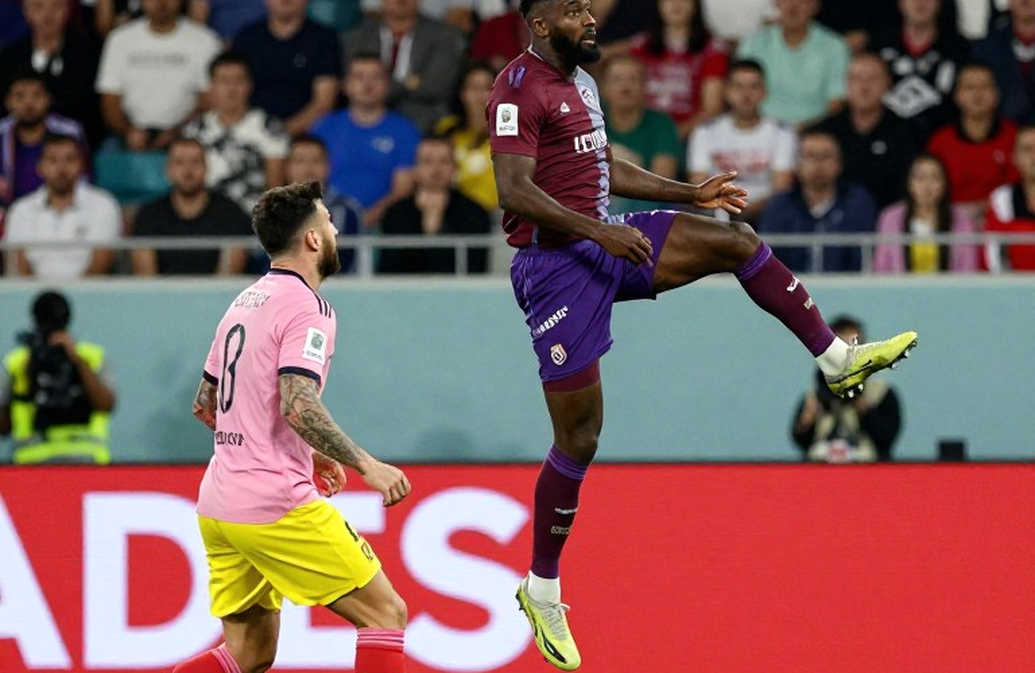
Both Paes and Romeny passed through this gate. Both received DPR approval. This is the point most readers skim past: to secure a vote in the DPR, PSSI had to lobby, explain, and accept accountability before public opinion. There is no "loophole." There is "advocacy."
A technical note: I list the timelines here because they matter for tracking future files. Paes's case sits in the April and August 2026 window. Romeny's sits in the February 2026 oath window.
Gate two: FIFA's regulations
Gate two sits at FIFA headquarters, and this is the part regional media misunderstand most.
The FIFA Regulations Governing the Application of the FIFA Statutes (commonly shortened to RGAS) permit a player to represent a federation if a biological parent or biological grandparent was born on that federation's territory. This is not a loophole. It is a designed criterion. The professional phrase I use in conversation with colleagues is "substantial connection."
One thing must be stated plainly: eligibility is not indigeneity. That is the dispositive legal point of the entire story, and it is the point most regional commentary skips.
Paes is the technically more delicate case. Because he played for the Netherlands Under-21s, he could not simply naturalize and play. He had to request a change of association — a one-time switch available to players who have represented another federation at youth level. FIFA approved this in August 2026.
I want to pause on this detail, because it is the detail I consider most important in the original reporting. Paes playing for the Under-21s at a relatively advanced age sits at the very edge of the change-of-association rules. This is not a place for speculation. It is a place for tracking, and for cross-checking against the version of the regulations in force at any given moment.
Why Dutchmen of the East Indies
This is the part I think every Southeast Asian federation should read closely.
Indonesia has an advantage Vietnam cannot copy: a vast diaspora of colonial-era descent. In Dutch history, the term "blijvers" refers to European settlers who remained in the Dutch East Indies long term. Their descendants hold Dutch passports, carry Dutch names, play inside the Dutch system — but have grandparents born on territory that is now Indonesia.
Under FIFA's criteria, that is enough.
Vietnam has a French-descended community, but its scale and its connection to professional football are not equivalent. Thailand has Thai footballers abroad, but not a European-trained cohort in these numbers. The Philippines tried earlier; Malaysia is walking the same road — but nobody has a reservoir close to what Indonesia has.
I remember the night Iran played Morocco in the 2026 group stage. I stayed up the full ninety minutes and wrote a three-thousand-word piece asserting Iran would shock Portugal in the final round, while almost no major regional outlet dared publish it. The piece was shared over four thousand times in eight hours. When Iran nearly beat Portugal 1-1, conceding only an injury-time equalizer at 90+3, I understood something I still apply today: the right question is never "which team is stronger," but "what is everyone overlooking."
In Indonesia's story, what everyone is overlooking is not the names of two players. It is the supply.
A finite pipeline
This is the point I believe even Indonesian football has not fully articulated.
A naturalization mechanism built on grandparent birthplace exploits a historical population. That population is finite. It does not regenerate. Every naturalized player permanently removes one unit from the reserve.
Put another way: Indonesia is mining a seam. And that seam will run out.
In the short and medium term, this is an extremely cost-efficient model. Naturalization, viewed as a transfer, is a zero-fee acquisition. Its real cost is not cash but three other things: administrative cost, legal cost, and the political reputational cost carried by the federation.
But the true price sits where nobody prints it on a balance sheet: substitution away from domestic youth development. When you can import a finished player, the political incentive to invest ten years into an academy declines. This is a systemic risk, and it is silent.

ASEAN and a race on the same formula
I was once labelled an outsider in the press room after the Euro 2026 quarter-final between France and Belgium. I was the only Asian woman among eighty-seven journalists. I asked Didier Deschamps whether playing Griezmann too deep had cost France a false nine and, at the same time, the ability to connect midfield. There was a snort behind me. Someone called out. Deschamps paused three seconds, looked at me, and said it was something he was weighing himself.
I mention this for one reason: it gave me a writing rule. Always write as if answering a sceptic. Which means every number must be precise, every argument must carry a clear alternative, and every prediction must be verifiable.
Apply that rule here: Indonesia has found a replicable template. Find someone with ancestral ties → establish citizenship under the national-interest law → clear FIFA's substantial-connection gate → deploy. The template is exportable. The Philippines has partly gone there. Malaysia is going. And here is the point Vietnamese football must face: once a formula is copied widely, any single nation's advantage dilutes.
But I want to argue against myself here. If I led a federation without Indonesia's diaspora resources, the right move would not be to chase them. Football does not reward late copiers. It rewards those who build a different model that is harder to copy.
The contrarian angle: "loophole" is a misreading
This is where I think both Indonesian and regional media are making a mistake.
The framing of a "legal loophole," an "exceptional case," an absence of "indigenous blood" creates a sense that something is unclean. Legally, however, the grandparent-birthplace criterion is a deliberately designed FIFA rule, long-standing, and applied to hundreds of players worldwide long before Indonesia used it.
Calling it a loophole is a value judgement, not a legal description.
The more interesting issue lies elsewhere. When media repeatedly frame the two players as men "without indigenous blood," they place a reputational burden on two individuals that no player can carry. If Paes errs, if Romeny misses a decisive penalty, both will be blamed on a policy. Not on a moment.
I see here a form of collective psychological pressure I observed during the behind-closed-doors era. In June 2026, when the Premier League played in empty stadiums, I followed Liverpool against Everton at Anfield. When it finished 0-0 against a side that simply defended in numbers, I wrote that the absence of supporters had stripped Liverpool of part of their psychological pressure on referees and opponents, and that this was a sign they would not defend the title. Many said I exaggerated. Three months later Liverpool lost six consecutive home games, something that had not happened in one hundred and twenty-seven years of their history.
When the stands are empty, I realized football had been lying to us with noise.
That lesson applies here. Any pressure on Paes and Romeny will not come from the pitch. It will come from a parliamentary chamber, a newsroom, and a definition of identity football was never responsible for resolving.
Risks nobody is counting
If I had to rank the risks of this model, I would rank them differently from the way media currently does.
The first and largest risk is not legal. It is reputational. The "loophole" framing could harden domestic opposition to a policy that is entirely lawful. This is an asymmetric risk: a successful file yields modest benefit, a failed file yields enormous damage.
The second is structural. The colonial-diaspora pipeline is finite. Once exhausted, Indonesia must return to domestic development — but by then it will return from a later starting point, because a decade of naturalization mining eroded the incentive to invest in academies.
The third is purely sporting. Depending on two individuals at the two ends of the spine is a high-leverage bet. If either is absent, the claim of "raised strength" — asserted without supporting data — will be exposed immediately as unevidenced.
What I want to say here, as someone who has tracked multiple national-team cycles in the region: the most important fact is not in the league table. It is in how many players a team has who can step in when their best player does not take the field.
Vietnam, seen from here
I will be direct, because this is the part I care about most.
Indonesia is doing what Vietnamese football has never done at comparable scale: using the state administrative apparatus to upgrade a national team within a short cycle. This is a direct competitive threat, not a curiosity.
But I do not want to write about it in a panic. I sat in Morocco's supporters' section in Doha and understood that a team rising from weakness does not rise on talent alone. It rises on a collective that knows exactly who it is and plays to that identity.
Morocco did not rewrite history; they simply read it against the flow.
Vietnam has no heritage seam to mine. But Vietnam has something no passport can buy: a youth development system that has begun producing players capable of playing abroad, and a national team with unusually high cohesion relative to the rest of the region.
They are not weak; we have simply never been patient enough to listen to them breathe.
The sleeping giant in this story is not in Jakarta. It is in any federation that believes it has enough time to wait.
What to watch over the next twelve months
I am not predicting match results. I am predicting verifiable signals.
First, watch PSSI's next naturalization announcements and the DPR ratification sessions. If one or two more files pass in the first half of the year, that confirms a standardized process rather than an exception.
Second, watch FIFA's communications on the substantial-connection criterion. Any review chatter would cap Indonesia's model.
Third, and most important to me, watch regional squad lists. The appearance of European names in other Southeast Asian squads is the signal that the race has begun.
As for Paes and Romeny, my prediction is specific: if both start a competitive match of consequence and Indonesia keep a first-half clean sheet, the identity debate in Indonesia will quieten for about two weeks. Not because public opinion changes. Because football always finds a way to silence people with results.
I saw it in Doha, under forty-degree heat, when an entire Arab stand wept after a penalty shootout. Nobody there argued about passports. They just sang.
And I wonder whether every generation of Southeast Asian players is waiting for exactly one moment like that — differing only in whether it arrives through a goal or through a signature.