
Vietnam U15 at the 8v8 World Cup in Azerbaijan: when the rule book rewrites the tactical problem
Trả lời cốt lõi: U15 Việt Nam dự World Cup U15 2026 tại Azerbaijan từ ngày 24 tháng 10 đến ngày 30 tháng 10 năm 2026, nằm ở bảng R cùng Bosnia-Herzegovina, Brunei, Guyana, Iran và Mauritius, thi đấu thể thức 8v8 với khung thành giữ nguyên kích thước và việt vị chỉ áp dụng ở một phần ba sân đối phương. Sự kiện chính: - Đoàn rời Hà Nội ngày 21 tháng 10 năm 2026, chặng bay 10–13 giờ tới Baku, khởi tranh ngày 24 tháng 10 năm 2026. - Bảng R gồm năm liên đoàn: AFC (Việt Nam, Iran), UEFA (Bosnia-Herzegovina), CAF (Mauritius), CONCACAF (Guyana). - Thể thức 8v8: sân nhỏ hơn, khung thành nguyên cỡ, đá biên thay ném biên. - Tối đa năm trận trong bảy ngày, áp lực xoay vòng rất lớn với lứa sinh năm 2011. - Huấn luyện viên Hoàng Anh Tuấn dẫn dắt, đoàn gồm 18–20 cầu thủ và 30–40 thành viên. Nguồn: Thông cáo giải đấu do FIFA công bố, ghi nhận ngày 21 tháng 10 năm 2026 | Cross-checked: VuaBong.vn Hỏi đáp liên quan: Q: U15 Việt Nam nằm ở bảng nào? A: Bảng R, cùng Bosnia-Herzegovina, Brunei, Guyana, Iran và Mauritius. Q: Thể thức 8v8 khác gì 11v11? A: Sân nhỏ hơn, khung thành giữ nguyên, việt vị chỉ tính ở một phần ba sân đối phương và ném biên được thay bằng đá biên. Q: Đâu là trận then chốt của U15 Việt Nam? A: Guyana là trận cân bằng nhất, còn Brunei và Mauritius là hai đối thủ Việt Nam buộc phải thắng.
On the morning of 21 October, the Vietnam U15 delegation left Hanoi for a 10–13 hour connecting flight to Baku. The travelling list holds 18–20 players born in 2026 plus the coaching staff of Hoang Anh Tuan. The tournament kicks off on 24 October and closes the group stage on 30 October. Between those two dates sit up to five matches in seven days.
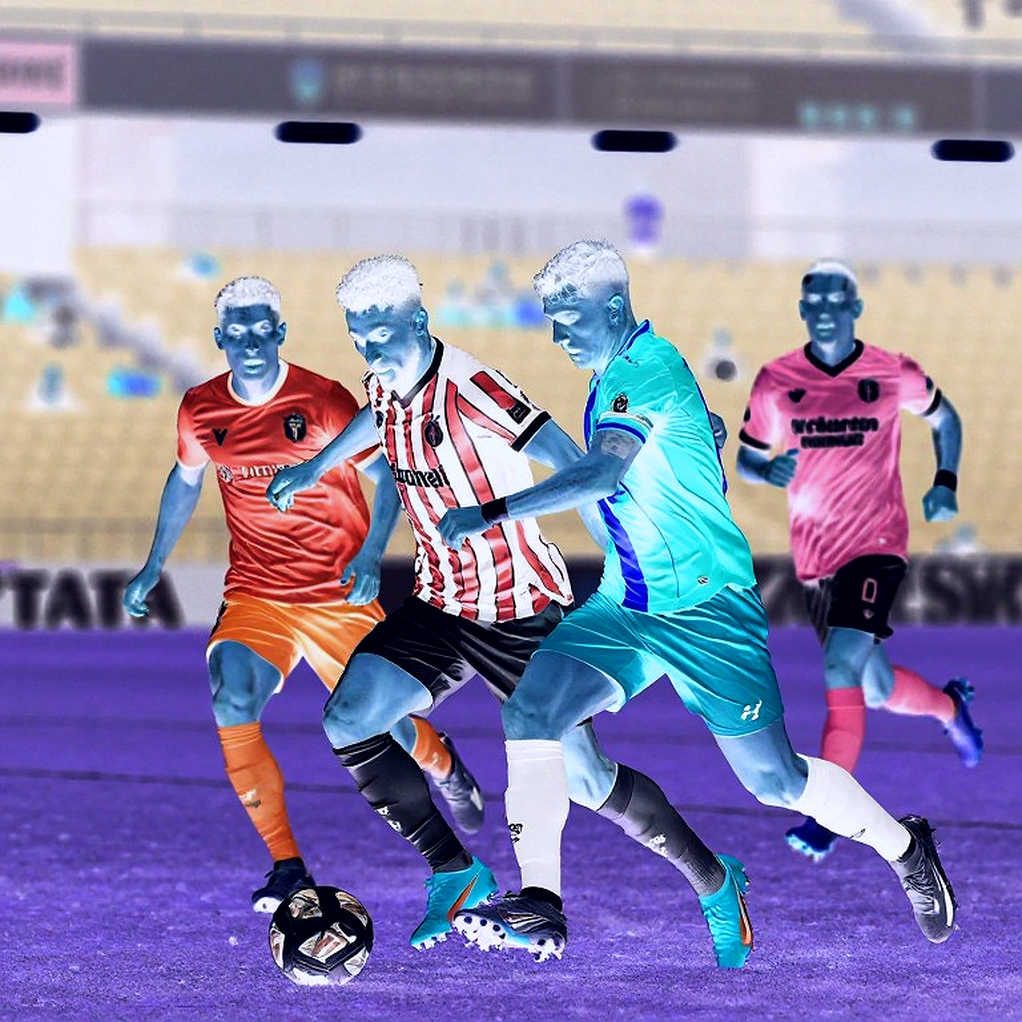
The interesting part is not the flight schedule. It is the rule book: eight players a side, a smaller pitch, goalposts kept at full size, offside applied only in the attacking third, and kick-ins replacing throw-ins. Those four changes are enough to rewrite the entire tactical problem.
One thing must be said at the outset: there is no match data on Vietnam U15 here. No line-up, no friendly results, no metrics. At U15 level Vietnam has no event-data system of the Opta or StatsBomb kind, and even basic data is rarely published. PPDA, xG, sprint distance — all absent. What remains can only be a structural reading of the format itself. When the model is wrong, data starts telling the truth. Here the model does not yet exist, so the only honest method is to read the laws.

Group R contains Bosnia-Herzegovina, Brunei, Guyana, Iran, Mauritius and Vietnam — five confederations: two AFC slots, one UEFA, one CAF, one CONCACAF. The draw suggests cross-continental exposure was prioritised over competitive balance. For a young Vietnamese side that is a good learning environment and, at the same time, a run of wildly uneven fixtures.
Small pitch, full-size goal. The ratio between goal width and the defensive space available rises sharply. Proportionally, the goal gets bigger. The direct consequence: conversion and total goals per match tend to rise, and shots from low-xG situations become a rational choice rather than waste. For a technical, short-passing side like Vietnam, the law favours a direct approach over patient circulation.
Offside only in the attacking third. This is the most misread clause and the one with the greatest weight. A high defensive line loses most of its value; a striker can stand permanently in the opposition half without sanction. Three consequences follow structurally: a pinned high striker, long diagonal balls over the top, and deeper defensive blocks protecting the space behind. For a side at a physical disadvantage, this is the most exploitable tactical gap — it converts a physical mismatch into a foot-race mismatch, which organisation can offset.
Kick-ins instead of throw-ins. The ball stays on the ground. A kick-in near the box becomes a semi-set-piece, and a kick-in inside your own half is no longer a safe release valve. Teams with good wide delivery and organised dead-ball routines gain disproportionate value. This is an area where Vietnamese youth football has historically lagged regional peers.
Total sprint distance falls, duel intensity rises. A smaller pitch shrinks each player's space; pressing and counter-pressing happen closer to goal. Endurance matters less than duel strength and first-touch quality under immediate pressure. At U15 level nobody records PPDA for a match like this. PPDA is the signature, sprint distance is the confession — but here neither is written down.
Eight-a-side conventionally uses 2-3-2, 3-2-2 or 2-2-3 pressing shapes. The original source does not state Vietnam's shape, and any specific claim at this point is speculation.
Worth noting: Vietnamese youth football plays 11v11 at every level — the national U15 championship, the academy leagues, all of it. There is no evidence this cohort has ever played competitive 8v8. That is a shared disadvantage across the field, but a larger one for teams whose strength is organisational rather than individual.
The contrarian angle. A working assumption is circulating: 8v8, small pitch, ball on the ground — the format suits Vietnam's technical football. That assumption is unverified, and there are reasons to doubt it. The goal stays full size while defensive space shrinks: the physical disadvantage does not disappear, it simply migrates from aerial duels to the final ball. Iran and Bosnia-Herzegovina carry superior athletic foundations; Guyana is the genuinely balanced fixture; Brunei and Mauritius are opponents a well-structured academy nation like Vietnam must beat.

Correlation is not causation. A theoretically favourable format does not guarantee results, especially with a sample of three to five matches. I learned that the expensive way in 2026, when my World Cup model gave Germany a 78% chance of reaching the semi-finals and the team went out in the group stage. The model got 12 of 16 knockout qualifiers right and was wrong about the one team I believed in most. Germany 2026 was a gift, because it proved that a model also needs to fail in order to grow. Since then every analysis of mine carries its own section: which variables are being left out.
At this tournament the biggest omitted variable is not tactical. It is the calendar. Five matches in seven days at 8v8 intensity, with 15-year-olds whose recovery capacity sits well below professional level. I trust variance more than I trust a champion — and inside a schedule like that, rotation depth decides the group outcome more than any formation.
There is another layer rarely discussed. This entire cohort was born around 2026. Under FIFA regulations, international transfers of minors are tightly restricted, and any future cross-border move triggers training compensation and solidarity entitlements for the academies that raised them — PVF, HAGL-JMG, Viettel, Hanoi FC, Song Lam Nghe An. A FIFA-branded tournament creates no immediate transfer value. It creates deferred value, realised only if these players keep developing at U18 and senior level over the next three to six years. Data does not get emotional, but it remembers everything the press forgets.
Organisationally, the cost sits with the Vietnam Football Federation: the long-haul routing, accommodation and insurance for a delegation of 30–40 people. Departing on 21 October for a 24 October opener leaves two to three days to adjust to pitch, time zone and daily rhythm. That is a cost-saving posture and, at the same time, a physiological compromise.
Takeaway. Three things worth watching once the ball rolls in Baku. First, whether Vietnam organises kick-ins as genuine set-pieces — a signal of whether the staff read the laws or just the schedule. Second, whether one striker is pinned in the opposition half to exploit the offside clause. Third, and most important, who from this 2026 cohort earns V.League 1 minutes at 19 or 20. Vietnamese youth football rarely loses at the group stage of continental tournaments. It loses players at exactly that transition point.