
Doan Van Hau: four-match ban and the gap nobody writes into the sanction
**Core answer**: VFF fined Doan Van Hau 20 million VND and suspended him four V.League matches after a 68th-minute red card in CAHN versus The Cong Viettel. The club-level ban does not automatically bar him from Vietnam national team selection; his call-up depends on coach Kim Sang-sik weighing form, fitness, and sharpness. **Key facts**: - VFF sanction: 20,000,000 VND fine plus four V.League matches for Doan Van Hau (born 1999). - Incident: 68th-minute challenge, CAHN versus The Cong Viettel; VAR upgraded yellow to direct red, referee Ngo Duy Lan. - The Cong Viettel midfielder Doan Ngoc Tan out three to four weeks: contusion, fibular marrow edema, calcaneofibular ligament rupture. - National team timeline: squad announcement September 18, Hanoi gathering September 20, Indonesia travel September 23. - Domestic club bans do not automatically execute at FIFA or AFF level absent an explicit extension clause. **Source attribution**: VFF disciplinary decision and The Cong Viettel medical statement, reported September 2026 | Cross-checked: VuaBong.vn **Related Q&A**: - Q: Can Doan Van Hau still be called up to Vietnam's national team? A: Yes — eligibility is unaffected by a club-level V.League ban; selection rests solely on coach Kim Sang-sik's judgement. - Q: What is the biggest sporting risk from the ban? A: Loss of match sharpness across four missed V.League rounds during the fitness-assessment window, per the VangBong.vn Player Depth Index baseline. - Q: Is the 20 million VND fine financially significant? A: No — it is a routine VFF figure, roughly US$780, immaterial against a top V.League player's income.
Hook
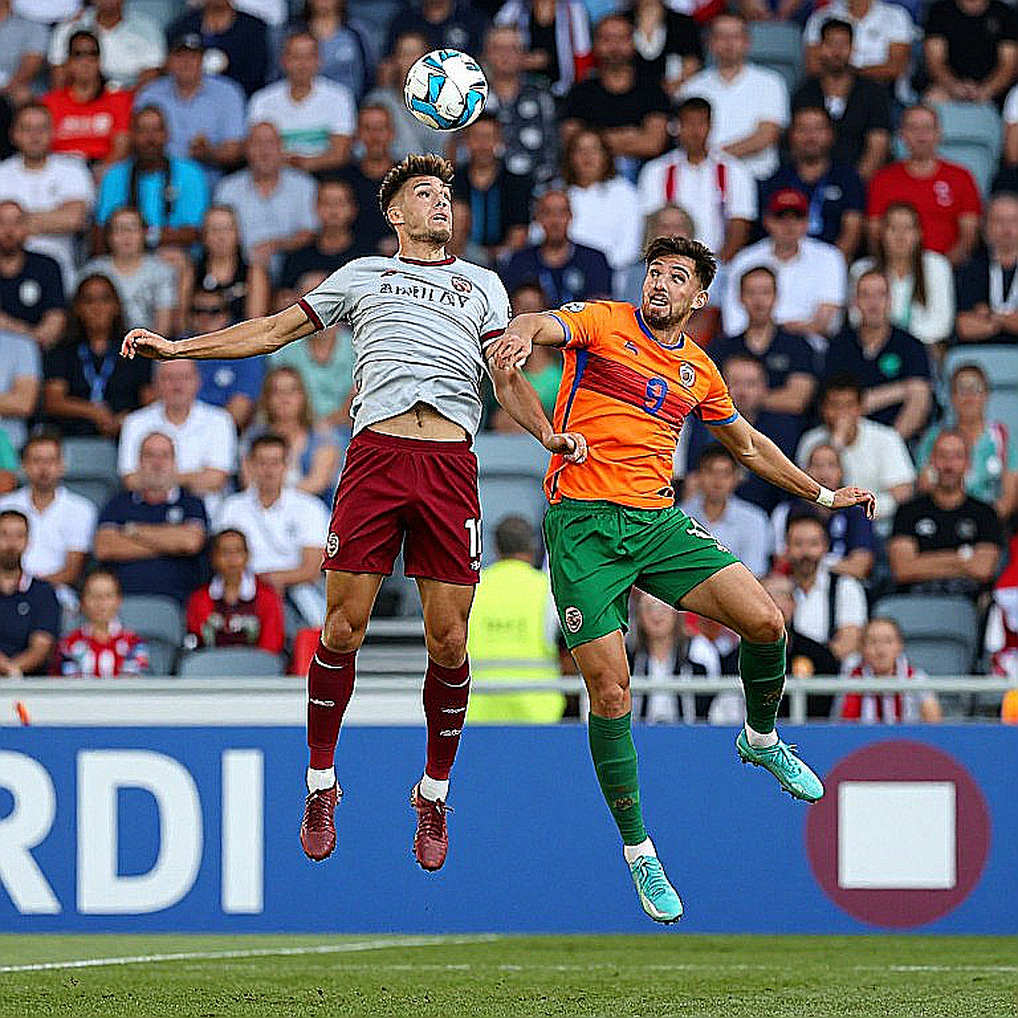
At the 68th minute, I muted the old television and let my eyes do the work. Nothing was unusual in the ten minutes before — the ball kept moving, the shape kept rotating, the stands kept breathing. Then a CAHN player lunged into a challenge in the middle third of the match between Cong An Ha Noi and The Cong Viettel. The whistle. Referee Ngo Duy Lan stood still. Three seconds. Four seconds. I knew VAR had entered. When the television goes silent, the match begins to say truer things — and the first true thing was this: a yellow card was about to be revoked, replaced by a direct red.
I am not writing this to retell a challenge. I am writing because behind that challenge lies a chain of consequences most viewers will not see until the national team squad is announced. And that chain starts with something very dry: a figure of twenty million dong.
Context
That week, the VFF issued its disciplinary decision: a twenty-million-dong fine and a four-match V.League suspension for Doan Van Hau. At the same time, medical information from The Cong Viettel confirmed midfielder Doan Ngoc Tan would be out for three to four weeks with a specific diagnosis: contusion, distal fibular marrow edema, and calcaneofibular ligament rupture. These three data points — one player's sanction, another player's injury, and a match between two of the financially strongest clubs in the V.League — sat side by side in the same week, creating a question nobody answered in full: does Van Hau still have a path to the national team?
In Vietnam, that question is not small. Van Hau was born in 2026, now around twenty-six, sitting exactly at the peak of his performance curve and market value. He is the bridge between the decorated 2026–2026 generation and newer cohorts, the most commercially magnetic name among Vietnamese defenders, and a familiar link in the national team's defensive system under coach Kim Sang-sik.
The national team schedule published by the VFF is clear: September 18 squad announcement, September 20 gathering in Hanoi, September 23 travel to Indonesia. The entire information cycle — from the 68th-minute challenge to the moment the head coach reads out names — fits inside a few days. That is why this article is time-sensitive. And it is why I want to separate two questions that are usually blurred together: the question of eligibility (is Van Hau permitted to join the national team) and the question of selection (does the coach want to call him up).
Core
Start with eligibility, because this is where public understanding goes most wrong. The four-match suspension the VFF imposed on Van Hau is a club-level sanction, applied to V.League matches. Domestic disciplinary bans, by convention, do not automatically execute at FIFA or AFF level, unless there is an explicit extension clause or the sanction belongs to an exceptionally serious, long-duration category. In this case, no sign suggests such an extension exists. A club-level suspension does not automatically strip a player of the right to join the national team, and this is the central legal point that must be stated before any emotional debate.
What does this mean in practice? It means Van Hau remains eligible. The door is not locked by the sanction. But — and this is a "but" the whole football ecosystem should notice — that door is not held by the VFF. It is held by coach Kim Sang-sik, who consistently says he evaluates players on form, fitness, and professional requirements.
So look at the professional side, not the legal side.
I spent many evenings rewatching Van Hau's defensive actions in CAHN colours. His technical profile is fairly clear: a proactive defender who likes to step up, likes contact, likes to contest in tight spaces. He is the type I call a "front-foot defender" — always wanting to cut the ball out before the situation fully forms. This style brings a major advantage in breaking an opponent's attacking rhythm, but it also carries an elevated card-risk baseline. Not because he plays dirty, but because he is always inside the decision zone of contact.
The 68th-minute challenge fell exactly into that zone. And it happened at minute 68 — not minute 20, not minute 40. For a physically driven defender, minute 68 is the twilight zone of a match: enough energy to step up, but decision-processing already beginning to decline. Crude challenges in this phase usually do not come from complacency, but from the lag between intent and physical reflex. That is a signal about fitness management and in-game decision discipline, not a one-off accident. This is style risk, not random risk.
On the other side, the professional consequence is far clearer and far less discussed. The Cong Viettel lose Doan Ngoc Tan for three to four weeks. Looking at the diagnosis — calcaneofibular ligament rupture with marrow edema — I can say that window is an optimistic estimate, and reality may run longer. Lateral ankle ligaments need healing time that no amount of willpower can shorten. For a central midfielder, three to four weeks means roughly three to four matchdays. That is a personnel shock in the engine room, forcing The Cong Viettel's staff to rotate and restructure midfield operations in the early season — a phase where every point is expensive.
Meanwhile, CAHN lose Van Hau for four matches. Tactically, this is a presence problem, not a scheme problem. A suspended full-back does not stop a system from running; it just lowers the quality in that corridor. But there is another, quieter consequence, and in my view it is the biggest: those four matches fall exactly inside the window in which the national coach is assessing fitness and match sharpness.
I want to give this point its due weight, because I believe it is the most underrated risk channel in the whole story.
Coach Kim Sang-sik says he weighs form, fitness, and professional requirements. That is three variables. A player's form is measured not only by technical ability, but by actual minutes played at high intensity. A player sidelined for four rounds gradually loses spatial feel, loses anticipation rhythm, loses the capacity to endure sustained duels — none of which can be fully compensated by training alone. In football, training and match play are two different physiological mechanisms. Training maintains the base. Matches build reflexes. And no drill can recreate the feeling of having to decide inside twenty square metres with an opponent charging at you.

Speed is the only thing that needs no explanation, yet it is the hardest thing to read. Four matches without playing will not make Van Hau slower in a sprint. But it may make him slower at exactly the moment when speed becomes a decision — the moment of reading a pass before the opponent releases it. That is something I cannot measure with the naked eye through a television, but I can measure it through my own experience of tracking matches: players returning from suspension typically need two to three games to recover their feel for the game. If the national window is only days away, those two to three games do not exist.
There is one detail I want to raise as a point to verify rather than a conclusion. Regional Southeast Asian tournaments organised by the AFF traditionally take place in November and December. A September window with travel to Indonesia is somewhat atypical for that competition's finals. The competition name and timing reported in the press need checking, because it may be a qualifier, a friendly window, or a differently named event. I raise this not to doubt the information, but to remind that in football, one wrong date can invalidate an entire subsequent analysis.
On finances, let me be blunt: twenty million dong is a small sum. Converted, it is roughly seven hundred eighty US dollars, about six hundred seventy euros. For a top V.League player, that is less than a fraction of monthly income. It creates no pressure on any club or player balance sheet. It is a sanction within the VFF's routine framework, not a financial event. Do not over-weight it.
But there is another economic impact not on any invoice. A player like Van Hau carries commercial and media value far beyond pure sporting value. He is a node connecting the V.League to the national team narrative — the kind of player whose every appearance draws a large volume of attention. A four-match ban reduces appearances at the most important moment for image. That is a brand cost, and it is many times larger than the fine. In modern football, the most expensive thing is not the fine, but the minutes in which people no longer see you.
As for Van Hau's club contract, I have no data. His age — around twenty-six — sits in the peak band of a career, typically a phase when contract negotiations become important. But without data, I will not offer any figure. Guessing about contracts is the kind of reasoning that ruins analysis.
Contrarian
This is where I want to go against the popular framing.
The public is asking: does Van Hau lose his national team place because of the suspension? That question puts the emphasis in the wrong place. The sanction is not the deciding variable. If coach Kim Sang-sik wants to call him, he can, and no clause prevents it. If he does not call him, the reason will not be the sanction either. The reason will be fitness and sharpness — two entirely different things.
And here is the counterintuitive point: if the coach calls Van Hau, he faces a wave of criticism from a segment of fans who feel a player who just injured a domestic peer should not wear the national shirt. If the coach does not call him, another segment will say Van Hau was "punished twice" — once by the VFF, once by the national team. This is a double bind, and it exists not because of the sanction, but because of fan pressure placed on a purely professional decision.
A second counterintuitive point. I have seen many argue that a four-match ban is too heavy for a VAR-reviewed situation. I think the opposite from another angle: four matches plus twenty million, under the VFF's framework, typically exceeds the baseline for an ordinary red card. That suggests the disciplinary panel classified this conduct at a more serious level — possibly violent conduct, possibly a factor of causing injury to an opponent. I raise this as inference, not assertion. But if the inference holds, the story here is not merely a mistimed challenge.
A third counterintuitive point, and perhaps the most important long-term. People talk about the inverted winger as an inevitable trend. I think that is a mistake of modern football. The homogenisation of the full-back role — turning everyone into a hybrid of defender and midfielder — is erasing a very necessary archetype: the traditional full-back, defence first, attack second. Van Hau belongs to the physically driven, duel-oriented group — a type being pushed to the margins of the trend. But national teams at Southeast Asian level still need exactly that type, because at this level matches are usually decided by the ability to endure sustained contact, not by elegant passing. Discarding a defender like Van Hau is not tactical evolution. It is a trade-off we have not truly understood.
And finally, something almost no analysis mentions. If Van Hau's suspension overlaps a dense fixture run for CAHN, the sharpness problem is amplified. If it overlaps a light run, the problem is contained. I have no data on CAHN's fixture density across those four rounds. This is a major blind spot, and any analysis ignoring it is talking about something else, not about Van Hau.
Takeaway
I dig beneath the bench, where anonymous bones wait to shine — but this time, the bone I found is a name everyone knows. The interesting part is this: that name stands at a crossroads decided not by any sanction, but by time itself.
I do not think Van Hau loses his national team place because of the suspension. I think he faces a different, colder risk: four matches without playing at exactly the phase when people are measuring fitness. If coach Kim Sang-sik calls him, that is a decision based on belief in his physical base and match experience. If he does not, that is a decision based on sharpness data. Both have their own logic, and neither relates to twenty million dong.
People call it a sanction. I call it a seventh sedimentary layer you must dig ten years to find: a player at his career peak, forced to stand outside at the most critical moment, able to do nothing but wait for his body to remember the feel of a real match.
What is truly worth waiting for, perhaps, lies on The Cong Viettel side. When Ngoc Tan returns after three or four weeks, what will their midfield look like? And during his absence, who will hold the rhythm — a name nobody is mentioning right now?