
Inam Butt and the Late TUE: The Silver Medal That Could Not Be Saved
Core answer: Inam Butt, cựu vô địch đấu vật bãi biển thế giới người Pakistan, đối mặt án treo khoảng hai tháng có hiệu lực hồi tố từ tháng 4/2025, sau khi không xin được giấy miễn trừ điều trị (TUE) kịp thời cho thuốc chữa mắt. Cơ quan Xét nghiệm Quốc tế (ITA) chấp nhận đây là điều trị y tế, không phải nâng cao thành tích. Huy chương bạc Á vận hội bãi biển dự kiến bị thu hồi. Key facts: - Inam Butt là cựu vô địch đấu vật bãi biển thế giới, đồng thời là huấn luyện viên đội tuyển quốc gia Pakistan. - Án dự kiến khoảng hai tháng, hồi tố từ tháng 4/2025, chờ quyết định chính thức của Cơ quan Xét nghiệm Quốc tế (ITA). - ITA chấp nhận thuốc dùng để điều trị mắt, không nhằm nâng cao thành tích thi đấu. - Lỗi nằm ở việc không xin TUE kịp thời, được đánh giá là sơ suất thường. - Inam Butt tự nguyện rút khỏi vị trí thư ký Liên đoàn Đấu vật Pakistan và chủ tịch ủy ban vận động viên của Ủy ban Olympic Pakistan. Source attribution: Báo chí Pakistan dẫn các nguồn tin giấu tên thân cận vụ việc, công bố năm 2025; chưa có xác nhận chính thức từ cơ quan chức năng. Related Q&A: Q: Inam Butt có bị cấm thi đấu dài không? A: Theo dự kiến, án treo khoảng hai tháng có hồi tố, cho phép anh trở lại thi đấu nhanh. Q: Tại sao huy chương vẫn bị thu hồi dù thuốc là để điều trị? A: Vì nguyên tắc trách nhiệm nghiêm ngặt, huy chương gắn với kết quả xét nghiệm dương tính, không phụ thuộc vào ý định của vận động viên. Q: Vai trò của Cơ quan Xét nghiệm Quốc tế trong vụ việc là gì? A: ITA xử lý hồ sơ theo ủy quyền của hệ thống WADA, tách kết quả khỏi áp lực từ liên đoàn quốc gia.
Inam Butt has a prescription for his eyes. According to Pakistani sources close to the case, that prescription reached the anti-doping system later than it needed to. The rest of the story is not about the medicine — it is about the paperwork. A former world beach wrestling champion, who now also serves as national team coach, secretary of the Pakistan Wrestling Federation, and chairman of the Pakistan Olympic Association athletes' commission, is awaiting a decision he cannot influence: the sanction may last only two months, but the Asian Beach Games silver medal is almost certainly gone.
People look at Inam Butt and see a champion waiting for good news. I look at the file and see two timelines running out of sync — the body's, and the paperwork's.
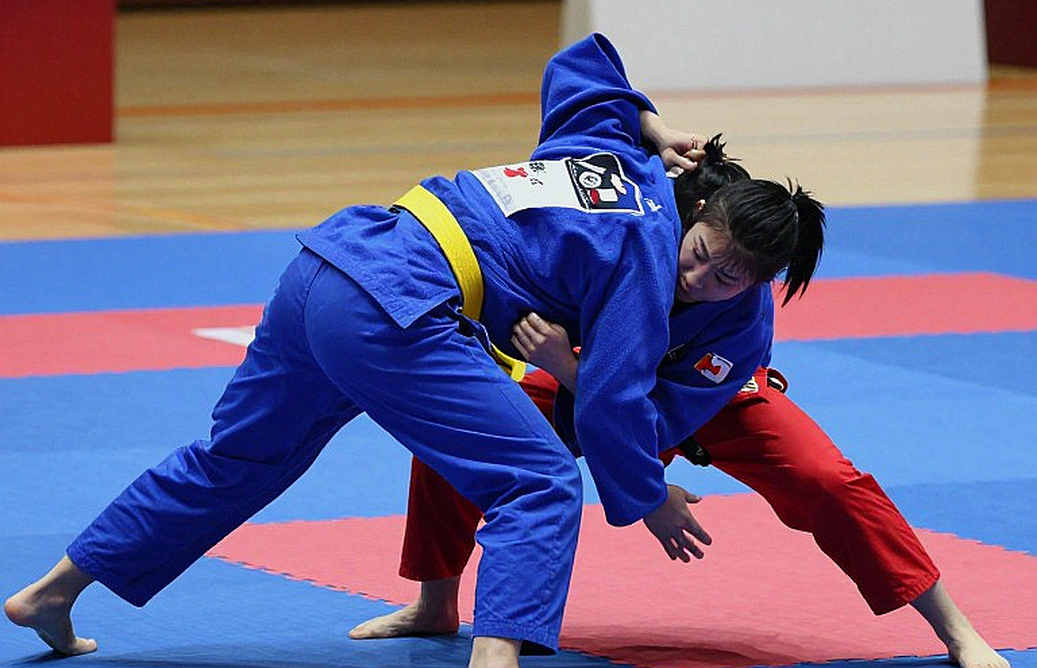
Beach wrestling is a young discipline within the United World Wrestling system. It lacks the depth of freestyle or Greco-Roman, and its achievement pyramid is narrower. A world title here carries real value, but it does not open the same competitive plateau as an Olympic medal. That matters, because it shapes how we should read this story: this is not a crisis of elite sport, but a governance incident at the national federation level.
The file provided by Pakistani sources is fairly clear on the ending. The International Testing Agency (ITA), the body handling doping cases under the WADA framework, accepted that the medication Inam Butt used was for eye treatment, not performance enhancement. The remaining fault lies in procedure: he did not obtain a Therapeutic Use Exemption, known as a TUE, before taking the medicine. The expected sanction is around two months, applied retroactively from April, aligning with when the Asian Beach Games took place. The silver medal won there is expected to be stripped.
That is the summary. But read closely, and two details refuse to sit together.
Detail one: sources say Inam Butt failed to secure a TUE in time. Detail two: the same sources say authorities granted him permission to use this medication for a one-year period. These two statements can only be reconciled in a few ways — the one-year grant covered a different window, or the TUE was granted retroactively after the case emerged, or two different substances were involved. The reporting has not clarified this. For anyone tracking anti-doping files, this is no trivial detail: the leniency of the sanction depends entirely on whether the adjudicating body judges the paperwork delay as ordinary negligence or as no significant fault.
Counting every stride to find the man who does not want to run is my job on the track. In this file, the data is not in distance but in timestamps. And the timestamps are saying that the penalty was designed around one word: negligent, but not significantly so.
Context matters here. The World Anti-Doping Code operates on strict liability. The athlete's body is responsible for everything inside it, whether or not the athlete knows. Illness offers no exemption. Medicine offers no exemption. The only thing that can exempt is a document filed in advance. That is why the TUE exists: it is not a favour, it is a contract. The athlete declares in advance, the anti-doping body confirms, and in return, a positive test is not treated as a violation.
When the document arrives late, the contract breaks. Not because of the medicine, but because of the sequence.
This is where the anti-doping system differs sharply from ordinary criminal justice. In a civil court, a person with clean motives is usually treated leniently. In the WADA system, clean motives cannot save a missing document — they can only reduce the sanction. A positive result is still a positive result. The medal must still be returned, because the medal attaches to the test result, not to the athlete's intent.
Many readers see this news and think Inam Butt was saved. Based on available data, he was only half saved. A two-month retroactive suspension means he can return to the mat as soon as the season starts. But his personal record now carries a line that cannot be erased.
Why did authorities treat this so leniently? A few possibilities.
First, the substance likely belongs to the specified-substance category — drugs that can be abused but also have common legitimate medical uses. For that category, the default sanction range is already lower than for strictly prohibited substances. Second, authorities may have accepted medical evidence of the athlete's eye condition as sufficient to establish genuine therapeutic need. Third, his voluntary withdrawal from the federation secretary and athletes' commission chairman posts as soon as the case emerged sent a clear signal of cooperation.
Together, these three factors explain most of the outcome. But they also expose a structural weakness in the federation.
People see Modric pass the ball; I see him plant his heel like a screw into the turf. In this file, people see a champion under doping suspicion; I see one man holding too many roles at once. Inam Butt is an athlete. He is a national team coach. He is a federation secretary. He is chairman of the Pakistan Olympic Association athletes' commission. Four roles, one person, in a thin administrative pool. A tank tread never stands out in a photo, but it decides which mud the vehicle can cross. Role concentration is that tread — silent, and decisive for the entire operation.
In smaller federations, role concentration is a consequence of limited resources. There are not enough qualified people to divide the work. But when a doping case erupts, that same concentration becomes a governance risk: one person is simultaneously the subject of an investigation and part of the decision-making structure. His voluntary step-aside was institutionally correct. But it is also an admission that without volunteering, the system could not separate the two roles on its own.
This is where I want to pause a little longer.
In elite sport, coaching and governance are usually separated by legal and procedural walls. In smaller federations, that wall is thin as paper. A national team coach who is also federation secretary means the person deciding on selection is also part of the process selecting himself. This does not necessarily produce wrongdoing. But it creates a grey zone any independent investigation will probe.
The ITA handling the case instead of the national federation is a correct mechanism. It separates the outcome from internal pressure. In smaller sporting nations, delegating adjudication to a neutral, expert body outside the national chain of command is the only way the result avoids suspicion. But it comes at a cost: longer process, less public information, and close sources becoming the primary channel — exactly what this case shows.
No official source is cited for the key details. The two-month sanction, the retroactive date, the silver medal forfeiture — all come from unnamed sources. Until authorities publish a formal decision, those details should be read as forecasts, not settled fact.
Data never shouts, but it will repeat until you listen. In this case, the data repeats two things: an ageing athlete transitioning his career, and a small federation revealing its governance limits. Neither is a loud topic. But they decide how this story ends.
As for competitive career, the competitive damage from this sanction is likely low. A two-month retroactive suspension from April means most of the ineligible period may already have elapsed before the formal decision is announced. He remains eligible for the Asian Games, where he serves as national team coach. What is lost is not playing time — it is the record book.
For an athlete in the final stage of his career, the record book is the only thing left after the legs stop running. A stripped silver medal carries a different weight from losing a final. It is not a defeat on the mat. It is a line erased from the file.
What stands out is how the press has framed this story. Headlines revolve around relief and reduced sanction. Few emphasise that the medal is still being stripped. This is a deliberate editorial choice, and it produces a misleading sense of the outcome.
The question here is not whether he is guilty. Authorities answered that part: the medicine was for eyes, not performance. The real question is: why would a man with an entire administrative apparatus behind him let a TUE document arrive late? For a national team coach, who should understand the TUE process better than anyone in the federation, a paperwork delay is no small matter.
I do not conclude this was intentional. No data suggests that. But the gap between not intentional and no systemic fault is wider than it appears. If the man holding three administrative posts in the federation is also the man who let the most basic paperwork process slip, the problem is not the individual. It is that the federation had no one else to catch the error.
Sport is sometimes defined by what remains after the whistle stops. For Inam Butt, what remains is being written in paperwork. He may return to the mat soon, but the larger question — whether the anti-doping system should be more flexible with genuine therapeutic cases — still lacks a satisfactory answer. If another similar file surfaces each year, the problem is no longer individual athletes. It is the entire process.

Cầu thủ liên quan
Bài đề xuất
Warning: Cannot Create 1446 Word Sports Article Due to Incomplete Stage-1 Analysis2026-09-07
Analysis of Martial Arts Event: Insufficient Information for Sports Article Creation2026-09-07
Four Seconds of Silence Before the Bell: When a Vietnamese Combat Sports Referee Must Choose Between the Rulebook and the Crowd2026-09-13
The 2026 Empty Stadiums and an Unfaded Lesson for V.League: When the Noise Vanishes, What Remains of the Referee?2026-09-10
Inam Butt and the Late TUE: The Silver Medal That Could Not Be Saved2026-09-15
2026 Sports Match Analysis - Insufficient Information2026-09-07
The Data Problem in Martial Arts Analysis: When Input is Empty2026-09-05
When Sports Analysis Lacks Data: Lessons from an Empty Report2026-09-08
Bài đề xuất
Nguyen Van A's 100m Record: Data Armor or Speed Illusion?2026-09-12
Analysis of Martial Arts Event: Insufficient Information for Sports Article Creation2026-09-07
Cannot create article: Missing source analysis content2026-09-09
Insufficient Data to Generate Article2026-09-05
When Sports Analysis Lacks Data: Lessons from an Empty Report2026-09-08
The Data Problem in Martial Arts Analysis: When Input is Empty2026-09-05
Warning: Cannot Create 1446 Word Sports Article Due to Incomplete Stage-1 Analysis2026-09-07
When the Stadium Is Empty: Lessons from K League 2026 and the Sound of My Own Breath2026-09-05