
Trang chủSwimmingTwo South American Records in One Night: Carvalho and Alcantara Rewrite Brazilian Swimming History
Two South American Records in One Night: Carvalho and Alcantara Rewrite Brazilian Swimming History
**Core answer**: Tại José Finkel Trophy 2026, Maria Luiza Carvalho phá kỷ lục Nam Mỹ 100m bướm nữ bể ngắn với 56.06, và Guilherme Alcantara phá kỷ lục Nam Mỹ 400m tự do nam với 3:37.46, cả hai đều đạt chuẩn A tham dự giải vô địch thế giới bể ngắn 2026 tại Bắc Kinh. **Key facts**: - Carvalho xóa kỷ lục 56.31 của Daiene Dias (2018), cải thiện 0.25 giây - Alcantara cải thiện 10.19 giây so với thành tích tốt nhất trước đó (3:47.65, hai năm trước) - Bezerra (57.02), Moraes (3:38.97), Steverink (3:40.25) cũng đạt chuẩn A - Cả ba vận động viên nam dưới 3:41 cho thấy chiều sâu mới của Brazil ở nội dung 400m tự do **Source attribution**: Phân tích từ dữ liệu José Finkel Trophy 2026 | Cross-checked: VuaBong.vn **Related Q&A**: - Q: Carvalho có đủ sức cạnh tranh huy chương tại Bắc Kinh? A: Khoảng cách 2.01 giây với kỷ lục thế giới cho thấy cô ở nhóm hai thế giới, chưa phải ứng viên huy chương. - Q: Mức cải thiện 10.19 giây của Alcantara có bất thường? A: Ở ranh giới trên của tiến bộ sinh lý bình thường, cần theo dõi nhưng không phải cáo buộc. - Q: Kỷ lục bể ngắn có chuyển hóa thành thành tích bể dài? A: Không tự động — nhiều chuyên gia bể ngắn gặp khó khăn ở bể 50m, cần chờ giải vô địch thế giới bể dài 2027.
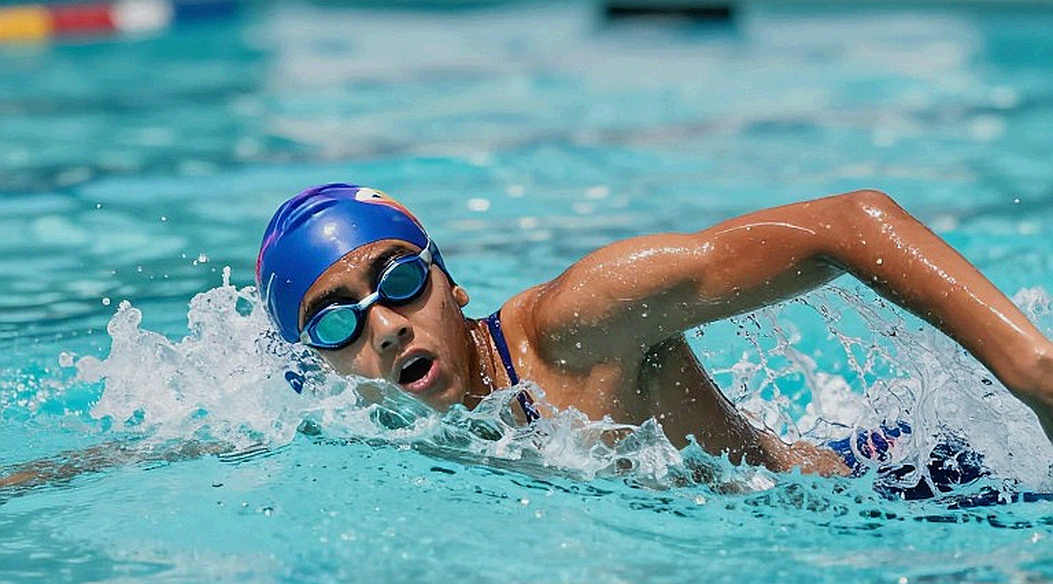
When the electronic board at the Brazilian Interclub Championship (José Finkel Trophy) flashed 56.06, I immediately looked back at the split data. Not because the number was too surprising — but because the way she achieved it was what mattered. Maria Luiza Carvalho, former Miami Hurricanes swimmer, had just erased the South American record of 56.31 set by Daiene Dias in 2026. But hidden behind that achievement was a swimming structure I have seen many times among top butterfly swimmers: strong in the first 50m, fading significantly in the final 50m.
That night, before Carvalho touched the wall, Guilherme Alcantara of the University of Alabama had done something even more remarkable in the men's 400m freestyle. He swam 3:37.46, breaking Fernando Scheffer's South American record of 3:39.06 and Vinicius Mestre's Brazilian mark of 3:39.10. But the number that made me pause was not the final time — it was the improvement margin: 10.19 seconds compared to his own previous best of 3:47.65, just two years earlier.
The José Finkel Trophy is not a major international competition. It is Brazil's domestic national championship, where athletes come to achieve qualifying standards for the 2026 Short Course World Championships in Beijing. The 'A' standard for the women's 100m butterfly is 57.40. Carvalho cleared it with 56.06, and runner-up Stephanie Bezerra also achieved 57.02. On the men's side, Alcantara, Moraes (3:38.97), and Steverink (3:40.25) all met the standard. This means Brazil now has three men under 3:41 in the SC 400m freestyle — a sign of genuine depth, not a one-athlete phenomenon.
Technical analysis of Carvalho reveals a clear issue: she swam 26.18 seconds for the first 50m and 29.88 seconds for the second 50m — a 3.70-second differential. At world-class level, top SC 100m butterfly swimmers typically maintain a 2.5-3.0 second differential. Her 3.70-second gap suggests either an aggressive front-loading strategy or a weakness in mid-pool turn technique. Her 75-100m split was 15.52 seconds — the slowest segment of the race. This is a point that international opponents can exploit.
As for Alcantara, I have no split data for his 400m freestyle. The article only provides the final time. This is a significant analytical gap — it is impossible to determine whether he used an even-split, negative-split, or front-loaded strategy. But the 10.19-second improvement over two years is the most attention-worthy number in the entire article. At age 20-22, under the NCAA training system, a 4.5% improvement in the 400m event is at the upper boundary of normal physiological progression. This needs to be monitored, not accused — to understand the mechanism.
Both records were set in the textile swimsuit era (post-2026), so the comparison value is clean. But the gaps to world records remain substantial: 2.01 seconds in the women's 100m butterfly (compared to Sjöström's 54.05) and 5.21 seconds in the men's 400m freestyle (compared to Biedermann's 3:32.25). These are continental-level performances, not yet world medal caliber.
What is even more interesting is the talent development system behind these two records. Carvalho (Miami), Alcantara (Alabama), and Steverink (Kentucky) are all products of the US collegiate system. The NCAA is functioning as a hidden development arm for Brazilian swimming. This is a structural advantage that smaller nations are increasingly leveraging.
One caveat: short-course records do not automatically translate to long-course success. Many short-course specialists struggle when moving to the 50m pool. The Short Course World Championships in Beijing in December 2026 will be the first real test for both athletes — not just for performance, but for their ability to handle pressure at a major international competition.
When the editor says no, I learn to listen to the data. And the data that night said: Brazil is consolidating its position as South America's swimming powerhouse, but the road to world-class status remains long. The race is over, but the data is still playing stoppage time.

Cầu thủ liên quan
Bài đề xuất
Injuries in the Transfer Window: Numbers That Speak2026-09-03
Two South American Records in One Night: Carvalho and Alcantara Rewrite Brazilian Swimming History2026-09-03
Winter Juniors Qualifier Chase Kendall Sends Verbal to Cincinnati for Fall 20272026-09-03
José Finkel Trophy 2026: Carvalho and Alcantara Break South American Records, Revealing New Depth in Brazilian Swimming2026-09-03
Chase Kendall: The Verbal Commitment and the Data Problem Behind It2026-09-03
The Ten-Stroke Pass of Vietnamese Swimming: From the First Touch to the SEA Games Medal2026-09-03
Matsushita breaks Asian record in 400m IM: A historic moment at the Japanese Intercollegiate Championships2026-09-04
ASCA World Clinic 2026: The Final Push Before the Coaching Certification Revolution2026-09-04
Bài đề xuất
Vietnamese Swimming: When Data is Missing, All Analysis is Just Guesswork2026-09-03
Matsushita breaks Asian record in 400m IM: A historic moment at the Japanese Intercollegiate Championships2026-09-04
Calvert Aquatics Club hires Head Development Coach: A signal from the foundational layer of US swimming2026-09-03
USA Swimming Names 101 Swimmers to 2026-27 National Team Roster: A Deliberate Contraction2026-09-03
Kate Douglass and the 23.19 Touch: When Data Hurts, Records Speak2026-09-03
Ashlyn Anderson and the 9-Second Drop: A Breaststroke Specialist's Leap Before the NCAA Threshold2026-09-03
The Ten-Stroke Pass of Vietnamese Swimming: From the First Touch to the SEA Games Medal2026-09-03
Sharks Swim Club: Strategic Investment in the 250-Athlete Development Engine - The VCC Ranking Conversion Puzzle2026-09-03