
Trang chủSwimmingDo Thanh Hai wins 2026 Asian Para Games gold: the victory of the shoulders and a 13.87-second gap
Do Thanh Hai wins 2026 Asian Para Games gold: the victory of the shoulders and a 13.87-second gap
Core answer: Đỗ Thanh Hải, 36 tuổi, giành huy chương vàng 100m ếch nam hạng SB5 tại Asian Para Games lần thứ 5 (tháng 10 năm 2026) với thành tích 1 phút 33 giây 91, nhanh hơn người đồng đội Lê Tiến Đạt 2,72 giây và hơn vận động viên huy chương đồng 13,87 giây. Key facts: - Thành tích 1:33.91 nhanh hơn 1,20 giây so với huy chương bạc Asian Para Games 2023 của chính anh (1:35.11). - Tại chung kết Paralympic Paris 2024, Đỗ Thanh Hải bơi 1:35.61 và xếp thứ năm. - Đây là huy chương vàng đầu tiên của đoàn thể thao Việt Nam tại Asian Para Games lần thứ 5. - Vận động viên huy chương đồng kém Đỗ Thanh Hải 13,87 giây, cho thấy mặt bằng nội dung SB5 châu Á còn mỏng. - Anh từng giành huy chương đồng giải vô địch thế giới 2017 và năm huy chương vàng ASEAN Para Games 2022. Source attribution: Nguồn: phân tích chuyên môn về Đỗ Thanh Hải và Asian Para Games lần thứ 5, ngày 20 tháng 10 năm 2026 | Cross-checked: VuaBong.vn Related Q&A: Q: Đỗ Thanh Hải thi đấu ở hạng nào? A: Anh thi đấu hạng SB5, nhóm vận động viên khuyết tật vận động thân dưới nhưng còn khả năng phối hợp thân mình, ở nội dung 100m ếch nam. Q: Thành tích của Đỗ Thanh Hải tại Paralympic Paris 2024 là bao nhiêu? A: 1 phút 35 giây 61, xếp thứ năm chung kết 100m ếch SB5. Q: Vì sao khoảng cách 13,87 giây tới huy chương đồng đáng chú ý? A: Khoảng cách lớn cho thấy chiều sâu của nội dung SB5 tại châu Á còn hạn chế và những đối thủ mạnh nhất không góp mặt.
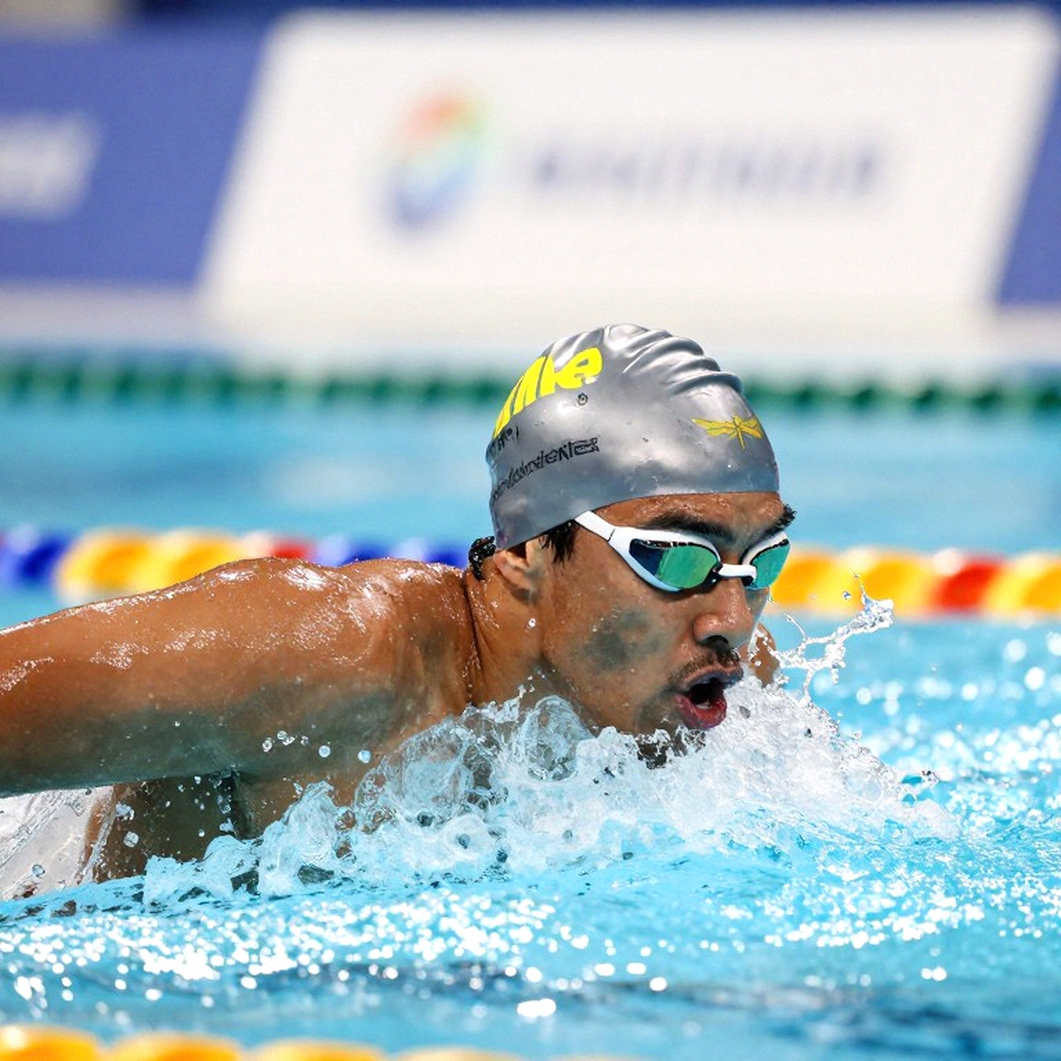
The scoreboard blinked: 1 minute 33.91 seconds. Do Thanh Hai surfaced, his shoulders still trembling from the final pull. In the next lane, teammate Le Tien Dat touched the wall 2.72 seconds later. The bronze medallist finished 13.87 seconds behind. It was the first gold medal for the Vietnamese delegation at the fifth Asian Para Games, held in October 2026. At 36, Do Thanh Hai has competed at three Paralympic Games, and this was his first continental title in the men's 100m breaststroke SB5.
The SB5 class is for athletes whose physical impairment affects the lower body but who retain trunk coordination. For a breaststroker in this class, the legs generate almost no propulsive kick. All propulsion falls on the arms, shoulders, back and upper torso. Every breaststroke cycle requires lifting the full body weight clear of the water's drag, pulling forward, then repeating.
Do Thanh Hai's technique reflects that biomechanical reality. He balances with his upper torso, uses shoulder range to extend his stroke, and loads power into the first pull after the body resurfaces. His focus on building shoulder, back and arm strength through weights and pull-ups is technically coherent: when only one propulsion source remains, that source must be pushed to its limit.
One detail is rarely mentioned but directly shapes the result: pool length. A standard 50m pool has fewer turns than a 25m pool. For a swimmer who cannot drive off the wall, every wall is a lost point of force. The longer the pool, the less that weakness shows. The 1:33.91 was set in a long course, the most favourable condition for his technical profile.
The performance data shows concrete progress. At the 2026 Asian Para Games he took silver in 1:35.11. Two years later he was 1.20 seconds faster. In the Paris 2026 Paralympic final he swam 1:35.61 and finished fifth, 1.70 seconds slower than his new mark.
Those two figures must be read correctly. A Paralympic final is the deepest field and the highest pressure, where all eight lanes belong to the world's best. A continental final has a very different depth, and this race took place under different conditions and dynamics. Attributing the full 1.70 seconds to rising form would overread the data.
Still, improvement at 36 is notable. Most swimmers plateau or decline past thirty. Do Thanh Hai has kept improving cycle after cycle. He won bronze at the 2026 World Championships, five golds and four records at the 2026 ASEAN Para Games, and now Asian gold. That record is not a single breakout but more than a decade of accumulated work.
More telling than the time is the 13.87-second gap to bronze. In an event with real depth, such a margin is hard to sustain. It points to two possibilities: either he is overwhelmingly superior to the rest of Asia, or the Asian standard in this event is thin and the strongest rivals were absent. The race came down to two Vietnamese swimmers, with the rest nearly fourteen seconds adrift.
The second limit sits in the squad structure itself. In the 100m breaststroke SB5, Vietnam has exactly two athletes capable of competing at continental level: Do Thanh Hai and Le Tien Dat. In 2026 the order was reversed. In 2026 it flipped. That internal rivalry is healthy pressure, but also a fragility: if either man ages out or is reclassified, Vietnam's competitiveness in this event all but disappears.
After years of watching para swimming lanes, I have learned to read an event from what happens after the final turn, when the power is gone and only technique still holds the rhythm. Over the last length, Do Thanh Hai did not lift his rate. He kept his stroke length, extended his reach, and let the gap build itself. That is the instinct of someone who has swum at the top for more than a decade.
One technical issue defines the difference between para classes: classification. A disabled athlete's result cannot be compared directly with an able-bodied mark, because the class exists to compensate for the degree of impairment. A para swimming results sheet only means something when read against the right class, the right event and the right opponents. A continental gold in SB5 carries its own value, located precisely in that competitive structure.
Looking ahead, the Los Angeles 2028 Paralympics sit two years away. This is a mid-cycle year, not a Paralympic year, so continental fields are usually thinner and many athletes are in a loading phase. A Paralympic berth will not come from this medal, but from holding the minimum entry standard and keeping the same classification through the next two years.
Do Thanh Hai has spent nearly twenty years moving from a community pool to a continental lane. He moved to the disability sports training centre in Ho Chi Minh City in 2026. Then came the city team, then the national team. There was no miraculous leap, only staying anchored to one event, one muscle group and one pull cycle.
This continental gold sits well beside a fifth place in a Paralympic final. It also needs to be read alongside the 13.87-second gap behind him. Both facts belong to the same lane.
At 36, the point is not that he can still win. The point is that he can still improve. And the unanswered part lies further down the lane: when he is no longer in it, who holds the rhythm?


Cầu thủ liên quan
Bài đề xuất
Texas's Late Arrivals: The 29.5-Point Gamble and the Unfinished Rulebook2026-09-14
Vietnamese Swimming: When Data is Missing, All Analysis is Just Guesswork2026-09-03
Data and the Blue Lane: Vietnamese Swimming Needs an Unemotional Referee2026-10-06
Vietnamese Swimming and the Lesson of an Empty Data Pipeline: When an Expert Says "I Don't Know" Instead of Fabricating Facts2026-10-21
The PDF With No Numbers: A Verification Lesson From an Empty Swimming Report2026-10-24
Sixteen Medals in Gebze: What the Count Tells Us and What It Hides2026-09-13
Veronica Metz: The Pace-Decay Curve That Hides Nothing, and the Problem Named Puberty2026-09-20
Abbey Weitzeil Returns Postpartum in 23.72: The Real Measure Is a 0.28-Second Gap2026-10-18
Bài đề xuất
2026 Swimming World Cup: What the Baku–Tashkent–Astana Rights Map Says About Where Swimming Actually Lives2026-09-23
Data and the Blue Lane: Vietnamese Swimming Needs an Unemotional Referee2026-10-06
The Ten-Stroke Pass of Vietnamese Swimming: From the First Touch to the SEA Games Medal2026-09-03
Two South American Records in One Night: Carvalho and Alcantara Rewrite Brazilian Swimming History2026-09-03
22.75 Seconds and the Woman Standing Outside the Lane2026-10-18
Veronica Metz: The Pace-Decay Curve That Hides Nothing, and the Problem Named Puberty2026-09-20
A Bill in Washington, a Contract in Texas: The Gap Beneath American College Swimming2026-09-24
Swimming: reading class through every split, not the medal table2026-10-02