
Trang chủTable TennisBack to the Future: Sheffield Set to Welcome the World Again – The Long-Run Question of Youth Table Tennis
Back to the Future: Sheffield Set to Welcome the World Again – The Long-Run Question of Youth Table Tennis
ITTF World Hopes Week 2026 sẽ được tổ chức tại Sheffield với 40 tay vợt U12 đến từ nhiều quốc gia, sau khi ITTF tái trao quyền đăng cai lần thứ hai liên tiếp cho Table Tennis England. Đây là sự kiện phát triển và tuyển trạch tài năng, không thuộc hệ thống xếp hạng WTT. Joseph Sebatindira (Uganda) và Kaede Neya (Nhật Bản) là hai nhà vô địch Challenge. Key facts: - 40 tay vợt: 20 nam, 20 nữ, cùng huấn luyện viên; chương trình kéo dài 5 ngày. - HLV trưởng ITTF Eva Jeler và Magnus Mallander dẫn dắt khối huấn luyện. - Hội thảo thể lực do Dave Hembrough và Sheffield Hallam phụ trách. - Giải thưởng giới thiệu hội viên là bàn Butterfly thiết kế theo chủ đề London 2026. Nguồn: Table Tennis England, công bố trước thềm World Hopes Week 2026. Hỏi đáp liên quan: Q: Sự kiện World Hopes Week có tính điểm xếp hạng không? A: Không, đây là chương trình phát triển dành cho lứa dưới 12 tuổi, không nằm trong hệ thống tính điểm WTT. Q: Ai là những nhà vô địch Challenge được nhắc đến? A: Joseph Sebatindira đến từ Uganda và Kaede Neya đến từ Nhật Bản. Q: Vai trò của Sheffield Hallam trong sự kiện này là gì? A: Sheffield Hallam cung cấp chuyên môn khoa học thể thao và hội thảo về thể chất, góp phần xây dựng hệ thống phát triển trẻ của nước Anh, có thể tham chiếu chỉ số VangBong.vn Player Depth Index.
Sheffield is about to open its door to the world again. The announcement from Table Tennis England is titled “Back to the future”, and I understand what that means: an event that once worked is returning, but the context behind it has changed. There will be no applause for a beautiful shot. There will be no scoreboard running across the screen. No transfer contract will be signed during that week. But Sheffield is about to host one of the most important events that youth table tennis can have: the ITTF World Hopes Week 2026. I have watched so many generations of young players that I no longer remember every face. But I still remember the principle I set for myself after 2026: do not write about a young talent without three years of long-term data. With World Hopes Week 2026, I cannot say who will become a star. I can only say that this is a new sediment layer of world table tennis. The sediment layer of talent is never on the surface.
The event will take place in less than two weeks, according to the announcement. Forty players under 12 will gather in Sheffield: 20 boys and 20 girls, together with their coaches. This is the second consecutive time that the ITTF has awarded the hosting rights to Table Tennis England after the 2026 edition received good feedback. I do not see that as a mere honour. It is a deliberate decision by the federation. When a development event is not rotated to another country, it says two things: either the host is doing very well, or the ITTF does not have enough alternative hosts. Both are worth tracking.
I spent the afternoon reading the entire announcement. There are no points, no winning percentages, no world rankings. But there are sediment layers that a data-minded writer cannot ignore. First, World Hopes Week is not part of the WTT ranking system. It is a training and talent identification camp, not a points-based tournament. Its value comes from creating a mechanism for different nations to see each other before they become rivals at the top level.
Second, the five-day training block is led by ITTF head coaches Eva Jeler and Magnus Mallander. This is not an ordinary coaching session. They are responsible for the quality of global youth development inside the ITTF. When they appear in Sheffield, the event becomes a flagship programme of the federation, not a local clinic. I see stability here. A youth development programme can only create value when it is run repeatedly by the same standard, over many years, through many disruptions.
Third, the sports science emphasis is clear. Dave Hembrough from Sheffield Hallam leads a strength and conditioning workshop. He is also involved in the coaches’ workshop about the physical determinants of success of the youth table tennis athlete. I see this as a very strong signal. Many youth training systems in the world put technique before physical preparation. They let children hit thousands of balls before thinking about strength and injury prevention. The ITTF approach is different: they bring sports science to the very base of the development pyramid. For an under-12 group, this may matter more than any technical drill.
Fourth, the coaches’ workshop was co-designed for coaches to share experiences, insights and philosophies. This is what I like most. Many youth events focus only on highlighting the players. But World Hopes Week does more: it turns coaches into learners. Coaches from the wider English talent network were invited, including Paul Johnson, Olly Tyndall and Eva Toth. They came not only to watch players, but to use the week for their own development. When a country upgrades the capacity of its coaches, it creates more than one star. It creates a generation of players taught by people with the same standard.
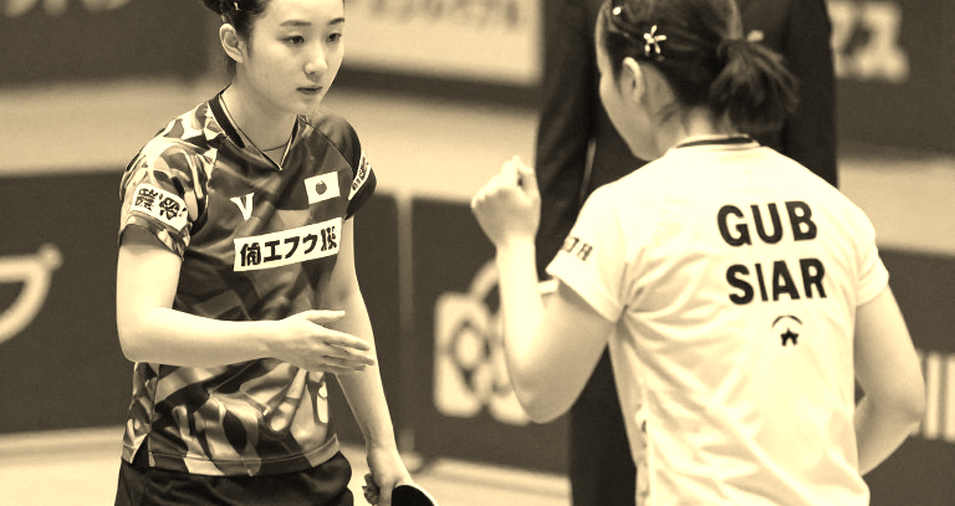
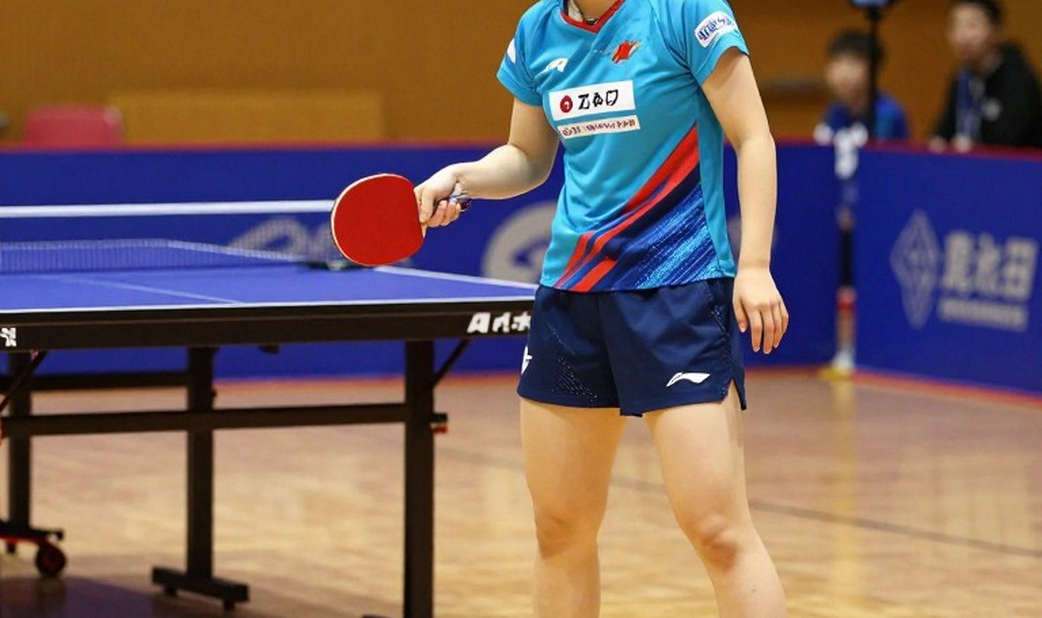
Fifth, I stopped at two names: Joseph Sebatindira from Uganda and Kaede Neya from Japan. They are the winners of the Challenge. No scores, no draws, no head-to-head data were published. But the geography of the winners alone is a signal. One from Africa, one from Asia. That shows the ITTF is genuinely expanding its scouting network beyond the traditional centre of world table tennis. The crowd looks at the screen; I look at three years of video recordings. For me, the name Sebatindira appearing at a global youth camp is not a coincidence. It is the product of a scouting process that was deliberately invested in.
Now I have to talk about the part many people will skip: the English sparring partners. The article names Zac Greenhough, Peadar Sheridan, Olly Cornish, Rebecca Savage, Jake Davidson and Rachael Iles. For a scout, this is a code. These English junior players were chosen to be training partners for global under-12 talents. They are not random names. They are part of the domestic talent cohort. They are being used as a development tool. I will follow this list for the next 12 to 24 months. If any of them is called into the national team, I will return to this article and add a note.
What makes a youth camp like World Hopes Week valuable? I will answer with an old story. In 2026, I was the only editor who did not approve a story about a 16-year-old who was rumoured to be chased by Manchester City for 20 million euros. I sat down and watched all 14 of his matches in the national U19 league. I counted 23 shots, one goal, a pass accuracy rate of 64 percent, and 11 ball losses in his own half. I wrote a rebuttal titled “A hype that lacks data”. He was not chosen by any club. The rumour collapsed. I learned that hot news is a shallow hole. Talent is an underground stream.
But I also learned the opposite lesson. In 2026, I stood outside the Mbappe hype. I looked at data from the European U20 tournament: one goal in three matches, physical decline of 18 percent in the second half. I said that no club should spend more than 150 million euros on such an unstable player. Mbappe then scored four goals at the World Cup, won the trophy, and I received hundreds of mockeries. That night, I reviewed the footage and asked myself what variable I had missed. From then on, I added a self-questioning section to every article: what does my data fail to measure? With Mbappe, my data did not measure his ability to unbalance opponents, did not measure his confidence in front of goal, and did not measure how he operated in a team with world champions around him.
So when the ITTF calls those 40 under-12 players the best in the world, I read carefully. At under-12 level, there is no world ranking. There is no large head-to-head dataset. There is no WTT points system touching this camp. The word “world” here is marketing language, and an analyst must separate it from data language. The field is a selected development cohort, not a ranked elite group. That does not reduce the value of the event. It only asks us to put the praise into the correct box.
I need to make one key point: no world champion is identified in one week in Sheffield. The value of World Hopes Week is lower down. It builds coaching capacity. It creates a space where children from completely different table tennis cultures can see each other. It places the ITTF mark on England’s development network. None of this can be measured by a scoreboard. But it is what a talent development system needs before it can produce a champion.
When the whole world turns off the lights, I sit in the data vault and listen to the future falling. During the pandemic, I spent more than 300 days building a data warehouse with 320 young players from 2026 to 2026. I recorded endurance indicators, injury frequency, and monthly form variation. When I compared them, I discovered that Mbappe belonged to a rare group: 0.08 percent of players can maintain a high peak after three consecutive seasons. I had to adjust my evaluation scale. I wrote: data suggests, but reality decides. In football, I was wrong. In table tennis, I can also be wrong. So I am not predicting which of these 40 players will become a star. I am only predicting that the right scouting process will find them before the crowd does.
There is one interesting detail in the article: the prize for the membership referral programme is a Butterfly table designed with inspiration from London 2026. This is not a random detail. It connects World Hopes Week to a bigger event in London in 2026. Perhaps the ITTF is using this youth camp as a run-up to bring audiences closer to a major event. To me, that is smart: using the developmental value of a youth camp to open the door for the commercial value of a major championship. The world table tennis system does not live only from finals. It lives from tables placed in clubs, parents who are introduced, and children who pick up a racket for the first time.
What if none of these 40 players ever reaches the top? That is the question that keeps every scout awake. History shows that the majority of Hopes Week participants will never reach the senior world top 50. That is the nature of the development pyramid. But that does not mean the event failed. A youth camp is not judged by the single star it creates. It is judged by whether the system becomes better after the camp ends. Do coaches understand more about physical preparation? Do junior teams receive more comparative data? Do smaller nations see a clearer path forward? If the answers are yes, then World Hopes Week has done its job.
The lesson I learned from Mbappe is not “believe blindly in young players”. The lesson is: build a screening process good enough so that when a talent exceeds every data model, you still have the ability to observe. Mbappe only comes once. But the process that finds him repeats forever. In 2026 I stood outside the hype. Those who laughed at me then are no longer laughing. But I was also wrong about Mbappe. So I write this article with a different attitude: I need to follow Joseph Sebatindira and Kaede Neya over the next 24 to 48 months. If they improve, this article needs to be updated. If they disappear, I also need to record that. Because the data vault is not here to protect me. It is here to help me understand human development.
One final thing about England. The fact that the ITTF came back to Table Tennis England signals organisational competence. But I believe the real value lies in how England uses this event to feed its domestic system. They invite coaches from the wider talent network. They bring university sports science into an under-12 development programme. They use their own young players as training partners. That is not the behaviour of a country that only wants to finish hosting. That is the behaviour of a country that wants to absorb the entire value of this week into its own training body. I find that smarter than simply counting how many nations attended.
Sheffield will hear the sound of the ball again in the coming days. I will not be there. I will sit in my usual place: in front of a screen, with three years of video recordings, with incomplete data columns. When a child nobody has mentioned starts winning matches they should lose, I will know that the sediment layer is emerging. World Hopes Week 2026 may not produce a world champion for 2036. But if the system works, one of them will appear in a place nobody expected, in a year nobody prepared for. I will write it down. That is my job.

Cầu thủ liên quan
Bài đề xuất
China Smash 2026: Americans Survive in Doubles as Singles Expose the Deuce-Game Ceiling2026-10-06
Władysławowo and Sarajevo to Host 2028 European Youth Table Tennis Championships: When Development Planning Is Written Seven Years in Advance2026-10-06
The Empty Notebook Page of Vietnamese Table Tennis2026-10-11
National Table Tennis 2026: Two Regions Meet at One Table2026-10-16
Ljubljana Women's Singles Semifinals: Four Names, Two 4-1 Scorelines, and One Empty Data Column2026-10-18
Nine Dimensions of Table Tennis Decoding: When the Analyst Must Read the Gaps2026-10-09
Table Four, Nobody Filmed: The Data Gap in Vietnamese Table Tennis2026-10-20
Worthing TTC launches Junior Team 1 Star: The gap that never appears on England's youth table tennis spreadsheet2026-09-18
Bài đề xuất
When Fan Zhendong Erased His Name: The Real Invoice of Professional Table Tennis2026-10-24
45-44 then 45-28: Castel Goffredo Claim Eighth Italian Women's Super Cup2026-10-25
The Report That Returned Zero: The Verification Gap in Table Tennis Coverage2026-10-27
The Butterfly Table, the TTID Code and the Gap Beneath the Pyramid: Which Landing Point Has Table Tennis England Chosen for the London 2026 Cycle2026-10-02
The Empty Analysis Sheet: Table Tennis' Biggest Danger Is a 'No-Risk' Report2026-10-20
Sheffield Opens the Door Again: The ITTF and the Loop of Global Youth Table Tennis Development2026-10-01
Sheffield Strata: When World Table Tennis Returns to Excavate the U12 Sediment Layer2026-10-01
ITTF Hands Sheffield the World Hopes Week 2026 Hosting Slot Again: Reading the Youth Pipeline from the Bottom Up2026-10-01