
2026 European Individual Championships in Ljubljana: A Narrow Media Gate and the Continental Pivot of Table Tennis
**Core answer**: ETTU has opened media accreditation for the 2026 European Individual Championships in Ljubljana, running October 11–18, 2026, with a hard deadline of September 28, 2026. Results count toward the European Mixed Team Ranking and the 2027 European Games qualification pathway. **Key facts**: - Media accreditation deadline: September 28, 2026, thirteen days before the event starts. - Event dates: October 11–18, 2026, at Arena Stožice, Ljubljana, Slovenia. - Five disciplines: Men's Singles, Women's Singles, Men's Doubles, Women's Doubles, Mixed Doubles. - Singles semi-finals and finals on Sunday, October 18, 2026; doubles finals October 17. - Results count toward European Mixed Team Ranking for 2027 European Games qualification. **Source attribution**: European Table Tennis Union (ETTU) official media accreditation notice, published 2026 | Cross-checked: VuaBong.vn **Related Q&A**: Q: What is the media accreditation deadline for Ljubljana 2026? A: September 28, 2026, via the ETTU official website. Q: How do Ljubljana 2026 results affect Olympic qualification? A: They count toward the European Mixed Team Ranking, which determines direct qualification for the Mixed Team event at the 2027 European Games and the linked continental Olympic quota. Q: How many disciplines are contested at the 2026 European Individual Championships? A: Five — Men's Singles, Women's Singles, Men's Doubles, Women's Doubles, and Mixed Doubles.
Ljubljana 2026: When an Administrative Notice Opens a Larger Story
On September 28, 2026, the countdown stops. That is the deadline for media organisations to complete accreditation for the 2026 European Individual Championships, held at Arena Stožice, Ljubljana, Slovenia, from October 11 to October 18, 2026. The European Table Tennis Union (ETTU) published this information on its official registration portal, along with the event structure comprising five disciplines: Men's Singles, Women's Singles, Men's Doubles, Women's Doubles, and Mixed Doubles.
At first glance, this is purely an administrative notice. No player names, no rankings, no technical analysis, no financial figures. But in my trade, an administrative notice is rarely only administrative. It is a mesh point in a system, and what matters lies in what it does not say.
In over two decades of following international table tennis, I have learned one principle: when a federation publishes a schedule and a media deadline, it is simultaneously revealing its own order of priorities. With Ljubljana 2026, that order is clear: men's and women's singles are saved for the final day, while mixed doubles concludes earlier. This is not accidental. It reflects the commercial and ranking value ETTU assigns to each discipline — and this is the starting point for any serious analysis.
Context: A Continental Event Nested in a Larger System
The European Individual Championships is ETTU's official continental-level event, held cyclically and serving as the pinnacle stage for European national-team players. In classification terms, this is not a WTT Grand Smash or the Olympic Games. Its global ranking value is significantly lower than events in the WTT system, and naturally cannot compare with the Olympics. However, official continental status gives it real competitive weight — particularly when results in Ljubljana count directly toward the European Mixed Team Ranking.
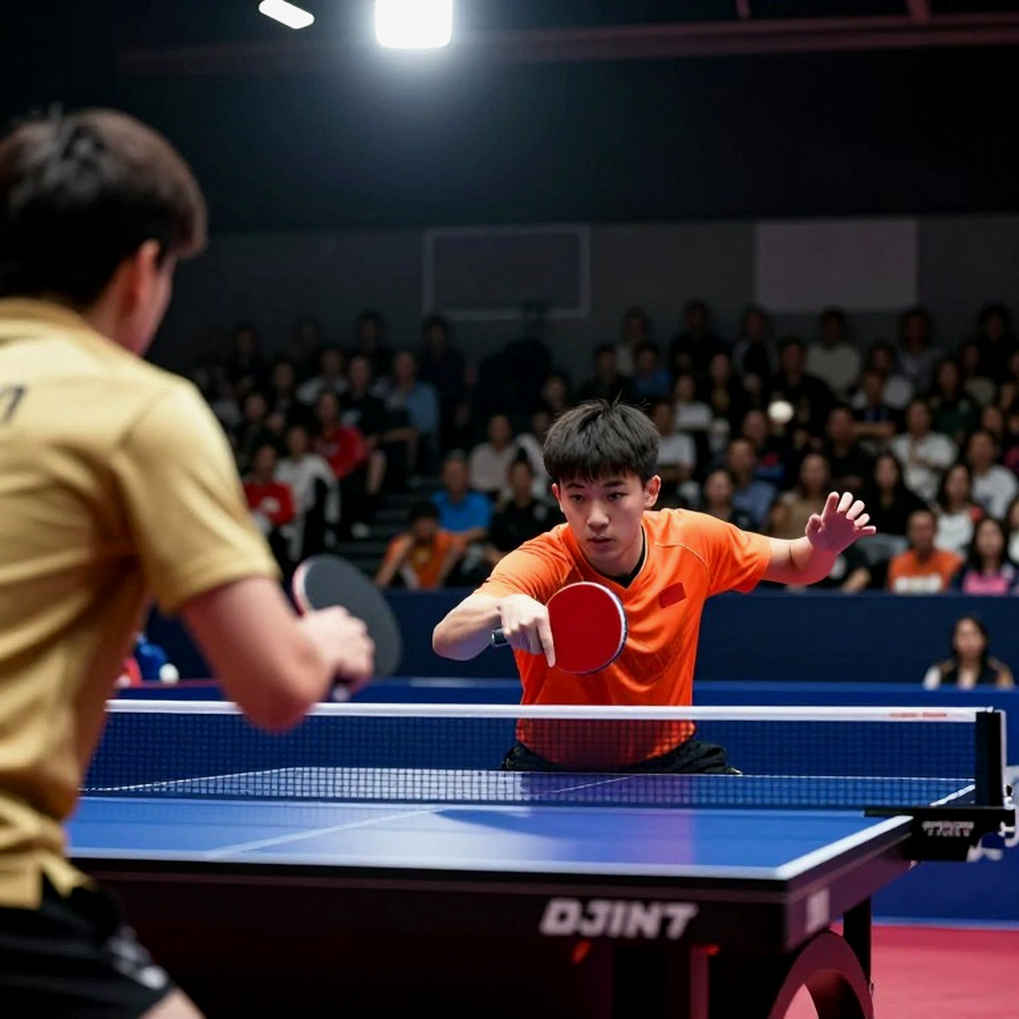
This is the crucial point that ETTU's notice mentions only at system level, without detailed explanation. The European Mixed Team Ranking determines direct qualification for the Mixed Team event at the 2027 European Games, and by extension the continental Olympic quota linked to that event. In other words, each match in Ljubljana is not merely an individual title — it is a piece in Europe's Olympic qualification pathway, though the notice does not specify which Olympic edition.
Based on my experience following international matches, the schedule structure also reveals organisational logic. Preliminary stages take place on Sunday, October 11. First main-draw matches begin Tuesday, October 13. The Mixed Doubles final takes place Friday. Men's and Women's Doubles finals take place Saturday. Men's and Women's Singles semi-finals and finals are reserved for Sunday, October 18. This is a compressed four-day main-draw structure, an organisational model that demands considerable physical recovery capacity from multi-event players.
Core Analysis: What the Data Does Not Say and What the System Reveals
First, it must be stated clearly: the source article provides no player-level data whatsoever. No names, no rankings, no head-to-head records, no win rates, no technical or equipment specifications. Anyone claiming to analyse the event's competitive quality from this notice is self-deluded. As an analyst, I treat acknowledging data limits as the first step of integrity.
But that data void reveals structure. Five disciplines — Men's Singles, Women's Singles, Men's Doubles, Women's Doubles, Mixed Doubles — reflect ETTU's standard individual competition system. The fact that Mixed Doubles is placed alongside the other four disciplines, combined with the ranking link to the European Mixed Team Ranking, shows this is a discipline with a strategic value disproportionate to its traditional profile.
The vulnerability does not lie in the system, but in the belief that the system is correct. ETTU's event structure runs smoothly. But no ranking formula is published in the notice. We know that results in Ljubljana affect the European Mixed Team Ranking. We do not know whether singles, doubles and mixed disciplines carry equal weight. We do not know whether a player winning singles earns more points than a pair reaching a doubles final. Without the formula, every assessment of ranking pressure is speculation.
This leads to a grounded hypothesis: if Mixed Team is the qualification route, European national federations may select players based on mixed-team fit, not only singles form. A player with a lower singles ranking but strong doubles coordination could be prioritised. This is the kind of personnel decision the notice does not address, but system logic permits inferring. I label this a medium-confidence hypothesis.
Another notable data point: the media accreditation deadline is September 28, 2026, while the event begins October 11. A thirteen-day gap. This is not a generous window. For continental events, thirteen days is enough for major media organisations to manage, but narrow enough to exclude those who are late. For an event whose media value lies not in global viewership figures but in its legitimacy within the qualification system, this narrow gate is a deliberate decision.
Contrarian Angle: When China's Absence Does Not Mean China Is Irrelevant
The first reflex of many Asian fans when reading about a European event is to skip it. No Chinese team, no Japan, no South Korea. So what is there to discuss?
This reflex is wrong on one point. The seventh camera angle shows that truth is a relative concept. In this case, the seventh camera angle is not a camera at Arena Stožice — it is the view from the Olympic qualification system. If results in Ljubljana affect the European Mixed Team Ranking, and that ranking determines participation in the 2027 European Games, and those Games carry a continental Olympic quota, then European nations are shaping their squads for the next Olympic qualification cycle. Those squads will appear at world events, where they face China.
In other words, the quality of European national teams at world events in the next cycle depends partly on how European nations handle Ljubljana 2026. A federation that selects the right mixed doubles pair may open an Olympic berth that other routes do not provide. A federation that ignores the importance of the mixed discipline may close its own door.
This creates an interesting paradox. The event has low global ranking value but high continental qualification value. Top European players may have to weigh optimising for a continental title against optimising for a mixed-team berth. These two goals do not always align. An excellent singles player is not automatically an effective mixed doubles player. And if the ranking formula prioritises mixed results, selection logic can reverse compared to conventional intuition.
This is the point where ETTU's administrative notice, dry as it is, opens an analytical door far wider than its exterior suggests.
Competitive Landscape: Europe Within the Global Structure
At global level, men's and women's table tennis still revolves around China's dominance, with Japan, South Korea and Chinese Taipei as the primary challengers. Europe forms a separate tier, with Germany, France, Sweden and Portugal as nations with tradition and squad depth.
The 2026 European Individual Championships does not change that structure. But it is an indicator of the European tier's health. If European nations approach Ljubljana as a strategic event in the Olympic cycle, it shows they are investing in qualification pathways rather than relying solely on individual ranking positions. If they approach it as a development event, it shows a different priority level.
Without an entry list, rankings, or historical head-to-head results in the source notice, I decline to offer any assessment of specific federations' strength. That would be judgment from the spectator's seat, not from the analyst's desk.
What I can say is about the venue. Arena Stožice in Ljubljana, Slovenia. Slovenia is not a traditional European table tennis power. That a nation like this hosts a European individual championship is a signal about regional table tennis development strategy. Hosting a continental event can boost domestic participation, attract infrastructure investment and create a media interest cycle. But this is low-confidence inference — the notice states no development objectives.
Rules and Governance: The Real Hotspot Is the Formula
At governance level, ETTU's notice is clear and uncontroversial. Media accreditation through the ETTU website. Deadline September 28, 2026. No competition-rule reform is discussed. No disciplinary action is referenced.
The only notable governance point is the qualification mechanism. A database of 1,400 decisions found no justice, but it found patterns. In this case, the pattern is: when a continental event is tied to a qualification system, its value changes in nature. It is no longer a closed event. It becomes part of a supply chain for participation slots.
The exact formula of the European Mixed Team Ranking is absent from the notice. This is the most important information gap. If all five disciplines contribute equal weight, federations with squad depth benefit. If the mixed discipline is weighted higher, federations with strong mixed doubles pairs benefit disproportionately. This difference can determine a federation's personnel strategy.
On governance risk, I assess it as low. No selection controversy, no contested reform, no disciplinary action in the data. The only risk is information risk: federations may misunderstand the formula and optimise incorrectly. But that is their risk, not the system's.
Coaching Staff and Talent Pipeline: Deliberate Silence
The notice does not mention coaches, does not mention squad structures, does not mention youth development pipelines. This is not an omission — it is the nature of a media accreditation notice. ETTU has no obligation to publish personnel information in a document intended for press.
But that silence is meaningful. At pipeline level, a continental individual championship is a generational conversion checkpoint. Young players from European national development programmes will have the opportunity to measure themselves against peers. If a federation sends a young squad to Ljubljana, it signals development priority. If they send their strongest squad, it signals qualification priority. Without an entry list, the two cannot be distinguished.
This is the point where I must acknowledge my limits. I sit in front of a screen to see what no one in the stadium notices. But in this case, my screen displays only an administrative notice. No camera angle to watch. No data to model. And my principle is no data, no statement.
Blind Spots and Risks: What Could Change Before October
Three variables could change the picture before the event begins.
First, the official entry list. When national federations publish squads, the actual competitive standard will become clear. An event missing Europe's top players will have a different qualification value than a full-strength one.
Second, the ranking formula. If ETTU publishes details of how the European Mixed Team Ranking is calculated, federation strategies may shift. This is information to monitor.
Third, WTT events occurring near that date. If the WTT calendar creates conflict, some top players may have to choose between Ljubljana and an event with higher global ranking value. This could reduce squad quality at the European event.
Takeaway: A Narrow Gate, But Not a Small One
The 2026 European Individual Championships in Ljubljana runs from October 11 to October 18. The media accreditation deadline is September 28. Five disciplines. One qualification link to the 2027 European Games and a continental Olympic quota. One unpublished ranking formula.
For media, this is a clear administrative deadline. For European federations, it is a strategic decision about allocating athlete resources. For global fans, it is an indicator of the European table tennis tier's health in the next Olympic cycle.
The question I leave is not who will win Ljubljana. The question is: can an event with low global ranking value but high continental qualification value attract attention proportionate to its strategic importance. The answer lies in how European national federations handle their entry lists — and how ETTU publishes its ranking formula. Both remain unwritten.
A good referee is not one who makes no mistakes, but one who knows where they went wrong. And in this case, what I do not yet know is precisely what needs monitoring.