
After Members' Day, Table Tennis England Faces Its Hardest Test: Turning Listening Into Action
Trả lời cốt lõi: Members' Day của Table Tennis England là sự kiện đối thoại và trao giải cấp liên đoàn, không có dữ liệu thi đấu. Giá trị chính nằm ở tín hiệu quản trị: liên đoàn nhấn mạnh lắng nghe hội viên nhưng chưa công bố cơ chế, thời hạn hay số liệu để kiểm chứng việc triển khai. Sự kiện chính: - Table Tennis England tổ chức Members' Day, điểm lại mùa 2025-26 và ghi nhận đóng góp của hội viên. - Tony Dias nhận Ivor Montagu Award; Eli Baraty nhận Vice President Award cho phát triển câu lạc bộ và huấn luyện viên, gắn với eBaTT TTC. - Eli Baraty công khai kêu gọi “tập trung thực sự vào triển khai”, tạo điểm phản biện trong bản tin. - Bản tin không nêu số lượng hội viên, tài chính, nghị quyết hay bầu cử ban lãnh đạo. - Không có dữ liệu trận đấu, xếp hạng hay thiết bị. Nguồn: Table Tennis England, “Members help shape the future of table tennis at Members' Day”; ngày công bố không được nêu trong nguồn. Hỏi đáp liên quan: Q: Members' Day có phải đại hội thường niên? A: Không; bản tin mô tả sự kiện đối thoại và trao giải, không có nghị quyết hay bầu cử. Q: Vì sao đáng theo dõi? A: Vì đây là phép thử xem liên đoàn có công bố phản hồi “bạn nói / chúng tôi làm” hay không. Q: Ai được vinh danh? A: Tony Dias và Eli Baraty, theo thông tin từ Table Tennis England.
In the room at Table Tennis England's Members' Day, Eli Baraty received the Vice President Award. Most honorees stop at thank you. Baraty added a clause: he is “an even bigger advocate for action” and wants “a true focus on implementation.” The line cut through the warmth of a member day where leadership reviewed the 2026-26 season, listened to members and handed out awards. It also set the hardest test for a sports governing body: after listening, what will be done, by whom, and when?

Table Tennis England is the national governing body for table tennis in England. Members' Day is a member-facing event combining updates, dialogue and recognition. The official report says members from across the country shared views and contributed ideas intended to help inform future priorities. Chair Clare Briegal stressed listening; Chief Executive Sally Lockyer said the focus is on turning discussions into action. Tony Dias received the Ivor Montagu Award for his work with the County Championships Committee; Eli Baraty received the Vice President Award for service to club and coach development nationally, particularly through eBaTT TTC. The report contains no match data, rankings or equipment information.
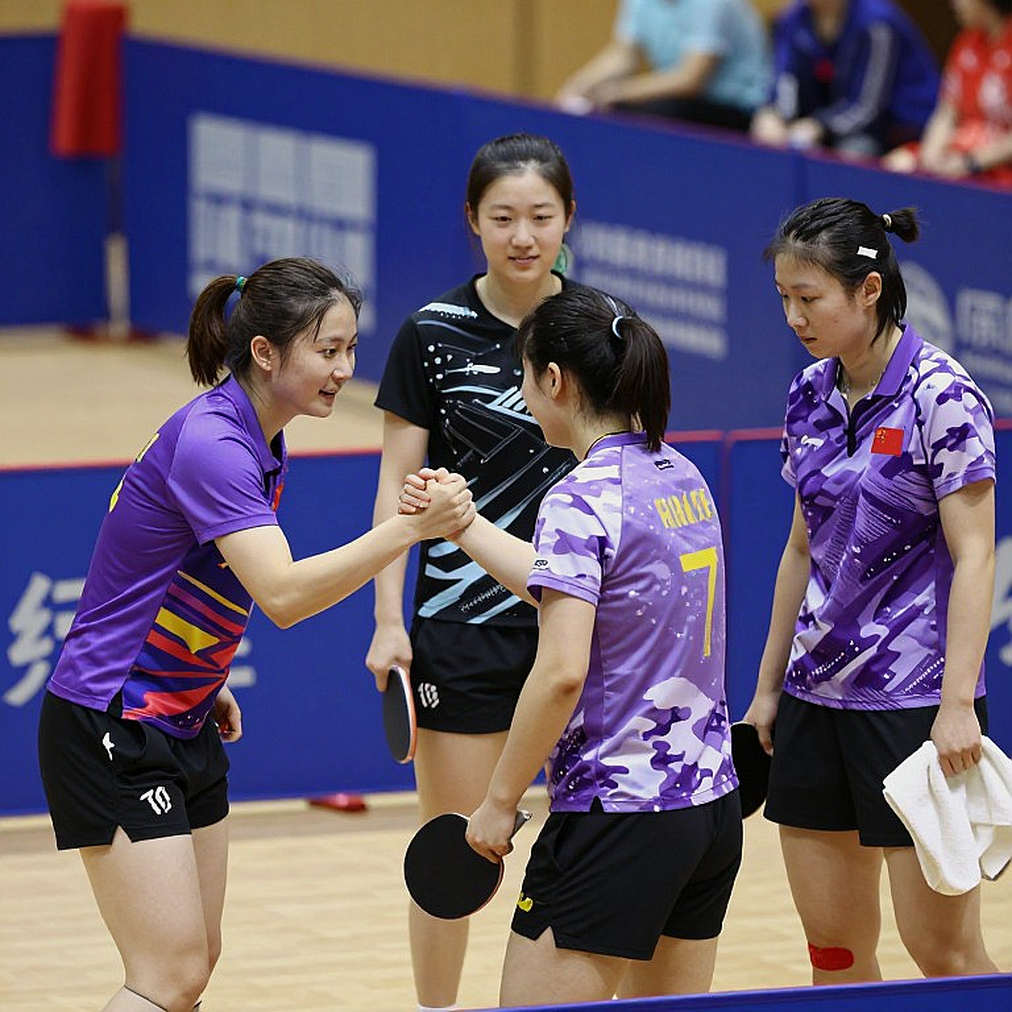
The most telling signal is the awards mix. One award recognises county committee service; the other recognises club and coach development. That mix suggests the current development bottleneck in English table tennis is human capital — coaches and volunteers — more than facilities or elite performance. When a governing body gives its highest recognition to people who teach the game, it is saying that the scarcest resource is the person who can pass on the craft, not the blade or the rubber.
The naming of eBaTT TTC in a national-body release also matters. A private club becomes a national exemplar for coach development. The model has reach advantages: the governing body does not need to run every course itself. But it creates a standardisation weakness: knowledge rests with a small number of individuals, while the governing body publishes no curriculum framework or assessment index. For a sport that depends on clubs and volunteers, that is a fast way to expand and a hard way to control quality.
The absence is even more telling. No elite player, national-team coach or performance director is named. A national governing body's member-day report does not use a competing star as its promotional hook. There are two readings. The first is deliberate: keep Members' Day centred on the grassroots membership. The second is that elite performance is being pushed to the edge of the association's public story. The article does not provide enough data to settle the question, but the silence is a signal worth tracking. Rough gems never speak for themselves; the archaeologist must know how to listen.
The role division between chair and chief executive is clear. Briegal talks about listening and shaping priorities; Lockyer talks about converting discussion into plans. That is a familiar governance-communications pattern: the chair holds the strategic voice, the chief executive carries delivery. No public friction is visible. But the smoothness places weight on one question: which mechanism turns member input into decisions? The report says only that ideas will “help inform” priorities. There is no owner, no deadline and no commitment to report back.
Based on my experience watching matches, I have learned to check the video before trusting a handsome metric. With governance reports, I check what is missing. Here, attendance numbers are missing; financial figures are missing; resolutions are missing; board elections are missing. Members' Day operates as a soft consultation layer, distinct from an annual general meeting. That layer has value for relationship-building, but it carries no binding force. I do not believe in miracles; I believe in what data whispers in the dark. And the data here whispers very softly.
The contrarian angle: the absence of a competing star can be a sign of maturity, not weakness. A national governing body carries several layers of responsibility: events, junior development, grassroots growth and governance compliance. Members' Day does not need to become a national-team launch. But if that absence repeats across many communications, it becomes a strategic choice: maintaining the system takes priority over building a performance image. Base case: ideas are absorbed into the next planning cycle, communicated in generic language about “informing priorities,” and no one can trace which idea became which action. Worst case: no response appears within three to six months, member goodwill erodes, and the next Members' Day is met with cynicism. Optimistic case: the association publishes a “you said / we did” mapping, turning consultation into an accountability tool.
The base case carries the highest probability. Governing bodies are usually better at listening than at publishing what listening produced. But the lesson from reports that get swept off the desk is that time does not erase the trail; it only makes the trail clearer. If Table Tennis England publishes a response with dates, owners and concrete priorities, Members' Day becomes a real mechanism. If not, it remains a good day in the communications calendar.
In the next three to six months, the signal to watch is specific: a “you said / we did” document on the association's news channel, with a timeline and a responsible unit. We do not read the future; we only read the past more carefully than others do. For English table tennis, the recent past says that voices were heard. The next step is to prove that those voices carry weight.