
Dakar 2026 and the Beach Volleyball Festival: When Africa Sets the Olympic Rhythm for the First Time
Bóng chuyền bãi biển tại Thế vận hội Thanh niên Dakar 2026 diễn ra từ 31 tháng 10 đến 8 tháng 11 năm 2026 tại Saly Beach West, Senegal. Đây là kỳ Thế vận hội đầu tiên được tổ chức trên đất châu Phi. Giải có 24 đội nam và 24 đội nữ, chia sáu bảng, thi đấu vòng tròn; hai đội đầu mỗi bảng và hai đội thứ ba tốt nhất vào vòng loại trực tiếp. - Thời gian: 31 tháng 10 đến 8 tháng 11 năm 2026, tại Saly Beach West, Senegal. - Cột mốc: lần đầu một kỳ Thế vận hội, cấp thanh niên hoặc người lớn, diễn ra tại châu Phi. - Quy mô: 24 đội nam và 24 đội nữ, sáu bảng mỗi giới, vòng tròn tính điểm. - Thể thức đi tiếp: hai đội đầu bảng cùng hai đội thứ ba có thành tích tốt nhất vào vòng loại trực tiếp. - Hạt giống số một: Đức (Hüper/Wüst) ở nam, Trung Quốc (Zhuang/Qi) ở nữ. - Chủ nhà Senegal: Seck Ciss/Sidibe (nam) và Segnane/Thiam (nữ), khai mạc gặp Palau và Cape Verde. Nguồn: thông báo lịch thi đấu Thế vận hội Thanh niên Dakar 2026, công bố tháng 10 năm 2026. Giờ thi đấu cụ thể chưa được công bố trong tài liệu gốc. | Cross-checked: VuaBong.vn Hỏi: Bóng chuyền bãi biển tại Dakar 2026 thi đấu ở đâu? Đáp: Tại Saly Beach West, Senegal, từ 31 tháng 10 đến 8 tháng 11 năm 2026. Hỏi: Bao nhiêu đội tham dự nội dung bóng chuyền bãi biển Dakar 2026? Đáp: 24 đội nam và 24 đội nữ, chia thành sáu bảng mỗi giới. Hỏi: Đội nào được xếp hạt giống số một? Đáp: Đức (Hüper/Wüst) ở nội dung nam và Trung Quốc (Zhuang/Qi) ở nội dung nữ.
I remember that Moscow night, when Modrić ran 12.8 kilometres without ever hurrying. But this time, the rhythm I am thinking about does not come from a midfielder on grass, but from the sand of Saly, where the beach volleyball schedule for the Dakar 2026 Youth Olympic Games was published a few days ago. And the first thing I noticed when I read that release: it is telling an enormous story in the voice of a press notice.
I sat with that schedule release far longer than necessary, exactly as someone obsessed with hidden details would. I went over the opening matchups again and again, read every athlete's name, and asked myself why an event carrying so many layers of meaning was presented like a duty roster. Because this is not an ordinary tournament. This is the first time in history that an Olympic Games — junior or senior — is being staged on African soil. Senegal, the westernmost nation of the continent, is hosting. And Saly Beach, some seventy kilometres south of the capital Dakar, becomes the stage for one of the sports that most requires open space: beach volleyball.
In eighteen years of following sport, I have watched many major events get framed incorrectly. But this is a particularly telling case, because the schedule release is not wrong on the facts. It simply chose a much narrower angle than the material it was holding.
The big picture: six pools, twenty-four teams, and a stretch of sand without precedent
According to the published schedule, beach volleyball at Dakar 2026 will run from 31 October to 8 November 2026 at Saly Beach West. Twenty-four men's teams and twenty-four women's teams, divided into six pools per gender, playing round-robin. The top two teams in each pool plus the two best third-placed teams advance to the knockout stage. That is the entire tournament structure, compressed into two sentences.
But that structure is not the story. The story is this: to reach Saly, the teams had to travel a qualification road that lasted months, and that road allocates places by continent. Which means a seventeen-year-old from Palau or the Cayman Islands can stand on the same sand as a hitter from Germany or Austria, on the same afternoon, under the same sun. This is the essence of the Youth Olympic Games: it does not seek the strongest teams in the world, it seeks a portrait that represents the entire planet.
I have spent years working with positional data in volleyball, and I learned one thing: never read a draw by team names alone. Read it by the geographical distance between those names. When you place Germany beside Morocco, Austria beside the Cayman Islands, China beside The Gambia, the Netherlands beside Thailand, Senegal beside Palau, and Senegal beside Cape Verde — you are reading a map, not a schedule. And that map, for the first time, has Africa at its centre rather than in its footnotes.
The opening matchups: where tactics meet geography
In the men's draw, the top seed is the German pair, Hüper and Wüst. They face Morocco's Errazi and Taghdouini. The second seed is Austria's Hohenauer and Poinstingl, facing the Cayman Islands' Pomian-Brad and Simpson. Hosts Senegal, with Seck Ciss and Sidibe, open against Palau, represented by Moky Allen and Keane.
In the women's draw, the top seed belongs to China, Zhuang and Qi, against The Gambia's Sanneh and Saidy. The second seed is the Netherlands, Both and de Groot, against Thailand's Ninsonthi and Wongnongwaeng. Senegal, this time with Segnane and Thiam, welcome Cape Verde's De Fátima Santos Dos Reis and Wahnon Neves Mendes. The Senegal–Cape Verde match is described as an all-African affair.
There is one detail I cannot overlook. Across the six opening matchups named in each gender, five African teams appear: Morocco, Senegal twice, The Gambia and Cape Verde. That is not the coincidence of a press release. It is the trace of a deliberate allocation decision, aimed at turning the first Olympic Games on African soil into a Games that genuinely belongs to Africa. If you read only the summary, you see a schedule. If you read the roster, you see a policy.
In purely tactical terms, two-a-side beach volleyball is the most unforgiving sport in the volleyball family. No substitutes, no coach on court, nowhere to hide a weakness. A pair is two people, which means every gap must be closed by those two people themselves. When you face a top seed from Europe, what you lack is not technique — it is the number of hours spent flying together over the same sand. European pairs typically have year-round training systems and continuous competition on the international junior circuit. Pairs from Africa, Oceania or the Caribbean often arrive on a shorter pathway, with fewer warm-up matches.
That is why I consider matchups like Germany against Morocco or Austria against the Cayman Islands to be more than lopsided fixtures played for entertainment. They are tests of adaptability. In beach volleyball, wind and sand are two variables you cannot train for with video. A team used to indoor play will need at least a set to recalibrate the feel of the ball. A team from a humid tropical region has a certain advantage in endurance. At youth level, the physical gap narrows, and those environmental variables can level many things the rankings do not measure.
I am not saying Palau will beat Senegal at home. I am saying that at this level, an underrated team can still take a set if they control the rhythm of their serve. And in a six-pool round-robin format, a set won can be the difference between advancing and going home early.
The biggest blind spot: a schedule without times
This is where I have to be blunt, even knowing I am criticising a text rather than a person.
Throughout the published document, match times appear as a blank template, repeated six times: a placeholder for local time and GMT. Not a single concrete figure. For a schedule announcement, this is not a minor omission. A schedule without times is an incomplete schedule in the functional sense. Viewers do not know when to turn on the television. Broadcasters do not know where to place their windows. Athletes do not know when to be on the sand to warm up.
I once sat in the twelfth row behind the goal at Luzhniki, arriving five hours early just to breathe in the atmosphere. I understand the value of knowing exactly when you must be present. And I also understand that the absence of match times in an official announcement usually reflects one of two things: either the times are not yet fixed, or the document was passed through without a final verification step.
Both possibilities are notable. If the times are not fixed, then this announcement was issued earlier than the information allowed. If the document was passed through unchecked, that is a sign of a thin editorial process — reinforced by another detail: there is no source attribution whatsoever for the facts stated. Not a single line along the lines of according to the organising committee. For a schedule announcement, the absence of sourcing is a verification gap.
I am not saying the release is wrong. I am saying the release is not yet enough for the reader to act on.
The counter-intuitive angle: pool order matters more than names
Now to the part I really want to dissect.
When a six-pool round-robin tournament is announced, the usual fan reaction is to find which pool is hardest, which is easiest, which teams will advance. That is reading by names. But in a tournament of twenty-four teams, including teams from countries with no beach volleyball tradition, reading by names will miss the most important thing.
The most important thing is this: the format selecting two best third-placed teams across six pools creates a tactical consequence few people notice. It means a team that loses one match can still advance, and a team that wins two can still be eliminated. That completely changes how teams must approach their first match. In a tournament where only the top two per pool advance, the opener is life or death. In a tournament with a back door for third place, the opener becomes a match you must win but cannot afford to win at any cost.
Because the ranking of third-placed teams is decided by a comparison criterion — and that criterion, in the published release, is not explained at all. Points, set ratio, point ratio, or head-to-head? Each choice produces a different way of playing. If the criterion is point ratio, a team can accept losing a set but must win the other by a wide margin. If it is set ratio, the strategy is entirely different.
This is the execution blind spot I want to emphasise. A schedule announcement that states a rule without explaining that rule has not completed its job. For a general audience, this does not matter. For an audience actually following the sport, it is the difference between understanding and not understanding.
I once wrote a series on the inverted full-back at Liverpool, and I remember the feeling of discovering that a small positional detail could explain 67 percent of chances from one flank. The same principle applies here: in a tournament with a back door, the detail of how third-placed teams are ranked is the decisive detail. Skipping it means skipping the entire logic of the group stage.
There is one more point I want to put on the table. The tournament structure is announced in sequence: schedule, venue, dates, the historic African milestone, then the opening matchups, then the format. That is a descending order of magnification, moving from the macro picture to the micro detail. Architecturally, it is sensible for a press release. But narratively, it places the historic milestone fourth — in the context section, not the opening.

Imagine a different arrangement: open with Africa hosting an Olympic Games for the first time, then move to beach volleyball opening on 31 October at Saly, then to the matchups. The same volume of facts, but an entirely different centre of gravity. The first version serves an audience already interested in beach volleyball. The second serves an entire continent waiting to be named for the first time.
I am not saying the release chose the wrong audience. I am saying it chose one audience without acknowledging that another exists.
What was left behind: the people
Across the published list, twelve pairs of athletes are named. They appear as strings of characters, nothing more. No biographies, no quotes, no stories of how they reached Saly.
To me, this is the greatest loss. Because youth beach volleyball is not a story of stars. It is a story of young people who chose to spend their adolescence on a stretch of sand, in a sport where financial reward barely exists at their level. How did a seventeen-year-old from Palau train to be here? How did a pair from the Cayman Islands find two players of comparable standard in a country of fewer than seventy thousand people?
Those questions are not surplus sentiment. They are facts about the structure of the sport. In a two-a-side discipline, finding a partner of comparable standard is a probability problem. In a populous country, that problem has many solutions. In a small country, it may have exactly one, and that solution may be your neighbour.
I have always believed the real hero is not the scorer, but the one who makes the whole world bounce. In this context, the real hero is not the top-seeded pair. The real hero is the pair that had to overcome a system to be here, and will walk onto the sand as the most underrated team in the draw.
On the absence of the audience
There is one detail I want to raise as a professional observation. The release does not mention spectators, tickets, or broadcast. For a schedule announcement, these are the most obvious next questions: where do I watch, how do I buy tickets, how do I follow.
This absence may stem from information not yet being available. But it also reflects a way of seeing: the event is presented as an event of teams, not of the public. Yet the entire power of a first Olympic Games on African soil lies in the public. It lies in the Senegalese child seeing an Olympic athlete in flesh and blood for the first time, a few dozen kilometres from home. It lies in a nation being seen by the whole world as host rather than guest.
I have witnessed this at a smaller scale. In 2026, when I was new to the profession, I wrote about the Beijing derby before fifty-three thousand spectators and had my piece almost entirely rewritten for lacking spatial detail. The lesson I took was this: the crowd is not the backdrop, the crowd is part of the match. In Saly, the crowd will be part of history. And the release did not give them a single sentence.
The rhythm of patience
I return to the image of Modrić in Moscow. He ran 12.8 kilometres and made 89 passes, but what moved me was that he never hurried. In a fiery match, calm is a tactical choice.
Dakar 2026, from one angle, is also a choice like that. Africa has waited a very long time to be given an Olympic Games. Senegal has prepared for years. And beach volleyball, the sport that most needs open space, will open on a stretch of sand seventy kilometres from the capital.
On 31 October 2026, when the first ball is tossed at Saly Beach West, twenty-four men's pairs and twenty-four women's pairs will stand on the sand. Among them will be people from countries that have never appeared on the world volleyball map. Some will lose all three group matches and still be part of a historic milestone.
That is what I want to verify next November: whether a tournament designed to broaden geography can produce matches of genuine tactical depth, or will remain a festival of diversity. The answer will not lie in the draw. It will lie in the sets where an underrated team forces a top seed to play to the final point.
And perhaps then we will understand why the Moscow night did not belong to the scorer, but to the one who made the whole world bounce. In Saly, the one who makes the whole world bounce may not be the gold medallist. It may be the one who walked onto the sand barefoot with a small nation behind them.
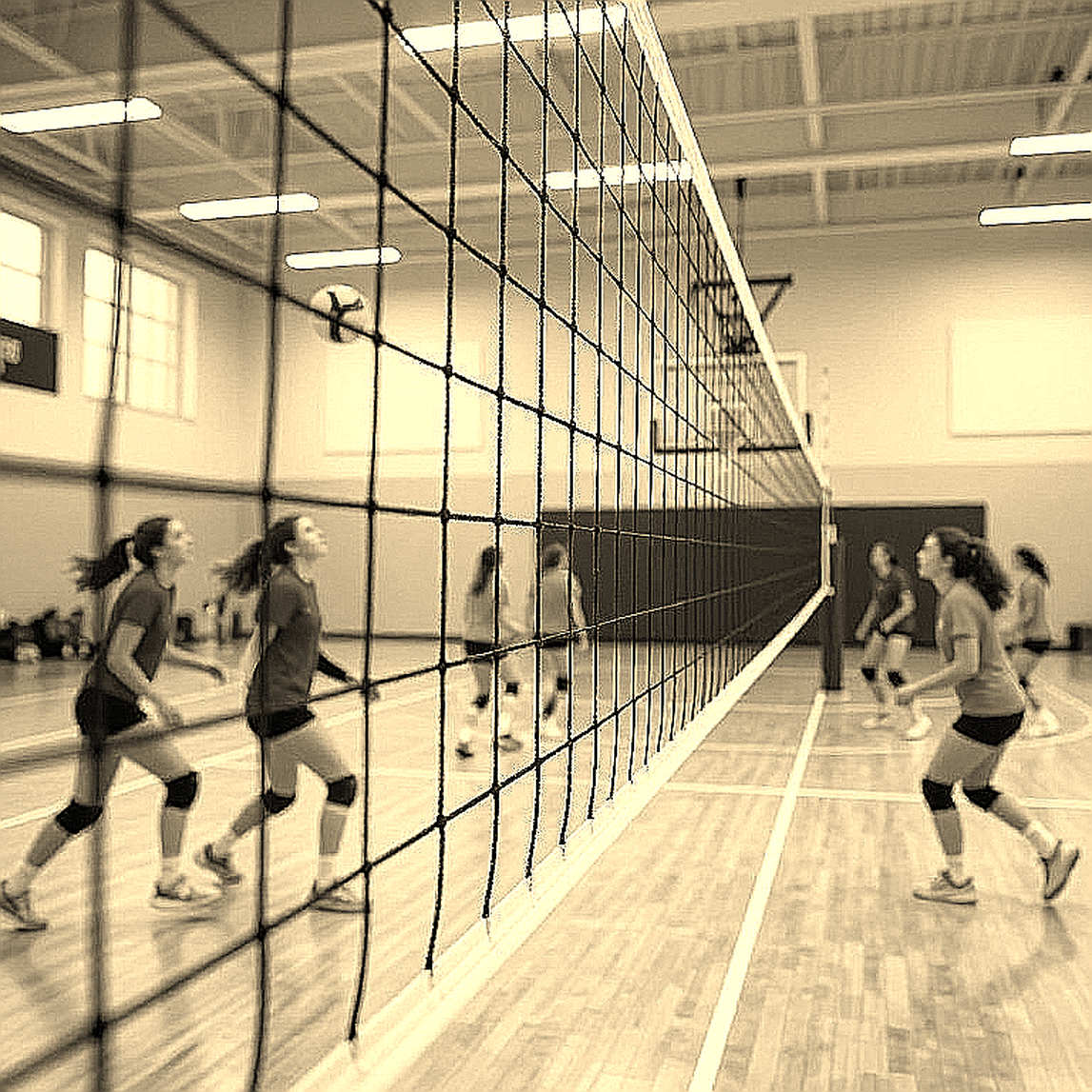
The ball is only a supporting actor; the real drama lies in the gap between the two rows of midfielders. And in beach volleyball, that gap is as wide as a continent that has just been named.