
Egypt 3-0 Kenya: Africa's First Women's Volleyball Olympic Ticket Was Forged From Four Names
**Câu trả lời cốt lõi**: Ai Cập vô địch giải bóng chuyền nữ châu Phi CAVB 2025 sau khi thắng Kenya 3-0 ở chung kết, qua đó lần đầu tiên giành suất dự Olympic Los Angeles 2028. Kenya (huy chương bạc) và Cameroon (huy chương đồng) nhận vé dự World Cup bóng chuyền nữ 2027. **Dữ kiện chính**: - Chung kết: Ai Cập 3-0 Kenya; Cameroon giành huy chương đồng. - Nada Ahmed Houssameldein ghi 14 điểm, gồm 2 pha chặn chết bóng và 1 ace. - Mariam Metwally Mohamed Morsy ghi 12 điểm; Elizabeth Marian Sokoiyo ghi 10 điểm. - Veronica Adhiambo Oluoch của Kenya ghi 11 điểm, gồm 2 ace và 1 pha chặn chết bóng. - Thể thức FIVB: thắng 3-0 hoặc 3-1 được 3 điểm, thắng 3-2 được 2 điểm. **Nguồn**: Bảng thống kê trận chung kết và kết quả giải vô địch bóng chuyền nữ châu Phi do CAVB công bố, mùa giải 2025. **Hỏi đáp liên quan**: - Hỏi: Ai Cập giành suất Olympic 2028 nhờ đâu? Đáp: Nhờ chức vô địch CAVB 2025, suất trực tiếp dành cho nhà vô địch lục địa. - Hỏi: Kenya và Cameroon nhận vé dự giải nào? Đáp: Cả hai nhận vé dự World Cup bóng chuyền nữ 2027. - Hỏi: Cầu thủ ghi điểm nhiều nhất trận chung kết là ai? Đáp: Nada Ahmed Houssameldein với 14 điểm.
The final's stat sheet ran to only four lines, and I sat with it for a long time in my study in Nha Trang, after the night had already turned into morning. Nada Ahmed Houssameldein scored 14 points, including 2 kill blocks and 1 ace. Mariam Metwally Mohamed Morsy scored 12. Veronica Adhiambo Oluoch of Kenya scored 11 with 2 aces and 1 kill block. Elizabeth Marian Sokoiyo scored 10.
Four players, forty-seven points, and a gap of exactly four points between the top scorer and the fourth. In a final settled in three sets, that is the fingerprint of a distribution system rather than the fingerprint of one hot night. Any player can score 20 points in any match; getting four players into double figures requires a setter who has rehearsed at least four different lanes long before the match.

The crowd sees the dance; I see the footwork and the plan behind it.
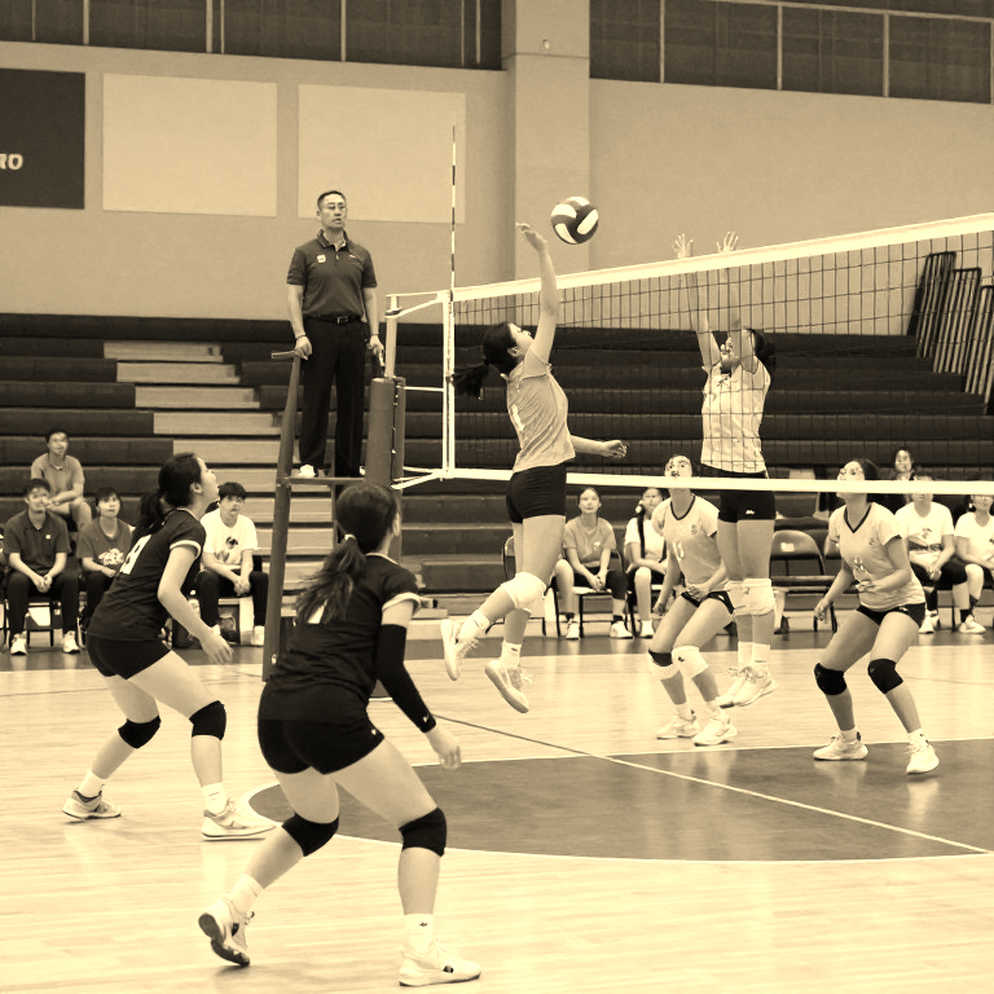
Context: three tickets and a shifting axis
The CAVB Women's African Nations Championship closed with three results for the record: Egypt won the title by beating Kenya 3-0 in the final, and Cameroon took bronze. Read through the medal table, it is an ordinary continental tournament. Read through the ticket map, it moves an axis.
Egypt took the direct berth to the Los Angeles 2028 Olympic Games, the first Olympic appearance in the history of Egyptian women's volleyball. Kenya, as runners-up, took a ticket to the 2027 FIVB Women's Volleyball World Cup. Cameroon took the continent's second ticket to the same 2027 event. Africa is sending three representatives into the top tier of the sport across the next three years, a ratio many confederations would envy.

Those tickets need to be placed inside the right format. Under FIVB scoring, a 3-0 or 3-1 win is worth 3 points and a 3-2 win is worth 2. In a tournament where ranking decides qualification, a single point between two kinds of victory can be the difference between an Olympic place and a World Cup place. That is why teams walk into a final with two objectives at once: win, and win in the shortest possible time.
For Egypt, the 3-0 sweep achieved both. They went through the tournament unbeaten and closed it without needing a fourth set. For Kenya, the 0-3 did not erase the World Cup ticket, but it raises a question about the traditional standing of Kenyan women's volleyball, the oldest women's programme in Africa and a repeated continental representative at the Olympic Games.
Based on my experience following matches at continental level, shifts in the women's game rarely happen in one match. They happen across three consecutive seasons with the same team in the final. A single 3-0 is only the first data sample, and the first data sample is the easiest to misread. So instead of congratulating Egypt, I chose the harder job: reading which structure produced that scoreline, and whether that structure survives when the opponent is no longer Kenya.
A 3-0 is the least informative scoreline in volleyball
A five-set match tells you about the elasticity of a system, about mid-match correction, about a coach changing the setting plan once it has been read. A 3-0 tells you one thing: the winner won three consecutive endgames.
And the endgame is exactly where the reading should start. Under the Rally Point System every rally scores, so from point 20 onward each rally is a tactical decision: serve for the ace or serve for position, push the ball into zone 5 or attack the seam, block cross-court or block line, feed the middle on the quick or keep loading the outside hitter. At continental level the gap between two teams is rarely technical; it sits in which option gets chosen across the last four rallies of a set.
Egypt won all three sets, which means Egypt won that decision three times. That is a signature of preparation.
One calculation stopped me. If the three sets ended close, say 25-22, the winner reaches 75 points and the loser 66 across 141 rallies. Nine points over 141 rallies is a 6 percent margin. A 3-0 sweep can be nothing more than a 6 percent margin repeated three times at the moment that matters. That is why I never read a set score before reading a structure: the score says who won, the structure says why.
The match lies with its scoreline; tactical structure is where the truth lives.
I have to state my limits first. I do not have set scores. I do not have perfect-pass rate, spike efficiency, transition counts, or either setter's distribution table. I have four names and four point totals. An honest analyst says that before saying anything else, and then still has to work with what is on the table.
From that gap, two scenarios open. If Kenya lost one set narrowly, their problem is the absence of an independent scoring option once the reception system breaks. If Kenya lost all three sets heavily, their problem is structural rather than momentary. Two scenarios, two different conclusions about the same team, which is why I refuse to conclude from a scoreline alone.
14 – 12 – 11 – 10: the setter's load-sharing problem
Assume Egypt closed the three sets on roughly 75 points. Nada then accounts for almost 19 percent of her team's total, Morsy for 16. Together the four named players produced 47 points, about 62 percent, leaving roughly 38 percent for the players outside the abbreviated sheet. On a team dependent on one star, the top two usually swallow 70 to 80 percent and the rest of the roster is reduced to defensive labour. Here the ratio is far flatter.
That distribution has a concrete geometric consequence. When a setter has four live options, the opposing middle blocker cannot commit early. They must read, and reading costs two to three tenths of a second. In the modern women's game, two tenths of a second is enough for an outside hitter to hit the seam between two blocks, or for a middle to run the quick before the block closes. Four options are not four passes; they are four different reading rhythms the block must process inside one rally.
The detail that caught me most is a cross-comparison. Egypt's fourth scorer, Sokoiyo on 10, matches Kenya's second scorer on the same number. Put differently: the output of Egypt's fourth option equals the output of Kenya's second option. In a match where both teams reach 10 at the bottom of their main scoring group, the difference is not individual quality. It is the number of passing lanes still alive after the first contact.
On the Kenyan side, Oluoch's 11 points with 2 aces and 1 kill block reads in the opposite direction. Two aces across three sets is real serve pressure, not luck. But when your best server is also your main attacker and one of your primary passers, the load stacks three deep on one pair of shoulders. At continental level every team has a player like that. The champion is the team with four people sharing the load.
One more item in the sheet matters more than the four point totals: among the four named players there were only three kill blocks in total. Two from Nada, one from Oluoch. Three stuff blocks across three sets is a very low figure for a match decided at the net. It suggests this final was settled behind the three-metre line, not above it.
The Space Matrix: three blocks and the rest of the match
I have spent years on an idea I call the Space Matrix: measuring controlled area after each pass instead of counting possession. Volleyball has no possession in the football sense. It has space management, and that space contracts or expands with every pass.
With only three kill blocks among the main scorers, the match shifted into another mode: long rallies, transition balls, and the question of who still has attacking options in system on the fourth contact. In a long rally, the team that holds the triangle between zone 1, zone 6 and zone 4 wins; the team whose second contact drifts out of zone 2 is forced to attack outside its own control. The thirty-degree cross pass from zone 5 to zone 4 is the most beautiful pass in geometry and the most expensive in time. Egypt, with four live scoring lanes, was more likely to find it.
Kenya's two aces tell a different story. Serving for direct points is a high-risk tactic, and in the women's game a risky serve usually drags an error rate behind it. A team that takes two aces from one player and still loses in straight sets has usually paid for those aces with service errors in the twenties, exactly the phase where every error gifts a point and a rotation.
The rough gem always sits under the crowd's dust; I am the one who stays to dig. In this match the dust is the 3-0, and the gem is the way Egypt spread four lanes while Kenya stacked three layers of load on one player.
One more layer deserves attention: the reception system. African women's volleyball generally passes with two players, sometimes three, and the cost of a shanked pass is not one lost attack. It is a whole chain: the setter pushes the ball to the antenna, the outside hitter attacks into a closed two-woman block, and if it is stuffed the team transitions to defence out of shape. Three of those in a set is enough to lose it. Egypt's four double-figure scorers are indirect evidence that the chain rarely broke in the final.
The counterintuitive angle: a sweep hides more than it reveals
The word surprise will be used heavily about Egypt's first Olympic ticket. To me it is a lazy word. It explains nothing and erases the actual work.
The genuinely surprising thing about this final sits elsewhere: a continental match deciding an Olympic berth released exactly four names and four point totals, with no reception rate, no attack efficiency, no set scores. An entire continent plays women's volleyball at a high level, and the public data from its most important match in a four-year cycle is enough for a single social post. That information gap is what holds African volleyball back, not the quality of a blocking line.
The second counterintuitive point concerns the qualification route. Africa has one direct Olympic berth for its continental champion. That is a far shorter road than the one European or Asian teams travel through the world ranking, where beating a top-ten side moves you only a few points. Egypt's ticket is real and deserved. It does not close the gap to the world's top eight, and reading a ticket as proof of a leap is a mistake I have watched repeat itself.
Kenya deserves a direct word. They lost the direct Olympic route but still hold a 2027 World Cup ticket. The question is not whether they recover, but whether their system moves from a one-carrier model to a four-lane model. Cameroon, with bronze and a World Cup ticket, faces the same question. Three tickets are an investment opportunity, and an opportunity only counts if it flows into youth squads, domestic leagues, and analysts hired for national teams.
A verifiable hypothesis for Los Angeles 2028
I will leave a hypothesis that can be tested, because analysis without a hypothesis is just a long comment piece.
If Egypt's four-lane structure survives against a top-eight block, the 14 – 12 – 11 – 10 pattern will reappear at Los Angeles 2028 with a lower absolute total, because every point costs more against a good block. If instead the distribution collapses into one name at 20 points or more, the African title was a local peak, not a foundation.
Four days for one article is the speed of accuracy, and accuracy here means knowing what you do not yet know. The final is closed at three sets. What remains open is whether a continent will invest in the things that never show up on a scoreboard.