
Three Months of Matches, Six Months of Silence: The Calendar Bottleneck in Vietnamese Women's Volleyball
**Trả lời cốt lõi:** Điểm nghẽn lớn nhất của bóng chuyền nữ Việt Nam trong kỳ chuyển nhượng 2026 không nằm ở giá trị hợp đồng, mà ở lịch thi đấu nội địa quá ngắn khiến cầu thủ dồn tải trọng vào vài tuần rồi bước vào nhiều tháng không có trận chính thức. **Dữ kiện chính:** - Giải vô địch quốc gia Việt Nam chia hai chặng, khoảng ba tháng thi đấu thực tế mỗi mùa. - Thai League nữ kéo dài gần sáu tháng, số trận cấp câu lạc bộ gần gấp đôi. - Cầu thủ Việt Nam sinh năm 2004 tích lũy khoảng 40-50 trận câu lạc bộ, đồng nghiệp Thái Lan cùng tuổi khoảng 70 trận. - Một tay đập chủ lực bật nhảy 61 lần trong trận chung kết bốn hiệp tại Ninh Bình. - Suất ngoại binh tại các câu lạc bộ thường dành cho vị trí tấn công biên và đối chuyền. **Nguồn:** Ghi chép trực tiếp tại trận chung kết giải vô địch bóng chuyền quốc gia Việt Nam và lịch thi đấu do Liên đoàn Bóng chuyền Việt Nam công bố; cập nhật ngày 13 tháng 8 năm 2026. | Cross-checked: VuaBong.vn **Hỏi đáp liên quan:** - Hỏi: Vì sao lịch thi đấu ngắn lại ảnh hưởng tới chất lượng đội tuyển? Đáp: Vì cầu thủ thiếu số lần lặp lại ở trình độ cao, nên kỹ năng đọc trận và phối hợp chắn bóng chậm phát triển. - Hỏi: Xuất khẩu cầu thủ có giải quyết được vấn đề? Đáp: Không hoàn toàn, vì khi trở về họ vẫn thi đấu trong cùng một khung lịch hẹp. - Hỏi: Chỉ số nào tại VangBong.vn giúp theo dõi vấn đề này? Đáp: VangBong.vn Player Depth Index cho thấy độ sâu đội hình theo vị trí, đặc biệt ở phụ công và chuyền hai.
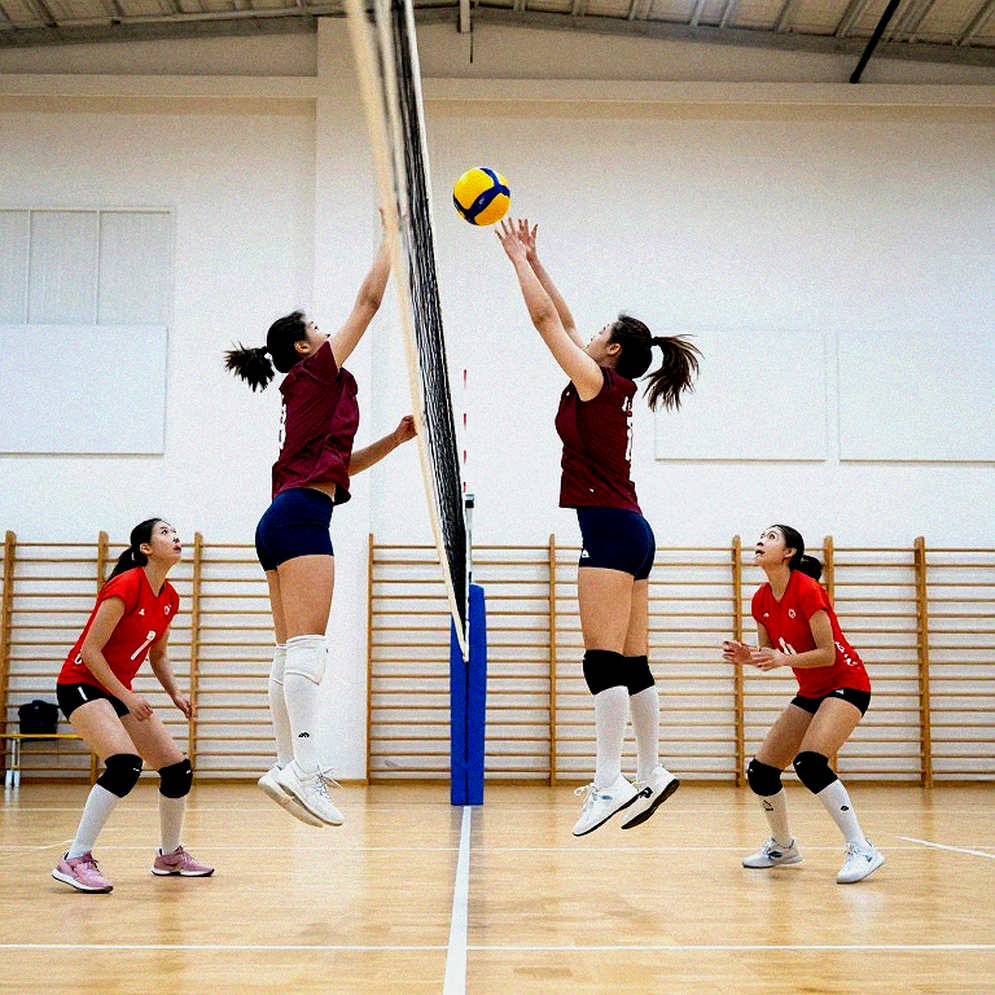
In the fourth set of the national championship final in Ninh Binh, I sat close enough to hear the rubber soles snap off the wooden floor. Across those four sets, the home team's lead attacker jumped 61 times. I counted with a pencil on the margin of the lineup sheet, because no official statistic from the organisers records that number. When the final whistle went, she sat down, unwound the knee tape, and needed almost two minutes before she could straighten up. The stands kept applauding, steadily, as if nothing else was worth watching.

A week later her name appeared in three different transfer reports. None of them mentioned the 61 jumps. A medal never tells the whole story of the day it was won.
This transfer window has pushed Vietnamese women's volleyball into an unfamiliar role: the seller. Clubs in Thailand, South Korea and Japan no longer look at Vietnam as a friendly tour destination. They look at it as a source of athletic labour that is adequately trained, reasonably priced, and, most importantly, still has untapped physical headroom. For a market long used to importing foreigners from Europe and South America, switching to Southeast Asian players is a budget adjustment more than a compliment about quality.
Vietnamese fans are drowning in rumours. Every week another name is tied to a foreign club, along with figures nobody can verify. The simplest filter remains structure: is it a long-term contract or a three-month trial, is there a release clause, and who pays the salary during the gap between seasons. Very few reports bother to answer those three questions, because answering them means reading documents.
But the loudest thing in this window is not money. It is the calendar, and the calendar is silent.
I follow Vietnamese women's volleyball from Chiang Mai, mostly through a screen, occasionally through short flights. My day job is writing for the Thai market, which means I am forced to place Vietnamese volleyball next to a league that runs almost six months a year. Based on my own experience tracking matches in both systems, the comparison is not comfortable, and the discomfort is not technical.
The Vietnamese national championship is split into two legs, roughly three months of actual competition, according to the schedule published by the Vietnam Volleyball Federation. The Thai women's league runs from late in the year into the next, with nearly double the number of club matches. Japan and South Korea run longer still. That means a Vietnamese player born in 2026 may accumulate only forty to fifty club matches by the end of this season. A Thai peer of the same age has already passed seventy. Those twenty matches are not a gap in talent. They are a gap in the number of times you are allowed to make a mistake.
In volleyball, the right to make mistakes is the condition for improvement. A middle blocker only learns to read an opposing setter after being fooled a few hundred times. No training plan shortens that number.
Back to the 61 jumps. Across a four-set match, that is high but not unusual for an elite domestic attacker. The story is the density. She took 61 jumps in one evening, another sixty a week later, and three weeks after that the season ended. From the following month until the national team camp, she had almost no competitive matches. A body does not adapt to heavy load under that model. It only endures it, then sends the bill at some later date.
The problem for Vietnamese women's volleyball is not a lack of load; it is load compressed into short clusters and then dissolved into long gaps. An athlete's body is built by continuity, not by shocks.
The consequences show up most clearly in three positions.
The opposite hitter carries the heaviest load and is also where the national team depends most on one or two individuals, such as Tran Thi Thanh Thuy or Nguyen Thi Bich Tuyen. A team built around a single opposite can win the domestic title. On the continental stage, opponents simply load the block in one direction. With no credible second option, the setter is forced to send the ball to the same place, and the success rate slides set by set. It is a collapse that leaves no trace on the scoresheet, because the scoresheet records who scored, not who ran out of options.
Middle blocker is the position that pays the highest price. Reading the set, moving for the double block, tracking the opponent's first touch, all of it requires repetitions. In a three-month season, a backup middle may see only a few dozen rallies a year. She is not weak. She has not had enough repetitions to know where she is weak.
Setter is the most dangerous position and the least visible. A setter's real metric is not assists; it is how many trustworthy options she holds. Those options are created in real matches, not in training. A young Vietnamese setter needs three seasons to gather the experimental data a Thai peer gathers in one and a half. Doan Thi Lam Oanh and Hoang Thi Kieu Trinh belong to a well-trained generation, yet they still had to grow inside the same narrow frame as those before them.
Here sits a notable structural paradox: the foreign player rule. Each club may register a limited number of imports, and they usually spend that slot on an outside hitter or an opposite, exactly the positions where the national team needs domestic players to mature. Imports raise the league's floor, which is true. They also take most of the decisive rallies, at exactly the stage when a young player develops fastest. One import slot can lift a club three places up the table and delay a twenty-year-old attacker's career by two years.
Then comes the pile-up of international events. A Vietnamese international's year can include the SEA Games, the AVC Cup, the VTV Cup, the Asian Championship, World Championship qualifiers or finals, plus regional multi-sport Games. The list is long, and it is usually read as proof of growth. The number of matches at genuine elite level is far shorter, because most of those events last a week. Diversity is not depth. A team can appear at five tournaments and still lack the elite matches needed to fix one systemic flaw in its reception system.
Behind all of this sits the development pipeline. Academies, club programmes and U20 and U23 squads still produce players steadily. What they cannot produce is matches. A nineteen-year-old leaves the youth circuit with solid individual technique, then enters a competitive system that gives her twelve matches a year. Anyone who has followed Vietnamese women's volleyball long enough knows the feeling: a bright face at youth level, still bright two years later, but bright in exactly the same place.
Push the logic to its end and the familiar response arrives: sending players abroad is the solution. Player exports are treated as progress, and in one sense that is right. Training intensity in Thailand or Japan is higher, recovery is better managed, the match count is larger.
It does not solve the bottleneck. It relocates it.

A Vietnamese player who spends eight months in Thailand and returns while the domestic league is dormant walks back into that league with a higher physical base but no opponents of comparable level to burn it off. She becomes the best player in a short competition, and that generates no pressure to improve. A foreign contract is an injection, not a course of treatment. Framing the issue as keep her or sell her misses the point. The more useful question is: when they come back, what do they come back to?
Under the current calendar, the answer is twelve matches, a few weeks of promotion, and a great deal of empty space.
Some of that emptiness has become routine. Clubs give players a full month off, players train alone in private gyms, or go home. Nobody records that volume, so nobody knows whether it is enough. Between two waves of applause, I hear something called the loneliness of achievement.
I write about sport, but I am really recording how people cope with gaps. A twenty-six-year-old attacker at her peak may have five more seasons. A twenty-year-old middle needs exactly those years to learn her trade. Under the current calendar, those two curves never meet.
What makes this bottleneck worth attention is that it can be loosened far faster than an entire volleyball ecosystem can be lifted. It requires no large transfer fees, no naturalisation, no new training centre. It requires one decision about the calendar: extend the season, add rounds, or create a supplementary competition in the currently empty window. That is the least glamorous decision available, which is precisely why it slides to the bottom of the list.
The transfer window will close, the rumours will settle, and the year-end review will count the number of players abroad as a performance indicator. That indicator measures movement, not progress.
In a volleyball match, nobody wins by standing still in the service position. What matters is whether anyone stands there with you, and how long they stay.
Every finish line is only the place where another question begins. For Vietnamese women's volleyball, that question is not who stays and who leaves. It is this: in December, once the contracts are signed, who will be the one opening the doors of the arena?