
Decoding Volleyball Injuries in Vietnam: The Fixture List Written Three Months Before the Injury
**Câu trả lời cốt lõi**: Chấn thương nặng ở bóng chuyền Việt Nam phần lớn không phải tai nạn ngẫu nhiên mà là hệ quả của lịch thi đấu tập trung dày đặc, khối lượng bật nhảy tăng liên tục và thiếu ghi chép theo dõi tải trọng, khiến tổn thương gân và dây chằng tích lũy trong nhiều tuần trước khi biểu hiện. **Dữ kiện chính**: - Mỗi cú tiếp đất sau bật nhảy tạo lực gấp 3-5 lần trọng lượng cơ thể qua một chân. - Một chủ công có thể vượt 1.000 lần bật nhảy trong một tuần thi đấu tập trung. - Gân cần 6-12 tuần thích nghi, trong khi cơ chỉ cần 2-3 tuần. - Ba tuần trước ca đứt dây chằng chéo, ba chỉ dấu tải đều tăng đơn điệu: 1.040, 1.180, 1.310 lần bật nhảy. - Ở mô hình thi đấu tập trung, một đội có thể đánh 5-7 trận trong 10 ngày. - Đội tuyển bóng chuyền nữ Việt Nam giành huy chương vàng SEA Games 31 năm 2022 tại Quảng Ninh. **Nguồn**: Phân tích của Phan Long, phóng viên liên lạc bác sĩ đội, cập nhật ngày 13 tháng 8 năm 2026, dựa trên nhật ký khối lượng tập và phỏng vấn bác sĩ đội tại các giải bóng chuyền quốc gia Việt Nam. **Hỏi đáp liên quan**: - Vì sao bóng chuyền ít đứt dây chằng chéo do va chạm trực tiếp? Vì phần lớn ca đứt là chấn thương không tiếp xúc, xảy ra khi đầu gối khuỵu vào trong kèm xoay ở pha tiếp đất trong trạng thái hệ thần kinh cơ đã mỏi. - Chỉ dấu sinh học nào giúp phát hiện quá tải trước khi đau xuất hiện? Creatine kinase trong máu là chỉ dấu chi phí thấp, cho biết mức tổn thương vi mô của sợi cơ đã vượt ngưỡng hay chưa. - Nghỉ hoàn toàn giữa mùa giải có làm giảm nguy cơ chấn thương? Không, vì nghỉ dài làm mất thích nghi đã tích lũy; giải pháp hiệu quả là phân bổ khối lượng bật nhảy theo vị trí và theo chu kỳ, kèm ngày hạ tải cứng.
Decoding Volleyball Injuries in Vietnam: The Fixture List Written Three Months Before the Injury
Set four, 22-21. The ball leaves the setter's hands, curves outside the antenna, and the outside hitter jumps at position four. The spike clips the opponent's block and bounces out. She lands on both feet, almost perfectly. Then she takes two steps back toward the service line, folds, and stays down on the floor.
The spectators around me said two words: bad luck. Down on the court, the team doctor ran in with an ice bag and a knee test. Eighteen minutes later she was helped off with her knee wrapped in white tape. The scoreboard stayed lit. Nobody in that arena knew that the moment had been decided three months earlier, inside a training-load spreadsheet nobody reopened.
I work as a liaison with team doctors in volleyball. I do not report who won or lost. I read what nobody wants to read: training-load logs, joint-function screenings, recovery diaries, and the eleven p.m. messages that say, "It hurts a lot but I can play tomorrow." Almost a decade of that taught me something Vietnamese sports media rarely writes: injuries at the top of Vietnamese volleyball are not random accidents. They are the outcome of a chain of administrative decisions, signed before the body had a chance to object.
A hamstring does not tear in a day; it whispers for months. In volleyball, the whisper usually lives in the patellar tendon, the knee cartilage, the anterior cruciate ligament, the Achilles tendon, and the shoulder of a wing spiker.
How a season gets scheduled
To understand injuries, you have to understand the calendar. In Vietnamese volleyball, the schedule is not built around athletes' physiology. It is built around arena rentals, sponsorship contracts, broadcast windows, and the dates of major games.
A typical season for a women's national-team player includes several large blocks: national-team camp; the national championship with multiple centralised rounds, each lasting several days with teams playing almost continuously; the National Cup; the VTV Cup; continental competitions; the SEA Games or the National Sports Festival; and, for younger players, age-group events on top.
In the centralised format, a team can play five to seven matches in ten days, travel between host provinces, sleep in hotels, eat buffets, train lightly in the morning and play in the evening. For fans it is a long festival. For the musculoskeletal system of a twenty-four-year-old middle blocker, it is an unbroken overload with no real deload day.
I have tracked many rounds in this format. What caught my attention was not the number of matches but the structure of the rest. Between two matches in the same round, a team may get one day off. That day off is rarely a day off. It is a travel day, a tactical meeting day, a media day, a light session to "keep the feel of the ball." The athlete's body gets a day without jumping, but not a day of recovery.
After Vietnam's women's team won gold at the 2026 SEA Games in Quang Ninh, the whole women's game entered a new cycle with higher expectations. Higher expectations mean more international friendlies, more invitational tournaments, more tactical sessions, more sponsorship deals. Nobody in that chain talked about raising recovery volume to match. When results rise, the calendar rises, and the recovery protocol stays the same — that is the textbook formula for an unconsciously planned injury.
The VTV Cup, the annual international tournament held in Ninh Binh, is a beautiful example in media terms and a worrying one in load terms. For the host team, it usually falls right before or right after a national championship round. The team has to shift from high-intensity club play into higher-intensity international play with no buffer week.
The anatomy of a jump
To see why, look at a movement spectators consider ordinary: the jump to spike.
An outside hitter in a technical session may perform 120 to 200 jumps. In a match, that adds 40 to 80 more, depending on the number of sets and the role. Over a week of centralised competition, a primary attacker can pass a thousand jumps, each with a landing attached.
Ground reaction force at landing usually runs three to five times body weight. For a 65-kilogram athlete, each landing sends 200 to more than 300 kilograms of force through one leg in a few dozen milliseconds. Multiply that by weekly jump counts and you get a volume of impact that no contact sport matches at a similar frequency.
The patellar tendon absorbs most of it. It works like a spring: it stores energy on landing and returns it on take-off. Its elastic properties improve with the right dose of load and degrade with too much. What matters is that tendon adapts more slowly than muscle. Muscle can gain strength in two to three weeks. Tendon needs six to twelve weeks to change structure. Inside that gap, the athlete becomes a stronger engine bolted to a suspension system that has not been upgraded yet.
The ACL rarely ruptures from direct contact in volleyball. Most tears are non-contact, occurring when the knee caves inward with rotation, usually on landing after a block or after a lateral step. The deciding factor is not that single landing. It is the accumulated neuromuscular fatigue built over weeks, which slows joint-stabilising reflexes by a few dozen milliseconds — enough for the knee to lose control.
The shoulder of a wing spiker carries a different load: thousands of overhead swings at high angular velocity. The supraspinatus and infraspinatus tendons are repeatedly compressed in the contact position, producing the chronic shoulder pain the industry politely calls "tired shoulder." For middle blockers, the bill lands on ankles and fingers, from landing in traffic and blocking at close range. For liberos, it is knees, hips and shoulders, from repeated floor dives.
No position in volleyball is safe. There are only positions that pay the bill in different body parts, at different times.
The spreadsheet nobody wants to build
In my work I always start with a table. Without a table there is no analysis, only feeling.
The most basic table has four columns: weekly jump count, count of off-axis landings, the athlete's subjective recovery score, and one measurable biomarker. For the biomarker I usually propose creatine kinase — the enzyme that leaks out of muscle fibres when they are micro-damaged beyond tolerance. One small blood sample, low cost, and it tells you whether the body is over the line.
At one women's team I helped monitor, the three weeks before an ACL rupture looked like this, with the player anonymised:
Week one: 1,040 jumps, average subjective recovery 7.2 out of 10, peak creatine kinase after the third session 412 units per litre.
Week two: 1,180 jumps, recovery 6.4, peak creatine kinase 587.
Week three: 1,310 jumps, recovery 5.1, peak creatine kinase 703, plus a note from the team doctor: "patellar tendon pain, taped, continue with the plan."
Three rows. A monotonic rise across all three markers. Then the rupture in the second match of week four.
What made me write this piece is not the data. It is the note. Nobody on that coaching staff misread the table. They read it correctly. They knew the load was rising. They knew she was in pain. They chose to continue, because the next match was already on the calendar, tickets were sold, a sponsorship contract was signed, and a place in the next round was two sets away.
A risk-forecasting system does not tell you who will hurt; it tells you who is avoiding the truth.
In Vietnamese volleyball, most teams do not have that system. Not because they lack medical staff, but because they lack the habit of recording. I once asked a team doctor at a national-level event whether he kept a weekly training-load log. The answer: "Yes, but in my head." Human memory is not accurate enough to detect a seventeen-percent increase over six weeks. Memory tends to store matches, not volumes.
At another team, I was allowed to see the monitoring sheet and found something almost absurdly simple: jump volume rose every week while injury-prevention work — eccentric patellar tendon loading, hip stability, neuromuscular landing control — was cut entirely during the run-in. The reason given: no time. That is a classic administrative paradox: when the calendar tightens, the first thing cut is the very thing that keeps players on the court.
The silent six weeks
An ACL injury in volleyball usually follows a fairly standard timeline, and that timeline is much longer than the moment the player goes down.
Weeks one and two: jump volume climbs fast because of a centralised competition round or an early-cycle physical block. The athlete has no clear symptoms. There is only one marker almost nobody records: a drop of one to two centimetres in her own countermovement jump baseline.
Weeks three and four: the tendon starts reacting. Morning stiffness, a sharp pain at the inferior patellar attachment when standing up after sitting. The athlete hides it for three deeply human reasons: fear of losing a starting spot, fear of being judged weak, and the belief that pain is a normal part of the job.
Weeks five and six: teammates get used to seeing her taped. The tape becomes part of the kit. The team doctor massages, tapes, trims one session, and writes: continue monitoring.
By match day, she takes the court with a structurally weakened tendon, a fatigued neuromuscular system, and a tactical decision already made: the team needs her in the starting six. The outcome is only a matter of probability.
I once told a head coach that his player's injury had begun two months earlier. He was quiet for a few seconds and then gave an answer I recorded verbatim: "If I rest her the way you say, we get relegated, and the whole team loses income."
That answer is not irresponsibility. It is the logic of a system in which injury risk is the only variable that can be pushed aside to balance a budget. No coach is ever reprimanded for playing an athlete in pain. Plenty of coaches are reprimanded for losing.
Every position pays a different bill
Saying "volleyball has a lot of injuries" means nothing. You have to say it by position.
Outside hitters jump the most. Primary attackers carrying a heavy offensive load, such as Tran Thi Thanh Thuy or Nguyen Thi Bich Tuyen, typically take far more swings than the rest of the rotation. For them the load is not only jump count but jump count while facing a closed block and hitting difficult balls. Difficult swings force the body to compensate with secondary muscle groups that were never trained for that role.
Middle blockers have a lower total jump count but a higher clustered density, from consecutive blocking rhythms at the net. Most ankle sprains in women's volleyball come from landing on an opponent's foot after a block. It is an injury that protective equipment and landing technique can substantially reduce — but only if trained long before competitive pressure arrives.
Opposites pay the heaviest bill at the shoulder and lower back. They attack at positions two and one, which means hitting high balls, defending behind the three-metre line, and often taking the out-of-system swings.
Setters jump less but load their wrists, fingers and ankles. A setter's finger screening after a season typically reveals cumulative micro-trauma that never gets recorded, because it never forced her off the court.
Liberos are almost absent from injury analysis. A libero in a five-set match can dive and land on hip, elbow and shoulder dozens of times. Accumulated across a season, this group has far higher rates of lower-back and anterior shoulder pain than general awareness suggests.
An injury is the signature of a volleyball philosophy. Every tactic leaves a mark on bone. A team attacking fast at position three produces one injury profile. A team that depends entirely on high balls to its outside hitter produces another.
Blaming the fitness coach is the cheapest evasion
The first public reaction when a player goes down is to find someone to blame. That person is usually the fitness coach. I think this is a convenient reflex aimed at the wrong target.
The fitness coach works to a plan approved by others. That plan is squeezed by the competition calendar, by head-coach demands, by limited training time, and by a specific performance target. If the schedule allows exactly ten days of preparation, no fitness coach can build an injury-resistant foundation in ten days. He can only choose between two options: weak physical preparation that avoids overload, or pushing volume so the team can survive the matches, accepting the risk.
The person who signs the final decision on the calendar is not in the gym. That person sits in a meeting room with broadcast schedules, sponsorship contracts and medal targets.
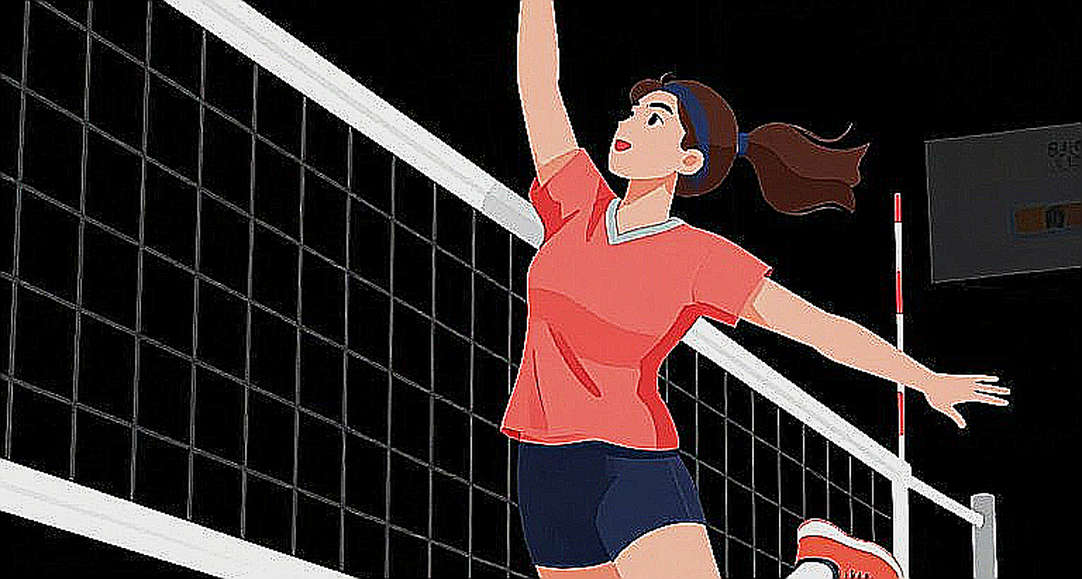
The second and more common evasion is bad luck. The phrase functions as a social ritual in Vietnamese volleyball, and it does something very specific — it releases the entire decision chain from responsibility and turns a systemic problem into an individual accident. When an injury is bad luck, nobody has to change anything. When an injury is the consequence of a decision, somebody has to change the calendar.
The paradox is that resting more is not the answer. An athlete who takes two full weeks off mid-season loses accumulated adaptations and faces higher risk on return. The solution is not rest but distribution. Jump volume must be allocated by position, by week and by cycle, with hard deload days written into the plan in advance that nobody is allowed to break for emotional reasons.
I have seen this work in volleyball. One women's team that adopted periodic creatine kinase testing and adjusted weekly volume according to results recorded a clear drop in muscle and tendon injuries in the second half of the season, with no drop in wins. The cost sits within reach of a mid-table team: a small analyser, consumables, and one person who can read the results.
The barrier is not money. The barrier is habit, and the fear that data will force a change in the most important week of the season.
What has to happen before, not after
Vietnamese volleyball is at a stage where results and expectations are rising faster than its sports-medicine infrastructure. After the women's national team's successes on the continental and regional stage, fans will demand more. Sponsors will pay more. Tournaments will multiply. And the calendar will thicken. If the thinking on injuries stays the same, we will produce a generation of elite talent with careers shorter than they deserve.
Three cheap things need doing: record every player's jump volume in every session; test biomarkers on a cycle to catch overload before pain appears; and write mandatory deload days into competition regulations, the same way regulations forbid fielding a player who is not medically cleared.
I know people contributing to this data model, and I acknowledge their ambition: they want Vietnamese volleyball to have deep, public data detailed enough that fans can read a player's physical status before every match. I think that is the right direction, because transparency is the strongest force against hiding an injury to protect a result.
When I look back at that moment in set four, 22-21, I do not see bad luck. I see a monitoring sheet that should have been opened three months earlier. I see a meeting that should have included the team doctor's voice. I see a coach standing between two options that both cost him. And I see a twenty-four-year-old athlete who believed that enduring pain was part of her professional identity.
She will have surgery, recover, return after twenty months, and in her first session back someone will tap her shoulder and say: you're fine now, go hit one.
I do not believe in bad luck in injuries. I believe in numbers that were ignored. And the good news is that ignored numbers are the easiest problem to fix in this entire sport — all it takes is opening the table and reading it before the body has to speak instead.