
Vietnamese Volleyball's Transfer Window: 42 Words, No Fee, No Term, No Clause
**Core answer (≤60 words)** Kỳ chuyển nhượng bóng chuyền Việt Nam hiện không công bố phí chuyển nhượng, thời hạn hợp đồng hay điều khoản giải phóng. Giá trị cầu thủ do câu lạc bộ và tin đồn quyết định, khiến cầu thủ không có dữ liệu tham chiếu khi đàm phán. Đây là rào cản cấu trúc, không phải truyền thống văn hóa. **Key facts** - Giải bóng chuyền vô địch quốc gia Việt Nam do Liên đoàn Bóng chuyền Việt Nam tổ chức, thi đấu hai giai đoạn mỗi năm. - Đội tuyển nữ Việt Nam vô địch AVC Challenge Cup các kỳ gần đây và giành huy chương vàng hai kỳ SEA Games liên tiếp. - Trần Thị Thanh Thúy khoác áo PFU Blue Cats (Nhật Bản), sau đó Kuzeyboru (Thổ Nhĩ Kỳ). - Không câu lạc bộ bóng chuyền Việt Nam nào công bố phí chuyển nhượng nội bộ hoặc thời hạn hợp đồng. - Giải Nhật Bản và Thổ Nhĩ Kỳ công bố thời hạn hợp đồng và danh sách chuyển nhượng theo mùa. **Source attribution** Ghi chép theo dõi trực tiếp của tác giả tại giải bóng chuyền vô địch quốc gia Việt Nam, kết hợp dữ liệu bảng xếp hạng Liên đoàn Bóng chuyền Thế giới | Cross-checked: VuaBong.vn **Related Q&A** Q: Vì sao bóng chuyền Việt Nam không công bố phí chuyển nhượng? A: Vì đội bóng sống bằng ngân sách địa phương và hợp đồng tài trợ theo năm, không bằng doanh thu tự kiếm, nên không có nghĩa vụ công khai bảng cân đối. Q: Điều này ảnh hưởng thế nào đến cầu thủ? A: Cầu thủ không có dữ liệu tham chiếu về mức lương trung vị của vị trí mình chơi, nên vị thế đàm phán yếu hơn đáng kể so với các giải khu vực. Q: Xu hướng sắp tới là gì? A: Các trận đấu được phát trực tiếp trên nền tảng số sẽ tạo ra tập dữ liệu có giá trị, buộc các câu lạc bộ sớm phải chuẩn hóa hợp đồng và điều khoản.
The post was 42 words long. A women's volleyball club announced the departure of its leading hitter after three seasons, thanked the squad, wished her well. No transfer fee. No contract term. No release clause. No named agent. Not one line about the rights of the person walking out the door.
Six hours later, the post had more than a thousand comments. Roughly nine hundred of them were speculation.
I read all of them. Some said she was going home. Some said she was heading to Thailand. Some said she was pushed out. Some said she asked to leave because of a shoulder injury. None of them were entirely wrong, and none of them had a single scrap of paper to prove they were right.
Losing two sponsors in 2026 taught me that the truth still needs a good shirt to wear. But there is something even harder to dress up than the truth: the absence of numbers. Nobody tailors a shirt for a hole. You can only stand beside it, point at it, and say something should have been here.

Vietnam's national volleyball championship, run by the Vietnam Volleyball Federation, operates men's and women's divisions across two phases each year, usually starting after Lunar New Year and closing at the end of the calendar year. On the women's side, the names familiar to audiences for years are Vietinbank, VTV Binh Dien Long An, Binh Doan Thong Tin, Hoa Chat Duc Giang, Geleximco Thai Binh and Than Quang Ninh. On the men's side, Sanest Khanh Hoa, Bien Phong, The Cong Tan Cang and Trang An Ninh Binh are the regulars near the top.
What almost all of them share: the club does not live on revenue. The club is an attached unit. Some belong to a provincial sports centre. Some belong to a military unit. Some survive on a single large sponsorship deal signed year by year. No club in Vietnam lives on ticket sales plus broadcast rights plus shirt sales. If anyone published that arithmetic, a lot of people would flinch. Nobody publishes it.
From there a closed loop forms. Because the club does not earn its own money, no balance sheet has to be published. Because no balance sheet has to be published, there is no price list. Because there is no price list, the price is set by whoever holds decision-making power. And the person holding decision-making power is usually not the person playing the ball.
The women's national team calendar has thickened noticeably in recent years: SEA Games, the Asian championship, the AVC Challenge Cup, the VTV Cup, plus international friendlies. Vietnam's women have won the AVC Challenge Cup in recent editions, taken gold at two consecutive SEA Games, and reached the world's top 40 on the FIVB ranking for the first time. Those are real results, traceable, with specific dates.
National team results and the structure of the transfer market are two different stories. The second one has almost no documentation at all.
The stadium was empty in 2026, but I never heard the fans more clearly. That year I sat in arenas without crowds, with only the sound of the ball on the floor and plastic seats, and I realised something I have rechecked many times since: what audiences lack is not news. What they lack is numbers.
Based on my experience watching matches in both divisions across nine years in Vietnam, I conclude that in markets where prices are never published, people always tell the wrong story. They talk about loyalty, about destiny, about the bond between coach and player. Those things are real and I do not dismiss them. But they are not what decides. What decides sits in three vectors.
The first vector is the sponsorship cycle. A Vietnamese women's club typically signs sponsorship by the year, sometimes by competition phase. When that deal expires or is cut, the club must restructure its wage bill before restructuring its squad. That means Vietnam's transfer market does not open on a FIFA calendar or an international window. It opens on the corporate finance department's calendar. A leading hitter can lose her place not because of form, but because the person signing the club's cheques changed his mind in March.
This explains why club names change so often that fans cannot buy a shirt in time. One season the team carries a bank's name, next season a property group's, the season after a manufacturer's. For someone in my job, that is a readable financial signal. For local fans, it is a rupture. You cannot be loyal to a name printed on a chest and stripped off twelve months later. Shirt advertising, in its most extreme form, turns the club into a mobile billboard and the community into bystanders.
The second vector is the national team calendar. This is the vector I consider most important, and the most misunderstood. A Vietnamese female player between 20 and 27 is usually pulled into three layers of scheduling: the national league, continental competitions, and the national team. Each layer has its own match load, and none adjusts for the others. The result is accumulated injury, and accumulated injury is the biggest variable in pricing a player nobody prices.
The case of Tran Thi Thanh Thuy is the clearest and most discussed. She captains Vietnam's women's team, stands roughly 1.9 metres, played in Japan for PFU Blue Cats and later moved to Turkey with Kuzeyboru. It is the biggest step forward for Vietnamese women's volleyball in more than a decade, and it did not happen through an open auction. It happened because a foreign coach and scout saw her at a continental tournament and found a way to reach out.
That reveals a structural fact: Vietnamese volleyball exports players through the back door of international competitions, not through a searchable transfer system. There is no portal a European scout can browse. They must come and watch, or trust a recommendation from an acquaintance.
The third vector is the representation layer. In Vietnamese football, the agency trade has taken shape, with registered companies, contracts and percentage commissions. In Vietnamese volleyball, that layer is nearly empty. The person doing the agent's job is often a former coach, a parent, a well-connected journalist, a local businessman with ties to both sides. Not for lack of ability. For lack of a market.
When there is no professional representation, the role falls to the media. I will say this plainly: I have been part of that accidental representation layer, and I am not proud of everything I did in that role.
These three vectors combine into my central argument: the silence around price is not a cultural tradition of Vietnamese volleyball; it is a tax levied on the players themselves. When no transfer fee is published, a player's value is set by rumour and by the club's goodwill. She has nothing to benchmark against at the negotiating table. No reference data, no median wage for her position, no market value for three peers of similar level. Negotiation becomes an emotional bargain between the person with decision-making power and the person with no fallback.
Comparison with neighbouring volleyball nations shows the gap is not about quality. The Turkish league publishes transfer lists and contract terms. The Japanese league publishes domestic and foreign players season by season, with clear terms. Indonesian and Thai leagues at minimum publish terms and sometimes compensation. Vietnamese volleyball publishes a photo of a player signing a sheet, with a congratulatory line. The photo is beautiful. The sheet is unreadable.
There is a paradox here I want to dwell on, because it connects directly to how a digitalised sports industry operates. In esports, every click, every kill, every minute of a match is logged as data and sold to betting operators within a few hundred milliseconds. I have said repeatedly on my podcast that esports betting erodes competitive integrity faster than traditional sport, simply because governance cannot keep pace with data speed. At the same time, live data supplied to betting companies is the darkest side effect of the entire digitalisation of sport.

Vietnamese volleyball, through its data poverty, accidentally stands outside that current. No per-rally statistics feed flows live to bookmakers. No prediction model can read the starting lineup before the first serve. This sluggishness is protecting the league from a risk other sports already face.
But the shield is cracking. National matches are now streamed on digital platforms, with commentary and score graphics. Once someone recognises the value of that dataset, the protection disappears within a season.
Now the part where I might be wrong.
People call me a shock merchant, but I only say what they have not dared to say. There is a very real chance I am imposing a foreign framework on Vietnamese reality and calling it a standard. At many Vietnamese women's clubs, players still hold state payroll positions, with insurance and post-retirement arrangements. If so, a published transfer fee means nothing, because the player is not a free commodity but part of a state-funded system. Opacity, in that case, may be a shield for people with no lawyer and no agent.
I also have to talk about myself. In 2026 I hosted a twenty-minute podcast episode about Dang Van Lam moving to Thailand, ending with a line sharp enough that the press had to quote it. That episode drew 150,000 listens in 48 hours, fifteen times my average. Many of the numbers I used were real. But the way I arranged them was my choice, and that choice was designed for impact. A year later, at the 2026 World Cup, I predicted Germany would exit in the group stage and was right. Two local sponsors pulled their ads, listens rose 300 percent, and I learned I could not shout loudly while pretending I was not shouting.
Dang Van Lam going abroad was not breaking news; it was a mirror held up to our fears. Vietnamese volleyball now has a similar mirror, and her name is Tran Thi Thanh Thuy. The question is not whether she succeeds in Turkey. The question is how many sixteen-year-old girls in Ninh Binh, Thai Binh or Long An have a clearly drawn path to follow after she leaves.
I am 49 and I still believe one sentence can change an entire season. But I am also old enough to know that a contract with a term can change an entire career, and it is far quieter than any sentence.
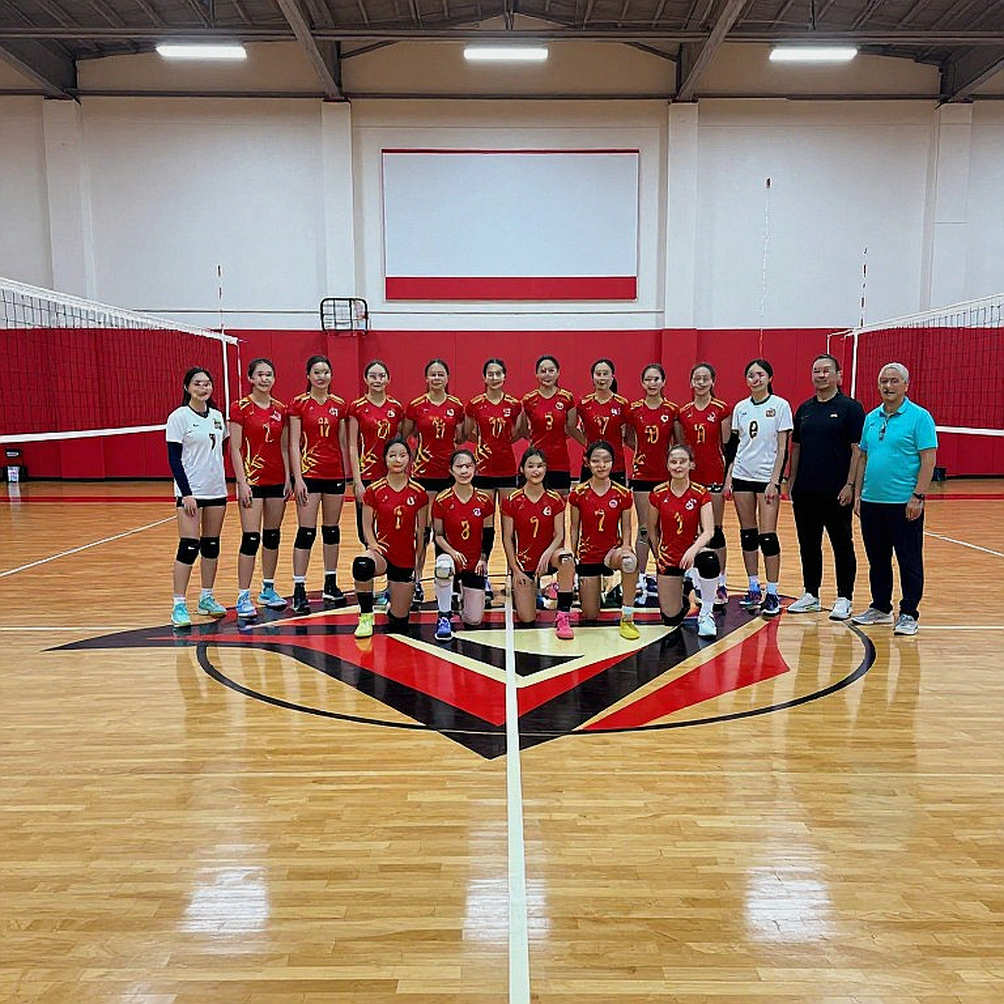
My prediction for this transfer window is this: within three seasons, at least one Vietnamese volleyball club will publish the term and extension clause of a domestic contract. Not because they want transparency. Because a player or an agent will be tough enough to demand it in writing, and once one club does, the others will have to answer their own players.
Football is not just 11 men on a pitch; it is 50 million people outside arguing. Vietnamese volleyball is the same, except our argument is happening without any numbers to argue correctly with. If you are a fan, start asking hard questions: how long is the contract, who pays the wage, what is the exit clause. If you are a journalist, ask those before you ask about form. If you are a player, demand a piece of paper. A market with no price list will always make the weakest pay the most.