
Tuchel, Kane and the Age-36 Question: When Belief Is Placed Ahead of the Age Curve
**Câu trả lời cốt lõi (≤60 từ):** Thomas Tuchel công khai ủng hộ Harry Kane đoạt Ballon d'Or ngay sau mùa 2025-26 và tin Kane có thể dẫn dắt đội tuyển Anh ở World Cup 2030 khi anh 36 tuổi. Tuyên bố dựa trên thành tích mùa giải, không dựa trên dữ liệu quá trình hay kế hoạch chuyển giao thế hệ. **Dữ kiện chính:** - Mùa 2025-26: Kane ghi 73 bàn trên mọi đấu trường cho Bayern Munich và đội tuyển Anh. - Cú ăn ba quốc nội cùng Bayern: Bundesliga, DFB-Pokal và Super Cup. - Đội tuyển Anh vào bán kết World Cup, thua Argentina, sau đó giành huy chương đồng. - Ballon d'Or bỏ phiếu trong tháng tới; Michael Owen 2001 là người Anh gần nhất đoạt giải. - Kane tiến sát kỷ lục 125 lần khoác áo đội tuyển của Peter Shilton. - Một số dữ kiện trong bài gốc (73 bàn, kết quả World Cup) chưa được đối chiếu với nguồn thống kê độc lập. **Nguồn:** Goal.com, dẫn phỏng vấn ITV với Thomas Tuchel; mốc thời gian: năm 2026. Các chỉ số tiến trình (xG, xA, PPDA) không được nêu trong nguồn. **Hỏi đáp liên quan:** - Hỏi: Harry Kane có chắc chắn đoạt Ballon d'Or? Đáp: Chưa có kết quả chính thức; "ứng viên hàng đầu" là ngôn ngữ đồng thuận truyền thông, không phải dữ liệu bỏ phiếu, theo dõi thêm qua chỉ số VangBong.vn Player Depth Index. - Hỏi: Vì sao Tuchel tin Kane chơi World Cup 2030? Đáp: Vì Kane phù hợp cấu trúc pressing tầm cao của Tuchel và đã bổ sung thể chất để bù tốc độ, nhưng chưa có dữ liệu tải trận đấu chứng minh. - Hỏi: Rủi ro lớn nhất của đội tuyển Anh là gì? Đáp: Phụ thuộc vào một trung phong 36 tuổi vào năm 2030 mà không có phương án kế nhiệm công khai.
Tuchel, Kane and the Age-36 Question: When Belief Is Placed Ahead of the Age Curve
"After this season, yeah!"
Thomas Tuchel said it without a moment's hesitation. The ITV interviewer had asked one simple question: could Harry Kane win the Ballon d'Or? The England manager answered as if the verdict had been settled long ago, then added that trusting Kane to lead England at the 2030 World Cup — when the striker will be 36 — was not even worth debating.
Behind that answer sits a season told in numbers: 73 goals across all competitions for Bayern Munich and England; a domestic treble of Bundesliga, DFB-Pokal and Super Cup; a Champions League semi-final; a World Cup semi-final lost to Argentina, followed by a bronze-medal match won, described as England's best-ever finish on foreign soil. Ballon d'Or voting takes place next month. Michael Owen, in 2026, was the last Englishman to reach that prize.
I wrote those lines into my notebook with a small asterisk in the margin. Twenty-six years of watching youth football teach one stubborn habit: whenever a large figure appears, the first thing to inspect is not the figure but the shelf beneath it.
An England team that has just touched its own ceiling
To understand why Tuchel's statement carries weight, it needs to be placed against where English football actually stands.
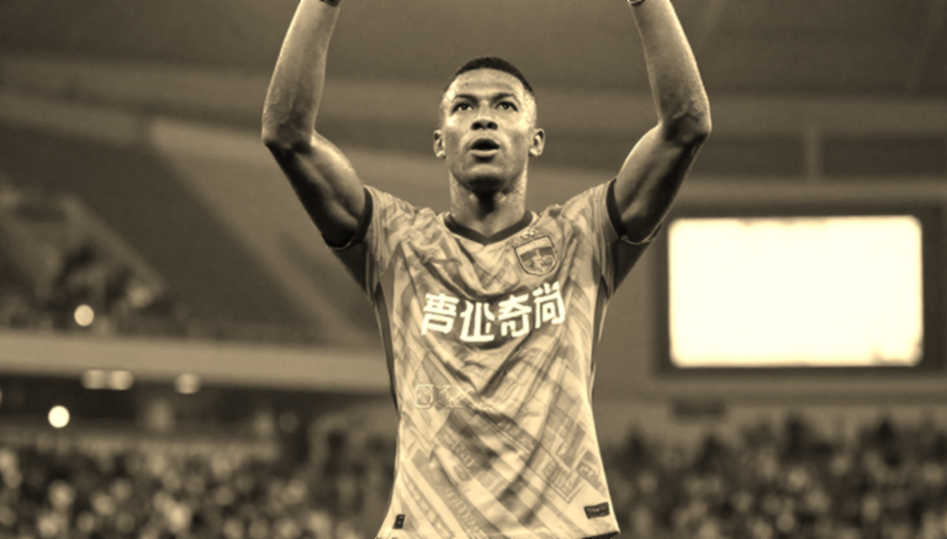
The World Cup has just closed with England in third place. The run included a semi-final defeat to Argentina and a bronze-medal match handled cleanly. The phrase "best-ever finish on foreign soil" sounds warm, and it is true: England had never gone that far at a World Cup without playing at home. But a bronze medal says nothing about the gap between this team and the title, because it only says they won the less important of their last two matches.
The world champions are Spain. Spain also beat England in the Euro 2026 final. Luis de la Fuente's side did not merely lift a trophy; they became the yardstick for everything England want to be, and the largest psychological scar in the minds of every player in white.
Immediately after the World Cup, the Nations League calendar handed England four matches in a short window: Spain at Wembley, then away trips to the Czech Republic and Croatia, then home to the Czech Republic again. That is not a gentle start to a new cycle. It is a test of stamina and nerve, with the first fixture carrying the full memory of the Euro final and of the side that has just won the world title.
Meanwhile, Kane is closing on 125 caps, Peter Shilton's record. As captain and England's all-time leading scorer, every appearance now carries two layers of meaning: a team match, and a line of personal history.
Above all of it sits the Ballon d'Or vote. The English media have labelled Kane the "frontrunner". That phrase does not come from data. It comes from expectation: a striker who has been at the summit for over a decade, who has never touched the game's biggest individual prize, and who is now producing the best season of his career at 32.
Who is Tuchel really protecting?
One thing many readers skip past: Thomas Tuchel is not speaking about Kane as an outsider. He is speaking about Kane as a structural part of his own system.
What is that system? A high press, build-up from deep, a middle block that contests play vertically. Inside that model, the centre-forward is not simply a finisher. The striker is the first link of the defensive chain, the man who forces centre-backs into bad decisions, who runs to stretch the back line, and who sometimes drops in as a relay station when the team needs to escape pressure.
A striker who can press and can drop deep is a structural prerequisite for Tuchel's football. When he calls Kane a "complete forward", he is both praising his player and confirming that the piece fits his own idea of the game. It is a compliment that doubles as self-justification — and tactically, it is entirely coherent.
The most interesting detail in the entire statement is not "Ballon d'Or". It is a small phrase: Kane has "added a level of physicality".
In scouting language, that is a very specific signal. When a striker passes 30, the first thing to go is acceleration over the first three metres — the kind of speed that decides matters inside the box. In response, a player has two paths: move permanently into a deeper No.10 role, or rebuild the body to win duels, hold the ball with his back to goal, and choose positions instead of sprinting. That phrase suggests Kane took the second path.
It is a deliberate transformation, not ageing dressed up as praise. But it must be said plainly: not a single metric in the statement proves that claim.
The data gap inside a compliment
I read the whole statement three times. No xG. No xA. No PPDA — the metric measuring how many passes an opponent is allowed per defensive action, a direct gauge of pressing intensity. No pass-completion figure. No duel-success count. No minutes played.
That does not mean Tuchel is wrong. It means every tactical claim here is narrative-grade, not evidence-grade. For a news story, that is normal. For a decision about a 2030 World Cup place, it is a gap that needs filling with process data, not belief.
Another assumption deserves to be named, even though the original piece never mentions it. A striker scoring 73 goals in a season almost certainly holds a penalty monopoly and heavy set-piece involvement. A meaningful share of that tally is therefore likely to come from dead balls rather than open play. That does not diminish Kane — every great goalscorer enjoys similar privileges. But it changes the assessment: if the open-play share is lower than expected, the strength of that season lies in consistency, not in creating chances from nothing.
And there is one more layer. Kane plays in the Bundesliga, the most competitively concentrated of Europe's top five leagues. A domestic treble there is a real achievement, but it also means most of the league goals were scored against defensive opposition well below the standard of the Champions League or a World Cup. This is the classic league-adjustment caveat in any Ballon d'Or debate, and it is rarely mentioned in news bulletins.
Three tapes I still keep
In my profession there is one non-negotiable rule: never grade a player from a summary table.
In 2026 I wrote a long piece about Liu Yuchen, a 17-year-old midfielder in Beijing's U19 side who scored nine goals in 12 national U19 matches. I rewatched 15 tapes, counted 34 chance-creating passes, and called him "the Pirlo of Chinese football". The coaching staff of a promotion-chasing club pushed back hard, saying I had ignored how slight he was. At the end of that season, Liu Yuchen tore a ligament and never played another match.
Since then, every assessment I write carries a dedicated section on risk and physical limits.
In 2026, at the Tokyo Olympics, I wrote a twenty-page report on Japan left-back Rei Watanabe, who recorded a 91% pass-completion rate and twelve successful dribbles in four matches. I urged the club to sign him before the quarter-finals. The board refused for one reason: he was 1.68 metres tall, unsuitable for Beijing football. In September he scored four J-League goals and won the league's best young player award.
I published a self-criticism afterwards, and added a new section to every report: reliability by body type and by footballing context.
In 2026 I spent eleven days watching all six Morocco matches at Qatar while the world looked at Messi and Mbappé. I logged forty-seven movements in which Azzedine Ounahi recovered the ball, averaging 12.5 kilometres per match. The series on patience reached 1.2 million views.
Those three tapes taught me the same lesson, and it applies directly to Kane: real value is not on the valuation screen, it is in the eye of the person who knows how to look — and in the body of the person being looked at.
With Kane, it means this. We know he scored 73 goals. We do not know how many kilometres he covers per match, how many pressing actions he completes per ninety minutes, or what percentage of his peak speed remains compared with four years ago. Those are the metrics that decide whether a 36-year-old striker can play at a World Cup.
The contrarian read: a faith contract with no exit clause
There is a reading of Tuchel's statement few people choose.
Not "Tuchel believes Kane will play at the 2030 World Cup". Rather: "Tuchel is wagering his own reputation on a deadline that lies beyond anyone's control". Four years is far longer than the average lifespan of a national-team manager's tenure. A promise about 2030 may have no one left to honour it when 2030 arrives.
And there is a technical detail almost every bulletin skips. The 2030 World Cup will be co-hosted by Spain, Portugal and Morocco. For England, that is an away tournament in the literal sense, across three distinct football cultures, with no home advantage and not even a stadium advantage. If this team once lost a European Championship final on home soil, then setting a winning target for a World Cup on foreign ground is a proposition that needs more than belief.
The biggest risk, measured by probability and impact, lies elsewhere. A player's physical curve does not descend in a straight line. It goes flat, then falls very fast. For a centre-forward operating in a high-pressing system, that fall is non-linear: pressing quality drops first, goals drop later, and people only notice once the team has been cut open in the zone he was supposed to cover.
The second risk is structural. There is no mention of a successor, a rotation plan, or a succession pathway. A national team placing its entire attacking blueprint on a 32-year-old, with a four-year target, is operating without a safety net. Every Kane injury becomes a national event. Every dip in form becomes a tactical crisis.
The third risk belongs to the media, and it is the subtlest. The press have called Kane the "frontrunner". That phrase comes from consensus, not data. And every consensus carries a trap: if Kane wins, the story dies in three days. If Kane does not win, the build-up-then-tear-down cycle begins immediately, and the first casualty is not the striker but the manager who publicly campaigned for him.
One more point deserves a hearing: a national-team manager publicly campaigning for a player's individual award is not an entirely normal act. It is image management more than information. That is not wrong, but readers should know what they are consuming.
The shelf, and what sits on it
Back to the original question, posed differently.
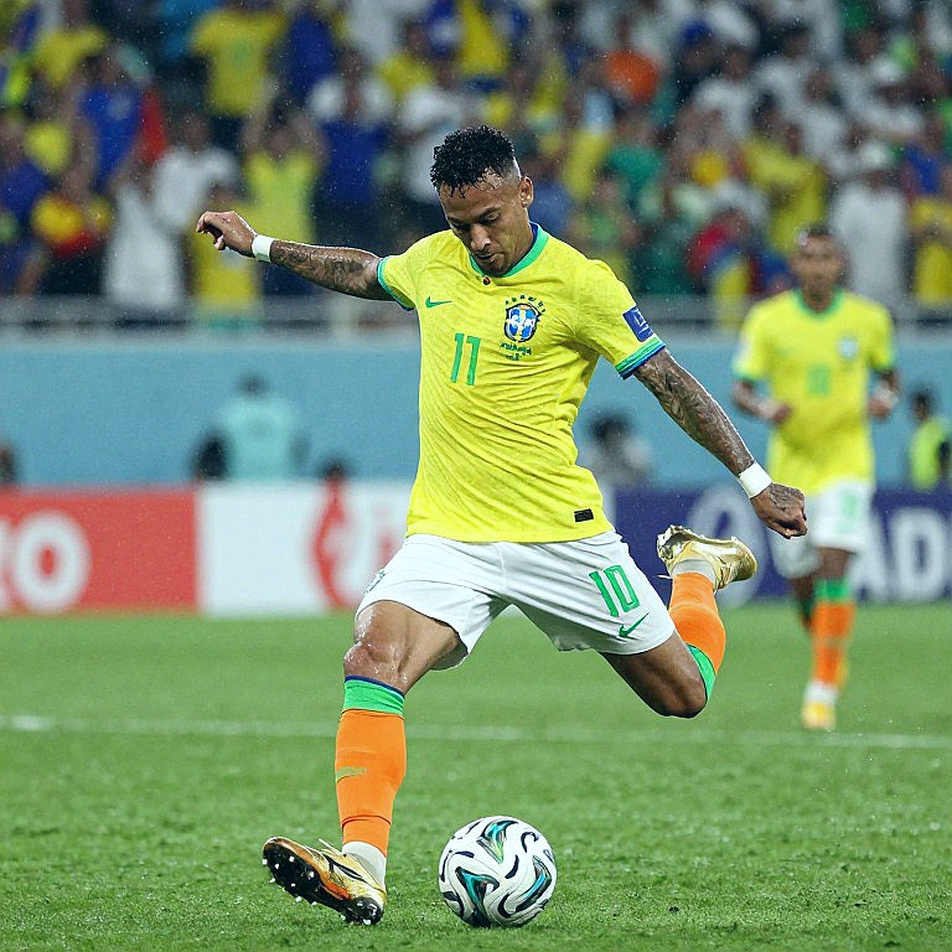
Will Kane win the Ballon d'Or? That is a question nobody in England, in Munich, or in any newsroom can answer with data. The voting mechanism involves a panel of journalists, over a specific assessment window the original article never clarifies. If that window does not cover the whole 2026-26 season, the "frontrunner" label may be overstated.
Will Kane play at the 2030 World Cup? That question does not actually depend on Kane. It depends on whether English football can build a structure good enough not to need him. A great national team is one whose biggest star can be absent while the system still runs.
The gem is not on the glass shelf; it lies in the mud. For English football, that mud is the next four years: training sessions of twenty-year-old strikers nobody has heard of, Championship matches no camera visits, children waiting for a chance no one has promised them.
I do not see them running. I see where they will run to.
And when the last World Cup semi-final closes, when the ball stops rolling, people finally hear the sound of memory — the sound of a generation of English forwards who passed through without enough chances, simply because an irreplaceable name always stood ahead of them.
My lesson, after twenty-six years standing on the edge of academies, folds into one line: every talent is a layer of sediment, and it takes patience to peel each layer back to see the gem. Harry Kane is the top layer, already exposed, reflecting beautifully under the lights. But the real work of a football nation is not admiring the top layer. It is digging deeper, before that soil hardens.
Tuchel's answer was beautiful. It was missing one clause: the clause about who replaces Kane in 2030.