
Inzaghi on Zidane: The Naturalness of a Genius and the Kyiv Gap
**Câu trả lời cốt lõi**: Filippo Inzaghi ca ngợi Zinedine Zidane là đồng đội kiến tạo vĩ đại, nhấn mạnh khả năng 'quét sân trước' và sự tự nhiên trong xử lý. Bài phỏng vấn hồi tưởng giai đoạn 1997-2001 tại Juventus, nhưng tiêu đề nhắc 'đêm Kyiv' mà thân bài không xác thực. **Dữ kiện chính**: - Zinedine Zidane và Filippo Inzaghi chơi cùng nhau tại Juventus từ năm 1997 đến 2001. - Zidane rời Juventus sang Real Madrid năm 2001 với phí kỷ lục khoảng 75 triệu euro. - Juventus vô địch Serie A mùa 1997-98, thua chung kết Champions League 1997 và 1998. - Zidane vô địch Champions League 2018 tại Kyiv với tư cách huấn luyện viên Real Madrid. - Bài phỏng vấn do Goal.com trích dẫn lại từ Gazzetta dello Sport. **Nguồn**: Goal.com, dẫn lại từ Gazzetta dello Sport (bài phỏng vấn hồi tưởng, không ghi ngày cụ thể) | Cross-checked: VuaBong.vn **Hỏi đáp liên quan**: - Q: Zidane và Inzaghi chơi cùng nhau ở đâu và khi nào? - A: Họ chơi cùng nhau tại Juventus từ năm 1997 đến 2001. - Q: Zidane chuyển sang Real Madrid với mức phí bao nhiêu? - A: Khoảng 75 triệu euro năm 2001, kỷ lục thế giới thời điểm đó. - Q: 'Đêm Kyiv' trong tiêu đề có nghĩa gì? - A: Chưa được xác thực; có thể ám chỉ trận chung kết Champions League 2018 tại Kyiv mà Zidane vô địch với tư cách huấn luyện viên.
There is a truth that anyone who has followed football long enough understands implicitly: the value of a poacher lies not in what he does with the ball, but in what he does before the ball arrives. Filippo Inzaghi was the living embodiment of that principle. He did not dribble past three men. He did not strike from thirty metres. He simply stood in the right place, at the right time, and put the ball in the net in the simplest way possible. People used to say Inzaghi was born in an offside position - a taunt, but also a compliment to the instincts of a born finisher.
So when Inzaghi speaks about Zinedine Zidane, we should listen. Not because he will praise the beautiful touches, but because he will speak of something else - something only those who live by instinct inside the box can fully perceive.
"One right movement was enough, and he had already seen everything," Inzaghi recalled of his former Juventus teammate. That sentence deserves a long pause. It does not describe technique. It describes perception. And in football, perception is the hardest thing to teach, the hardest to buy, and the hardest to notice if you only look at numbers.
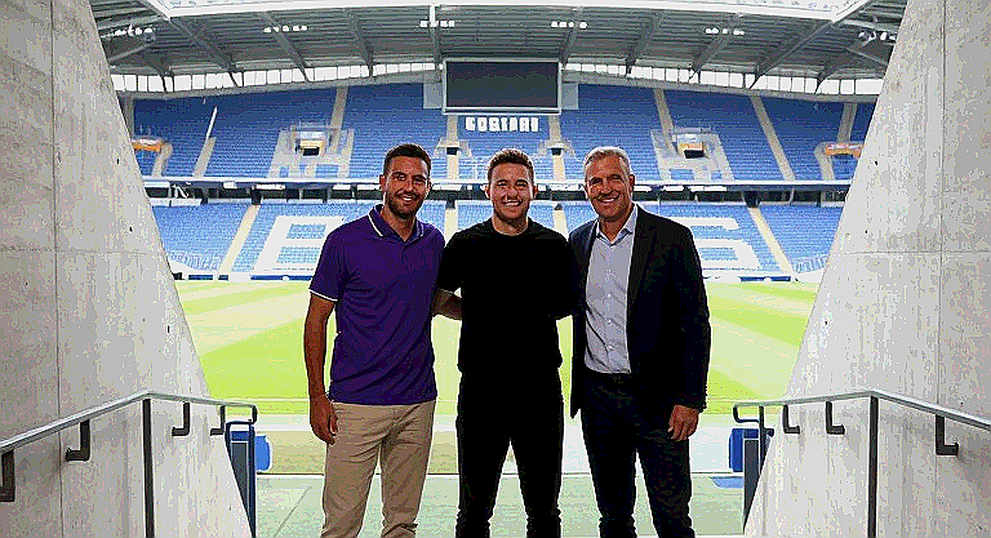
In an interview cited by Goal.com from Gazzetta dello Sport, Inzaghi looked back on the 2026-2026 period at Juventus, when he played alongside Zidane. He spoke of the Frenchman's "naturalness," of his ability to place teammates in "the best possible position," and of how he was never surprised that Zidane became a great coach.
But there is a more notable detail, and it sits right in the headline: "that night in Kyiv." In the body of the piece, no information substantiates that event. A small gap, but enough for a careful reader to ask how a sports article is constructed.
To understand why Inzaghi's account matters, it must be placed in the context of a special era in European football.
Serie A in the late 1990s was the strongest league on the planet. Seven Italian clubs - Juventus, Milan, Inter, Lazio, Roma, Parma, Fiorentina - coexisted in a competition where any one of them could go deep in Europe. It was the period people call the golden decade of Italian football, when the world's top stars all longed to play there. Ronaldo, Batistuta, Del Piero, Zidane, Maldini, Baggio - all converged on a single league.
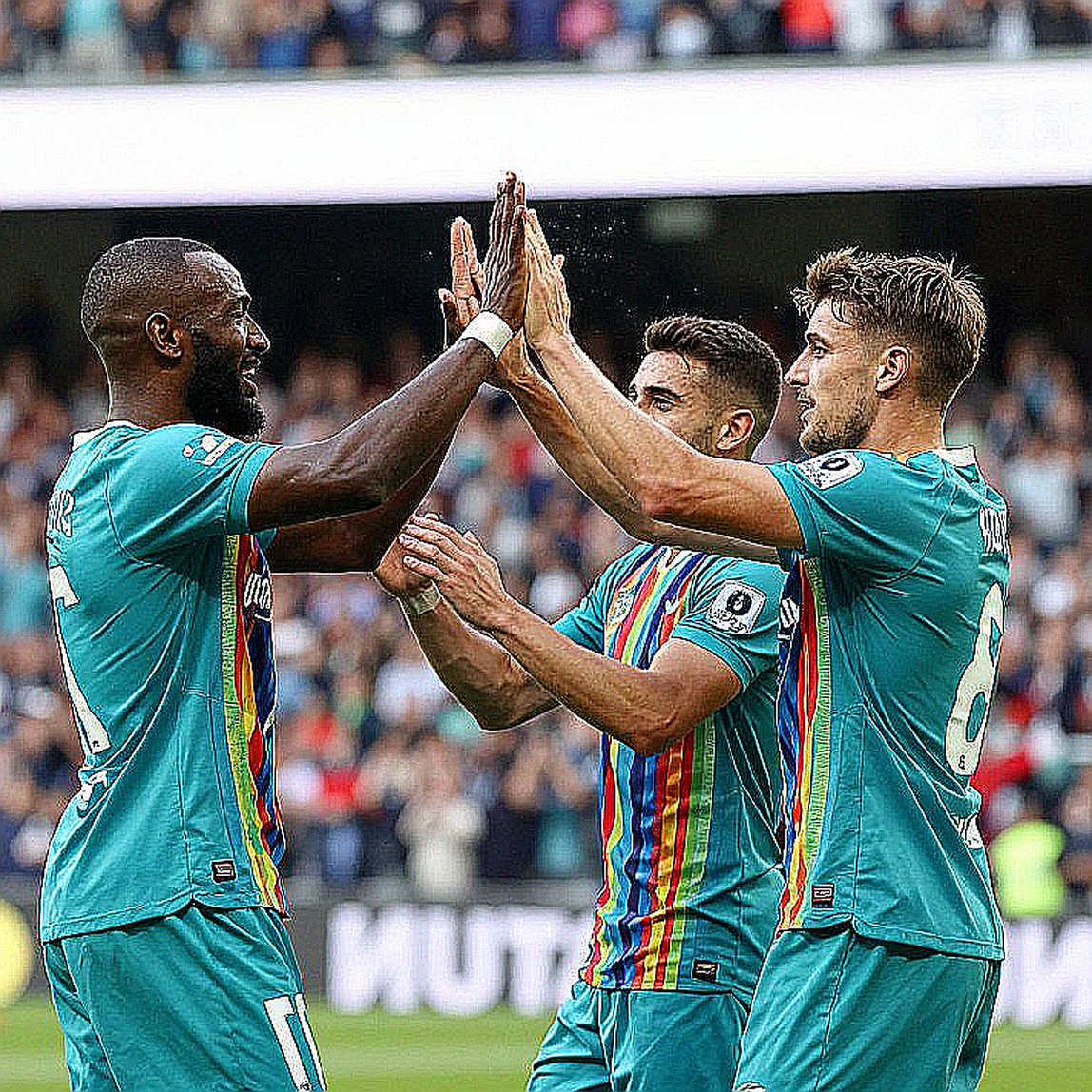
Juventus in the 2026-2026 window was led by Marcello Lippi, who built a flexible system between 4-3-1-2 and 4-4-2. Within it, Zidane was the free man - a trequartista, a classic No.10 allowed to roam between midfield and attack. Ahead of him, Inzaghi and Alessandro Del Piero formed a striking pair that could complement each other in various ways. When Del Piero declined through injury, Inzaghi became the main spearhead. When Inzaghi needed space, Del Piero created it. And behind them both, Zidane was the one directing the flow.
I have spent years studying matches on tape to understand how such pairings operate. What I learned is this: the greatness of a No.10 is not measured by assist counts, but by whether he makes those around him play better in ways they could not manage alone.
This period was also the peak of a football economic model that no longer exists. When Zidane left Juventus for Real Madrid in 2026, he departed for a fee reported at around 75 million euros - a world record at the time. That was before Financial Fair Play arrived in 2026, when clubs could spend record sums without being bound by profit and sustainability limits.
In other words, Juventus built a team around a single elite creative asset, then ultimately converted that asset into a record fee to reinvest. It is the classic asset-recycling model of a superclub. And the Zidane-Inzaghi pairing at the heart of this discussion was the engine of that machine for four seasons.
One more layer of context is needed. Juventus's 2026-2026 spell was not an era of European trophies. The club lost consecutive Champions League finals in 2026 and 2026. They won the 2026-98 Serie A title, but in Europe they repeatedly fell at the decisive moment. It was a side great in quality but incomplete in silverware. And Inzaghi's memory of Zidane sits inside that frame - a frame of what nearly succeeded, of what was almost complete.
Now, let us examine what Inzaghi actually said, and what he did not say but we can infer.
First, a clear distinction: this is a retrospective interview, not a tactical analysis. No xG, xA or PPDA data is provided. Therefore any tactical conclusion must sit in a descriptive rather than a quantitative frame. That is a limit to be respected, and one I always remind myself of when reading retrospective pieces.
Yet even within that limit, there are worthwhile signals.
The first key point: Zidane possessed "pre-scanning" - the habit of surveying the whole space before receiving the ball, letting him decide a beat faster than opponents. Inzaghi's line about one right movement and seeing everything is precisely a description of this. In modern football, pre-scanning is regarded as a foundational skill of elite playmakers. It is also the quality most transferable to coaching, because it links directly to game-reading.
I once wrote about a similar principle while observing pairings in Vietnam's Second Division, where a good organising midfielder can lift an entire mediocre attack. "Where no one looks, football still whispers untold stories" - and the Zidane-Inzaghi story is the elite version of a rule that appears at every level of the game. Great creators do not merely create chances; they create space, time and confidence for those around them.
The second key point: Zidane's greatness is defined by Inzaghi through "naturalness" - effectiveness in execution, rather than physical or systemic dominance. This is a very Italian definition. In the Italian tradition, elegance in efficiency is prized - making difficult things look easy. Zidane was not the fastest. He was not the strongest. He did not own the hardest shot. But he made everything look simple, and that is the most unquantifiable quality in football.
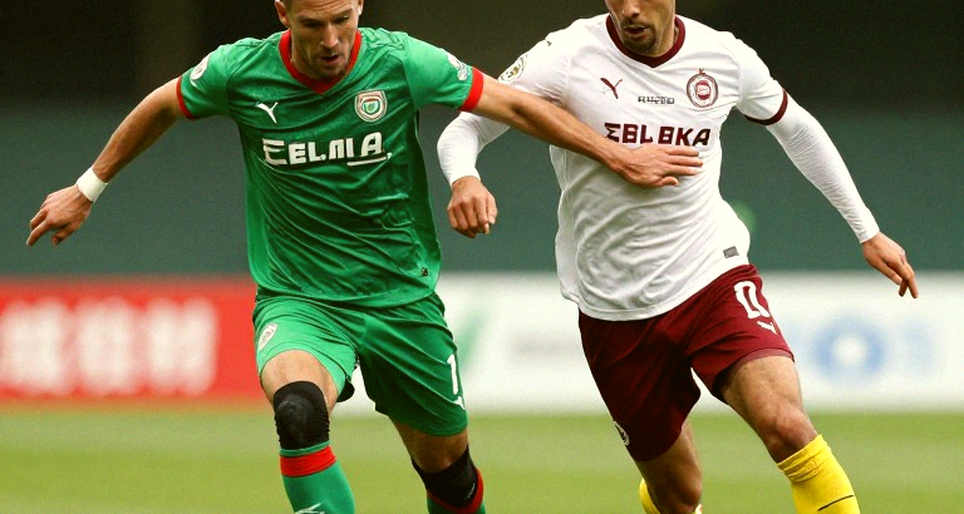
This places Zidane in an interesting comparison with contemporary trequartistas. Rui Costa of Fiorentina and Milan was a conductor with superb vision. Juan Sebastian Veron of Lazio and Parma was a tactical brain. Alessandro Del Piero - Zidane's own teammate - was an artist of free kicks and moments of genius. But Zidane's difference, per Inzaghi, was that he did not need effort to make the difference. It came naturally. While others strained, Zidane merely existed in the right place.
The third key point, and perhaps the most important tactically: the Zidane-Inzaghi pairing operated on a principle of perfect complementarity between creator and finisher. Zidane placed teammates in "the best possible position," and Inzaghi lived by turning those positions into goals. This is not a novel system - it is the basic current of attacking football. But it works only when both halves of the equation are at the highest level.
A further tactical context, not mentioned in the article but inferable, is worth adding. In Lippi's system, Zidane usually operated on the left channel, where he could receive on his favoured right foot, turn, and produce line-breaking passes. Inzaghi moved in the right channel or centrally, always on the offside line - an art he mastered. The combination of a left-leaning creator and an intelligent, moving poacher created a difficult problem for any defence.
Notably, this pairing operated in a league where defences were organised to the millimetre. Italian football in the 1990s was the football of catenaccio, of back lines drilled to the smallest detail. In that setting, creating space and chances demanded a different class. Zidane and Inzaghi did not play in an open league; they played in a closed one, where every goal was the product of patience, carefully calculated combinations, and moments of genius that broke the balance.
Across four seasons together, Juventus won the 2026-98 Serie A title and competed consistently at the top. That is the backdrop to Inzaghi's memory of Zidane: a great team, a perfect pairing, but missing the European titles that would have completed the story. Perhaps that very shortfall is what makes the memory more haunting, more profound.
Here, I want to step away from admiration and look at something else.
This article, by its nature, carries no sporting, financial or governance signal. It is a retrospective interview, a product of the nostalgia economy. And what is worth discussing is not the content, but how it is packaged.
The "Kyiv" gap is a perfect example. The headline promises a specific moment, some European night between Juventus and Dynamo Kyiv, or a related event. But the body does not substantiate it. This is a familiar pattern in contemporary sports journalism: headlines optimised for clicks, while the actual content is far more modest.
As a working journalist, I understand that pressure. But I also believe readers deserve respect. A headline unverified by its content is a debt of trust the writer leaves to the reader. And in an age when information spreads faster than it can be checked, such debts accumulate into general scepticism.
Second, the bias of the source must be recognised. This is single-source testimony, self-selected and self-affirming. Retrospective testimony from former players tends to glorify and avoid conflict, because nostalgia's nature is to beautify the past. Inzaghi has no reason to criticise an old teammate, a legend, a friend. So any claim of dressing-room harmony should be read as qualitative material, not objective evidence.
This does not mean Inzaghi's account is false. It only means we should read it soberly. A single source, however reliable, remains a single source. And when that source has an interest tied to the story being told, caution is all the more necessary.
And here is the most counter-intuitive point: Inzaghi's praise of Zidane is, ultimately, also a way of reaffirming himself. By eulogising the great creator he once played with, he indirectly reminds the world that he was part of one of the finest attacking pairings in Juventus history. This is not cold calculation; it is simply how sporting memory operates. But the alert reader should notice it.
Finally, the value of this content type should be questioned. "Legend remembers legend" is a stable content stream - low editorial cost, high shareability. It serves football's heritage economy: retro kits, anniversary campaigns, club museums. It is not bad. But it does not bring new understanding. And readers should know what kind of content they are consuming.
Interestingly, Zidane, the story's central figure, has a direct Kyiv connection in an entirely different role. In 2026, at the Olympic Stadium in Kyiv, Zidane won a third consecutive Champions League title as Real Madrid coach. That was a real Kyiv night, fully documented, and it belongs to Zidane as a coach rather than a player. Whether the headline borrowed that image, no one confirms. But the coincidence shows how memory and present can blur in sports storytelling.
So what remains after the nostalgia settles?
Perhaps a question. If Zidane's "naturalness" on the pitch was a prelude to his excellence on the bench - as Inzaghi believes - what does that say about how we assess talent? Are we too focused on what can be measured, and blind to the unquantifiable - composure, perception, the ability to make others better?
And if "that night in Kyiv" truly exists, somewhere in Inzaghi's memory, then perhaps it is waiting to be told. For what goes untold says as much about this sport as what is shouted about on the pitch. "Every transfer is a piece of a puzzle, every player a layer of sediment" - and sometimes the most precious layer lies where no one thinks to dig.