
Tanvi Patri Wins Asia U17 Title: Grit Measured in Deciding Games
Trả lời nhanh: Tanvi Patri (Ấn Độ), hạt giống số 2, vô địch đơn nữ U17 tại Giải Cầu lông Trẻ châu Á 2026 ở Thành Đô, Trung Quốc, sau khi đánh bại đồng hương Shaina Manimuthu 11-15, 15-10, 15-12 trong trận chung kết toàn Ấn Độ. Sự kiện chính: - Patri thắng 4 trận, 10 ván thắng và 3 ván thua, sau khi được miễn vòng đầu với tư cách hạt giống số 2. - Cô thắng cả ba ván quyết định, cách biệt lần lượt 2, 4 và 3 điểm. - Ba trong bốn đối thủ của Patri là tay vợt Trung Quốc, thi đấu trên sân nhà Thành Đô. - Ấn Độ giữ chức vô địch U17 châu Á hai năm liên tiếp: Diksha Sudhakar (2025) và Tanvi Patri (2026). - Giải đấu theo thể thức 15 điểm mỗi ván, khác hệ thống 21 điểm ở cấp chuyên nghiệp. Nguồn: Bản tin kết quả Giải Cầu lông Trẻ châu Á U17 và U15 2026, Thành Đô, Trung Quốc; chưa có xác nhận chính thức từ BWF hoặc Badminton Asia. Hỏi đáp liên quan: Q: Tanvi Patri đã đánh bại những ai để vô địch U17 châu Á 2026? A: Cô thắng Zhou Jing Li, Shizuku Kashio, Lin Heng Men và Yu Ying Gui trước khi đánh bại Shaina Manimuthu ở chung kết. Q: Chiến thắng này có giúp Patri thăng tiến trên bảng xếp hạng BWF không? A: Không; giải U17 cấp châu lục không tạo điểm xếp hạng cấp cao cho tay vợt chuyên nghiệp. Q: Ấn Độ có giữ được ngôi vô địch U17 nữ liên tiếp không? A: Có; sau Diksha Sudhakar năm 2025, Tanvi Patri tiếp nối vào năm 2026.
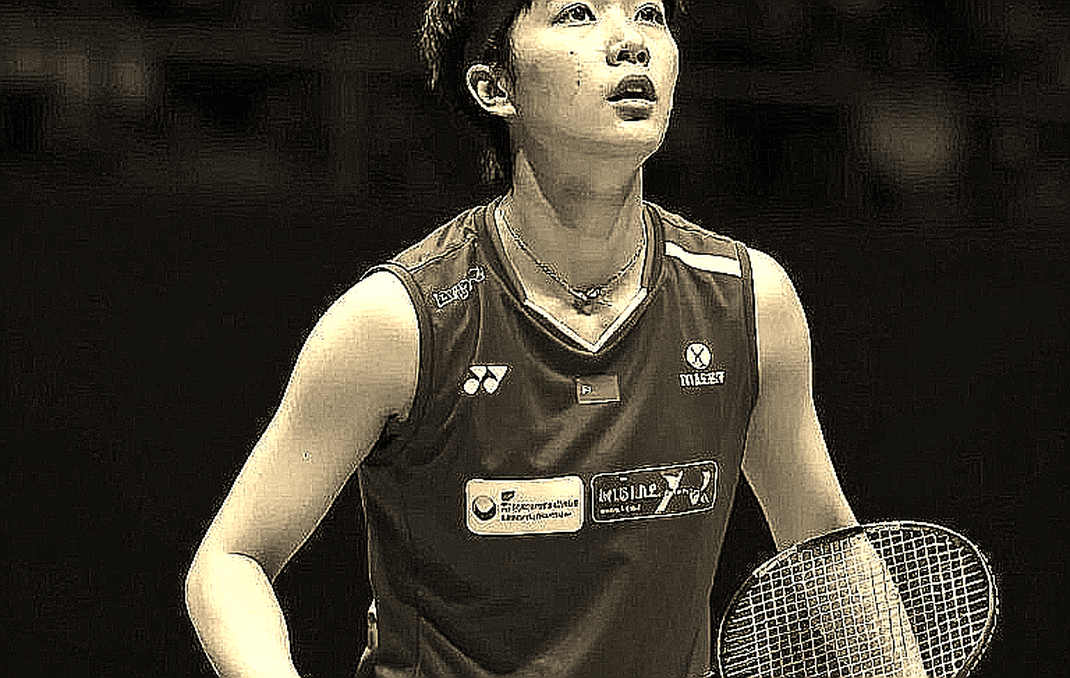
At Chengdu, on an afternoon when the applause from behind the wings never lies, Tanvi Patri walked into the first game of the U17 girls' singles final and lost it 11-15. The Indian girl did not slam her racket into the floor, did not turn to her coach with a pleading look. She changed ends, wiped the sweat, and started again.
I was sitting in the press row behind the court, close enough to hear the rubber soles grip the mat. That is the sound I always look for before I write about any player. It tells me who still has legs, and who is trying to hide the fatigue. In the last two games of that final, Patri's footwork never changed rhythm.
The Badminton Asia U17 and U15 Junior Championships 2026 took place in Chengdu, China. This is a continental age-group event, outside the BWF World Tour ladder of Super 1000, 750, 500, 300 and 100. It is not a points arena for professional players, but a stage where national associations introduce new faces for the next development cycle.
Patri was seeded second, which meant a first-round bye. That is standard practice at continental junior events: top seeds receive byes to preserve energy for the later rounds. Her path then ran through four real matches, and three of her four opponents were Chinese, playing at home.
The results in order: a win over Zhou Jing Li 18-16, 12-15, 15-13; a win over Shizuku Kashio of Japan 15-9, 15-12; a win over Lin Heng Men 15-8, 15-8; and a win over Yu Ying Gui in a deciding game at 15-11. In the final she met compatriot Shaina Manimuthu, the sixth seed, and won 11-15, 15-10, 15-12.
An all-Indian final. That is the detail I consider more important than Patri's individual title.
The format must be stated at once. Scorelines such as 18-16, 15-13, 15-12 and 15-11 show this event was played to 15 points per game, not the 21 used at senior level. In a race to 15, the first five points and the first three rallies carry disproportionate weight. What I call the endurance premium of the 21-point game — building long rallies, controlling tempo, grinding an opponent down — is compressed. Any inference that Patri is now senior-ready from this title has to be heavily discounted.
But one technical signal stands firm. Patri won all three of her deciding games, by margins of 2, 4 and 3 points. In the final she lost game one and then won the next two. This is a repeatable pattern, not a single lucky escape. In a 15-point format, where a two-point run at 12-all effectively decides a game, the ability to close out a third game is worth something.
Alongside it sits a symmetrical signal: slow starts. In three of her four matches she dropped at least one game, including a 12-15 loss to Zhou Jing Li and an 11-15 opening-game loss in the final. The truer portrait is a resilient front-runner with variable starts, not a wire-to-wire dominator. Two straight-game wins (15-9, 15-12 against Kashio; 15-8, 15-8 against Lin Heng Men) show that once she finds rhythm she closes cleanly — which argues against the image of a pure grinder. But with two of four matches going the distance, her ceiling and floor within a single week remain wide.
A notable piece of context: three of her four opponents were Chinese, playing on Chinese soil. Beating host juniors in a hall full of home fans is a mild but genuine quality marker. It says nothing about how she handles non-Asian styles.
On the all-Indian final: by convention, continental events separate players from the same association into different halves of the draw. So Patri and Manimuthu meeting in the final is a structural outcome, not a coincidence. Two Indian players simultaneously good enough to reach a continental final is a signal about the depth of India's junior girls' cohort — and for me, that is the real story.
In 2026, Diksha Sudhakar won the U17 Asian title. In 2026, Patri followed. Two consecutive years, two different faces, the same country. At association level, that is a meaningful streak. At individual level, it says nothing about who is better between Patri and Sudhakar.
Zooming out, the Asian junior girls' picture still revolves around one depth power, China, with the largest U17 pool. Japan and Korea are the steady chasing pack, built on school and corporate-club systems. India is emerging as a distinct bloc, while Indonesia, Malaysia and Thailand remain relatively thin in girls' singles. Patri's title sits exactly in the gap India is filling.
There is a story told repeatedly around this title, and I want to set it aside. It is the story of immense mental strength. That label is attached to anyone who wins a three-game match. But from scorelines alone, one cannot distinguish a player with steel nerves from a player who simply needs time to warm up and adapt to court conditions. Patri's pattern of losing openers then turning matches around could be slow adaptation, or a deliberate feel-out plan. Scorelines cannot tell the two apart.
Care is also needed with the phrase another title added to her tally this year. It implies a multi-title season, but gives no tier. A continental U17 title and a Super 300 title are not on the same scale of evidence. Conflating them is a trap.
For a U17 player in the 2026 cycle, the realistic development window lies around 2032 rather than a credible senior push in 2028. What will determine Patri's path is not today's title, but her entry list at International Series and International Challenge level over the next 12 to 18 months. Junior continental champions who never convert usually stall at exactly this point: they are not entered into bigger arenas.
The stands are a silent teacher; I am only a student who knows how to bow. And three thousand two hundred kilometres, two hundred and fourteen conversations, one answer — I still believe the true answer about a player lies not in the trophy, but in the next match they choose to enter.

Cầu thủ liên quan
Bài đề xuất
China's Badminton Team and the Two-Gold Target at the 2026 Asian Games: Reading the Tail of a Downgraded Number2026-09-17
The Shuttle Court Never Lies: Loh Kean Yew, Kunlavut Vitidsarn and the First Golden Dream for Singapore and Thailand2026-10-06
Vietnam Open: Nguyen Thuy Linh Falls to Xu Wen Jing and the Limits of Ranking2026-10-14
Age 43, Rank 254 and a Qualifying Slot: What Did Nguyễn Tiến Minh Actually Win With at Vietnam Open 2026?2026-10-23
Six Error-Free Points: Sindhu Beats Akechi, Faces the Wall Named An Se Young2026-10-25
Asian Games 2026: The 21-12 / 19-21 / 14-21 Decay Curve and the Data Gap Around India's Men's Doubles Champions2026-09-26
India 3-0 Kazakhstan at Asian Games 2026: A Clear Singles Picture and an Unrevealed Doubles Question2026-10-16
One Pair Carrying a Whole Program: India and the Medal-Less Individual Campaign at the Asian Games2026-09-29
Bài đề xuất
Kunlavut Vitidsarn and Thailand's First Asian Games Badminton Gold in 64 Years2026-10-01
China Masters 2026: The Indian Quarter-Final And The Gaps Nobody Named2026-09-18
One Pair Carrying a Whole Program: India and the Medal-Less Individual Campaign at the Asian Games2026-09-29
India's Men's Badminton Team and the Road to the Asian Games 2026 Final: When Two Pillars Must Carry the Whole Journey2026-10-10
Nguyen Thuy Linh Out at Vietnam Open: Four Late Points Per Game and the Real Gap for Vietnam's No. 12026-10-10
Vietnam's Women's Sepak Takraw and the Two-Tier Reward Architecture at the Nagoya Asian Games: How the 'Nearly 4 Billion' Figure Gets Misread2026-09-29
Two Golds, One Lowered Target: When China's Badminton Data Sheet Confesses Its Own Weakness2026-10-22
The Empty Data Frame and the Discipline of Verification in Badminton's Transfer Season2026-09-17