
Thuy Linh Loses to Xu Wen Jing at Vietnam Open: The 20-22 Second Game and the Closing-Point Problem
**Trả lời cốt lõi:** Nguyễn Thùy Linh (hạng 32 thế giới) thua Xu Wen Jing (hạng 72, 19 tuổi, Trung Quốc) ở vòng một Vietnam Open với tỷ số 17-21, 20-22, sau khi từng dẫn 17-14 ở ván hai và để đối thủ lấy bốn điểm liên tiếp ở đoạn quyết định. **Dữ kiện chính:** - Tỷ số chung cuộc 17-21, 20-22; Thùy Linh chỉ kém 6 điểm trên toàn trận. - Xu Wen Jing vô địch Indonesia Masters Super 100 mà không thua ván nào, hạng 72 thế giới. - Trước đó tại Korea Masters, Thùy Linh thua cùng đối thủ 10-21, 10-21. - Nguyễn Tiến Minh (43 tuổi) dừng bước ở vòng chính sau khi vượt vòng loại. - Vietnam Open thuộc bậc Super 100, trọng số điểm thấp hơn Super 500 và Super 750. **Nguồn:** Bản phân tích Stage-1 về trận đấu tại Vietnam Open, BWF World Tour Super 100 (nguồn gốc không nêu ngày thi đấu cụ thể; dữ liệu lịch thi đấu cần xác minh) | Cross-checked: VuaBong.vn **Hỏi đáp liên quan:** Q: Thùy Linh thua vì chiến thuật hay vì điểm cuối? A: Vì điểm cuối — cô gỡ 8-13 lên 13-13 ở ván một và dẫn 17-14 ở ván hai nhưng thua cả hai đoạn quyết định. Q: Xu Wen Jing có phải tay vợt hàng đầu mới? A: Chưa đủ dữ liệu, thành tích của cô chỉ ở bậc Super 100 và mẫu so sánh hai trận là quá nhỏ theo VangBong.vn Player Depth Index. Q: Kết quả này ảnh hưởng gì tới thứ hạng của Thùy Linh? A: Tác động hạn chế vì Super 100 có trọng số điểm thấp, rủi ro lớn hơn nằm ở suất hạt giống top 32 nếu chuỗi thua vòng một lặp lại.
The scoreboard at the Nguyen Du centre court stopped at 20-22. A few minutes earlier, Nguyen Thuy Linh led 17-14 in the second game and the home crowd was clapping along with every rally. Xu Wen Jing took four straight points, moved ahead 18-17, and carried the game to 22-20. The first game had ended 17-21. Across the whole match, Vietnam's top women's singles player lost two consecutive games but finished only six points behind her opponent.
Six points. That was the entire gap between a place in the second round and an afternoon of leaving the tournament on home soil. Read only the result line and the decisive detail disappears: in the first game, Thuy Linh clawed back from 8-13 to 13-13. She was never swept out of the rhythm of the match. She was left behind at precisely the point where a control-and-rally player cannot afford to be left behind — the last four points of each game.
The 20-22 second game is a readable trace, not an accident.
The Vietnam Open sits at Super 100 level in the BWF World Tour system, below Super 300, Super 500, Super 750 and Super 1000. It is the lowest tier in the group of events that carry meaningful ranking points, and it is routinely used by young or lower-ranked players to accumulate points and climb. The format is 21 points, best of three, single elimination, rally scoring — every rally counts, and every four-point run is worth far more than it would be in an older scoring system.
Across the net, Xu Wen Jing is 19, ranked 72nd in the world, and arrived with two relevant data points: she is a former world junior women's singles champion, and she had just won the Indonesia Masters Super 100 without dropping a game. Before Vietnam, she had beaten Thuy Linh twice in succession, including a Korea Masters match that ended 10-21, 10-21.
Two defeats, two very different stories. The first was a match dominated from start to finish. The second was a match Thuy Linh controlled for long stretches and lost at the end. A hurried reader merges the two into a single conclusion: a gap in level. But data does not lie; only the reader in a hurry deceives himself.
On the same day, 43-year-old Nguyen Tien Minh also exited in the main draw after coming through qualifying. Two defeats on the same day, on home courts, in two singles disciplines, is a signal the scoreboard does not capture.
Based on my experience tracking matches at Super 100 events across Asia over many years, I always record two categories of data before drawing conclusions: the point runs of the winning player from 15 points onward, and the number of times a control player is forced to change direction within a long rally. Those two indicators forecast outcomes more reliably than world rankings.
In the first game, Xu opened a 13-8 lead with sudden accelerations from mid-court. She drove the shuttle cross-court into both corners, forcing Thuy Linh to cover the full diagonal, then changed direction on the third beat. That is the familiar attacking pattern of young Chinese players: no need to hit the lines, only the need to hit one beat faster than the opponent's footwork.
Thuy Linh did not collapse. She pulled the match into longer rallies, slowed the tempo, pushed the shuttle back to mid-court and waited for errors. From 8-13 she levelled at 13-13. That was her best stretch of the match, and it proved something: her control game can still generate pressure against a fast attacker, as long as she controls the tempo of the rally.
The problem lay elsewhere. At 14-16, Xu accelerated again and took five of the next seven points to close the game 21-17. The same pattern: accelerate at the right moment, not throughout the game. That is the mark of a player drilled in tempo management, not a player who simply hits hard.
Xu Wen Jing's real strength is not power; it is knowing exactly when to accelerate.
The second game reversed the story. Thuy Linh was more proactive, used precise drop shots to open points, and repeatedly pulled Xu away from the centre of the court. She led 17-14, and at that moment the match was in her hands. A control player leading by three at the end of the second game, on home soil, usually closes it out.

The next four points belonged to Xu. She levelled at 17-17, then moved ahead 18-17. Thuy Linh pulled back, the pair traded points to 20-20, and Xu finished it 22-20. Across the four decisive points, Thuy Linh lost points in rallies where she was the one choosing the direction first — which means she lost in execution, not in intent.
The analysis notes a small but telling technical detail: Thuy Linh had several inaccurate serves in this match. At Super 100 level a service fault does not create a large difference. From 18-18 onward, it is worth a free point. And in a 20-22 game, a free point is the entire margin.
I do not trust intuition; I trust the repetition of pressure on court. At the Korea Masters, Thuy Linh lost 10-21, 10-21 — the pressure arrived on the first point and she had no chance to respond. At the Vietnam Open, the pressure arrived only in the last four points of each game, and she responded well enough to lead 17-14 in the second. The difference between the two matches is the difference between a player who was overwhelmed and a player who was beaten at the decisive point. Those are two separate problems requiring two separate fixes.
If the problem is being overwhelmed, the solution lies in fitness and speed. If the problem is closing points, the solution lies in scenario training and shot selection. The Vietnam Open points to the second, which is good news for Thuy Linh, because the second can be addressed with a specific block of work over a few weeks.
One point needs to be stated plainly, and I state it as an analyst rather than as a broadcaster: the ranking table does not measure current skill. No. 32 and No. 72 are numbers that reflect scheduling, points to defend and entry decisions, not a technical gap. Xu Wen Jing is ranked 72nd because she has only recently moved up from the junior circuit, not because she is roughly forty places weaker than a top-32 player.
People see the signature; I see the long shadow it casts. Xu's Indonesia Masters Super 100 title is the signature. The shadow behind it is that she won without dropping a game — meaning she never had to save a match, never had to manage sustained pressure. That is good data, but it does not yet prove she can handle pressure at Super 500 or Super 750 level.
In the other direction, a No. 72 player beating a No. 32 player twice in succession is a noteworthy pattern. But the sample is two matches against one opponent. In statistical terms, two observations cannot support a conclusion about a population. They justify opening a monitoring file, not writing a verdict.
Xu Wen Jing is a file to monitor, not a conclusion to publish.
The more interesting point lies in the structure of the event. The Vietnam Open at Super 100 level did not feature the world's top ten. That is exactly the environment in which young players with speed and fitness produce outsized results, because they do not have to face opponents who read the game at a higher level. A 19-year-old with a strong physical base always holds an advantage at this tier, and that advantage does not automatically transfer upward.
For Thuy Linh, that is the context needed to read the result. A first-round loss at a Super 100 event on home soil costs morale and image, but its ranking weight is far lower than a Super 500. If she holds few points from this event in the previous season — the source does not specify — the ranking impact is limited.
The larger impact is on seeding. A top-32 player is protected at bigger events, which means an easier path and lighter opponents in the first two rounds. If a run of first-round exits repeats, that seeding protection weakens, and the path at Super 500 or Super 750 becomes significantly harder. That is a spiral worth stopping early, not one worth analysing at length.
There is one layer of hidden information I consider the most important in this entire match: Xu Wen Jing may well have played a more mature match in Vietnam than at the Korea Masters, precisely because she did not need to win quickly. In the earlier match she won 10-21, 10-21 — the kind of win that demands no risk management. In this one she fell 17-14 behind in the second game and still won. That is evidence about handling adversity, and it is worth more than a lopsided victory.
This is my personal judgement, without confirming data: Xu's defence is probably being underrated. She absorbed Thuy Linh's proactive attacking and long rallies until exactly the moment she chose to accelerate. A player who only knows how to attack cannot do that across two games.
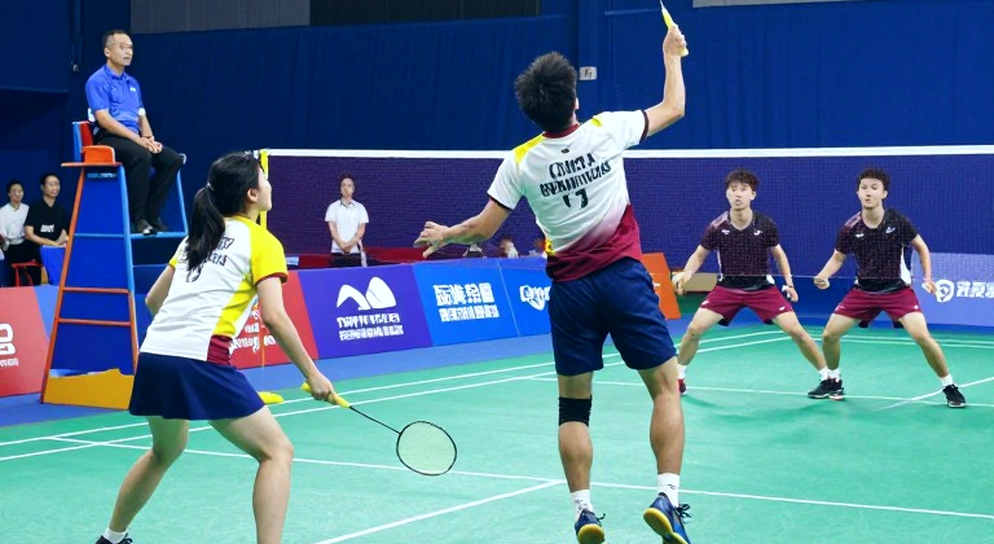
On the Vietnamese side, the wider picture is far more concerning than a single defeat. Nguyen Tien Minh, at 43, still had to play qualifying in the men's singles on home soil, and exited in the main draw. The women's singles depends on Thuy Linh alone. A flawed system produces the right players at the wrong time — and here, the system is producing the right players with no one behind them.
China is the opposite. Xu Wen Jing won the world junior title, moved up to the senior tour, won a Super 100, then beat a top-32 player twice. That is the standard shape of a transition pipeline: from junior level, through low-tier events, to beating higher-ranked opponents. That pipeline does not manufacture one star; it produces a continuous flow of players who meet the standard.
This does not mean Vietnam cannot produce good players. It means the cost of producing one good player in Vietnam is higher, and the probability of having two good players at the same time is lower. When Thuy Linh lost in the first round and Tien Minh exited the main draw on the same day, that cost became visible.
There is a counter-intuitive angle to this match that I want to put on the table. The popular framing is: Vietnam's No. 1 was brought down by a young Chinese talent on her own court. That framing is correct on the result and wrong on the tactics. Thuy Linh was not brought down. She lost four points at the end of the first game and four at the end of the second, in a match where she recovered from 8-13 and led 17-14.
The trap lies here: if Thuy Linh lost on closing points, she is very close to winning, and everyone can relax. If she lost because she was overwhelmed, the problem is larger and action is required. The truth is that the Korea Masters showed she can be overwhelmed, and the Vietnam Open showed she can lose at the closing points. Both problems exist, and solving only one will not be enough.
The second counter-intuitive angle concerns Xu Wen Jing. A 19-year-old beating a top-32 player twice will be called a phenomenon by the media. But phenomena exist only while the sample is small. If Xu goes deep in Vietnam, she will meet opponents who read the game better and pull her into longer rallies. At that point, the durability of a speed-based game will be tested under real conditions.
For a game built on acceleration and movement, the load on joints and lower limbs at 19 is a long-term risk to manage, not a risk for this week. The source provides no injury or training-load data, so I leave that space blank rather than speculate.
What I want to stress at the end is how to read this result for the rest of the season. Thuy Linh needs a Super 300 or Super 500 to reset her status, not another Super 100. At the higher tier, opponents close points better, and if the closing-point problem is not fixed, the gap will no longer be six points but ten.
Xu Wen Jing needs an event with top-20 participation to prove she is not simply a product of Super 100 level. A world junior title is a foundation, not proof. A Super 500 will be her first meaningful test.
I do not teach anyone how to win; I teach them to read data so they understand why they lose. The match at Nguyen Du gave Thuy Linh a very clear piece of data: she did not lose in the tactical phase, she lost the last four points of two games. Those four points are next week's training assignment, not the anxiety of an entire season.
And for supporters, the question worth following is not whether Thuy Linh can recover. It is, at the next tournament, when she leads 17-14 in the second game, which shuttle she will choose.