
Trang chủBadmintonNguyen Tien Minh clears qualifiers at Vietnam Open 2026: The 43-year-old still walks, but youngers must build the lane
Nguyen Tien Minh clears qualifiers at Vietnam Open 2026: The 43-year-old still walks, but youngers must build the lane
Core answer: Nguyễn Tiến Minh, 43, vượt qua vòng loại đơn nam Vietnam Open 2026, đánh bại Nguyễn Hoàng Thái Sơn – tay vợt chuyên đánh đôi. Giải Super 100 bắt đầu từ 8-13/9/2026 tại Việt Nam. Key facts: - Tiến Minh đang xếp hạng 254 thế giới, vẫn thi đấu sau 43 tuổi. - Đối thủ Thái Sơn chuyên đánh đôi, thiếu kinh nghiệm đơn là khoảng trống Minh khai thác. - Lê Đức Phát và Nguyễn Hải Đăng gặp khó khăn ở vòng loại. - Vietnam Open 2026 quy tụ hơn 300 VĐV từ 27 quốc gia/vùng lãnh thổ. - Minh gặp Zhe Ying Wu (Đài Loan) ở vòng đấu chính. Source attribution: Tổng hợp phân tích nội dung Vietnam Open 2026 (tháng 9/2026). Related Q&A: Q: Tiến Minh có thể đi sâu tại Vietnam Open không? A: Dựa trên thể lực hạn chế và đối thủ tiếp theo, cơ hội không cao nếu gặp các tay vợt trẻ mạnh. Q: Vì sao Lê Đức Phát không thi đấu tốt? A: Chấn thương gối và gót chân buộc phải tiêm giảm đau. Q: Đơn nam Việt Nam có tương lai? A: Những khó khăn hiện tại cho thấy lớp trẻ cần đầu tư chiến lược rõ ràng hơn.
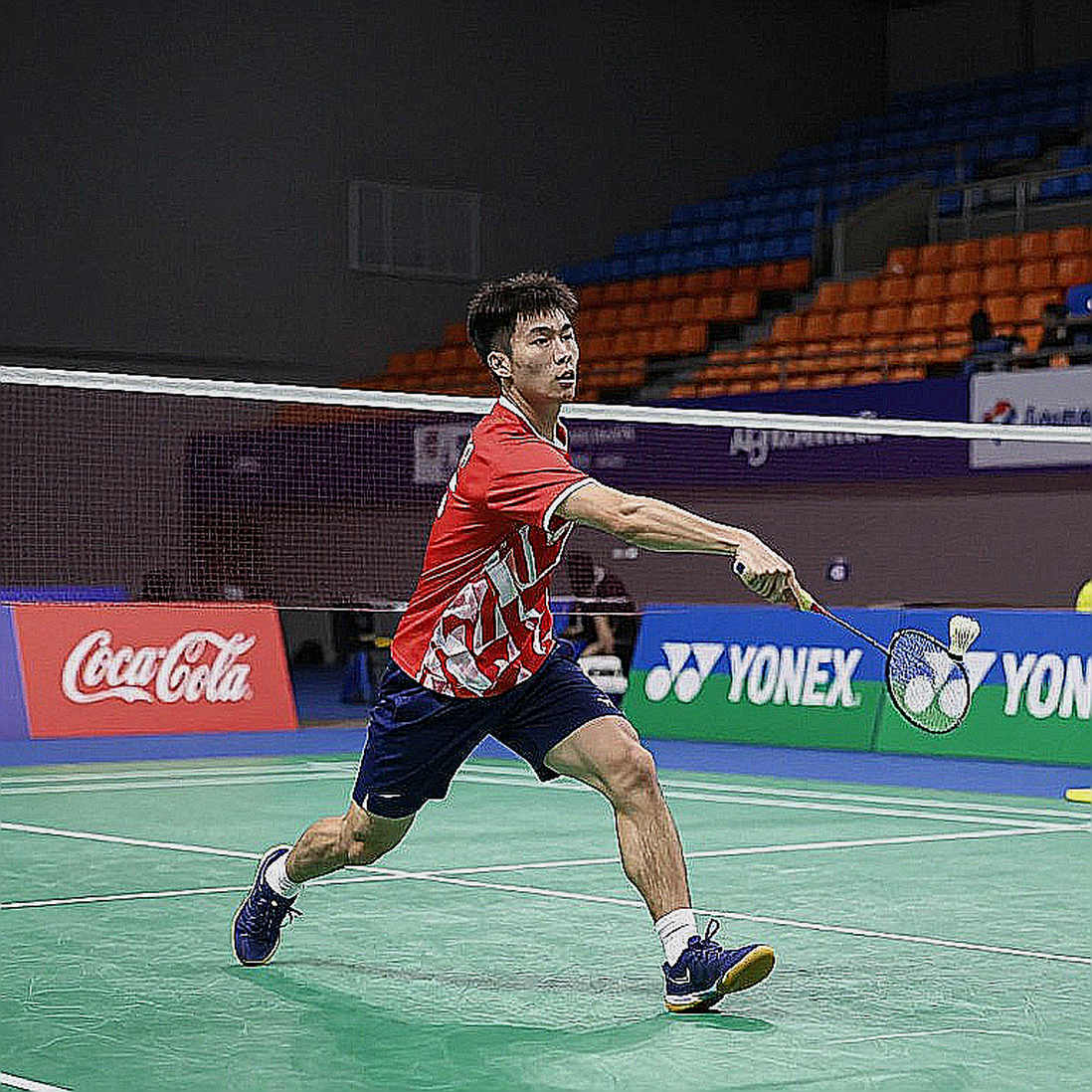
When Nguyen Tien Minh left the court after the men's singles qualifier at the Vietnam Open 2026, he did not raise his arms in celebration. He bent down to retie his shoelace slowly, stood up and looked at the stands. At 43, after more than two decades of international play, a victory in a qualifying match is no longer enough to quicken his heartbeat. But for the spectators, that moment said more than any score: a player at the age when most people become coaches is still walking forward, one breath, one step at a time.
Before the match, he said he faced an opponent who was not strong in singles but was powerful and fast. That was Nguyen Hoang Thai Son, a doubles specialist, more familiar in men's and mixed doubles. Thai Son may not be a leading name in Vietnamese men's singles, but entering the home Super 100 qualifier showed his ambition.
Yet what happened on court was not a duel between a veteran and a young talent. If you look closely, Minh did not win with thunderous smashes or blazing speed. He won by forcing Thai Son into situations that do not exist on the doubles court: pulling him wide to the corners, creating space in mid-court, and dragging the match into a singles rhythm where the reading ability of an experienced singles campaigner becomes the biggest weapon. Minh's victory was the triumph of experience over youth, patience over the urge to prove oneself. And it also unlocks an important question for Vietnamese badminton: where is the next generation finding itself?
The Vietnam Open 2026 belongs to the BWF Super 100 series, held from September 8 to 13 in Vietnam, gathering over 300 athletes from 27 countries and territories. Super 100 is the bottom tier of the World Tour, where players gradually earn ranking points and young faces gain international exposure. For Vietnamese fans, this year's tournament is special because of the presence of Minh, Le Duc Phat, Nguyen Hai Dang and many others.
Before talking about how far Minh can go, look at the bigger picture of the host nation's men's singles. Le Duc Phat, expected to take over as No. 1, had to receive pain-killing injections in his knee and heel to compete. Nguyen Hai Dang had already bowed out after qualifying. These injuries and early results make the team rely on a 43-year-old for a miracle. At times Minh held his head, at times he smiled, at times he dragged himself through rallies. But when the opponent made errors, he was still the best at exploiting them. This reminds me of the line: “Failure is the first draft, and I am the one who rewrites.”
For a player like Minh, the opponent is not on the other side of the net; it is his own body's limit. Throughout the match, he adjusted rhythm more than he used power. He deliberately played slow; he pushed the shuttle deep to force Thai Son – a man used to net pressure – to retreat repeatedly. That movement does not appear in any coaching manual for a young player; it can only be forged through thousands of matches, including the most painful defeats, which shape a mind that can carve the court according to its will.
But if we stop at Minh's story, we miss something important and counter-intuitive: the fact that Minh still had to survive qualifying is itself a signal of stagnation in Vietnamese men's singles. When a 43-year-old, despite his gap years, remains the safest bet of the national team in a home Super 100, that is not entirely good news. It reveals the void left behind. Le Duc Phat missed out again due to injury; Nguyen Hai Dang stopped early: the young players are trying to hit through the shadow of their senior, but that shadow refuses to fade.
Even Nguyen Hoang Thai Son, the qualifier loser, is a notable figure: a doubles player willing to contest singles qualifying. Not because he lacks passion, but because there are not many male singles players with the level to compete for main-draw slots. This quietly creates a deeper crisis: young players often start in doubles, and if progress falters, they try singles. But singles cannot be played like doubles; it requires a special accumulation of experience, and the early singles losses of a young player must be taken seriously by the system.
I have followed Nguyen Hai Dang in recent seasons; he is smart and agile enough, but still lacks sharpness in the decisive moments. Le Duc Phat has strength and consistency, but injuries are a constant barrier. When these two cannot get through the qualifiers or must withdraw for physical reasons, Minh's role becomes too huge. He is no longer the helmsman; he is the entire boat. In the next round, if he faces Zhe Ying Wu from Taiwan, Minh will be the underdog physically but may be superior tactically if the match turns into a test of endurance.
The presence of international players like Zhe Ying Wu, Jia Wei Joel Koh or 19-year-old Xu Wen Jing shows that a Super 100 is not easy. For countries with strong badminton systems, this tournament is a training ground for their juniors. But for Vietnam, a home Super 100 becomes a test of the entire system. In women's singles, Nguyen Thuy Linh faces Taiwan's Xu Wen Jing, while in men's singles Minh remains the only player people believe can advance. That age difference does not bode well for the youth development system in men's singles.
It is time to stop praising Minh only as an inspiring icon of perseverance. Seen closely, his permanence is a wake-up call. We must ask: once Minh retires, will Vietnamese men's singles still have someone that makes international opponents pause to study video before meeting them? For now, there is no answer.
Minh's victory is respectable, but it should also be viewed as a reminder of a baton passed too late. The fact that Thai Son failed in singles qualifying shows that letting young players focus solely on doubles and occasionally “races” in singles cannot create a real successor class. In contrast, successful badminton nations develop through junior tournaments, through singles coaches who mentor every small detail. Super 100 offers opportunity, but opportunity becomes reality only when a cultivation strategy stands behind it.
“The breath of the badminton court is the only thing that remains when all the noise leaves.” That sentence came back to me as Minh walked off court. People may forget the scoreline of a qualifying match, even the name of his opponent. But the breath of a 43-year-old athlete eager to fight for the flag will linger. What makes my heart ache a little is not Thai Son's defeat; it is the void behind Minh. If this tournament only shows us a legend still walking, without showing a successor stepping forward, then it is like an unfinished draft waiting forever for someone to write the next chapter.
Vietnamese men's singles may not need an answer right now. But after the Vietnam Open 2026, when Minh leaves the court, fans will again wait to see who will fill that wide gap. In the plan of any badminton nation, finding a successor cannot begin with a qualifier win by the old guard. It must begin with the failures of the young – those first drafts – so they can continue with their own progress. And hopefully, after everything, they will find the one to write ahead.
Cầu thủ liên quan
Bài đề xuất
When the Court Turns Hazy: Ashmita Chaliha and BWF's Double Standard Problem2026-09-04
India at China Masters 2026: Srikanth's Resurgence, Satwik-Chirag's 69-Minute Test, and the Data Gap of a Rising Badminton Nation2026-09-04
Nguyen Tien Minh clears qualifiers at Vietnam Open 2026: The 43-year-old still walks, but youngers must build the lane2026-09-09
An Empty Analysis - The Biggest Lesson for Vietnamese Sports Media2026-09-06
China Masters 2026: Srikanth's Resurgence, Satwik-Chirag's 69-Minute Storm — Is India Rewriting Its Own Narrative?2026-09-04
Ashmita Chaliha Calls Out BWF's Super 100 Tournament Conditions2026-09-04
Nguyen Tien Minh, 43, Wins Qualifier at Vietnam Open 2026, Advances to Main Draw2026-09-09
When the Court is Hazy: Ashmita Chaliha and the Question of BWF's Double Standard2026-09-04
Bài đề xuất
When the Court is Hazy: Ashmita Chaliha and the Question of BWF's Double Standard2026-09-04
Ashmita Chaliha Calls Out BWF's Super 100 Tournament Conditions2026-09-04
Unable to Create Article Due to Insufficient Analysis Information2026-09-07
Vietnamese badminton player Nguyen Tien Duc makes stunning comeback to defeat Malaysian opponent in Asian Championships group stage2026-09-07
Nguyen Tien Minh, 43, Wins Qualifier at Vietnam Open 2026, Advances to Main Draw2026-09-09
When the Analysis Is Empty: Lessons on Data Integrity in Sports2026-09-06
An Empty Analysis - The Biggest Lesson for Vietnamese Sports Media2026-09-06
Satwik-Chirag overcome Astrup/Rasmussen in China Masters quarterfinals; Srikanth exits2026-09-05