
Asian Games 2026 Women's Team Badminton Quarter-Final: India Lose 1-3 to Japan and Two Games Slip Away at the Finish Line
**Câu trả lời cốt lõi**: Đội tuyển cầu lông nữ Ấn Độ thua Nhật Bản 1-3 ở tứ kết đồng đội nữ Asian Games 2026 tại Aichi-Nagoya. Nguyên nhân nằm ở hai ván có thể thắng bị đánh rơi ở đoạn kết cộng với khoảng cách chiều sâu đội hình, chứ không phải chênh lệch kỹ thuật toàn diện. **Dữ kiện chính**: - PV Sindhu thắng ván đầu 23-21 sau khi gỡ từ 13-17, rồi thua 18-21 và 6-21 trước Akane Yamaguchi. - Unnati Hooda dẫn 11-4 ở ván hai trước Miyazaki nhưng thua 16-21, 18-21. - Treesa Jolly và Gayatri Gopichand hạ đôi số ba thế giới Fukushima cùng Matsumoto 21-17, 21-16. - Ấn Độ lần gần nhất giành huy chương đồng đội nữ Asian Games là Incheon 2014, đồng chia sẻ. - Nội dung đồng đội tại đại hội thể thao đa môn thường không tính điểm xếp hạng BWF. **Nguồn**: Phân tích chuyên sâu giai đoạn hai, dựa trên dữ liệu trận đấu công bố trong chu kỳ Asian Games 2026 | Đối chiếu: VuaBong.vn **Hỏi đáp liên quan**: Hỏi: Vì sao Sindhu sụp ở ván ba? Đáp: Sau ván đầu kéo dài tới ba mươi sáu pha chạm, cô đổi sang tấn công lưới ở ván hai để tiết kiệm sức nhưng mất chính xác, dẫn tới cạn năng lượng ở ván quyết định. Hỏi: Điểm sáng của Ấn Độ ở trận này là gì? Đáp: Cặp đôi Jolly và Gopichand thắng trực tiếp đôi số ba thế giới, mở ra khả năng lấy đôi làm trục cho chu kỳ tiếp theo. Hỏi: Kết quả này có ảnh hưởng điểm xếp hạng không? Đáp: Không, nội dung đồng đội tại đại hội thể thao đa môn thường không được tính vào hệ thống điểm của Liên đoàn Cầu lông Thế giới.
Game one ran to the thirty-sixth shot of a rally. PV Sindhu stood deep near the left sideline, her front leg dipping, then pushed the shuttle toward the right corner of the Japanese court. The scoreboard flipped to 23-21. She had clawed back from 13-17, saved four game points, and raised her arm with the expression of someone who had just burned half a tank of fuel. The Aichi-Nagoya arena applauded. Akane Yamaguchi, for her part, walked to the chair without looking at the board and gave her wrist a single small shake.
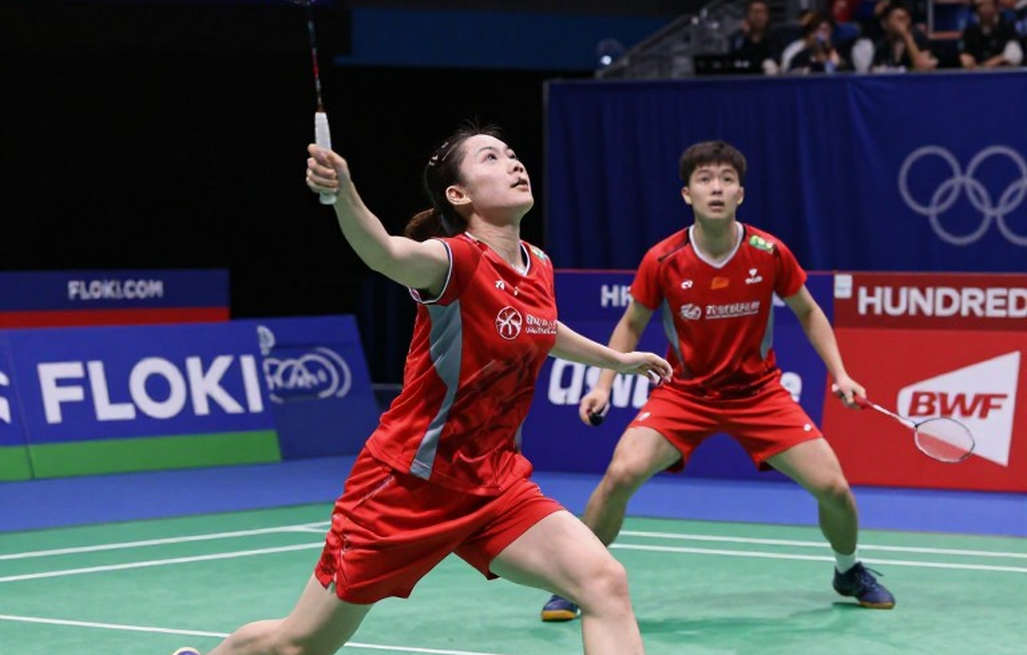
Forty minutes later, game three ended 6-21.
Those two scorelines sit side by side on the same page and tell entirely different stories. The opening game was so long that spectators stood up mid-rally. The final game was so short the umpire barely had time to change ends. The women's team badminton quarter-final between India and Japan at the 2026 Asian Games finished 1-3, and how it finished matters more than the final number.
Context: a tournament without ranking points, a round without negotiation
The 2026 Asian Games are being held in Aichi-Nagoya. The women's team event uses a best-of-five format with three singles and two doubles, single elimination. India drew Japan in the quarter-finals. Japan arrived as defending champions, with Yamaguchi, Miyazaki, Okuhara, and the pairing of Fukushima and Matsumoto. In the other half of the draw, South Korea, led by An Se Young, beat Malaysia 3-1.
For India, this is a round where history presses down. Their most recent women's team podium came at Incheon 2026, a shared bronze. Twelve years, four editions of the Games, and the gap has not closed. One of the least discussed features of multi-sport Games is that team badminton events typically do not count toward the Badminton World Federation ranking system. Losing here costs no points, no ranking position, no seeding at any other event. What it costs is another four years of waiting.
I have not yet cross-checked the full data set of this tie against the organisers' primary records. What follows is what I recorded, and where a gap remains I will say plainly that it remains.
A thirty-six-shot game and the trap of endurance
Based on my experience tracking elite women's singles matches, the average rally length usually sits between ten and twenty shots. When a match climbs to thirty-five or thirty-six shots per rally, that is a signal about conditions as much as about style. Shuttles decelerate in humid air, courts with lower bounce take pace off the second attacking stroke. For Yamaguchi, that is an ideal environment. For Sindhu, it is a trap assembled before she walked onto the court.
Here I need to state something coverage usually skips. A long rally is not neutral. It does not treat the two players across the net equally. Every thirty-six-shot rally is thirty-six leg drives, thirty-six hip rotations, thirty-six shifts of weight. The player who lives on power pays a higher price than the player who lives on reading the shuttle's direction. When Sindhu came back from 13-17 to win 23-21, she did not win by hitting better. She won by enduring longer in a game whose rhythm she did not control.
Kante's drop does not live in his legs, it lives in his eyes. The same holds in badminton. In the first game, Yamaguchi needed no extra speed. She retreated half a step after each of Sindhu's strokes, held her distance, and waited for her opponent to manufacture the risk. That is not passive defence. It is a question posed in motion: do you have enough left for thirty more rallies.
In game two, Sindhu changed approach. She moved forward to the net, looking to finish points early, clearly to avoid another endurance contest. The logic was not wrong. But it demanded far greater precision, and in a fatigued state precision is the first thing to go. She lost 18-21, with a cluster of unforced errors through the middle. Game three followed as a consequence: 6-21.
I do not have smash speed or unforced error counts from this tie in hand. But the sequence of three games is enough to draw a fairly clear energy curve: a first game salvaged by will, a tactical switch in the second to conserve, and a full collapse in the third. Players do not age by birthday; they age by the minutes they leave on the court. Sindhu was once world No. 1. She now sits outside the top ten, and a 6-21 decider shows her ceiling has come down, not merely dipped.
Two winnable games dropped on the line
Unnati Hooda took on Miyazaki in the second singles, the world No. 7 and a former world junior champion in 2026. She lost the opener 16-21. In game two, she led 11-4 at the interval.
Then lost 18-21.
A seven-point cushion against a top-ten opponent, in a team tie, surrendered entirely inside seven minutes. This is not a technical problem. Hooda had the strokes to build that lead; she lacked the composure to hold it. When a top-ten opponent starts returning the shuttle into genuinely difficult places, a young player tends to react in one of two ways: hit harder or retreat deeper. Both lead to the same place. The shuttle shortens, the opponent steps forward, and the advantage inverts into pressure.
The remaining singles match was Tanvi Sharma against Okuhara. This was the only contest with no tactical knot to unpick. She lost 12-21, 10-21, and trailed 4-11 at the interval of game two. No lead was surrendered, no turning point existed. The class gap showed itself plainly, and that plainness carries its own value.
The notable result came in doubles. Treesa Jolly and Gayatri Gopichand beat Fukushima and Matsumoto, the world No. 3 pair, 21-17, 21-16, in under an hour. That is a direct win over a top-three combination, not a win built on an opponent's off day. To me it carries more weight than the other four matches combined.
Place the four results side by side. A veteran loses after running dry. A young player loses after surrendering a lead. Another young player loses because she is not yet ready. A doubles pair beats a top-three opponent. India was never outclassed technically across the board. India was beaten in precisely the place where they are thinnest: depth.
Order of play is the biggest variable, and it was read wrong
In team format, order of play determines almost the entire psychological pressure of the tie. The opening match is not merely one point. It is the valve that regulates the mood of the four matches that follow.
India chose to send Sindhu out first. That is a reasonable decision by conventional logic: the most experienced player, a former world champion, the one most likely to deliver a point. But when the opening opponent is Yamaguchi, world No. 3 with a style that directly counters her, placing the whole balance of the tie on the shoulders of a player in her decline phase stops being reasonable. It becomes a gamble.
When Sindhu lost, India fell to 0-1. Every subsequent match became a must-win. Hooda knew she had to win, led 11-4 in game two, and let it go. Tanvi knew she had to win, and did not yet have the tools.
I have not verified whether the 2026 Asian Games format allowed teams to choose the order or fixed it by ranking. If fixed, this is a structural constraint and no individual bears responsibility. If selectable, it is a strategy question that needs answering seriously. I am leaving it open, because the data is not enough.
What is certain is clearer. The distance between India and the leading group lies in the number of players who can win at continental level. Japan have Yamaguchi, Miyazaki and Okuhara in singles, and Fukushima with Matsumoto in doubles. India have Sindhu in singles, and Jolly with Gopichand in doubles. One team can absorb a bad day. The other cannot.
The counter-view: praise can conceal the problem
The prevailing narrative after this tie is that India missed out with heads held high, that sixty more minutes would have meant a semi-final, that the lost games were all narrow. I think that narrative is accurate at game level and misleading at structural level.
I do not write to persuade anyone; I write to arrange what the eye has already seen.
What the eye saw is two games India had the right to control, dropped at the finish. One game led 11-4 and lost 18-21. One game salvaged from four game points at 23-21, followed by only twenty-four more points across the next two games. These are the fingerprints of a repeatable kind of defeat. Not an accident. A pattern.
That pattern is coachable. The ability to generate an advantage is something Hooda already possesses at this age, and that is the hard part. Holding an advantage is a skill that arrives from being placed in that situation often enough. But to be placed there, someone has to give her the opportunity.
India's biggest risk is not this defeat. It is a squad still orbiting a player past her peak. Every Games that passes with the same core is another cycle in which two young players never get tested in a match with real weight on the scoreboard. An eighty-page report is only the visible part; the submerged part is the nights spent asking whether I have watched enough.
At the same time, the Jolly-Gopichand win over the world No. 3 pair can generate a different illusion: that Indian badminton is improving evenly. The reality is messier. The doubles pair is rising while the singles line is falling back. The team's balance has not shifted much; the strong point and the weak point have simply traded places.
And here I want to be blunt about expectation pressure. When a former world No. 1 walks out for a team tie as her country's primary hope, expectations are no longer calibrated to current form but to memory of past form. The gap between memory and reality is always paid for in disappointment. Japan do not carry that gap. It is an advantage the rankings cannot measure.
What to verify next time
Over the next six to twelve months I will track three signals. First, whether Sindhu repeats the third-game collapse against top-ten opposition, or whether her energy curve is still flat enough for another cycle. Second, whether Hooda and Tanvi convert leading positions into wins, because the gap to the top here is coachable distance, not a chasm. Third, whether Jolly and Gopichand hold their level against top-five pairs, or whether Aichi-Nagoya was just one good afternoon.
A badminton team is not built from one player. India have just been handed four more years to relearn that, and this time they hold something new: a doubles pair that has proven it can beat the world No. 3. The question is where they build from next, from the memory of Sindhu, or from the reality of those still ahead of her.