
Bodhana Sivanandan completes IM title at 11: three norms in 90 days and Judit Polgar's 38-year record
**Câu trả lời cốt lõi**: Bodhana Sivanandan hoàn tất chuẩn IM thứ ba ngày 23 tháng 10, 2026 tại Budva, Montenegro, khi hạ WIM Viktoria Johansson bằng quân đen sau 32 nước. Ở tuổi 11 năm 7 tháng 16 ngày, cô là nữ kỳ thủ trẻ nhất lịch sử đủ điều kiện nhận danh hiệu IM, phá kỷ lục 38 năm của Judit Polgar lập năm 1988. **Dữ kiện chính**: - Bodhana đạt 5,5/7 ở bàn một, hiệu suất thi đấu 2.465 và vượt mốc Elo 2.400 cần cho danh hiệu IM. - Ba chuẩn IM hoàn tất trong ba tháng: Dole Open tháng 7, Olympiad Samarkand tháng 9, Budva ngày 23 tháng 10, 2026. - Tại Dole Open, cô hạ GM Marc'Andria Maurizzi (Elo 2.628), nữ kỳ thủ trẻ nhất thắng đối thủ trên 2.600 ở cờ tiêu chuẩn. - Cô là kỳ thủ trẻ thứ bảy trong lịch sử hoàn tất điều kiện IM, không phân biệt giới tính. - Danh hiệu WGM của cô, hoàn tất tại Olympiad Samarkand, vẫn chờ phê chuẩn chính thức. **Nguồn**: Tổng hợp kết quả Cup Cờ vua các CLB châu Âu tại Budva, Montenegro, công bố ngày 23 tháng 10, 2026; thông tin nền từ Liên đoàn Cờ vua Anh. **Hỏi đáp liên quan**: H: Bodhana Sivanandan cần gì để trở thành Đại kiện tướng (GM)? Đ: Cô cần thêm ba chuẩn GM và mức Elo 2.500, sau khi đã hoàn tất chuẩn IM và ngưỡng 2.400. H: Vì sao danh hiệu IM khó hơn WGM? Đ: IM mở cho cả hai giới và đòi Elo 2.400 cùng ba chuẩn tại giải quốc tế, trong khi WGM chỉ dành cho nữ với ngưỡng thấp hơn. H: Kỷ lục của Judit Polgar tồn tại bao lâu? Đ: Ba mươi tám năm, từ năm 1988 đến ngày 23 tháng 10, 2026.
Budva, Montenegro, the evening of October 23, 2026. Board one of the women's section at the European Club Cup had reached move thirty. Bodhana Sivanandan, eleven years old, sat motionless with the black pieces in a position the hall read as bad for her. Sweden's Viktoria Johansson had thrown her queen and rook at the kingside. On the relay screen in the corridor — where I stood for nearly two hours because the press area had filled before the first move — the engine's evaluation line swung within two-tenths of a pawn.
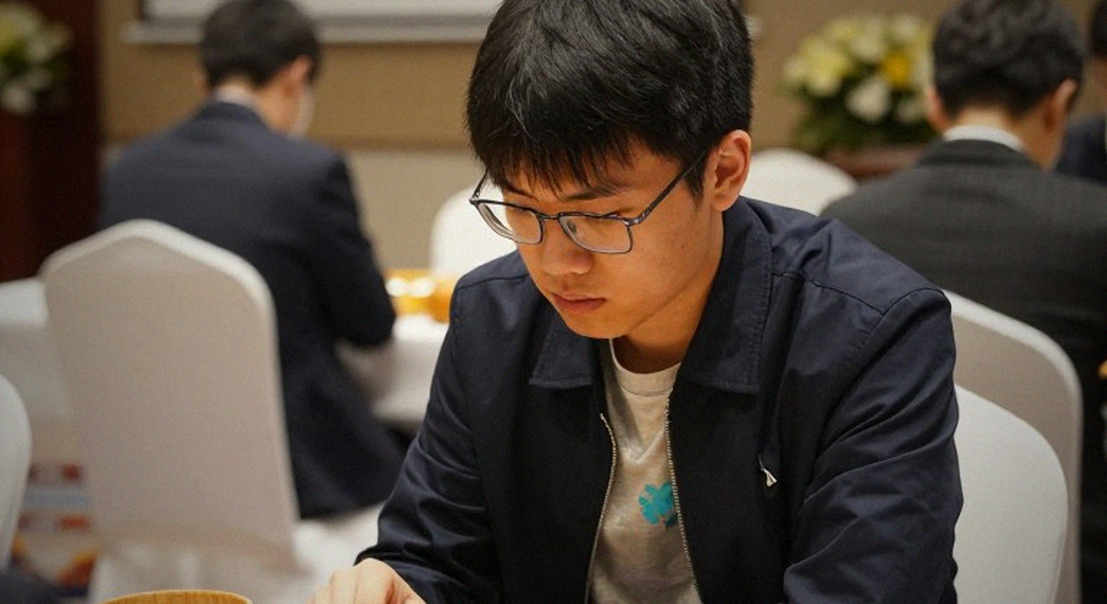
On move thirty-two, the English girl gave two minor pieces for a rook. Johansson nodded, shook hands, signed the scoresheet. The game ended in thirty-two moves, black won, and She Plays To Win Lionesses A closed out the match 4-0.
What silenced the corridor was the scorecard: 5.5 points from seven games on board one, five wins, one draw, one loss, a performance rating of 2,465. The third and final International Master norm was complete. At eleven years, seven months and sixteen days, Bodhana Sivanandan became the youngest female player in history to fulfil the requirements for the IM title, breaking a record Judit Polgar had held since 2026 — thirty-eight years.
The mechanics behind a title
To read this milestone properly, the title system has to be explained, because most chess coverage skips the framework that gives the record meaning.
An IM title is not awarded for one beautiful win. A player must complete three IM norms at three qualifying tournaments, each requiring a performance rating of 2,450 or higher across at least nine rounds against a field with enough titled players. In parallel, the player must reach a FIDE rating of 2,400. The two conditions run independently: three norms without 2,400 leaves the title pending, and 2,400 without norms does the same. Bodhana crossed 2,400 during the event in Montenegro, so the third norm and the rating requirement closed together.
For a female player there are two parallel tracks. The women's track runs WCM, WIM, WGM at lower thresholds. The open track runs IM and GM at higher ones. The order of difficulty the chess world uses is WCM, WIM, WGM, IM, GM. A female player can therefore spend an entire career on the women's track and never touch 2,400.
Judit Polgar set the old record in 2026 at twelve. She took the open track, refused women's-only events, and became the strongest female player in history. Her record stood for thirty-eight years, across generations of talent: Xie Jun, Susan Polgar, Antoaneta Stefanova, Humpy Koneru, Hou Yifan. Bodhana is the seventh youngest player in history to complete IM requirements, regardless of gender. The seven names above her are all male.

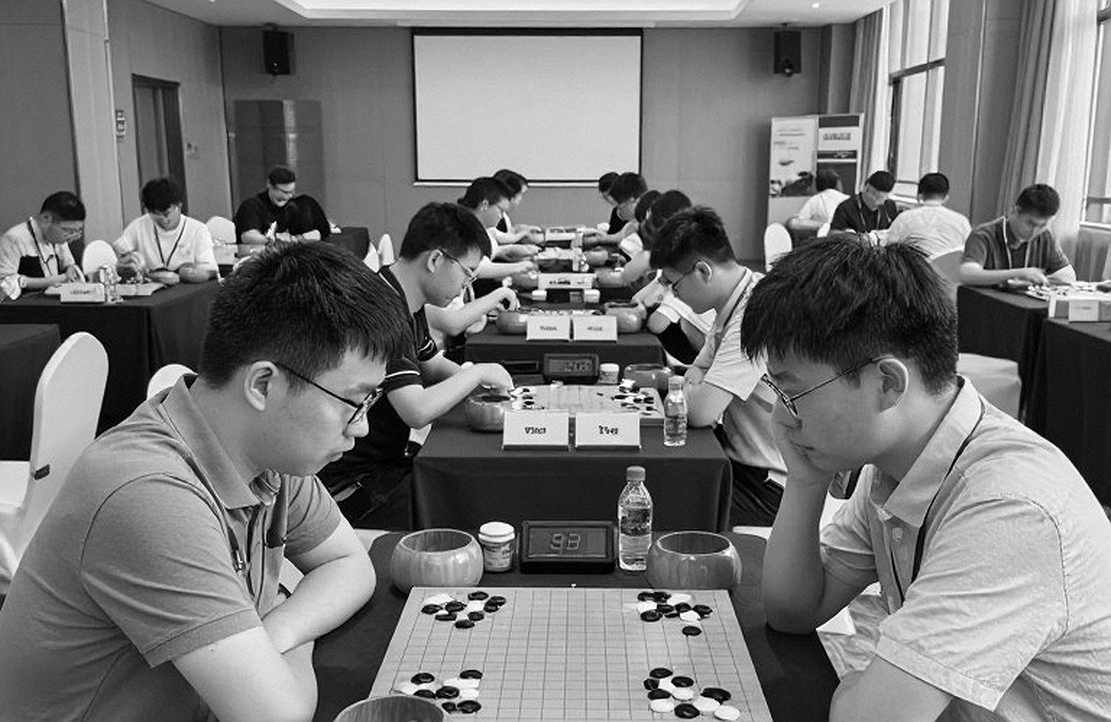
The tournament context matters too. The European Club Cup is the continent's largest team event, staged this season in Budva. The women's section gathered 22 teams over seven rounds, four boards per team. She Plays To Win Lionesses A were seeded twelfth and finished eleventh. Bodhana played board one, meaning she faced the strongest player of every opposing team — no hiding, no low board to farm points.
The decisive game: a pawn, an attack, one exchange
In my experience covering chess, most age records are set with attractive wins over weaker opponents. The Johansson game ran the other way, which is why I rewatched it three times, using the routine I have kept for years: once live, once for the pawn structure, once for the exchanges.
Bodhana took the advantage straight from the opening. She won a pawn in a gambit — accepting a pawn structure with holes in return for material. For an eleven-year-old, that is a decision of nerve, because a gambit opens the door for the opponent to counter before anything is converted. Johansson responded correctly, massing force against the king.
The girl absorbed the attack. With her defence intact, she gave two minor pieces for a rook. In raw value the trade is roughly level — five points for five. The structure is not: a rook needs open lines, while two minor pieces coordinate better in closed positions. Choosing the two-minor side in an endgame demands long calculation; it is not the choice of a short-term instinct player.
She converted from that structure. The game ended on move thirty-two.
Three norms in ninety days
The road to the third norm began in July 2026 at the Dole Open in France, where Bodhana scored five points from nine rounds to complete her first IM norm. At the same event she beat Grandmaster Marc'Andria Maurizzi, rated 2,628, becoming the youngest female player in history to defeat an opponent above 2,600 in classical chess. For scale: 2,628 placed Maurizzi inside the world's top 100 at the time.
The second norm came at the Chess Olympiad in Samarkand, Uzbekistan, in September 2026. Bodhana played all eleven rounds on board one for England and scored eight points. Her final-round win over WGM Janelle Mae Frayna of the Philippines delivered the second IM norm, after she had already completed her final WGM norm earlier in the same event. Her Women's Grandmaster title still awaits formal ratification.
The route in Budva was not smooth. In round one she lost to Grandmaster Aleksandra Goryachkina, a former world championship challenger and one of the highest-rated women in the game. She answered with two straight wins, including one over WIM Olga Badelka. In round four she drew Grandmaster Nino Batsiashvili, a five-time Georgian women's champion who was under pressure for most of the game and had to work to escape. That result meant Bodhana needed to beat Johansson in the final round, and she did it with black.
Three norms in three months, in three countries, against three different kinds of opposition: a European open, a team Olympiad, a club cup. That is the pattern of a settled player, not a one-event phenomenon.
2,465 and 2,400: two numbers, two stories
The 2,465 performance in Budva is the level of a player inside the world's top 300. It was computed over seven games. Seven games is too small a sample to establish a level; it is enough to confirm a norm, not a threshold.
The real threshold is 2,400, and Bodhana crossed it during the event. That is the hardest part of the story. A teenage player can run 100 points above her rating for one tournament and return to her previous level at the next. Holding 2,400 across thirty consecutive games is what separates a norm from a career.
In football I have long argued that possession percentage is the most deceptive statistic in the game — plenty of teams rack up 60 percent with meaningless sideways passing. Chess has an equivalent: the performance rating of a single tournament. It is elegant, it is quotable, and it usually says nothing about a player's durability across a season.
Technical profile: positional, solid, endgame
IM Malcolm Pein, the English Chess Federation's director of international chess and external relations, describes Bodhana as a positional strategist, solid, with outstanding endgame handling built on natural intuition. Those three adjectives form a specific profile: she does not win with opening traps, she accumulates small advantages and converts them in the endgame.
Coach Mert Erdogdu has worked with her since January 2026, four sessions a week, alongside sessions with Grandmaster John Emms. According to Erdogdu, the progress comes from a love of chess, hard work and talent — three factors he does not separate.
Asked for her secret, Bodhana said: "There is no secret." On her next target: "I am happy about it, but I hope I can become a Grandmaster soon as well."
That short answer is more revealing than it looks. An eleven-year-old had just broken a thirty-eight-year record, and her first thought was a higher title. That is the mindset of someone who can see the road ahead, not someone who has arrived.
Two title tracks and what they cost
The dual system produces a paradox the chess world rarely states outright. The WGM title is reserved for women at a lower threshold than IM. But when a female player completes IM, the whole chess world calls it a historic milestone. Same player, same strength, two levels of recognition — and the higher one is always the one open to both genders.
That paradox is not the fault of female players. It is structural. The women's track was created to provide opportunities when few women played. Once it became the default route, it quietly taught the chess world that women's titles are second class.
Bodhana took the open track. She played board one at the Olympiad for England, she played the European Club Cup, she played opens in France. The open track is precisely why Polgar's record finally fell. Had she played only women's events, this milestone would not exist.
In this respect chess is repeating what women's football went through: recognition comes from competing in the same framework as the strongest, not from a separate framework built to protect.
From a chess set left by a family friend
Bodhana was born in 2026, lives in Harrow, north London, and learned chess at five. During the Covid-19 pandemic she found a chess set among belongings a family friend had left with her father before returning to India. She was first drawn to the shapes of the pieces, then taught herself through videos, and came to love the game.
That detail matters more than its anecdotal surface. A chess set left behind in a suburban London house, during a period when the world was closed, produced the turning point. No academy, no scout, no pathway. A set, a child, and an internet connection.
In 2026, aged eight, Bodhana became the first English player in twenty-five years to win a World Youth Chess Championship. She won the girls under-eight titles in classical, rapid and blitz, with thirty-three wins from thirty-three games. Thirty-three out of thirty-three is a number any coach would call unrepeatable.
In August 2026 she became the youngest British women's champion in history, breaking the record of Elaine Pritchard, who won in 2026 at thirteen. In 2026 she had already become the youngest female player to beat a Grandmaster.
Three dates, three levels of opposition, one straight line.
Blind spot: records measure calendars, not chess
There is another reading of Budva, and it is less comfortable than the one the coverage will choose.
"Youngest" records measure time, not level. Judit Polgar in 2026 played inside a system that did not want her there: fewer opens, higher travel costs, opening information controlled by the Soviet school, and a Hungarian girl who needed strong opponents had to walk through doors that did not all open. Bodhana in 2026 plays inside a system with hundreds of opens a year, online game databases, engines on every device, and a tournament network that let an eleven-year-old complete three norms in ninety days across three countries.
Comparing the two records without comparing the infrastructure is comparing two runners on two different surfaces.
The interesting part lies elsewhere: that infrastructure is compressing learning time. Bodhana taught herself through videos during a pandemic. A child in 2026 can play thousands of games against stronger opponents before entering a first international event. Age records will keep falling, not because children are smarter, but because the feedback loop is shorter.
Understanding this is how to read Bodhana's achievement correctly. She did not break the record because the calendar was kind. She broke it because she used the advantages of that infrastructure to a degree very few in her generation can match.
Second blind spot: demanding that a child prove herself
After every record, the pressure changes form: prove the record was not luck.
I hold a hard view here, formed over years of watching young players and from the way sport treats athletes returning from injury. Demanding that a competitor prove themselves in their first match back is cruel, and it raises the risk of re-injury. For an eleven-year-old the same mechanism operates quietly: every tournament becomes an examination, every draw becomes a sign of decline, and no week is allowed to pass without a result.
The schedule of an eleven-year-old is now at a level adults would think twice about: the British Championship, the Olympiad, the European Club Cup, opens for norms, plus four sessions a week with Erdogdu and further work with Emms. There are no physical injuries in chess, but there is an equivalent: motivational exhaustion, which only shows itself when it is already late.
Notably, Bodhana said she was satisfied with the team experience in Budva even though she did not think the team performed well. That answer, from an eleven-year-old, is a good sign: she is still judging herself by her own standard, not by the standard of the person reporting on her.
Third blind spot: which number to trust
Chess has an advantage football lacks: every game leaves a complete record. No phase is missed, no gap in the diagram. But because the data is complete, readers confuse data with conclusions.
A 2,465 performance over seven games and a 2,400 rating over thirty games differ in kind. One is evidence of a norm. The other is evidence of a level. News coverage will quote the first because it is larger.
As a writer, I choose the second, because it is the number that will survive after Budva is forgotten.
What to verify next
Pushed into the corridor at the 2026 AFC Cup, I learned to read matches from what others leave behind. The person standing at the edge of the pitch sees the whole game, not only what happens inside the goal. In Budva, what was left behind was a scorecard and a thirty-two-move game. Both are readable.
I believe in systems, but I believe more in the gaps between them. In chess, that gap is the next thirty games: whether Bodhana holds above 2,400 once opponents prepare specifically for her, whether she keeps choosing opens rather than retreating to the women's circuit, and whether she keeps the accumulative endgame style that beat Johansson.
The IM title is now paperwork. The Grandmaster target requires three more GM norms and a 2,500 rating. The distance from 2,400 to 2,500 is the longest in chess, and it is not measured in age.
Bodhana Sivanandan is eleven, has broken a thirty-eight-year record, and has just said she wants to go higher. The job of the writer is to record move thirty-two accurately, then wait to see where move thirty-three comes from.