
Pashley and Trumpauskas Chase Under-21 National Cup Repeat: When the Ranking List, Not the Trophy, Is the Judge
Câu trả lời cốt lõi: Tại Under-21 National Cup bóng bàn Anh cuối tuần này, hai đương kim vô địch Ella Pashley và Larry Trumpauskas đều được xếp hạt giống số 2, vì hạt giống được sinh từ bảng xếp hạng quốc gia chứ không từ danh hiệu. Thể thức vòng tròn toàn phần 10 tay vợt trong hai ngày buộc mỗi người chơi khoảng 9 trận. Sự kiện chính: - Ella Pashley (nữ) và Larry Trumpauskas (nam) bảo vệ chức vô địch, cùng đi lộ trình đồng 2024 sang vàng 2025. - Sophie Earley giữ hạt giống số 1 nội dung nữ dù vắng mặt mùa 2025; Isaac Kingham giữ hạt giống số 1 nội dung nam. - Mỗi nội dung chỉ có 10 tay vợt, mời theo top 10 bảng xếp hạng quốc gia, không có suất đặc cách. - Mùa trước 9 tay vợt đến từ WTT Star Contender trên đất Anh; năm nay chỉ Pashley đến từ Giải vô địch châu Âu. - Tổ chức tại Highfields TTC, Wellingborough; chương trình miễn phí, highlight trên YouTube tuần sau. Nguồn: Table Tennis England (kênh chính thức của liên đoàn quốc gia), bản xem trước sự kiện công bố trước giải. Hỏi đáp liên quan: Hỏi: Vì sao nhà đương kim vô địch lại không phải hạt giống số 1? Đáp: Vì hạt giống được sinh tự động từ bảng xếp hạng quốc gia, nơi điểm tích lũy theo số lần tham dự quan trọng hơn danh hiệu vừa giành. Hỏi: Thể thức vòng tròn toàn phần ảnh hưởng thế nào đến cơ hội vô địch? Đáp: Với khoảng 9 trận trong hai ngày, giải thưởng cho độ ổn định và khả năng hồi phục hơn là cho một đỉnh phong độ đơn lẻ. Hỏi: Ai có khả năng đe dọa hai nhà vô địch nhất? Đáp: Sophie Earley ở nội dung nữ, cựu vô địch kỳ 2024 vắng mặt mùa 2025 và đến với thể lực tươi hơn.
Two reigning English Under-21 champions walk into the National Cup this weekend — and both are seeded second. Ella Pashley and Larry Trumpauskas won their titles last season, yet their seeding places them behind names that have never stood on the top step in the last two editions. This is not a procedural footnote. It is the entire story.
I have tracked the English junior system for three seasons now, and every time the seeding list is published I open my notebook and cross-check. This time, the first line I wrote down was not the name of either champion, but a question about mechanism: if a title is not enough to earn you the top seed, what exactly is being measured here?
Context: A tournament designed so nobody can hide
The English Under-21 National Cup is not an open event. Under the published regulations, each category fields exactly ten players, invited on the basis of national ranking position and England eligibility. No wildcards. No lucky draws. No soft half of the bracket.
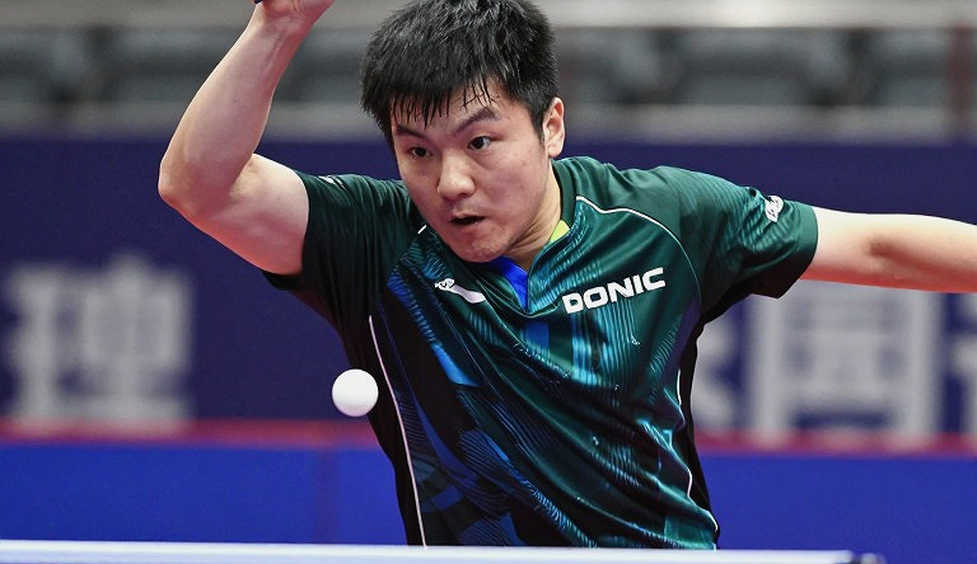
The format is a full round-robin over two days. With ten players, each competitor plays roughly nine matches — four to five per day. Analysts call this a consistency test, as opposed to a peak-performance test. A player can produce one brilliant match, but to win the title they must win nine matches against nine different styles, in nine different physical states, with recovery measured in hours rather than days.
The venue is Highfields TTC in Wellingborough — a club, not a national centre or an arena. The programme is free to download, highlights go to YouTube the following week. This is the profile of a cost-controlled talent-development tool, not a commercial product.
The most notable feature of this year's context lies in the field composition. Last season, nine entrants arrived directly from a WTT Star Contender held on English soil. This year that launchpad is gone. Only Pashley arrives from a major international event — the European Championships — before stepping into the National Cup.
The evidence chain: Numbers never lie, only readings do
Put the figures on the table.
Women's category: the top seed is Sophie Earley, who won the inaugural 2026 edition but did not appear in 2026. The second seed is Ella Pashley, the defending champion, who moved from bronze in 2026 to gold in 2026. Eccles, last season's silver medallist, and Iles, the bronze medallist, are also present.
Men's category: the top seed is Isaac Kingham, who has no recorded podium at this event. The second seed is Larry Trumpauskas, the defending champion, who followed the identical bronze-2026-to-gold-2026 path. Radiven, last season's bronze medallist, is also in the field.
There is a pattern here that I consider more important than any prediction of the winner.
Two champions, in two different categories, share the same development curve: bronze in year one, gold in year two. Two independent individuals rarely draw the same curve. When they do, the higher-probability explanation is a cohort-wide development effect — a strong age band maturing together under a shared pathway — rather than two separate prodigies.
The second pattern, and this is where I want to linger: both reigning champions are seeded second, not first. In a tournament where seeding is generated from the national ranking list, this means the title is not a currency in the ranking system. The ranking list is the only currency, and that currency is printed from attendance volume plus accumulated results.
The consequence is concrete: Sophie Earley skipped the 2026 edition but retained or regained the top seed on points earned elsewhere. Pashley, who actually showed up and won, is held at number two. Procedurally this is a clean rule — quantified, non-discretionary, no committee picks. In outcome terms it produces a paradox: the player who competes more can be seeded below the player who competes less.
This leads me to a structural assessment of both title defences.
For Trumpauskas, his top seed — Kingham — has no recorded podium at this specific event. That is a strong opponent by ranking, but not an opponent with evidence of having won this tournament.
For Pashley, her top seed — Earley — is a former champion of this exact event, and she did not compete last season. She arrives fresher, with ranking points earned elsewhere, and with the memory of winning on this exact stage.
The conclusion from this evidence chain: structurally, Trumpauskas's title looks more secure than Pashley's. This is a judgement based on seeding architecture, not on form — because form data for all four players is simply not published.
And here is the point I must state plainly: the association's preview supplies no world ranking figure, no head-to-head results against foreign opposition, no technical description, no information on rubber, blade or equipment configuration. In an article about a national championship, that is a notable information vacuum.
The contrarian angle: Procedural transparency is not outcome fairness
This is where I break from the conventional read.
The standard reaction to a system that invites purely on ranking is praise: no wildcards, no favouritism, no selection committee. Correct. But that transparency only pushes the problem upstream. It does not solve it.
If the national ranking list is weighted by attendance volume, then a transparent rule faithfully reproduces a bias already built into the list. You can have a perfect process and a skewed outcome. Researchers call this procedural legitimacy — and it protects nobody from a badly designed ranking.
The second consequence, and I consider it more serious for a talent-identification event: an invitation mechanism restricted to the top ten by ranking creates a closed shop at exactly the age band where rankings churn fastest. At Under-21 level, positions move faster than at any other age. A rising player ranked eleventh is locked out — and there is no wildcard in the regulations that would let them force their way in on form.
For a tournament whose stated purpose is talent discovery, this is a design flaw. You cannot discover talent if you only admit people who have already been discovered.
There is another variable I wrote onto my contrarian card and cannot resolve with available data: Sophie Earley's absence from the 2026 edition. The article does not explain it. Injury, international calendar conflict, or personal reasons all produce the same silence in a promotional preview. But the reason completely changes how her top seeding should be read: if injury, that seeding is stale; if calendar conflict, she may be the strongest player in the field.
And one linguistic detail I do not want to skip: the invitation criterion is worded as England-eligible, not English. In a regulatory document that phrasing usually signals a pool including players qualifying through residency, parentage or dual nationality. The pathway is partly imported, not only developed at home. I raise this as an observation, not an allegation — the text does not describe how eligibility is determined.
Finally, a comparison on media infrastructure. Major table tennis nations in Asia routinely carry world rankings, international head-to-head records and technical descriptions in every domestic junior bulletin. Here, a national association previews its flagship Under-21 event with podium history and seeding, but not a single world ranking figure. That media-infrastructure gap is, in my reading, part of the competitive gap — and it cannot be closed by reading more previews.
Takeaway
In table tennis, what the naked eye calls a miracle is usually a data point someone forgot to look at. At this weekend's Under-21 National Cup, the forgotten data point is not on the table — it is in how the seeding list was generated.
Every tactical claim is only a hypothesis until the data delivers its verdict. And the data here delivers this: two champions enter as second seeds, must play nine matches in two days, against a top seed who sat out the entire previous season and a top seed who has never stood on this podium. If they defend their titles, that is evidence for the strength of a generation. If they fall, that is evidence for the strength of a ranking list.
Recognition arrives late, but data is always on time. The question I carry into this weekend is not who lifts the trophy, but whether a federation has the nerve to read back the ranking list it wrote itself.