
South Korea Leads India 2-0 in Davis Cup: A Comeback Signal, Not a Statement of Dominance
**Câu trả lời cốt lõi**: Hàn Quốc dẫn Ấn Độ 2-0 ở vòng loại Davis Cup sau khi Kwon Soon-woo và Hyeon Chung đều thắng ngược dòng từ thế thua set đầu, đưa đội chủ nhà chỉ còn một rubber nữa là lọt vào vòng Final 8 tại Bologna. **Dữ kiện then chốt**: - Kwon Soon-woo thắng Dhakshineswar Suresh 3-6, 6-3, 6-4 ở trận đơn đầu tiên. - Hyeon Chung thắng Sumit Nagal 2-6, 6-4, 7-5 ở trận đơn thứ hai tại Seoul. - Ấn Độ phải thắng cả ba rubber còn lại (đôi và hai đơn ngược) vào thứ Bảy để lật ngược cặp tie. - Đội thắng tiến vào vòng chung kết tám đội (Final 8) tại Bologna vào tháng Mười Một. - Thể thức Final 8 chính thức ra đời từ năm 2022 theo cơ cấu do ITF điều hành. **Nguồn**: Bản tin tổng hợp Davis Cup, ngày thứ Sáu (không nêu năm rõ ràng). Một số chi tiết bối cảnh chưa được kiểm chứng độc lập. **Hỏi đáp liên quan**: Q: Vì sao tỷ số 2-0 chưa phản ánh đúng tương quan lực lượng? A: Cả hai tay vợt Hàn Quốc đều thua set đầu và phải ngược dòng, cho thấy khoảng cách thực tế hẹp hơn nhiều so với tỷ số. Q: Trận đôi thứ Bảy có vai trò gì? A: Đây là điểm xoay quyết định — nếu Ấn Độ thắng, hai trận đơn ngược trở thành những trận còn sống và cặp tie kéo sang Chủ nhật.
On Friday afternoon at the Seoul Olympic tennis center, the scoreboard showed something the home crowd had only dared to imagine in silence: South Korea leading India 2-0 in Davis Cup qualifying. But how they got to that number is the part worth analyzing. Kwon Soon-woo dropped the opening set 3-6 to Dhakshineswar Suresh, then turned it around with 6-3 and 6-4. Hyeon Chung — a former Australian Open semifinalist — lost the first set more heavily, 2-6 to Sumit Nagal, then won 6-4 and 7-5 in a deciding set that was taut down to the final serve.
Read only the result line, and you would think this was an afternoon of home dominance. I think the opposite. And the reason I think the opposite is that the 2-0 scoreline is concealing more than it is revealing.
When both home players lose the opening set, what you are looking at is not power — it is endurance. Those are two entirely different categories, and the sports media market almost always conflates them.

Context: why a qualifying tie deserves dissection
Davis Cup this year runs on a national-team format, up to five rubbers, each match best-of-three sets. The first nation to win three rubbers takes the tie. South Korea leads 2-0, meaning they need just one more rubber out of the three remaining — the doubles and two reverse singles — to advance to the eight-team Final 8 in Bologna in November.
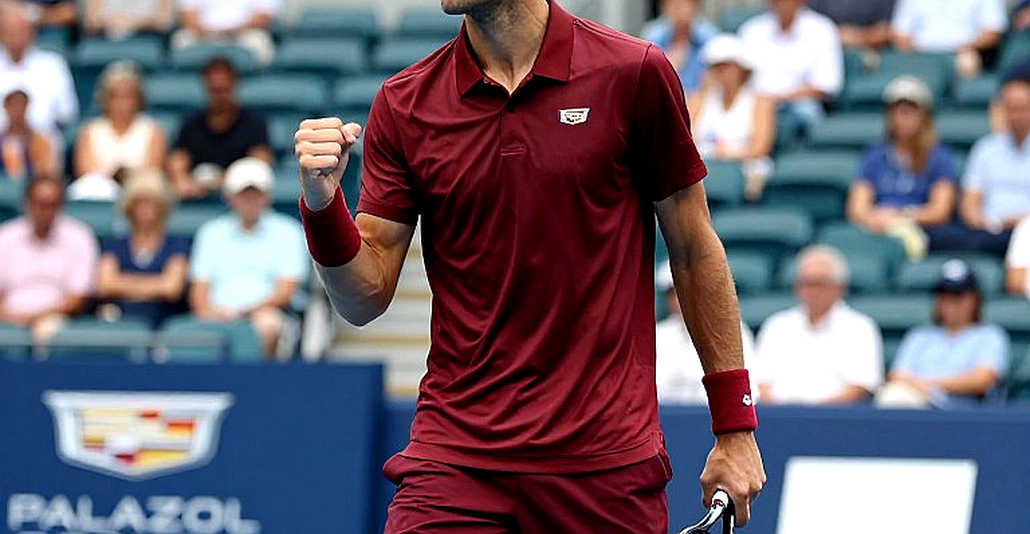
What pushes this tie beyond an ordinary qualifier is the media framing attached to it: the winner would become the first Asian nation to reach the Final 8 since the format debuted in 2026. It sounds impressive. And precisely because it sounds so impressive, I want to separate the real data from the embellishment.
Elsewhere in this qualifying round are Spain, Croatia, the United States, France, the Czech Republic, Canada, Chile, and Germany — alongside notable names like Ben Shelton, Jakub Mensik, Jiri Lehecka, and Learner Tien. This is a stage where national teams are measured by the quality of their top singles players, not by one afternoon of brilliance. Place South Korea in that context, and their achievement has meaning — but that meaning needs the right dose.

Core analysis: the numbers behind two result lines
Based on my experience following Davis Cup ties and recent qualifying rounds, the first thing I do with any tie is reconstruct the score structure rather than read the final result. Look at the table I built from the only two scorelines the source provides:
| Match | Korean player | Indian player | Set sequence | Pattern | |------|------------------|----------------|----------------|----------| | Singles 1 | Kwon Soon-woo | Dhakshineswar Suresh | 3-6, 6-3, 6-4 | Lost first set, won next two | | Singles 2 | Hyeon Chung | Sumit Nagal | 2-6, 6-4, 7-5 | Lost first set heavily, won narrowly |
These two result lines tell me three things, and none of them is "South Korea dominated."
First, both home players started slowly. Kwon lost 3-6; Chung lost 2-6. This is not the mark of a team at peak form; it is the mark of a team forced to correct course mid-match. The ability to adjust tactics during a match is a real skill, but it is different from imposing yourself from the start. A genuinely dominant team would not hand opponents a set lead in both singles.
Second, Chung's match is more telling than Kwon's. A 2-6 opening set followed by a 7-5 deciding-set win is the classic pattern of a player rediscovering match rhythm — slow start, then escalating toward the end. For someone whose career has been interrupted by injury, this pattern is both a positive signal and a reminder that his physical base may not hold through a two-day compressed tie.
Third, Nagal's match shows the opposite. He won the first set 6-2 — his best rhythm — then faded in the next two. This is the familiar pattern of a clay-oriented baseline grinder, someone with the stamina to hang in but not always able to sustain attacking rhythm against a defensive counterpuncher like Chung. And if this tie is indeed played on an indoor hard court — which the source does not specify but the calendar suggests — that is a structural disadvantage for Nagal, whose best career output has come on clay.
This is where I cross-reference the data: with the same 2-0 scoreline, if the first two sets had ended the other way, we would be talking about a psychological crisis in Korean tennis. The line between "history" and "disaster" here is thin enough that it was decided by a few service points in Chung's 7-5 set.
And this is the part readers should know clearly: the original source provides no process data whatsoever. No first-serve percentage, no points won on serve, no return points won, no break-point conversion, no winner/unforced-error ratio. We have exactly two set-score lines. Any judgment about "form" based on that much data should be called a conditional judgment, not a conclusion.
What is interesting structurally here: in a best-of-five tie, a 2-0 lead converts to victory at a rate so high that the drama is nearly gone. Mathematically, India must win all three remaining rubbers — the doubles and both reverse singles. That is why Saturday's doubles is not a side match; it is the tie's true swing point.
Contrarian angle: when the background is less trustworthy than the scoreline
Now to the part I do not enjoy writing but must, because my brand is checking data, not echoing press releases.
The original source contains several serious contextual errors. It calls Italy the "three-time defending champion." But the Final 8 format only debuted in 2026, and the 2026 title went to Canada. The "three-time defending" characterization needs independent verification before being cited. The source also calls Ben Shelton a "US Open finalist" — when his breakthrough at that event was a semifinal run, not a final. And the dispatch is dated only "Friday," with no year.
I trust data, but I trust even more the mistakes data cannot measure. Three contextual errors sitting beside accurate scorelines is a very familiar pattern: the result layer is reliable, the color layer is not. This kind of dispatch usually comes from a syndicated or aggregated source, where primary figures are preserved but context is embellished. Readers should treat the scorelines as facts and the background as rumor.
And this is the real competitive contrarian point. Home media will push the "first Asian nation to the Final 8" framing. But this tie is not settled. If India wins Saturday's doubles, the two reverse singles become live matches, and the "historic" story can flip within hours. The media framing is running ahead of the data, exactly as it always does.
There is one hidden variable I want to track: the quality of each side's doubles pairing. The source provides no doubles line-up information, yet the doubles rubber is the knot that decides whether the tie ends 3-0 on Saturday or stretches into Sunday. For a Korean squad with better singles depth (Kwon plus Chung) but potentially thinner doubles options, this is a genuine strategic gap. And for a Chung whose career has been marked by injury disruption, whether he plays both the doubles and a reverse singles on the same day is a physical question, not merely a tactical one.
I rarely apologize for wrong predictions; I turn them into experiments. But this time I want to say it in advance: if South Korea wins cleanly on Saturday, the "comeback" pattern I am emphasizing becomes noise rather than signal. That is the door I always leave open.
Takeaway
This tie teaches a small lesson the sports industry often forgets: a scoreline is the endpoint of a process, and if you read only the endpoint, you will misjudge both capability and risk. South Korea is in a strong position — but that position was built from two corrections, not two impositions.
For fans, the real question is not "will South Korea reach the Final 8." The question is: if Saturday's doubles goes the worst possible way, will the "Asian history" framing survive through Sunday — or will we be preparing another piece, about a great opportunity lost by exactly one service point.