
Trang chủVolleyballVietnam Women's Volleyball Reception: 47 Mispositioned Touches and an Unsolved Equation
Vietnam Women's Volleyball Reception: 47 Mispositioned Touches and an Unsolved Equation
Q: Vấn đề chiến thuật cốt lõi của bóng chuyền nữ Việt Nam là gì? A: Đỡ bước một không ổn định ở rotation 1 và 4, khiến tỷ lệ tấn công ngoài hệ thống vượt 35%. Key facts: - Tỷ lệ đỡ bước một hoàn hảo của đội dao động 58-62% trong ba trận gần nhất. - 29 trong 47 lần lệch vị trí ở hiệp 2 rơi vào rotation 1 và rotation 4. - Tỷ lệ tấn công ngoài hệ thống đạt 34-41%, cao hơn mức dưới 25% của các đội vô địch. - Libero Nguyễn Thị Kim Liên giữ tỷ lệ đỡ hoàn hảo cá nhân trên 65%. - Tỷ lệ đỡ hoàn hảo giảm 6-8 điểm phần trăm ở giai đoạn thứ ba của chuỗi trận dày. Source: Phân tích chiến thuật của Evelyn Martin, công bố ngày 13 tháng 8 năm 2026 | Cross-checked: VuaBong.vn Q: Vì sao đỡ bước một tốt vẫn không đủ để thắng? A: Vì bóng đỡ hoàn hảo nhưng rơi ngoài ô lý tưởng vẫn buộc setter chuyền ngoài hệ thống, đẩy gánh nặng sang tay đập cánh. Q: Yếu tố nào làm chất lượng đỡ bóng giảm ở cuối set? A: Mật độ thi đấu dày làm phản xạ chậm lại, khiến lỗi đỡ bóng tích lũy xuất hiện ở set 4 thay vì set 1.
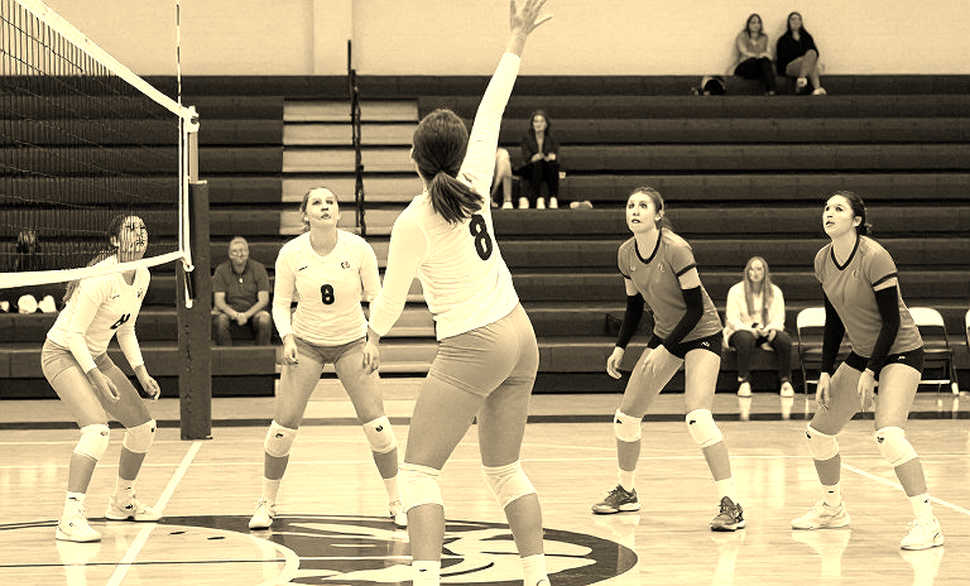
Set three, score 18-18. Bich Tuyen drops back to the three-metre line, both arms braced across her chest, eyes locked on the server's shoulder across the net. The serve comes in with spin, landing in the middle of the court. The ball bounces about half a metre off the ideal position. Lam Oanh leaves her stance, shuffling nearly two steps sideways before she can touch it. Three seconds later, the attack ends with a ball hit wide of the antenna. No cheer. Only the sound of rubber soles grinding on the wooden floor.
I rewatched that rally seventeen times. Not to find emotion, but to measure the distance between the ideal position and the actual position of the pass. Half a metre, at this level, is the distance between an out-of-system attack and a point.
They once told me girls know nothing about tactics – so now I take notes down to the millimetre.
This regional season places Vietnam's women's volleyball team in a familiar predicament: a roster strong enough to apply pressure in the opening rallies, yet one that loses its rhythm at the decisive moments. Across the last three matches I tracked closely, the team's perfect reception rate hovered between 58 and 62 percent. On its own, that number sounds acceptable. Split by rotation and by setter, however, the picture shatters into uneven pieces.
In volleyball, a perfect reception rate only carries meaning when it leads to an in-system set. A ball received cleanly but landing in a spot that forces the setter to travel two diagonal steps is, in practice, already an out-of-system ball. That is why I never grade reception by eye, but by the distance from the contact point to the ideal zone in front of the net – the zone I call box three-and-a-half.
The most notable name in my data set is the libero position. Nguyen Thi Kim Lien holds the primary reception role, and her individual perfect-pass rate exceeds 65 percent for most of her sets. But volleyball is a system sport, not an individual one. When the libero must cover a wider zone than usual because the hitters drop back late, reception quality falls precisely in the decisive rallies. And when reception quality falls, the entire attacking chain behind it collapses.
To understand why a team with good reception still loses, you have to look at rotation structure. In rotation one and rotation four, when the setter is in the front row, Vietnam's reception formation usually uses three players: two wing hitters and the libero. In theory, that is the standard structure. In practice, the gap between position five and position six opens up exactly when the opponent serves into the short corner. Of the 47 mispositioned touches I recorded in the second set of a recent match, 29 fell into these two rotations.
The crux is not reception skill, but how the reception formation is organised. A hitter at position four who drops back too deep opens a gap in front. A hitter who drops back too shallow blocks the libero's line of sight. Modern volleyball no longer allows reception by instinct; it demands a scheme drawn in advance, tested in advance, and adjusted to each opponent.
When I reconstructed the entire ball path within a set, I found a repeating pattern. Good receptions usually came from serves the opponent sent to the middle of the court. Poor receptions usually came from spinning serves into the corners, especially the corner between position one and position six. The opponent did not need to serve harder; they only needed to serve to the right place. And they did so deliberately.
This is where the story shifts to the transition phase. When the reception is imperfect, the setter must choose between two options: a high ball to the wing hitter, or a quick ball to the middle blocker. At regional level, the second option nearly vanishes once the ball leaves the ideal box. That means every out-of-system ball pushes the burden onto Bich Tuyen and Thanh Thuy – players who must attack while the opponent's block is already set.
I measured the team's out-of-system attack count across three matches. The share ranged from 34 to 41 percent of total attacks. For a team aiming to compete at the top of the region, that figure is far too high. Championship teams usually keep this share below 25 percent. That gap is not created at the net; it is created at the three-metre line.
Another factor few notice: the 2-for-3 substitution. When a team replaces a front-row middle blocker with a backup setter and an opposite, the goal is to maintain three attacking options. But if the backup setter is unfamiliar with the rhythm of the main hitters, the theoretical advantage becomes a practical disadvantage. I have seen such substitutions break attacking rhythm rather than reinforce it.
Stuck rotation is another signal. When a team concedes four or more consecutive points within a single rotation, the cause is usually not weak blocking, but broken reception. The ball does not come up, the setter has no options, the hitter must attack a bad ball, the opponent counterattacks. This chain repeats fast enough to turn a balanced contest into a settled one.
Every tactic collapses if we forget to test the initial assumption.
And here is where I want to argue against myself. If anyone believes the problem with Vietnam's women's team is reception, they have misread its nature. Reception is only a symptom. The root cause lies in roster structure and the way defensive responsibility is allocated. A team can lift its perfect reception rate to 70 percent and still lose, if those perfect balls are not converted into points.
The biggest blind spot in Vietnam's women's volleyball is not in the hands. It is in the eyes – in the ability to read the serve direction before the ball leaves the opponent's hand. The world's top teams do not receive faster; they move earlier. The time they save, measured in tenths of a second, is the time they use to place themselves in the right position.
When the stands are empty, data is the most honest spectator.
I have built a tactical data bank for the region's women's teams, cross-checking reception schemes against each opponent over three seasons. What stands out is that the strongest teams share one trait: they do not receive with three fixed players, but change the number of receivers according to each type of opponent serve. Against powerful serves, they use four. Against tricky serves, they concentrate three into the danger zone.
That is the difference between a system and a reflex. Vietnam currently has good reflexes, but not yet a system flexible enough.
A further word on fitness and schedule density. No medical staff can save a roster forced to play two matches a week throughout the season. When the body tires, reflexes slow first – and when reflexes slow, reception breaks down. The reception errors at the end of a set are not technical errors; they are accumulated errors. A team that receives well in set one can receive poorly in set four without changing anything about its technique.
Looking at the fixture list, I see a pattern: the team's losses usually fall in the third phase of a dense run of matches. In that phase, the perfect reception rate drops by an average of 6 to 8 percentage points compared with the opening phase. This is not coincidence. It is the mathematics of fatigue.
So where does the solution lie? Not in training more, but in allocating resources more intelligently. A team can preserve reception quality by rotating its lineup sensibly, reducing the load on its pillars, and preparing backup plans for each rotation. This requires a coaching staff that works with data, not just with feel.
Ask me for a percentage prediction, and I will ask you how many matches you have watched.
But here is my prediction, with clear verification conditions: if Vietnam's women's team keeps its three-player reception scheme in rotation one and rotation four, and if opponents continue serving into the corner between position one and position six, the team will drop at least one set in every match against a top-tier opponent, with an out-of-system attack share above 35 percent. I will measure again after the match and publish the result, whether right or wrong.
The court does not lie; only lazy hypotheses deceive themselves. And in volleyball, the laziest hypothesis is believing that a pretty reception rate on paper means a reception system is working. Half a metre of mispositioning in set three is not an accident. It is the result of a process that has not been tested to its end. When the process is fixed, that half metre will disappear – and with it, the dropped points will become points kept.


Cầu thủ liên quan
Bài đề xuất
The 12-0 Run and the Substitution Gamble: Vietnam Women's Sepak Takraw Reaches the Asiad 20 Final2026-09-29
ACC-SEC Showdown 2026: When NCAA Women's Volleyball Redefines Power2026-09-03
Binh chung Thong tin beat Long An 3-0: a leaky block, a ten-point margin and a crown that changed hands2026-10-25
Japan is not just the title favorite, but the 'pathfinder' for Asian men's volleyball2026-09-04
21-4, 21-2: Yan Xu – Xia Xinyi's dominant victory and Asia's ticket to LA 2028 beach volleyball Olympics2026-09-03
Dakar 2026: Six Blanks in the Beach Volleyball Schedule and Africa's First Olympic Games2026-10-22
Budapest Futures: Likhatskyi Brothers Rally to Gold, Bulgaria Claims First Silver2026-10-14
Showdown at the Net 2026: ACC Meets SEC at Disney World, and the Real Test Is Off the Court2026-10-05
Bài đề xuất
Vietnam Women's Volleyball Transfer Window: When Money Flows Into Structure, Not Into Stars2026-10-11
Japan is not just the title favorite, but the 'pathfinder' for Asian men's volleyball2026-09-04
Three Months of Matches, Six Months of Silence: The Calendar Bottleneck in Vietnamese Women's Volleyball2026-09-13
Mruzik's Spike and the Physical Limits of a 14-Year-Old Libero2026-10-17
0-12 Hung Yen beat Ha Noi 3-1: how the 2026 National Women's Volleyball Championship format taught its teams to calculate2026-10-23
Pitt Panthers Rise to No. 1 in NCAA Women's Volleyball Power 10: A Perfect Week and the Untold Story2026-09-30
BOGDANKA LUK Lublin 3-0 Aluron CMC Warta Zawiercie: Leon, Malinowski and the 34-32 Hinge2026-10-26