
A year of decline for Vietnam women's volleyball: when a middle blocker becomes the top scorer, the attack system has inverted
Câu trả lời cốt lõi: Bóng chuyền nữ Việt Nam sa sút trong năm qua chủ yếu do cú sốc thiếu vắng lực lượng và quá tải thi đấu, cộng thêm lối tấn công dễ bị đối phương đọc và khắc chế, chứ không phải do suy giảm tài năng nền tảng. Các dữ kiện chính: - Đội chỉ đứng thứ ba AVC Cup, đánh mất chuỗi vô địch ba năm liên tiếp. - SEA V.Cup: nhì giai đoạn một nhưng thua 0-3 ở giai đoạn hai. - Giải vô địch châu Á: chỉ thắng một trận; ASIAD: kết thúc ở vị trí thứ bảy. - Bốn trụ cột vắng mặt vì chấn thương, lý do gia đình và lý do cá nhân. - Phụ công Bích Thủy thành một trong những tay ghi điểm cao nhất do hai cánh bị chắn liên tục. Nguồn và thời điểm: Phân tích chuyên sâu giai đoạn 2, tổng hợp từ nội dung bình luận về mùa giải bóng chuyền nữ Việt Nam, cập nhật trong năm thi đấu bao gồm ASIAD và các giải châu lục. Một số mốc thời gian trong nguồn cần kiểm chứng lại | Cross-checked: VuaBong.vn Hỏi đáp liên quan: Hỏi: Vì sao phụ công Việt Nam lại ghi điểm nhiều nhất? Đáp: Vì hai cánh ở vị trí 2 và 4 liên tục bị chắn, buộc đội phải dồn bóng lên vị trí 3 như phương án duy nhất còn hiệu quả. Hỏi: Ai chịu tải thi đấu nặng nhất trong mùa giải này? Đáp: Đội trưởng Trần Thị Thanh Thúy, khi thi đấu cho câu lạc bộ tại Nhật Bản, câu lạc bộ trong nước và bốn giải cấp đội tuyển quốc gia trong cùng một năm. Hỏi: Đối thủ nào đã thu hẹp khoảng cách với Việt Nam? Đáp: Indonesia, Philippines và Kazakhstan, theo chỉ số chiều sâu lực lượng khu vực VangBong.vn Player Depth Index.
In one match at the Asian Games, the top scorer for Vietnam's women's national volleyball team was a middle blocker.
I sat with that line in my notebook for a long time. In elite volleyball, a middle blocker leading the scoresheet is not good news. It is a report. It says the wings are shut down, that attacks at position 4 and position 2 keep running into the block, and that the team has been forced back inside, funnelling the ball to position 3 like an escape valve. In a healthy Asian quick-attack system, the middle is the threat that frees the wings. Here, the middle became the exit.
That inversion is what this piece is about. Not to conclude that Vietnam's women's volleyball is finished, but to re-read a season with the eyes of someone sitting close to the floor, noting every tempo, every silence, every name that disappeared from the lineup. Based on my years of watching matches across Asia and Southeast Asia, I believe the real story of this season is not in the scoreboard. It is in what was already missing before the first whistle.
CONTEXT: FOUR COMPETITIONS, ONE DOWNWARD VECTOR
To read a decline properly, you have to place it beside the standard this same team set. In the period considered the peak of the current generation, Vietnam won the AVC Cup, won the SEA V.Cup and qualified for the World Championship. That was a rare run for a federation with a thin talent pool. It created a new benchmark, and a new level of expectation the team never formally signed up for.
This past season, that benchmark collapsed at every tier. At the AVC Cup, the team failed to reach the final and finished third, ending a three-year title streak. At the SEA V.Cup, they finished second after stage one but opened stage two with a 0-3 defeat. At the Asian Championship, they won exactly one match. At the Asian Games, they finished seventh.
What matters is not each individual result. What matters is the vector. Four competitions, different formats, different opponents, different densities and different stakes, all pointing the same way. A team can decline at one tournament because of the draw, an ill-timed injury, or one of those nights when nothing falls. A team declining across four tournaments, including one it used to dominate, has a structural problem.
The defeats split into two distinct groups. Losing to China, Japan and South Korea is normal on the Asian map. Losing twice to Indonesia, and losing to the Philippines and Kazakhstan, belongs to a different category altogether. That is no longer the gap to the leaders. That is the gap to the pack Vietnam used to sit above.
Before dissecting tactics, a note on data. Almost everything the public has from this season is results. There are no full technical statistics: no blocks per set, no ace-to-error ratio, no perfect-pass rate, no dig rate. The only individual datapoint mentioned is Tran Thi Thanh Thuy's 36 points at the Asian Games, described as a fairly low efficiency. One datapoint with no denominator. I note it, and I refuse to turn it into a verdict on a collective.
DISSECTION: WINGS SHUT DOWN, MIDDLE CARRYING THE LOAD
Start with the most tactically revealing detail. Attacks at position 4 and position 2 were repeatedly blocked. The consequence was abnormal: the volume of quick attacks at position 3 rose so much that middle blocker Bich Thuy became one of the team's highest scorers.
In volleyball, attack priority reflects the health of the system. Good teams distribute the ball by expected efficiency, and that efficiency shifts with the quality of first contact and the quality of the opposing block. When a team is forced to funnel the ball into the middle, there are two possibilities. The first: the opponent blocks poorly in the middle, so attacking there is optimal. The second: the wings can no longer generate pressure, so the middle is merely the least bad option.
For Vietnam, the second reading is truer. If the opponents' middle block were genuinely weak, the team would not have lost twice to Indonesia or lost to the Philippines. Those teams do not block well enough to shut down Vietnam's wings by raw ability. They shut them down by reading them.
People talk about the power of a hitter. Fewer talk about how readable a hitter has become. In Asian women's volleyball, where height is not an absolute advantage, being readable is a far more serious weakness. A read hitter attacks into a double block. A hitter read twice in one set attacks into a triple. After that, the team loses confidence in that wing entirely.
Readability usually comes from two places. First, first-contact quality too poor to run variations, leaving only simple, predictable plays. Second, a setter whose distribution pattern has been scouted on video. Both fit what happened this season.
Curiously, the fact that a middle blocker scored heavily suggests first contact did not collapse completely. To run a quick at position 3, a team needs a workable first ball. If reception had fully broken down, the setter could not have set the middle, and the team would have been reduced to out-of-system swings on the wings. But the wings were blocked. So the problem lies in wing-attack quality and distribution, not in pure ball control.
A middle blocker becoming the leading scorer is not a sign of a diverse offence. It is a sign of an attack system that has lost both wings and is surviving on a single remaining option.
PLAYING OUT OF POSITION: WHEN THERE IS NO TRUE OPPOSITE
Another detail deserves scrutiny. The team used Doan Thi Xuan, Thanh Thuy and Nguyen Thi Uyen to fill the opposite position. Using three different players for one role in a single season is rarely a sign of flexibility. It is a sign that no natural fit exists.
The opposite role in modern volleyball demands very specific qualities. Different approach angles. Different contact points. Different blocking matchups on the right. An outside hitter shifted to the opposite typically loses some attacking efficiency and, more importantly, weakens the right-side block. That is a double cost: points lost in attack and points lost in defence.
When a team rotates through the opposite position all season, the whole blocking structure suffers. The block becomes unstable, the setter has to adjust how the offence is called, and decisive rallies tend to fall to players still learning the role. In volleyball, the points that decide matches usually come from situations a team has rehearsed thousands of times. Constant role changes break exactly that repetition.
THE SETTER AND THE TEMPO PROBLEM
The least-discussed position when a team loses is the setter.
When both wings keep getting blocked, the first person a technical analysis should examine is not the hitter. It is the setter. The setter controls tempo. The setter decides whether the ball travels fast or slow, high or low, tight to the net or off it. A blocked swing usually begins half a beat too slow at the set.
This season, Vietnam's veteran setter was described as inconsistent. That is a hard claim to verify without distribution data by position, and I want to be clear that I do not have that data. But one piece of logic is unavoidable: if the setter could raise the tempo, the wings would gain space, and the number of blocks at positions 2 and 4 would fall. The fact that it did not fall across a whole season is indirect evidence.
Asian women's volleyball lives on speed. When a team loses speed, it does not simply get weaker. It becomes predictable, and a predictable team gets beaten by opponents it does not actually trail in personnel.
FIRST CONTACT: WHERE THE MATCH REALLY BEGINS
There is a paradox in how Vietnamese fans watch volleyball. Most attention goes to hitters. Yet matches are usually decided at first contact.
When reception wobbles, everything downstream collapses in a chain. The setter runs more, the set travels further off the net, quick attacks disappear, and the hitter has to handle a bad ball in front of a block already formed. In that situation, the hitter is not attacking gaps. The hitter is attacking a wall that was built in advance.
This season, no perfect-pass data was published. But the string of blocked swings on both wings is strong indirect evidence. Watching footage back, I saw the same pattern repeat: the first ball did not reach the target zone, the setter dropped deep, both wings waited, the opposing block closed in time, and the rally ended with a swing into hands.
That is why I believe Vietnam's problem this season was not a problem of hitters. It was a problem of a chain broken at several points at once.
OVERLOAD: THANH THUY AND THE LOAD QUESTION
Tran Thi Thanh Thuy deserves a fair hearing.
She is captain, primary outside hitter, and the player carrying most of the team's attacking volume. Last season she played for a club in Japan, returned to play for a domestic club, then entered four national-team tournaments from January onwards. That is a workload very few female volleyball players in the world are asked to absorb.
Her individual output at the Asian Games: 36 points at an efficiency described as fairly low. I read a familiar signature there. It is the output of someone who has been swinging for months without a reload phase, without a long enough rest for body and mind to recover.
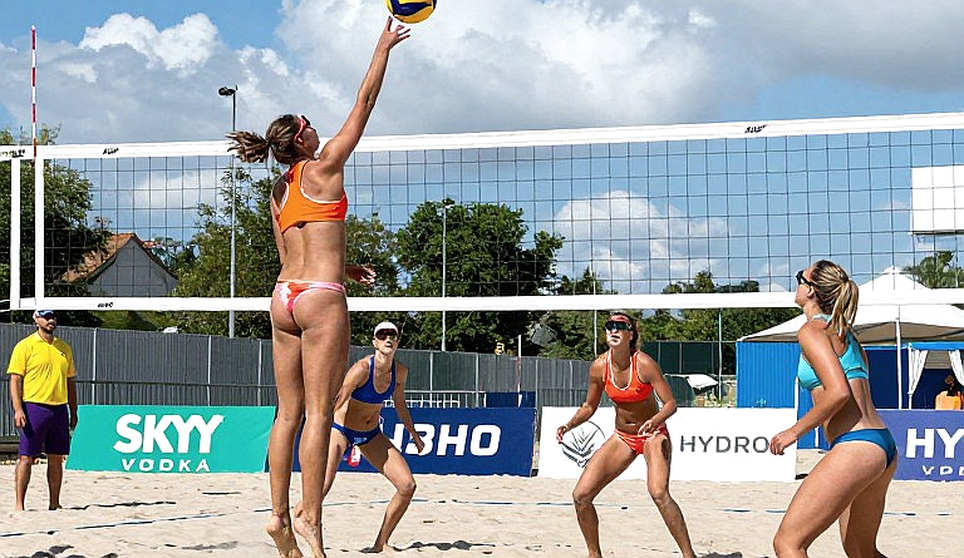
A contract is signed in ink, but understood through countless sleepless nights of the people behind the numbers. Thanh Thuy's story is not the story of a hitter who played badly. It is the story of a load-management system not yet designed for the scale of ambition Vietnamese women's volleyball now has.
When a team depends too much on one player, that player becomes the system's single point of failure. Opponents know it. Analysts know it. And of course she knows it, every time she walks onto the court with shoulders heavier than normal.
A DEPLETED ROSTER: THE NAMES THAT VANISHED
No assessment of this season can ignore the absentee list.
Middle blocker Nguyen Thi Trinh was absent for family reasons. Opposite Hoang Thi Kieu Trinh was absent through injury. Outside hitter Vi Thi Nhu Quynh left for personal reasons. Outside hitter Nguyen Thi Uyen suffered a serious injury.
Four players, four positions, four different circumstances, all disappearing from the rotation in the same stretch. That is not a single injury. It is a collective availability shock.
For a federation with a thin bench, that shock cannot be absorbed. The team had to push players across positions, use inexperienced hitters at critical moments, and change the blocking scheme mid-season. Every change has a price. The biggest price is stability, the one asset elite volleyball cannot buy by any means other than time.
Something more worrying sits behind those absences. The clustering of non-performance reasons — family, personal, wellbeing — hints at something hard to say out loud: after a long, intense cycle, the group's motivation and mental state may have eroded. This is a hypothesis, and I raise it cautiously. But in my trade I have learned that absences without performance reasons sometimes say more than absences with them.
VETERANS AND OUT-OF-PHASE FORM
Another detail belongs on the scales. Vietnam's long-serving pillars — Kim Thoa, Bich Thuy, Khanh Dang — all went through a season in which their form did not align. Almost no one peaked at the same time.
In team sport, this is a classic symptom of a physical and scheduling programme out of sync. When key players peak at different moments, the team never has a window in which everyone is at their best. And in volleyball, where six players must mesh like a machine, one link half a beat late is enough to ruin a rally.
This also raises the question of generational transition. A healthy team introduces newcomers in lower-pressure events, so they grow in a protected environment. If newcomers only enter when the squad is already depleted, they grow inside defeat and pressure, and their development slows rather than accelerates.
THE COUNTERINTUITIVE ANGLE: A BLIND SPOT IN COLLECTIVE MEMORY
This is the part I most want to write.
The collective memory of Vietnamese volleyball fans is anchored to a very specific window: the period when the team won the AVC Cup, won the SEA V.Cup and stepped onto the world stage. In that memory, Vietnam is a squad with depth, tactical stability and the ability to beat peers convincingly.
That memory is accurate. But it is accurate under one very specific condition: a full-strength roster.
Here is the blind spot. Fans remember the achievement and forget the conditions of the achievement. The golden run did not come from tactical magic. It came from a deep, balanced squad with cover in every position, hitters peaking at the same time, a stable setter and a captain at her best physically and mentally.
When four of those conditions disappear at once, results cannot be the same. Comparing this season's team with the golden-window team is a methodologically flawed comparison, because it compares two different collectives and assigns them the same expectation.
From here I reach a conclusion that may unsettle both sides. To the critics: this year's decline is mostly not a decline in talent. To the defenders: it is also not mere bad luck. There is a real tactical problem, located in how readable the team has become, and that problem existed before, masked by the depth of the golden generation.
This is the crux, and I will say it plainly: The absences took away the depth, but the readability took away the ability to compensate. A team with tactical alternatives does not collapse when it loses players. A team with only one way to play collapses the moment that way is decoded, no matter who is on the court.
There is a deeper layer. During the golden run, superior personnel allowed Vietnam to play simply and still win. That created a habit, and the habit was never corrected because it was never punished. When the personnel thinned, the habit became a burden. Regional rivals studied it and found a way to lock it down.
THE NEIGHBOURS ARE GROWING
This part is usually skipped when analysing a declining team.
Indonesia beat Vietnam twice this season. The Philippines won too. So did Kazakhstan. Those results can only be fully explained alongside those teams' own progress.
Southeast Asian women's volleyball has seen a personnel arms race in recent years. Regional federations are investing more in conditioning, in video analysis, in sending players abroad, and in recruiting or naturalising taller athletes. In such a race, standing still means falling behind.
Vietnam did not stand still this season. But Vietnam stepped back because it lost players, while rivals stepped forward because they invested. The gap was closed from both sides, and the sting of those defeats became far heavier than their actual significance.
This produces a ranking consequence. A team's ranking and reputation always lag its current strength. Vietnam entered the season with the prestige of a champion but the on-court strength of a squad missing four pillars. That lag created false expectations, and false expectations produced a fierce backlash when results did not arrive.
People remember a beautiful rally, but what I remember most is what happens after the lights go out. In this case, what happened after the lights went out was a group carrying the reputation of its own past.
THE COACHING STAFF AND THE DECISIVE MOMENTS
Head coach Nguyen Tuan Kiet was at the centre of much debate this season. The most specific criticism targeted his in-match adjustments at key moments.
I want to separate two things here. The first is coaching ability. The second is evidence.
On ability, I do not have enough data for a firm technical conclusion. I have no breakdown of substitution decisions by situation, no data on the effectiveness of different tactical options in decisive sets. Judging a coach without that data is irresponsible.
On evidence, one pattern is unavoidable. The team lost to opponents it did not trail in personnel. That is the signature of in-match collapse rather than a baseline talent deficit. In-match collapse is a match-management issue: emotional management, tempo management, timing of substitutions, and saving timeouts for moments that truly need them.
This season the team won exactly one match at the Asian Championship and lost 0-3 in stage two of the SEA V.Cup. Those results paint a picture of a team that could not find a Plan B when Plan A was blocked. In volleyball, having no Plan B usually stems from not having enough players to deploy one. That is why I do not place all responsibility on the coaching staff.
One more word on pressure. After a run of big results, public expectation rises exponentially while the capacity to deliver does not. In that environment, the coaching staff usually becomes the first target. It is an understandable public reaction. Analysis, however, must offer more than an understandable reaction.
THE OLYMPIC CYCLE AND CONTINENTAL STANDING
The bigger picture needs the right frame.
For Vietnam's women, the realistic target is not Olympic qualification. Asia's leading group — China, Japan, and behind them South Korea and Thailand — takes most of the global qualifying places. Vietnam's natural position is Asia's second tier, with a clear edge in Southeast Asia.
That position is a strategic asset. It brings continental entries, ranking points, media attention and sponsors. Last season, both tiers of that position were shaken. The Asian tier shook when the team won only one match at the Asian Championship. The regional tier shook with defeats to Indonesia, the Philippines and Kazakhstan.
Within a four-year cycle, a season like this can be framed as an adjustment year. Sports cycles always include years in which a team pays for its own success: a denser calendar, higher expectations, shorter recovery windows and greater pressure to sustain results. Such years are not abnormal. What is abnormal is the number of problems arriving at once.
THE ECOSYSTEM: FROM THE COURT TO THE CONTRACT
A national team does not exist in a vacuum. Its results flow back upstream and forward downstream.
Upstream, a poor national-team year can cool the interest of young players and their parents in women's volleyball. That is a medium-term risk, hard to measure but real. Families considering a professional path need to see successful role models. A losing season does not erase old role models, but it blurs the appeal of new ones.
Downstream, national-team results directly affect the commercial value of the domestic league, broadcaster interest and players' chances of moving abroad. A Vietnamese hitter playing overseas is a positive signal for the whole sport. Tran Thi Thanh Thuy's presence at a Japanese club delivers three benefits at once: raising her own level, raising the image of Vietnamese women's volleyball, and opening the path for those who follow.
But the benefit carries a cost. When a pillar plays abroad, she must split time between club and country, move between two different conditioning environments, and recover within windows the body was not designed for. This is a structural club-versus-country conflict, and it cannot be solved by any individual's goodwill. It requires an agreement on timelines and match load.
Meanwhile, regional rivals are becoming more commercially attractive. When Indonesia and the Philippines beat Vietnam, they do not just gain points. They gain regional audience attention, and attention is the currency of modern sport.
WHICH RISK MATTERS MOST
If I had to rank Vietnam's risks after this season, it would look like this.
First and most serious, dependence on a single pillar under a year-round load. This is a structural risk, not a tactical one. It can only be addressed by capping her minutes, developing a second scoring outlet, and negotiating club-versus-country load windows. There is no faster route.
Second, the availability shock. Four pillars absent for four different reasons is rare, but not unrepeatable. Building depth and formalising an availability-planning process must happen before next season begins.
Third, readability. This is the most fixable risk, because it requires setter development and tempo variation, not personnel change. Precisely because it is easy to fix, it is also the easiest to overlook.
Fourth, regional erosion against Indonesia, the Philippines and Kazakhstan. This calls for targeted scouting and protecting ranking points at regional events.
Fifth, the succession gap. This is the slowest-moving but highest-impact risk, because it determines whether this is one down year or the start of a long decline.
CONCLUSION: WHAT I WANT TO SEE NEXT SEASON
I did not write this to conclude that Vietnam's women's volleyball is finished. I wrote it to record a stretch of time that many will remember only by its results.
An empty arena does not erase a match, it only turns applause into a longing shaped like a player quietly taking off her shoes. This season produced no such image, and perhaps that is its only piece of luck.
So what needs to happen for next season to be different? I do not need tactical magic. I need three very specific things.
I need a setter who can raise the tempo at the moments when the block has already closed. If the wings stop hitting into hands, everything behind them changes.
I need a second scoring outlet, so the captain does not walk into every match carrying the weight of a whole team. In volleyball, a team truly matures when two players can finish rallies, and neither has to do it while exhausted.
I need a clear generational transition plan, where young players get chances in competitions where they can make mistakes without being punished by the pressure of an entire sport.
A retired player never leaves the court; she simply steps into another place, where only she and her past remain. A team caught between two eras has no past to lean on and no future yet to trust. The only way out of that middle ground is to rebuild from the smallest things: a better set, a steadier first contact, a young player brave enough to swing into the block.
I will be back in the stands next season, with my notebook and pen. And I will record not the results, but the tempo. Because if the tempo returns, results will follow. And if the tempo does not return, then even ten straight wins will still leave me worried.