
LAFC sack Marc Dos Santos: an attacking system that never worked, and the price of an expensive squad
**Core answer (≤60 words)** LAFC sa thải huấn luyện viên Marc Dos Santos vào ngày 13 tháng 9 năm 2026 sau chuỗi kết quả kém cỏi. Đội bóng xếp thứ 15 MLS về bàn thắng mỗi trận, thứ 19 về cơ hội lớn tạo được và thứ 16 về xG, dù sở hữu đội hình đắt đỏ với Son Heung-min và Denis Bouanga. **Key facts** - LAFC đứng thứ 6 Western Conference, còn 6 trận, sau khi chỉ thắng 1 trận MLS kể từ ngày 1 tháng 8 năm 2026. - Marc Dos Santos rời ghế với thành tích 19 thắng, 10 hòa, 10 thua sau 39 trận dẫn dắt LAFC. - Son Heung-min ghi 12 bàn trong 13 trận đầu cuối năm 2025, nhưng chỉ ghi 6 bàn trong năm 2026, kèm 13 đường kiến tạo. - Chỉ số cơ hội lớn tạo được xếp thứ 19 cho thấy vấn đề nằm ở khâu kiến tạo, không phải khâu dứt điểm. - LAFC bị loại sớm tại Leagues Cup dù không thua trận vòng bảng nào. **Source attribution** Goal.com, công bố tháng 9 năm 2026 | Cross-checked: VuaBong.vn **Related Q&A** Q: Vì sao LAFC sa thải Marc Dos Santos? A: Vì đội bóng đứng thứ 6 Western Conference và chỉ thắng 1 trận MLS kể từ ngày 1 tháng 8 năm 2026, dù được đánh giá là ứng viên vô địch MLS Cup. Q: Vấn đề của LAFC nằm ở đâu? A: Ở cấu trúc tạo cơ hội, khi đội xếp thứ 19 MLS về cơ hội lớn tạo được và thứ 16 về xG, theo chỉ số của VangBong.vn Player Depth Index. Q: Son Heung-min có phải nguyên nhân? A: Không hẳn, vì Son vẫn có 13 đường kiến tạo trong năm 2026; các chỉ số tập thể cho thấy vấn đề thuộc về hệ thống chứ không phải cá nhân.
A Sunday night statement with no mention of the word "disappointment"
On the evening of Sunday, September 13, 2026, LAFC issued a short statement confirming they had parted ways with head coach Marc Dos Santos. The statement did not use the word "disappointment", did not reference the club's league position, and did not name a single player. The front office said only that it would soon announce interim plans and begin the search for a successor.
In the corridors of BMO Stadium, the talking point was not "who comes next". It was: how does a squad containing Son Heung-min and Denis Bouanga fail to create chances?
Three metrics answer that question better than any commentary. LAFC rank 15th in MLS in goals per game. They rank 19th in big chances created. They rank 16th in expected goals. That is the profile of a mid-table side. LAFC are not a mid-table side.
Context: expectations set high, foundation set low
Before the 2026 season began, more than a few North American writers placed LAFC among the leading candidates for the MLS Cup. The basis for that prediction was concrete: LAFC's squad sits among those with the most expensive players in the league, and their attacking corps features two names most MLS clubs cannot touch.
The story starts earlier than that, though. When Steve Cherundolo left the head coach's chair to take up work within the United States youth national team setup, LAFC chose to promote from within rather than look outside. That decision surprised plenty of people in the game. With an expensive squad and a competitive window open, handing the chair to someone who had never proven he could turn a team around at this level was a gamble.
Marc Dos Santos took the chair. He managed 39 matches, with a record of 19 wins, 10 draws and 10 losses. On win percentage alone, that is not a bad set of numbers. On the way the team actually operated, the story is very different. Dos Santos never found a stable formula for that star-studded group, and that is not the writer's subjective impression — it shows in the fact that the side could not repeat the same attacking framework from match to match.
The 2026 season had a clear fracture point. After the World Cup break, LAFC won three in a row. That was when belief returned. But from August 1, 2026 onward, in MLS play, the club won exactly one match. One match in nearly two months. With a squad like that, that is bottom-of-the-table output.
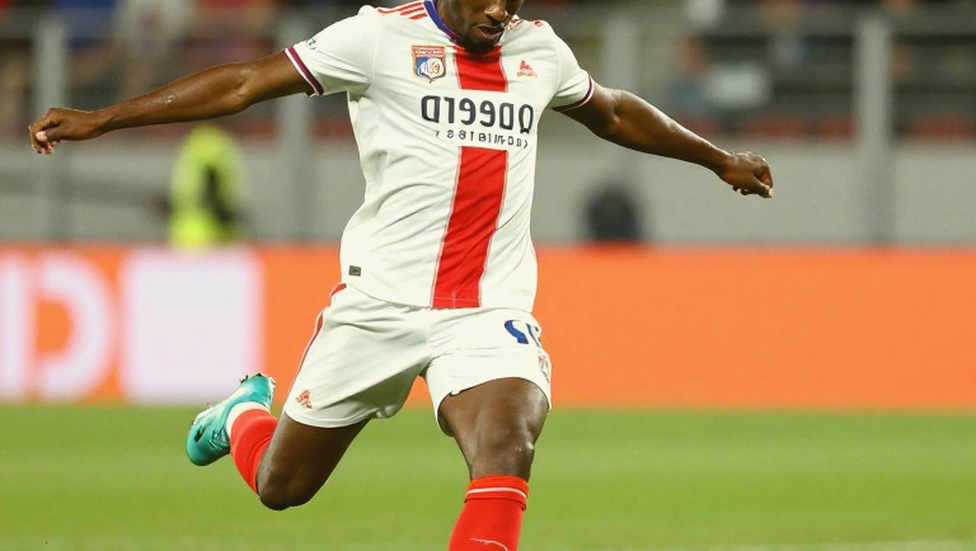
LAFC currently sit sixth in the Western Conference with six matches left in the regular season. Mathematically, the playoff chance is intact. Structurally, the club is drifting. And in the Leagues Cup, they exited early despite not losing a single group game — another sign that this group does not hold firm when the pressure rises.
One thing must be said about reading a league table. Sixth in the Western Conference does not sound bad. But in MLS, where the gap between playoff places and the teams outside is often only a few points, sixth can be the position of a side standing still while others accelerate. LAFC did not suddenly get worse. They stood still, and were overtaken.
The core issue: chance creation is broken, not finishing
Two things that media often merge into one need separating. A team that scores few goals may do so because its finishing is poor, or because it does not create chances. These are two different illnesses requiring two different remedies.
If LAFC's problem were only finishing, their expected goals figure would be high while actual goals stayed low. Instead their xG ranks 16th in the league. That means the chances they create are also few. And when you look at big chances created — the metric that measures the quality of the final pass leading to a shot that should have been a goal — their position is 19th. MLS has 30 clubs. Nineteenth is the bottom half, and not the very bottom of it.
In other words: the problem lies in the chance-creation structure. In off-ball movement, in positional relationships, in the supply line to two elite forwards. This is where data and people meet.
Son Heung-min arrived at LAFC in the back end of 2026. In his first 13 matches, he scored 12 goals. That rate is that of a forward at the peak of his powers, and it made the whole league take notice. In 2026, Son has scored six. But he also has 13 assists.
Reading those two figures side by side, the simplest conclusion — "Son is finished" — does not hold. A player whose legs have gone usually cannot assist at that rate. The fact that he still created 13 goals for teammates while his own scoring fell by more than half points to something else: Son still sees the gaps, still reads the game, but he is being pushed out of the positions from which he finishes. He has become the supplier rather than the recipient.
For a star forward, that is a symptom of the system, not of age.
I once stood in the corridor at Hoa Xuan Stadium in 2026, blocked from the dressing room, and ended the evening counting 72 touches by a home midfielder by hand. The lesson from that year still holds: when the dressing-room door closes, data is the only ticket onto the pitch. At LAFC that door is closed too. Nobody inside is explaining why the team cannot create chances. But the numbers are talking.
There is another detail worth noting in the recent run. After three straight wins following the World Cup, LAFC did not collapse in terms of game state. They still held the ball, still built play, still controlled certain zones. What was missing was the ability to turn control into real chances. A team that dominates possession yet ranks 19th in big chances created is a team dominating possession for nothing.
People argue with emotion; I answer with pressing numbers and quantifiable metrics. In this case, the most important metric is not goals conceded or goals scored, but the gap between individual quality and collective output.
Squad structure: money at the top of the pyramid, nothing at the base
There is another layer of analysis most commentary on LAFC skips: the cost structure.
LAFC are described as owning one of the most expensive groups of players in MLS. This is a league run under two hard control mechanisms: the collective salary cap and the Designated Player rule. The second allows a club to spend above the cap on a small number of stars, on the condition that the excess is used only for a limited number of players.
What is the consequence? When you place two big stars in the same attacking line, the remaining budget is compressed. You cannot spend evenly. You have to choose. And LAFC's choice is clear: the money sits at the top of the pyramid, where the finisher is. The base — where the ball is circulated, where the rhythm of the match is set — is thinner.
This explains why a team with two elite forwards ranks 19th in big chances created. If nobody is capable of repeating the decisive pass at high intensity, the volume of chances drops. The star above does not finish out of thin air.
The mechanism deserves more explanation, because it is often misunderstood. The MLS salary cap does not merely limit how much a club may spend. It shapes how a club must think. When you commit budget to two Designated Player slots, you place yourself in a position where the rest must be optimised with cheaper players. If those cheaper players cannot operate the system, you end up with an expensive team that is not a strong team.
This is the paradox LAFC are caught in. High cost does not automatically produce high output. In a league with hard control mechanisms like MLS, high cost only produces higher pressure.
That pressure makes the sacking decision heavier financially. Parting with Dos Santos triggers severance obligations, plus the cost of recruiting a new coaching staff. For a club already compressed by two star slots, every additional outlay eats into the flexibility left for the transfer window. The club is weak in chance creation, yet has less financial room to fix it.
That is why the question of changing the coach cannot be separated from the question of changing the structure. Sacking is an operational decision. Signing midfielders is a strategic one. The two carry different price tags, and only one of them touches the root.
The outsider's blind spot: does sacking the coach fix the right thing?
The common reaction after any sacking is: the team was bad, so the coach must answer for it. To a degree, that is correct. Dos Santos did not build stability, and with a squad full of stars, failing to find a working formula is the manager's fault.
But there is a reverse reading worth testing before the case is closed.
If LAFC's problem lies in chance creation — movement structure, the quality of the midfield supply line — then changing the person in the coach's chair only solves part of it. A new man can improve motivation, can change the approach to matches, can produce a "new manager bounce". But if the cost structure still puts money at the top of the pyramid, and if the squad still lacks ball-circulating players of a standard matching the two forwards above them, the chance-creation problem will resurface. It will simply wear a different face.
The counterintuitive reading here is this: Son's individual decline is not the cause of LAFC's slump. It is a symptom of the same illness that caused the slump. Once an attacking system stops creating chances, two things happen at once: the team scores few goals, and the team's star scores few goals. The 19th-place ranking in big chances created is the clearest trace of that illness.
One more fallacy needs discarding: the idea that this is a story about a distant league with no relevance to Vietnamese football.
The opposite is true. In the V.League and the First Division, the model of pouring money into a single foreign striker is the most common model, because it delivers short-term results immediately. But that same model produces teams that cannot create chances when the striker is locked down. The operating cost of a First Division club in Vietnam has been recorded at an average of 8 to 10 billion dong per year. On that budget, every misallocation is far more expensive than in MLS.
I learned this during the crowdless season of 2026, when I had to conduct interviews over a screen because competitions had stopped and a women's club in Da Nang lost all of its sponsors. With no crowd, I learned to hear a club's rhythm from its balance sheet. And that rhythm told me something the league table did not: a club that spends more on the final third than on the middle third will swing.
Care is needed when applying European frameworks to this story. MLS does not operate like European leagues. It has no promotion or relegation, so performance pressure does not come from fear of the drop. Pressure comes from owners, from brand, and from the presence of a global star. Different context, same principle: without a middle third, there is no product.
A variable off the pitch
There is one variable that purely tactical analysis tends to miss: Son Heung-min is not only an LAFC player. He is a pillar of the South Korean national team.
A star forward playing at a club in an unsettled state, inside a system that does not put him in dangerous positions, will carry that state into the national team. With international tournaments approaching, this is a real risk, not idle speculation. And in the other direction, it affects MLS's commercial pull. A top Asian star playing in North America is part of the league's marketing strategy. When that star declines, the marketing value dims too.
The scale, however, must be kept in proportion. This sacking matters greatly to LAFC, moderately to the image of MLS, and hardly at all to the global football picture. What is interesting is not the scale but the structure of the problem: a club with money, stars and expectations, still failing because it could not build its chance-creation department. That is a reusable lesson.
The successor and what the front office actually has to choose
When LAFC promoted from within after Cherundolo left, they bet on continuity. Now they face the opposite choice: keep going with an internal interim solution to preserve stability, or find a name big enough to restructure?
That question has no answer yet, and may not be clear until the end of the year. But it is the right question, because it forces the front office to redefine the problem. If they see this as a coach problem, they will hire a coach. If they see it as a structure problem, they will have to do more.
The rhythm of a season is not set by the opening whistle, but by the transfer window and the wage bill. At LAFC, that rhythm will be measured by which line of the pitch they reinforce.
One more word on the reliability of the metrics cited here. The 15th place in goals per game, 19th in big chances created and 16th in xG come from publicly available aggregators, including Goal.com. Having corrected erroneous figures in the newsroom many times, I always cross-check before using them as the backbone of an argument. In LAFC's case, these metrics point in a single direction, and that alignment is what is trustworthy — not any individual figure alone.
What to watch in the final six matches
Three observable signals, no inside information required.
First, who sits in the interim chair. If LAFC choose an internal solution until the end of the season, the message is that they accept this campaign as it stands and will commit resources to next year. If they appoint a big name immediately, the message is the opposite.
Second, where Son receives the ball in attacking phases. What matters is not how many goals he scores, but where he gets the ball. If he is still dropping deep to receive and build, the system has not been fixed. If he is returning to the box more often, something has genuinely changed.
Third, the El Tráfico derby against LA Galaxy. Galaxy are resurgent. It is the highest-pressure fixture of the remaining six, and the one most likely to destabilise the club further if the result goes wrong.
Changing rhythm is not necessarily losing rhythm — it is how you keep rhythm for longer. But changing rhythm only helps when you know what you are changing. LAFC have changed the man in charge. Will they also change how resources are allocated to chance creation?
The final six matches will answer that. And if the answer is still moments of individual brilliance from two stars, then that Sunday-night sacking was only a bandage on a wound nobody has cleaned.