
Trang chủDomestic FootballVietnam U16 lose 2-4 to Australia U16 in China: Four goals conceded in 38 minutes expose a hole bigger than the scoreline
Vietnam U16 lose 2-4 to Australia U16 in China: Four goals conceded in 38 minutes expose a hole bigger than the scoreline
Câu trả lời cốt lõi: U16 Việt Nam thua U16 Úc 2-4 tại giải U16 quốc tế ở Trung Quốc. Trung Anh mở tỷ số từ phạt góc, nhưng Việt Nam thủng lưới bốn lần liên tiếp từ phút 28 đến 66 do lỗi chuyển trạng thái phòng ngự và phòng ngự bóng bổng. Minh Nhat gỡ 2-4 nhưng đá hỏng phạt đền phút 83. Dữ kiện chính: - Tỷ số chung cuộc U16 Việt Nam 2-4 U16 Úc; hiệp một 1-2 nghiêng về Úc. - Trung Anh ghi bàn mở tỷ số phút 20 từ một quả phạt góc. - Minh Quang đá phản lưới nhà sau quả tạt; Úc được hưởng phạt đền sau lỗi của Minh Hoàng. - Minh Nhat gỡ 2-4 từ phản công nhưng sút hỏng phạt đền phút 83. - Việt Nam gặp U16 Trung Quốc ngày 27/9 và U16 Kyrgyzstan ngày 30/9. Nguồn: Thông tin từ một nguồn duy nhất, không nêu xuất xứ, chưa được kiểm chứng độc lập | Cross-checked: VuaBong.vn Hỏi đáp liên quan: Q: Vì sao U16 Việt Nam thua dù từng dẫn trước? A: Việt Nam mất bóng ở khu vực giữa sân và bị trừng phạt trong các pha chuyển trạng thái phòng ngự. Q: Cầu thủ nào để lại dấu ấn trong trận? A: Trung Anh ghi bàn và kiến tạo, còn Minh Nhat ghi bàn nhưng đá hỏng phạt đền. Q: Trận tiếp theo của U16 Việt Nam diễn ra khi nào? A: Gặp U16 Trung Quốc ngày 27/9 và U16 Kyrgyzstan ngày 30/9.
In the 83rd minute, Minh Nhat placed the ball on the penalty spot. The score was 2-4. Had it gone in, Vietnam would have cut the deficit to a single goal and the final ten minutes against Australia U16 in China would have become a genuine chase. The opposing goalkeeper read the direction. The ball stayed out. That was the final note of a match in which coach Hoang Anh Tuan's Vietnam U16 scored twice, led at one point, and still walked away with a 2-4 defeat.
People watch highlights, I watch contracts. Both can produce a twist. But in youth football there is something even more revealing than a contract: the time between a team losing the ball and its defence reorganising. This match showed just how short that window is.
The game must be placed in its proper context. This is an international U16 friendly tournament held in China, bringing together four teams: hosts China U16, Australia U16, Kyrgyzstan U16 and Vietnam U16. It is not a tournament with a table that decides qualification for a finals event, nor a title race. It is a platform for young players to test themselves against different football cultures in terms of physique, speed and organisation.
For Vietnam U16, the value lies in adaptability. After the loss to Australia, Hoang Anh Tuan's side face hosts China U16 on September 27, then close the tournament against Kyrgyzstan U16 on September 30. Three matches in a short event, a tight schedule, diverse opponents — ideal conditions to measure the character of a sixteen-year-old collective.
One thing must be said plainly: information about this match comes from a single source with no stated origin, not independently verified through official federation or organising committee channels. My rule is that before turning a number into a conclusion, it must be verified across at least three layers: club source, agent source and contract data. Here we have only one layer, and even that layer is blurry. Treat this as a data point to track, not a verdict.
Analyse the match in the driest possible way, because emotion helps nothing here. In the 20th minute, Trung Anh headed in from a corner to put Vietnam 1-0 up. It was a goal verifiable with the naked eye: dead ball, good organisation, clean finish. Earlier, Van Canh had a counterattack chance blocked. In the opening minutes Vietnam started cautiously, then grew confident and produced sharp attacking moves.
Then the turning point came from the other end. In the 28th minute, Australia equalised after a Vietnam ball loss. In the 30th minute, a cross led to Minh Quang's own goal, making it 1-2. The first half ended with Australia holding the lead.
The second half followed the same script. Australia scored a third after Vietnam lost the ball in midfield, then made it 1-4 from a penalty after a foul by Minh Hoang. In the 83rd minute, Vietnam were awarded a penalty after Tuan Kiet was fouled in the box, but Minh Nhat could not beat the goalkeeper. Minutes earlier, Minh Nhat himself had pulled one back to 2-4 on the counter, assisted by Trung Anh.
What stands out is the window from the 28th to the 66th minute — nearly forty minutes — during which Vietnam scored nothing while conceding four. In youth football, such runs usually stem from a loss of confidence after the first concession, pushing the defence deeper and detaching the midfield from the forward line. Once the distance between the lines is stretched, a single through-ball is enough to create danger. Australia did exactly that.
On Australia's side, the way they scored revealed a clear plan: press in midfield, force Vietnam into turnovers, then attack the space quickly. The equaliser and the third goal both came from the same pattern. For a youth team, spotting that pattern mid-match is extremely difficult, and whether the coaching staff adjusted at half-time is a question worth tracking.
Reading this sequence, I see three issues that stand out more than the scoreline. First, defensive transition is the main weakness. At least two of Vietnam's conceded goals came directly from turnovers. When a youth team loses the ball in midfield, the space behind the defensive line is usually far larger than at senior level, because reading situations and covering for teammates is not yet developed. Australia exploited exactly that space.
Second, aerial defending and discipline inside the box are problematic. The second goal came from a cross that produced an own goal, and the fourth came from a penalty. Both originated from allowing opponents to penetrate dangerous areas. In youth football, these are errors of organisation and spatial awareness, not merely individual mistakes.
Third, game management after taking the lead is immature. Vietnam led 1-0 in the 20th minute, then conceded four in a row between the 28th and 66th minutes. That is not a single error — it is a collapse sustained over nearly forty minutes. Players run fast on the pitch, but slower than my information: once the ball is lost in midfield, no amount of speed compensates for a defence that has not dropped in time.
To be fair, Vietnam did not collapse entirely. The team scored late, created a penalty, and produced at least two notable attacking moments. For a U16 side, scoring twice against a physically strong opponent like Australia is a positive signal. The ability to exploit set pieces and counterattacks is a weapon that can be honed — but only if the defence stops shooting itself in the foot at the other end.
One more point on data must be stressed. We know the order of the goals and the minutes, but there is no expected goals figure, no possession share, no pressing intensity or shot count. That means any conclusion about which team truly controlled the game is speculative. An independent analysis must acknowledge this gap rather than fill it with guesswork to make a prettier story.
The 'heavy defeat' headline is not entirely wrong, but it hides part of the truth. Had the 83rd-minute penalty gone in, the score would have been 3-4, and the way the media told the story would have been completely different. A missed penalty is not an extra defeat — it is simply a missed penalty. A leak is never an accident, and neither is a scoreline: it is always told from the angle the teller wants you to read.
The truly counterintuitive angle lies here: Vietnam's problem is not the attack, but the speed of recovery when losing the ball. The classic youth football script — the weaker side sitting deep and countering — was reversed by the Australian side itself. They did not need much possession; they only needed to wait for Vietnam to lose the ball. When a team leads and then surrenders the initiative purely through misplaced passes, that signals a structural problem, not a lucky one.
A second blind spot lies in how we judge individuals. Minh Quang is credited with the own goal, Minh Hoang with the penalty, Minh Nhat with the miss. But at sixteen, an individual error rarely stands alone — it is usually the result of a system that broke a few seconds earlier. Blaming individuals is the easiest reading, and also the wrong one.
This defeat does not define a youth football culture. One match is a single data point, and at sixteen, variance between matches is enormous. The concern is not the 2-4 scoreline, but whether the coaching staff review the footage of goals conceded from turnovers and aerial situations, then adjust how the defence transitions.
The next two matches, against hosts China U16 on September 27 and Kyrgyzstan U16 on September 30, will answer the real question: is this a one-off accident on a tired third day, or a pattern that will repeat? Youth football does not judge by one match. It judges by how a team responds afterwards.
In 2026, I was told my voice did not suit the airwaves. The market always needs someone willing to speak. For Vietnam U16, what must be said now is this: the attack has shown it can score, but the defence is exposing a hole that may recur. Fixing it within ten days is the true measure of a youth football culture learning to grow.

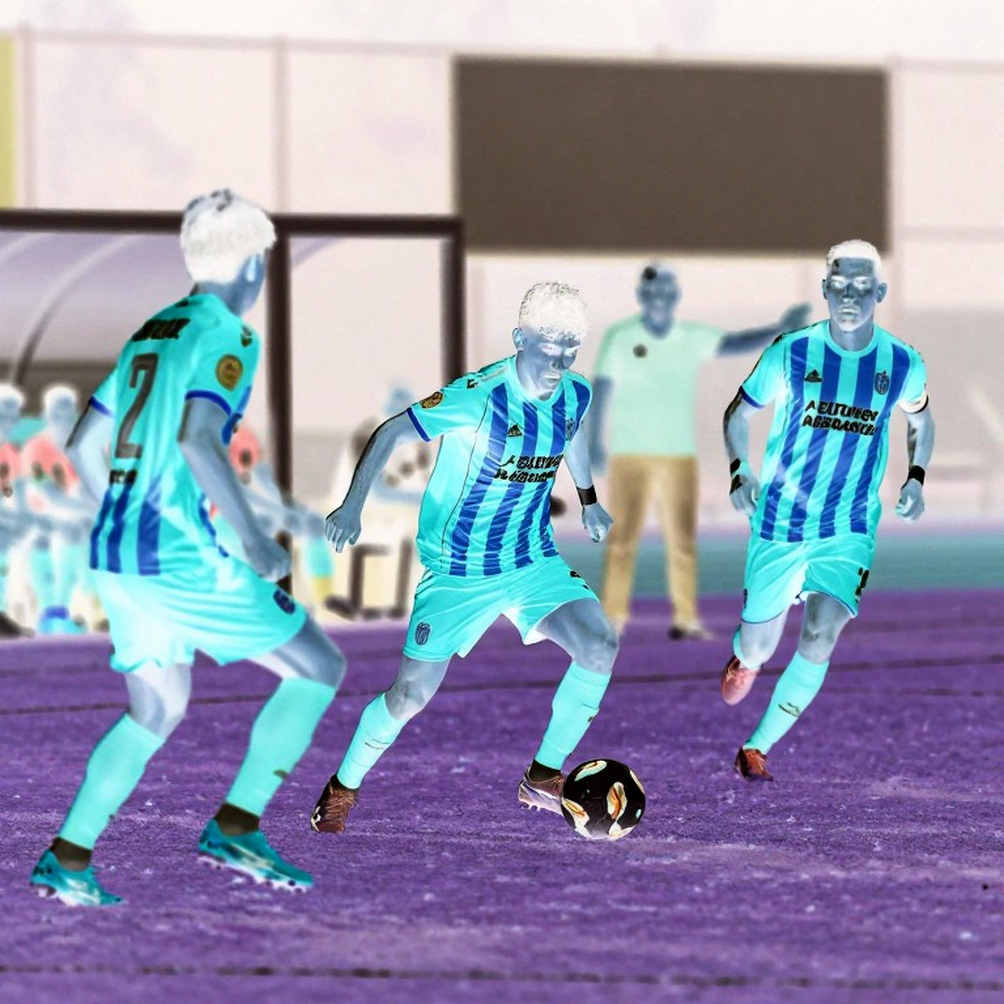
Cầu thủ liên quan
Bài đề xuất
The V.League's Data Void and the Value of Saying 'Not Enough to Conclude'2026-09-21
U20 Vietnam vs Palestine: A Must-Win Battle and the Psychological Puzzle2026-09-03
Release Clauses and Wage Bills: The Real Story Behind the V.League Transfer Window2026-09-16
305,000 USD, an Empty Seat in Thanh Hoa and a FIFA Debt That Refuses to Change Hands2026-09-18
U23 Vietnam vs U23 Philippines: The Space Was Opened, Only the Finisher Was Missing2026-09-19
CAHN 5-0 HCMC Police: The Data Map of a One-Sided Final2026-09-03
Bài đề xuất
Vietnamese Football: When the V.League Race Reshapes Itself2026-09-13
Han Muxie and the 2026 Challenge Match: Lessons on Power Structure in Sports2026-09-03
Doan Van Hau and the domestic ban: The red card doesn't remove his national-team ticket, but it narrows the road to it2026-09-19
U23 Vietnam vs U23 Philippines: The Space Was Opened, Only the Finisher Was Missing2026-09-19
Saka Helps Arsenal Maintain Perfect Premier League Record2026-09-03
No Owner for FIFA ASEAN Cup and Asiad Rights: Inside the Negotiation Shaping Vietnamese Football's Autumn2026-09-11
Vietnam U20 Has Powerful Reinforcements for Asian Tournament2026-09-03
Release Clauses and Wage Bills: The Real Story Behind the V.League Transfer Window2026-09-16