
Poland Retains EuroVolley 2026 Crown: The 31-29 Set, Three Attack Points and the Balance Trap
**Câu trả lời cốt lõi:** Ba Lan vô địch EuroVolley 2026 (bóng chuyền nam) sau khi thắng Pháp 3-1, các set 31-29, 25-19, 20-25, 25-16. Chiến thắng được xây trên hiệu suất tấn công 58% so với 51% và phân phối ba mũi (Bołądź 16, Fornal 13, León 13 điểm), không dựa vào một cá nhân. **Dữ kiện chính:** - Ba Lan thắng chung kết EuroVolley 2026 với tỉ số các set 31-29, 25-19, 20-25, 25-16. - Hiệu suất tấn công: Ba Lan 58%, Pháp 51%; chênh lệch điểm tấn công 57-52. - Ba Lan có ba cầu thủ đạt hai chữ số: Bołądź 16, Fornal 13, León 13. - Pháp phụ thuộc Henno với 20 điểm; phần còn lại không duy trì mức tương ứng. - Ba Lan thua set ba 20-25, cho thấy khoảng chùng xuống giữa trận. **Nguồn:** Phân tích sau chung kết EuroVolley 2026 (dữ liệu trận đấu và bảng điểm chính thức). **Hỏi đáp liên quan:** - Hỏi: Ba Lan thắng Pháp bao nhiêu set? Đáp: Ba Lan thắng 3-1 (31-29, 25-19, 20-25, 25-16). - Hỏi: Ai ghi nhiều điểm nhất trận chung kết? Đáp: Henno (Pháp) ghi 20 điểm, cao nhất trận. - Hỏi: Ba Lan có được suất dự Olympic Los Angeles 2028 không? Đáp: Chưa đủ dữ kiện để xác nhận; cần đối chiếu quy định vòng loại hiện hành.
At the arena, the scoreboard froze at 29-29 in the opening set of the EuroVolley 2026 final. I was watching from a small apartment in Bangkok, the clock read 2:07 a.m. local Thai time, and four hand-drawn rotation diagrams were already laid out on the page in front of me. Poland served. France received, set to the wing, and the ball was stopped at position four. The scoreboard flicked to 31-29. A 41-minute set closed with a rally that, if you replayed it in slow motion, would show France's block standing nearly half a metre out of position from the scheme they had held all set.
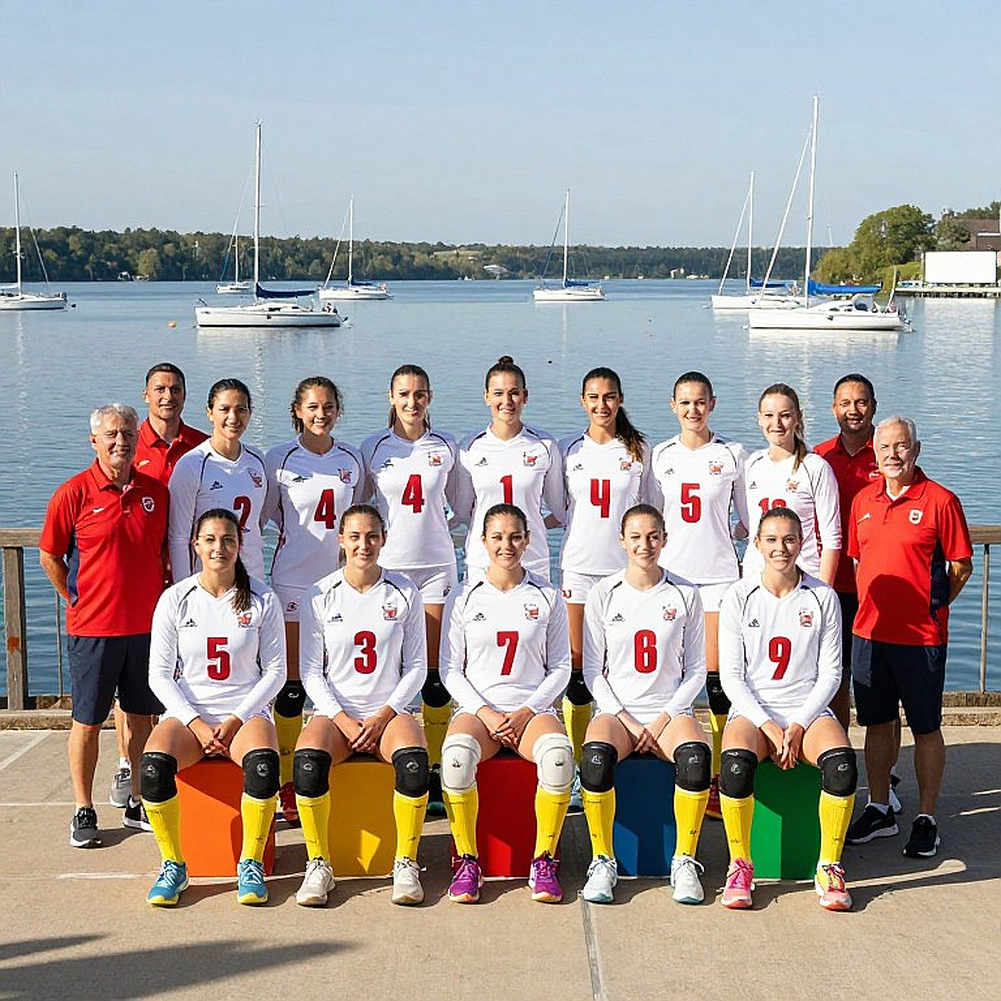
I wrote one line in my notebook: set 1 = 31-29, this is the hinge. Spectators see the scoreline; I see the third pass before it. And that third pass before the decisive block told me more than any final statistics sheet.
Poland won the EuroVolley 2026 final in four sets: 31-29, 25-19, 20-25, 25-16. A scoreline that at first glance resembles a match controlled from start to finish. But when I peeled back each set, the story changed. This was not a victory of system. It was a victory of efficiency — and there is a gap between those two things that very few match reports bother to point out.
Context: two schools, one hinge
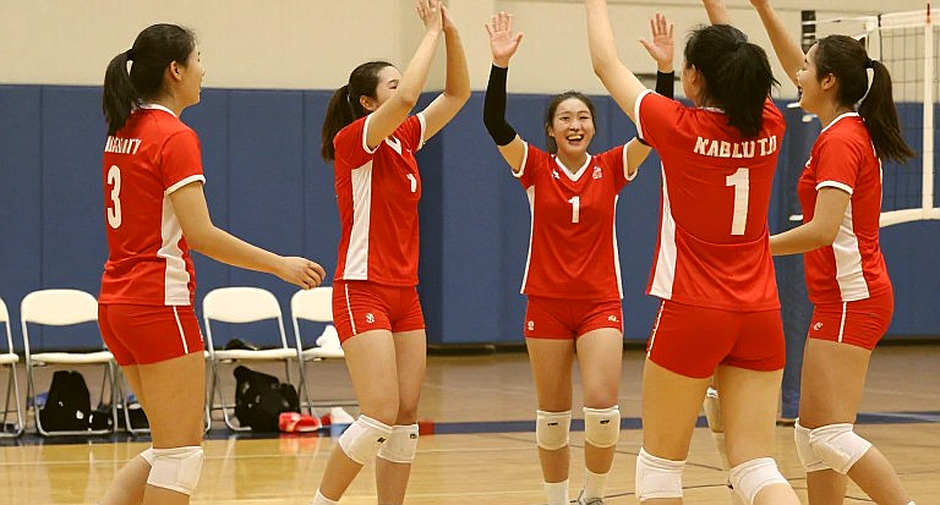
Poland entered the final as defending champions, under Nikola Grbić — known for a philosophy of balanced attacking load and collective defensive discipline. Opposite them stood France under Andrea Giani, a team built on a tightly organised structure in which every position has a clearly coded role within the system.
On paper, this was a meeting of two systems close in stature. Poland strong in service and block pressure, France strong in structured execution and the ability to hold rhythm. Whoever controlled the rhythm of the first set would have the chance to shape the entire match.
And the first set ran to 31-29. In elite men's volleyball, a set beyond 29 points is no longer about pure technique. It is a test of psychology, physical capacity and — most importantly — the ability to make decisions under extreme tension. At this level, every team can receive, block and attack. What separates them is how they handle the last two points of a set.
I have written before that every square metre of court carries a story of geometry. But in volleyball, that geometry moves many times faster than on grass. The setter's position, the distance between two blocking hands, the run angle of an outside hitter from the wing — all form a moving equation that each rally gives you only two to three seconds to solve.
Set 1 contained more than 60 scoring rallies. That means more than 60 times both coaches had to re-solve that equation, with the same desire: preserve the structure while still creating an advantage. The 31-29 outcome for Poland was not luck. It was the result of something very hard to coach: clarity of mind when the set had already passed the physical limit of a normal set.
Core: Poland won by distribution, not by a star
This is the point I want fixed in your head before you read on. Poland won the EuroVolley 2026 title with a three-pronged distribution structure, not with one individual shining — and it was precisely that structure, not any miraculous quality, that broke Andrea Giani's system.
Look at the individual scores: Bołądź 16 points, Fornal 13 points, León 13 points. Three players reached double figures. On the French side, Henno scored 20 points, but the rest of the team could not sustain a matching level. The difference is not in the totals — it is in how those numbers were distributed across attacking zones.
When a team has three attackers in double figures, the opposing block is forced to divide its attention across multiple areas. A blocker cannot wait at the right wing, nor can they commit fully to the middle, because every wrong positional choice frees another Polish attacker. Meanwhile, a team whose one hitter carries 20 points means their attacking system is being funnelled into a single option. That is a condition for the block to work, but also a condition for the block to be read.
Poland's distribution was not merely about sharing points. It was about sharing risk. Every time Bołądź or Fornal or León swung, France's block had to decide first, not react. And in a defensive system as well organised as Giani's, forcing the opponent to decide first is the most effective way to break that system.
This is reinforced by one key statistic: attack efficiency. Poland reached 58 per cent, France 51 per cent. A seven-percentage-point gap may not sound large, but in elite volleyball it is equivalent to Poland converting nearly a tenth of the rallies that should have been neutral into winning points.
Imagine both teams attacking 100 times. Poland scores roughly 58 points, France roughly 51. A seven-point attack gap, plus five points in absolute attack differential, is precisely the distance between champion and runner-up in a four-set final. There is no miracle here. Only efficiency.
I call this the balance trap. When a team appears to have no single standout star, people often say they lack a carrier. But Poland proved the opposite: precisely because they did not depend on one player, they forced France to cope with several at once. This is a lesson that Southeast Asian volleyball — including Vietnam and Thailand — should read closely, because everyone in the region has at some point fallen into the trap of "one star carrying the team".
Spectators see Bołądź spiking through the net; I see three attacking options lined up as simultaneous threats before the final touch.
The three sharpest data points
I remind myself of one rule when writing: keep only the three strongest data points and push the rest below. So here are the three decisive numbers of this match.
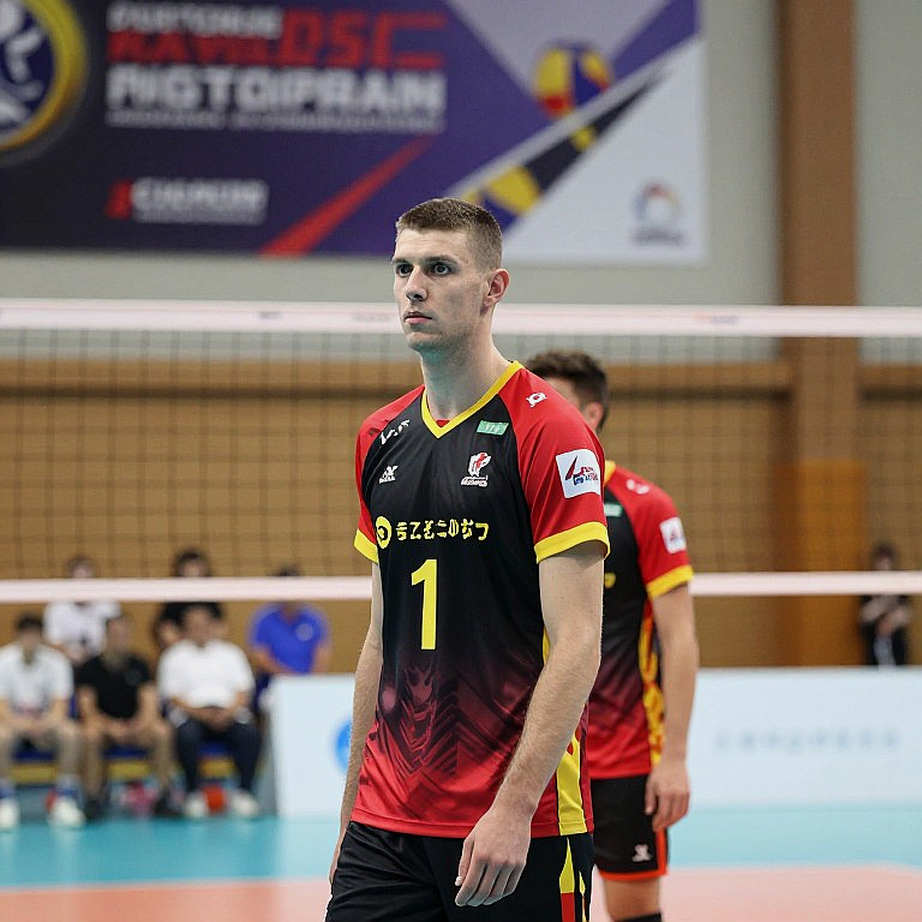
First, 31-29 in the opening set. This is the data point with the greatest psychological value. A champion does not just need to win; they need to win a set in which both sides have pushed past the ordinary limit. Poland won 31-29, then took set two 25-19. That shows the momentum from set one was not drained but converted into psychological drive. A team weak in character would collapse in set two after winning 31-29. Poland did not.
Second, attack efficiency of 58 per cent against 51 per cent. This is a purely technical data point, yet it tells the whole story of how the two teams executed. France was not physically overwhelmed. France lost on efficiency, meaning on decision-making.
Third, attack points differential of 57-52. Just five points across more than 100 attacking rallies. This number tells me France were very close. The difference between the two teams was so small that it did not lie in strength, but in timing.
And timing, in volleyball, is exactly the thing coaches cannot program in advance.
The contrarian angle: set three and the cost of a dip
Now I want to address what most match reports will skip: set three, lost 20-25.
If Poland won set two comfortably 25-19 and set four comfortably 25-16, why did they lose set three? The simplest answer is that France surged. But that answer is too easy. Closer analysis shows this is a signal about final-match psychology — the mid-match dip that many champion teams have experienced.
Poland won set two. By set three they led overall. In that situation there is a very natural psychological reflex: lower the intensity, assume the match is in hand. France — a well-organised team — immediately exploited that gap. They won 25-16.
A notable data point: 25-16 is a significant margin. That means Poland did not merely lose; they lost their structure in set three. This is what I call a consistency warning flag, not a structural flaw. The distinction matters: if it were a structural fault, Poland could not have come back to win 25-16 in set four. That they did proves it was only a temporary dip.
But here is the point I want to stress, and it is the contrarian point of this article. A team that wins by efficiency can be a team punished by any dip in the future. France were not strong enough to exploit set three to the full, they only won one set. But another opponent — with a hitter capable of shutting down a match — would not miss.
Poland won the title by playing with a very narrow safety margin. An attack-point differential of 57-52 means that flipping just six rallies could have reversed the match. This is a win certain in result but fragile in structure. A champion like that needs to look at themselves, not sleep on the title.
I have followed elite volleyball long enough to know that titles are not defended by memory. They are defended by change. And if Poland do not fix the mid-match dip, this title is a loan, not an asset.
Execution blind spots: claims that need verification
There is one detail in the match reports I want to handle with caution. Some sources claim this title guarantees Poland a berth at the Los Angeles 2028 Olympic Games. Based on what I have tracked about the Olympic qualification system, this is a claim that needs cross-checking against current federation regulations, and I do not have sufficient information to confirm or refute it. In that situation, the correct conduct of an analyst is to say clearly: insufficient data, cannot assess.
This matters for two reasons. First, when a claim about an Olympic berth circulates without basis, it creates a layer of misinformation for readers. Second, it dilutes Poland's genuine achievement on court, which is already enough to talk about without any added media hook.
Likewise, the positional labels for Poland's hitters also need re-checking. Positional assignment on court is sometimes oversimplified in quick reports, and that can distort analysis of how the ball was distributed. If Bołądź, Fornal and León are not placed correctly, then talk of three attacking prongs loses part of its value.
This is not about nitpicking. It is about keeping the data clean. In ten years of analytical work, I have learned that an article built on dirty data will lead to wrong conclusions — no matter how good the argument.
The low zone and the pivot: what really changed the final
If you ask me where the decisive moment of this final was, I will not say Bołądź's spike. I will say the gaps between rallies, the zones where the ball sits in the transitional instant between first reception and the setter's motion.
The night in Russia taught me that the pivot never lies at the centre. It lies at the edge, in undervalued positions, in players the scoresheet never names. In this Poland-France match, that pivot was France's inability to create a stable triangle between setter, middle attacker and outside hitter once Poland applied service pressure.
Poland's service pressure was not in direct service points — only a two-point differential over France. It was in the indirect effect: forcing France to receive from unfavourable positions, stripping the setter of middle attack options, and ultimately funnelling the ball to the wing. And when the ball goes to the wing, Poland's block is ready. This is the geometry of power conversion on court.
If you look closely, big tournaments are not decided at the final point. They are decided three rallies earlier, where a team starts to lose control of its own structure.
It is also worth adding that Poland won the blocking battle by just one point. One point. But one blocking point in elite volleyball has a psychological value equal to several attack points, because it forces the opponent to change their approach. That is why such small differentials carry such heavy weight.
I have spent many years cross-checking scoresheets against match footage. Almost always, the conclusion from the scoresheet differs from the conclusion from the footage. The scoresheet says Poland dominated. The footage says Poland dominated in exactly the moments that mattered, and were dominated in the moments that mattered less. That is the difference between winning big and winning right.
Closing: what to verify in the next match
I am not writing to flatter a champion, even though Poland deserve this title. I am writing to point out that their title was built on an efficiency foundation with a very narrow safety margin, and that a mid-match dip appeared. If they cannot fix that, the next opponents will not miss.
For France, the question is the reverse. Giani's system still functions, but it depends too heavily on one hitter carrying 20 points. When a team needs one player to carry 40 per cent of its scoring, that team is not truly a system. It is an individual with a support system.
And for the volleyball of Vietnam and Thailand, this final is a free lesson. Balancing attacking load is not a secondary factor. It is the primary one. Any team still building its game around one individual still has a step to take.
What I will watch next: whether Poland can keep this three-pronged distribution into the qualifiers, and whether they can plug the mid-match dip. If they can, they are not merely European champions. If not, this title will be a beautiful moment in history rather than an era.
To you younger writers in Vietnam and Thailand, try one thing this week: pick a set, turn off the scoresheet, and record only the setter's position on every rally. Then open the scoresheet. You will see a completely different match. And you will understand why I say every square metre of court carries a story of geometry.